Showing posts with label Philosophy. Show all posts
Rummanah Aasi
Description: One night in an isolated college town in the hills of Southern California, a first-year student stumbles into her dorm room, falls asleep--and doesn't wake up. She sleeps through the morning, into the evening. Her roommate, Mei, cannot rouse her. Neither can the paramedics, nor the perplexed doctors at the hospital. When a second girl falls asleep, and then a third, Mei finds herself thrust together with an eccentric classmate as panic takes hold of the college and spreads to the town. A young couple tries to protect their newborn baby as the once-quiet streets descend into chaos. Two sisters turn to each other for comfort as their survivalist father prepares for disaster. Those affected by the illness, doctors discover, are displaying unusual levels of brain activity, higher than has ever been recorded before. They are dreaming heightened dreams--but of what?

Review: I loved Walker's imaginative debut novel The Age of Miracles and was looking forward to reading more from her. Her latest, The Dreamers, has same atmospheric and philosophical musings like her debut novel. The Dreamers begins in a college dorm in an isolated town in the hills of Southern California, where a freshman thinks she is coming down with the flu. In fact, she has a mysterious disease that causes its victims to fall into a deep, dream-laden sleep from which they cannot be woken, and which sometimes leads to death. The disease spreads slowly at first, then more rapidly, and soon the whole town is under a quarantine.
  The story is told from multiple perspectives ranging from Mei, a lonely college freshman; 12-year-old Sara, who copes with an unhinged survivalist father; Sara's neighbors, a faculty couple with a newborn baby; and aging biology professor Nathaniel. Unfortunately we do not get a chance to spend time and learn more about these characters besides a touch and go as they deal with the disease. I would have much rather proffered if we had one character to explore, but the large number of characters does add to the sense of suspense and urgency to find a cure to this mysterious disease. Walker gives us a lot to think about when it comes to human nature, the state of dreaming and of consciousness, and the nature of epidemics. The text is sparse but beautifully written. It's not a book filled with action nor character-driven but I found it thoroughly fascinating.

Rating: 4 stars

Words of Caution: Sexual situations, child abandonment, and some minor language are in the book. Recommended for adults and older teens.

If you like this book try: Station Eleven by Emily St. John Mandel, Sleeping Beauties by Stephen King
Rummanah Aasi

Description: Suddenly - tomorrow or the day after - girls find that with a flick of their fingers, they can inflict agonizing pain and even death. With this single twist, the four lives at the heart of Naomi Alderman's extraordinary, visceral novel are utterly transformed, and we look at the world in an entirely new light. What if the power to hurt were in women's hands?

Review: I read The Power two weeks ago and I am still conflicted about it. There are a few things you should know about the book before deciding to read this book: Do not read this book for its world building and/or how the women get powers because it is very vague and unclear. Do not read this book for its characters. While there is a small cast of characters we follow throughout the book, they are not admirable, likable, or even have much character development. Do read The Power if you are interested in philosophy and gender politics. Reading this book is very much like watching a chess match, watching the players meticulously move their pieces after much thought.
  Sometime in the near future, young women discover they have within them the ability to unleash skeins of electrical current that can maim and kill. It is to believed that the power only affects people with the Y chromosome (mostly women but intersex individuals also have a very low form of power too) due to a substance dropped into the water during World War II. The power is triggered in flight or flight situations, but women quickly learn how to release it at will. Soon women begin to use this power to infiltrate and subvert all important institutions such as government and religion. Several women's revolts occur across the world. The first upheavals are in Saudi Arabia and Moldova, places where women have few rights. The woman who rules Bessapara, the first nation of the new world order, is unscrupulous and afraid, and she creates further instability by stripping men in her country of all rights and implicitly threatening world war. Men are now threatened and virtually have no rights. An underground terrorist group composed of men try to "revert back to the old times".
   The central question running throughout the book is: what would happen if women ruled the world? Alderman tests her female characters, from various backgrounds and classes, by giving them power and they all abuse it. The book does not have a linear narrative. It is actually told via a male historian with snippets from museums and other artifacts. There is a lot to unpack from this book from it's unique narrative structure to how we define power with male characteristics such as aggression. Along with power, the concept of freedom should also have been explored. I would have loved to learn more about the world building as we are not told when this story takes place, however social media such as Facebook and Reddit are constantly referenced. I would have also loved to see a wider, diverse cast of characters too. The author attempts to take her narrative globally but it only occurs on the book's periphery. What personally bothered me is the author's stereotypical assumptions of "oppressed" Muslim women who spontaneously go from cloaked individuals to being in a "Girls Gone Wild" video.
  The Power is a difficult book that will stick with you long after you read it. It is an intense read that I could only read in small snippets. It very much reminded me of The Handmaid's Tale with its shocking premise, but as it did with the other book, I was left cold and disconnected with its characters.

Rating: 3.5 stars

Words of Caution: There is strong language throughout the novel, scenes of violence such as sexual abuse and graphic depictions of sexual assault. Recommended for mature teens and adults only.

If you like this book try: The Handmaid's Tale by Margaret Atwood, Future Home of the Living God by Louise Erdrich
Rummanah Aasi
 If you only have time to read just one YA book this year, then I would highly recommend picking up We Are the Ants by Shaun David Hutchinson. This book was exquisitely written and left me thinking about it long after I closed the last page. It is my first 5 star read of 2016.

Description: There are a few things Henry Denton knows, and a few things he doesn’t.
Henry knows that his mom is struggling to keep the family together, and coping by chain-smoking cigarettes. He knows that his older brother is a college dropout with a pregnant girlfriend. He knows that he is slowly losing his grandmother to Alzheimer’s. And he knows that his boyfriend committed suicide last year.

What Henry doesn’t know is why the aliens chose to abduct him when he was thirteen, and he doesn’t know why they continue to steal him from his bed and take him aboard their ship. He doesn’t know why the world is going to end or why the aliens have offered him the opportunity to avert the impending disaster by pressing a big red button. But they have. And they’ve only given him 144 days to make up his mind.

The question is whether Henry thinks the world is worth saving. That is, until he meets Diego Vega, an artist with a secret past who forces Henry to question his beliefs, his place in the universe, and whether any of it really matters. But before Henry can save the world, he’s got to figure out how to save himself, and the aliens haven’t given him a button for that.


Review: The writing style of We Are the Ants is very reminiscent of Kurt Vonnegut's masterpiece Slaughterhouse Five. While the book is categorized as science fiction, it is mostly science fiction in the allegorical sense. Henry Denton is a depressed, nihilistic teen who is having an existential crisis. He has been abducted by aliens and have been told by them that the world will end. Strangely, they give Henry a red button that he can press to save the world but is the world and humanity worthy enough to be saved? From Henry's point of view, humans are not the center of the world, we are actually as significant as the little ants crawling on the ground.
  All throughout the book Henry asks the same question over and over again: if you were given the chance to save the world, would you take it and why? For Henry, the answer is not an easy one. His life is in tatters in a town called Calypso where the flaws of the characters tether them down and prevent them from growing much like Odysseus and Calypso from Homer's epic The Odyssey. Henry's first love and boyfriend, Jessie, has committed suicide. His father left his home and some point to Henry's 'abductions' as a reason, his chain smoking, alcoholic mother is struggling to make ends meet while taking care of his dementia ridden grandmother. His older brother and fiance are expecting a child though neither of them are adults or capable of supporting themselves. On top of all this, Henry is bullied and used as a play toy for the closeted gay bully.
  It is hard to be Henry and be optimistic when there is so much negativity and sadness revolving around him. Henry blames himself for Jesse's death and further drives the nail in his self loathing coffin. I liked how Hutchinson uses Jesse as a symbol of Henry's self-worth because Jesse is the only person who made Henry feel loved and accept despite his quirks. Jesse was Henry's safety net, but when he is tragically ripped away due to Jesse's own mental health issues he helplessly watch Henry go in a similar downward spiral until he meets the charismatic Diego who shows up in town.
 Like Henry, Diego is also dealing with his own personal demons, which Hutchinson sprinkles throughout the story. Instead of turning to aliens to help him sort out the meaning of life, Diego uses art to express himself. I really appreciated that the book focuses on the friendship and connection between Henry and Diego while leaving the possibility of a romantic relationship open. Diego and Henry do not solve each others issues miraculously because they find each other, but they do form a supportive network that is immensely important. There is also Audrey, a mutual friend of Jesse and Henry, who gives us a more realistic account of Jesse instead of Henry's romanticized view of his boyfriend. Ultimately, we are all on the edge of our seats wondering if Henry does really have the freedom of choice he thinks he has or will push the button to save the world?
  We Are the Ants is an excellent novel that is much needed in our world that often seems uncaring and meaningless. Each character is complex, necessary, and most importantly true to life. There are both light and dark moments in the book much like real life. The novel is never didactic and perfect for readers who love character driven stories and it would make a fantastic book club discussion.

Some favorite quotes:

“Depression isn't a war you win. It's a battle you fight every day. You never stop, never get to rest.”
“We may not get to choose how we die, but we can chose how we live. The universe may forget us, but it doesn't matter. Because we are the ants, and we'll keep marching on.”
“Dreams are hopeful because they exist as pure possibility. Unlike memories, which are fossils, long dead and buried deep.” 
“We're not words, Henry, we're people.
Words are how others define us, but we can define ourselves any way we choose.” 
Rating: 5 stars

Words of Caution: There is strong language throughout the book, drug use and underage drinking, allusions to sex, and scenes of bullying. Recommended for Grade 9 and up.

If you like this book try: The Vast Fields of Ordinary by Nick Burd, Someday this pain will be useful to you by Peter Cameron, The Serpent King by Jeff Zentner, and for similar writing style definitely check out Slaughterhouse Five by Kurt Vonnegut
Rummanah Aasi
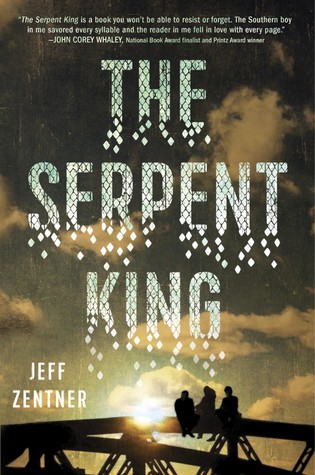
 The Serpent King is the best book that I've read so far in the month of May. It is possibly my favorite book by a debut author so far this year. The book has rich characters, thought provoking subjects, and a setting of rural Tennessee that is not seen frequently in YA.


Description: Dill has had to wrestle with vipers his whole life—at home, as the only son of a Pentecostal minister who urges him to handle poisonous rattlesnakes, and at school, where he faces down bullies who target him for his father’s extreme faith and very public fall from grace.

He and his fellow outcast friends must try to make it through their senior year of high school without letting the small-town culture destroy their creative spirits and sense of self. Graduation will lead to new beginnings for Lydia, whose edgy fashion blog is her ticket out of their rural Tennessee town. And Travis is content where he is thanks to his obsession with an epic book series and the fangirl turning his reality into real-life fantasy.

Their diverging paths could mean the end of their friendship. But not before Dill confronts his dark legacy to attempt to find a way into the light of a future worth living.

Review: The Serpent King is a lyrical coming-of-age novel about three teens who are trying to escape poverty, abuse, and prejudice that follow them like shadows in their rural Tennessee town. The book is told in three, distinct, and unforgettable point of views. All of the main characters are outcasts in their own rights, but their alienation made them best friends and an incredible support group.
  Dill is burdened with carrying the name of his grandfather and father who are both known for their notoriety. His grandfather in his grief became mad and his father, a Pentecoastal minister, was publicly shamed and arrested for child pornography. Dill feels that he will inevitably follow the same bleak path as his elders. He is bullied in school and his overbearing mother feels that he is partly responsible for his father's arrest since Dill had a computer in the house and furthermore, he should work and focus on his faith in order to help her pay off his father's legal bills rather than pursue his dream of being a musician and going to college. Dill's only life line to sanity is through his best friends Lydia and Travis.
 Lydia is considered the lucky one out of her friends. Her parents support and love her unconditionally. She is also financially well off compared to Dill and Travis. She has big dreams of working in the fashion world and is the creator of the super famous fashion blog called Dollywould, a salute to her idol Dolly Parton. Lydia is a bit of a cultural snob and can't wait to leave her provincial town to start her new life in New York City. 
  Travis has a mixture of both of Dill's and Lydia's worlds. Travis has a very intimidating physical presence, but he is really just a giant teddy bear. His geeky devotion to Game of Thrones-esque fantasy series is contagious and his only escape from his abusive father. 
  I loved each of these characters for different reasons. I really empathized with Dill's existential crisis and his ultimate fear that he would never leave his town. I also appreciated the open discussion of whether or not college is even an option because of financial strains and Dill's mother not valuing education. I think we all assume that college is the next step after a teen graduates from college, but that is not always the case. I will say that I was initially worried how the book would handle religion considering how prevalent it is in Dill's life, but the author showed both religious fervor as well as Dill questioning his faith which felt real and not heavy handed. Though Lydia annoyed me at times for being judgemental, I admired her ambition and her desire for her friends to reach their own potentials. I also adored Travis, who is full of light, love, and laughter.
  The Serpent King is very much a character driven novel. The pace is a bit slow, but I didn't mind as I got to spend time with each of the characters. While the themes are dark and hard to read sometimes, there is hope and lighter moments that will lift you up. There is a bit of romance in the book but it is slow burning and takes a bit of a back seat to the characters' self discovery. Definitely pick this book up if you are in the mood for an absorbing, beautifully written realistic fiction read.  

Rating: 4.5 stars

Words of Caution: There is strong language including homophobic slurs, a scene of underage drinking, scenes of physical, verbal, emotional, and alcohol abuse. Recommended for Grades 9 and up.

If you like this book try: Eleanor and Park by Rainbow Rowell, I'll Give You the Sun by Jandy Nelson, Looking for Alaska by John Green
Rummanah Aasi
 I first featured The Lie Tree on one of my Waiting on Wednesday posts. I have read such great reviews of this book and I have been really looking forward to it. Thanks to Amulet and Netgalley, I was able to read an advanced copy of the book. The Lie Tree is now available in your libraries and bookstores.

Description: Faith Sunderly leads a double life. To most people, she is reliable, dull, trustworthy—a proper young lady who knows her place as inferior to men. But inside, Faith is full of questions and curiosity, and she cannot resist mysteries: an unattended envelope, an unlocked door. She knows secrets no one suspects her of knowing. She knows that her family moved to the close-knit island of Vane because her famous scientist father was fleeing a reputation-destroying scandal. And she knows, when her father is discovered dead shortly thereafter, that he was murdered.
  In pursuit of justice and revenge, Faith hunts through her father’s possessions and discovers a strange tree. The tree only bears fruit when she whispers a lie to it. The fruit of the tree, when eaten, delivers a hidden truth. The tree might hold the key to her father’s murder—or it may lure the murderer directly to Faith herself.

Review: The Lie Tree is a rich, complex, and multi-layered historical mystery with a dash of magical realism and horror. Faith Sunderly is a girl ahead of her time and a victim of her society's mores, particularly those of gender expectations. In a time when a young woman is discouraged to think for herself, seek knowledge, and only learn skills which help them ensnare a wealthy bachelor, Faith is a dangerous and wicked girl. Despite her plain physical appearance and demure nature, she has a sharp and inquisitive mind. She idolizes her father and shares his keen interest in the scientific research of fossils and evolution. She also has an irresistible impulse for sneaking, spying, and skulking around. While as readers of a modern era we find nothing evil about Faith's healthy curiosity about the world around her, Faith however, keeps all of these traits and desires hidden and believes it is a source of personal shame. Ironically, she yearns for people, particularly her father, to discover her hidden truth and become an active participant in her father's archaeological dig. Hardinge does a wonderful job in demonstrating Faith's inner turmoil of being the 'obedient' daughter, a budding scientist along with her envy of her younger brother. The story drips from blatant sexism, but moves on to something much sinister when Faith's family moves to an insular island community of Vane where her father is invited to an archaeological dig.
  It doesn't take long for Faith to suspect there are darker reasons the family left London in such a hurry. Her family is shunned by the Vane's community for unknown reasons and her mother seems to have ulterior motives. As Faith starts to meddle in her parent's affairs and begins to put things together, her father is found dead. Many believe that her father committed suicide, but she is determined to prove her father's death was a murder. The mystery of her father's death not only hints at professional envy and greed, but also potentially being a dissident in the theological debate of creation.
  The story moves at a leisurely pace as Faith slowly uncovers a web of secrets her father has been keeping. Once the lie tree, a small tree that thrives on lies and bears a fruit that tells the truth, is introduced the pacing becomes faster and the story then evolves into Faith's growing obsession to finding out the truth and her reckless behavior. I found the concept behind the lie tree to be fascinating and wanted to learn more about how the tree utilizes lies to create a fruit of truth. Faith believes she can use the tree to find her father's killer and begins feeding it lies.
 The Lie Tree is not a book for those seeking a fast paced plot, but rather those who are patient to see how it slowly grows. The book is dense, but full of philosophical questions and discussions of Darwinian evolution. Hardinge's sharp observations of the book's time period are definitely a high light.  While reading the book I found myself wondering if we all have a metaphorical lie tree and our pursuit to seeking truth will ever end. I would definitely recommend this book to readers who like depth to their stories and it would also be a good book club discussion pick too.

Rating: 4 stars

Words of Caution: There are some disturbing images and violence in the book. Due to the mature themes and writing style, I think this book would best be suitable for Grades 9 and up.

If you like this book try: Clay by David Almond, The Brides of  Rollick Island by Margo Langan
Rummanah Aasi
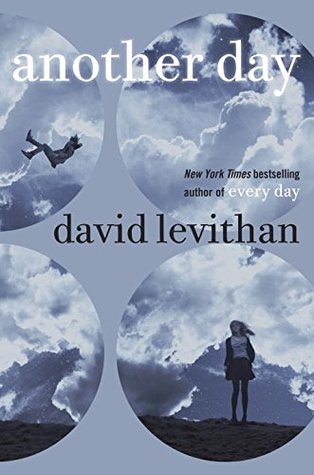
 Another Day is the companion novel to David Levithan's widely acclaimed novel, Every Day. Another Day mostly succeeds standing on its own, however, I personally think you would miss its full impact if you did not read Ever Day first.

Description: Every day is the same for Rhiannon. She has accepted her life, convinced herself that she deserves her distant, temperamental boyfriend, Justin, even established guidelines by which to live: Don’t be too needy. Avoid upsetting him. Never get your hopes up.
  Until the morning everything changes. Justin seems to see her, to want to be with her for the first time, and they share a perfect day—a perfect day Justin doesn’t remember the next morning. Confused, depressed, and desperate for another day as great as that one, Rhiannon starts questioning everything. Then, one day, a stranger tells her that the Justin she spent that day with, the one who made her feel like a real person…wasn’t Justin at all.
  In this enthralling companion to his New York Times bestseller Every Day, David Levithan tells Rhiannon’s side of the story as she seeks to discover the truth about love and how it can change you.


Review: In Every Day we explored the universality of love through a gender neutral character named A who inhabits a different body every day. In one of these bodies A was Rhiannon's boyfriend named Justin and they two spent a wonderful day together. Unexpectedly A fell in love with Rhiannon and has tried to pursue a relationship with her, which has been further complicated by A's constantly changing state.
  Another Day recalls this same event, however, we are now seeing things through Rhiannon's point of view. Throughout the book Rhiannon inquires what makes a relationship valuable. One of my main criticisms about Everyday was the lack of character development of Rhiannon. I never understood what was about her that captivated A. This time around I felt I had a better understanding of her, but I didn't really like her as a character.
  In the beginning Rhiannon is a codependent person who uses her rocky relationship with her acerbic boyfriend, Justin, to define herself. While she craves intimacy and emotional attentiveness, he wants distance and wants to hangout or in other words fool around, which feel cold and mechanical. It is clear to everyone around her and indubitable to even to Rhiannon in heart of hearts, that her relationship with Justin is doomed yet her fear to be alone eclipses her logic and it is what keeps her at Justin's side.
 While it was hard seeing Rhiannon defend Justin at his worst moments to her friends and even chastising herself from demanding things that is her right from her boyfriend, I did like how Rhiannon slowly comes into her own person after she encounters A and acknowledges her own needs and desires. With A's constant changing of human bodies from boy to girl, various body types, and backgrounds, Rhiannon has the emotional intimacy that she craves, but can't have the physical relationship that she wants with A. There is a nice contrast between the idealistic world that A would love to live in in which Rhiannon would love him regardless of who A is and the realistic world that Rhiannon has firmly placed her feet on in which she is only attracted to males of a particular type, however, this discussion seems to go on endless circles in Another Day and it began to feel a bit tedious. Readers who have read Every Day will recognize several scenes in Another Day, however the tone is a bit different.
 Like the ending of Every Day, there is no real conclusion to Another Day and Levithan leaves the door open to a possible another book featuring Rhiannon and A. Personally, I enjoyed Every Day just a bit more because I found A a lot more interesting than Rhiannon. I think readers who enjoyed Every Day will find something new in Another Day and readers who are meeting A for the first time would be intrigued to read Every Day to find more about him/her.       


Rating: 3.5 stars

Words of Caution: There is strong language, underage drinking, and strong sexual content since Rhiannon and Justin are sexually active however these episodes are not graphically depicted. Recommended for Grades 9 and up.

If you like this book try: Every Day by David Levithan, Cycler and Recycler by Lauren McLaughlin
Rummanah Aasi
 The Dinner is one of those books that you will either love or hate. The book was a huge bestseller in Europe last year and when it was brought to the U.S. it was dubbed "the European Gone Girl". Though I can see similarities between both books, The Dinner stands on its own and will generate immediate reactions once you are finished with it.


Description: A summer's evening in Amsterdam and two couples meet at a fashionable restaurant. Between mouthfuls of food and over the delicate scraping of cutlery, the conversation remains a gentle hum of politeness - the banality of work, the triviality of holidays. But the empty words hide a terrible conflict and, with every forced smile and every new course, the knives are being sharpened.
  Each couple has a fifteen-year-old son. Together, the boys have committed a horrifying act, caught on camera, and their grainy images have been beamed into living rooms across the nation; despite a police manhunt, the boys remain unidentified - by everyone except their parents. As the dinner reaches its culinary climax, the conversation finally touches on their children and, as civility and friendship disintegrate, each couple shows just how far they are prepared to go to protect those they love.

Review: The Dinner is a chilling novel starts out as a witty look at contemporary manners and social class before slowly turning into a I-can't-believe-the story-went there psychological thriller. As the title suggests, plot unfolds over the time over a dinner between the Lohman brothers, unemployed teacher Paul and politician Serge, a candidate for prime minister, meet at an expensive Amsterdam restaurant, along with their respective spouses, Claire and Babette, to discuss a situation involving their respective 15-year-old sons, Michel and Rick. At first, the two couples discuss such pleasantries as wine and other chit chat cleverly avoiding the reason why all four adults have come together. The  five-course dinner, from aperitif (i.e. appetizer) to digestif (i.e. dessert/coffee), we get to see the true aspects of the characters and the secrets that come out which will threaten relations between the two families. I don't want to say much more because that would spoil the suspense and the twisted plot turns, which slowly strips away layers of civility to expose the primal depths of supposedly model citizens, not to mention one character's past history of mental illness and violence. There is lots of dark humor in The Dinner and I would even go as far as saying it could be labeled as a satire about the lengths to which people will go to preserve a comfortable way of life. Though you may not find any redeemable characters and an unreliable narrator, you will be hooked once you start The Dinner. I would highly recommend it for a book club discussion.

Rating: 4 stars

Words of Caution: There is strong language and scenes of violence. Recommended for older, mature teens and adults only.

If you like this book try: Defending Jacob by William Landay, God of Carnage by Yasmina Reza, We Need to Talk About Kevin by Lionel Shriver
Rummanah Aasi
  I haven't participated in Manga Mondays for quite some time due to time constraints. Manga Mondays is a meme hosted by Alison at Alison Can Read where bloggers can share their passion for reading mangas. It's a great place to get new manga titles to try and to meet new bloggers.

Description: The exclusive St. Kleio Academy is in jeopardy. Kai and his following have become terrorists who vow to protect those who remain at the academy. Rockwell, the head of the Academy, calls for Shiro to end his time at the school and move on to his next step: being the ultimate protector of St. Kelo Academy like his his original. What does being protector entail?

Review: Unlike other mangas that I've read, I read a volume of Afterschool Charisma at least twice. that's not to say that I put the volume down or that I become disinterested in it but rather the plot becomes more complicated with each volume. In this volume, we learn that Shiro is a clone of the person who created the St. Kelo Academy. He is caught in the middle of helping his friends by working with the Academy and joining the extreme terrorist group created by Kai.
  When he unexpectedly graduates from the Academy, he is given the huge responsibility to take care of the Academy. The Academy is still very much a mystery. From what Shiro is told, it was the vision that the clones of great and infamous historical figures is to lead society in the right direction. One wonders if that is the real reason or if it's the reason that sounds the best.
  Shiro is now educated by clone Leonardo De Vinci, where he is to learn how to become a leader. Once he arrived, he discovers some surprises such as an older clone Freud and even Marie Curie, who Shiro (and myself) believed to be dead. As Shiro tries to wrap his head around his new surroundings, Kai and the terrorists appear on public television to expose St. Kleio in hopes of getting the public sympathies how the clones are treated.
   Just like other volumes of this series, more questions are raised than answered. How does exposing the St. Kleio Academy help either side? What will become of St. Kleio in the meantime? I guess I have to wait until October to know.


Rating: 4 stars

Words of Caution: There is some sexual innuendo and mature themes. Recommended for older teens and up.

If you like this book try: Afterschool Charisma Vol. 8 by Unwind by Neal Shusterman, Hetalia: Axis Powers by 
Rummanah Aasi
   With one book left in the Amelia Rules! series, I'm sad to say good bye to these fantastic and realistic characters. I wish I had these great graphic novels when I was a kid. Each volume is satisfying and gets better as the series goes on. If you read and enjoyed Raina Telgeimer's Smile, be sure to pick up this series.

Description (from the book's back cover): Amelia McBride may be growing up, but she's feeling down. If there's one theme to her life, it's that nothing lasts: not her parents' marriage, not Aunt Tanner's support, not the clubhouse for the Gathering of Awesome Super Pals (G.A.S.P.), not even her new spot on the stupid cheerleading squad. And while she's learning all kinds of things about foot fungus, cheerwitches, and Reggie--who thinks Rhonda is CUTE?!--there's still one thing Amelia can't figure out, and that's the meaning of life. It takes a grownup sort of tragedy for Amelia and her friends to realize that even when the world is scary, and life is as mystifying as ever, some things--like friendship--do last. In Jimmy Gownley's touching seventh installment of Amelia Rules!, Amelia may not find all the answers--but she does know how to ask the right questions. Who needs answers, anyway?

Review: A good sign of a strong graphic-novel series is that the characters and plot developments grow and never get stale. Amelia is growing up and beginning to take on the bumpy ride through adolescence and middle school. She is about to graduate from elementary school and officially become a preteen. In this seventh volume, precocious Amelia McBride encounters her first major crisis. She feels her time dressing up as Princess Powerful hanging with her superhero friends, G.A.S.P. (the Gathering of Awesome Super Pals) and being a care-free kid slipping away. She is now straddling the line between angst-ridden adolescence and her fading carefree childhood. For the first time in her young life, she realizes that nothing is permanent, and not everything is fair. She finally has come to terms that her parents' marriage has dissolved into divorce and they won't be together as a whole family. Her friend's father is fighting abroad (most likely in Afghanistan), which he may or may not return safely. Her school's principal treats her unjustly and even her beloved rock-star Aunt Tanner, whom she counted on for support, has left her and is now on tour.
  Though the seventh volume is a slender compared to its previous volumes, Gownley does not shy away from tough topics, presenting them in a way that is both approachable and understandable to kids. With all of the tribulations Amelia must deal with, she paints an accurate portrait of what preteens must deal with and how fast they sometimes have to grow up.

Rating: 4 stars

Words of Caution: None. Recommended for Grades 4-6.

If you like this book try: Ariol: Just a Donkey Like You and Me by Emmanuel Guibert, Big Nate by Lincoln Peirce, Her Permanent Record by Jim Gownley
Rummanah Aasi
  Sangu Mandanna's debut novel, The Lost Girl, is a provocative and page-turning thriller/romance that gets at the heart of what it means to be human. Using similar themes of Mary Shelly's Frankenstein, the story is wholly original and one that is not easy to forget.
Description (from the publisher):  Eva's life is not her own. She is a creation, an abomination—an echo. She was made by the Weavers as a copy of someone else, expected to replace a girl named Amarra, her "other," if she ever died. Eva spends every day studying that girl from far away, learning what Amarra does, what she eats, what it's like to kiss her boyfriend, Ray. So when Amarra is killed in a car crash, Eva should be ready. But sixteen years of studying never prepared her for this.
  Now she must abandon everything and everyone she's ever known—the guardians who raised her, the boy she's forbidden to love—to move to India and convince the world that Amarra is still alive. What Eva finds is a grief-stricken family; parents unsure how to handle this echo they thought they wanted; and Ray, who knew every detail, every contour of Amarra. And when Eva is unexpectedly dealt a fatal blow that will change her existence forever, she is forced to choose: Stay and live out her years as a copy or leave and risk it all for the freedom to be an original. To be Eva.

Review: Eva doesn't have a right to her own life. She is an echo, a carbon copy of a girl named Amarra who lives halfway across the world. Eva is created as a back-up plan for Amarra's parents in case Amarra dies. Eva mimics Amarra's life, she learns everything that Amarra learns and is even nearly forced to suffer the same physical injuries as her other. Though the concept of clones isn't breaking new ground, what makes The Lost Girl stand out is the exploration of the psychological aspect to Eva's character, since it's not just Eva's organs that are being harvested, but her entire entity and identity.
 The Lost Girl is a novel that sits uneasily along the genre lines of dystopia, science fiction, and speculative fiction. While it contains elements of each of these genres, the world of echoes and their creators called Weavers take on a somewhat mystical and mysterious manner. The book never really delves into how the world came to exist. Like some of Bradbury's stories, we are shown human beings who find themselves in extraordinary futuristic circumstances instead of a technology driven setting that drives humans. I know some readers may be disappointed in not knowing much about Weavers and the utterly creepy setting of the Loom, but this didn't bother me at all. I was thoroughly captivated by the characters of this story and it didn't deter me from enjoying the story. 
  Mandanna's writing is exceptional, thoughtful, and beautifully descriptive, deftly balancing seriousness and humor, just like her characters. Eva is a heroine that I loved from the start. She finds herself in a horrible circumstance, but makes the best of it without losing her dignity and constant persistence. Unlike many heroines that fill our pages with noble self-sacrifice, Eva refuses to give up her inalienable rights to have a life and a place in society regardless of how he kind is perceived. She is rightfully selfish, but also aware of the dangers she puts her loved ones while she goes an incredible journey. 
  Though the plot of The Lost Girl is a bit of a slow starter as it is divided into three sections. The first section introduces us Eva as Eva without any strings attached. In this section,  we see Eva as a reflection of our humanity. Her connection to her family, a collection of people who are not bound to her by blood but by their concern and love for her, and her guardian/best friend/love interest Sean are explored. Each of these members reflect a different aspect of Eva's personality. The pace of the book quickly picks up in the second and third part of the book, where we see Eva on display and acting out her duties as an echo. Our hearts ache with her struggle and we are horrified at all the hurdles she must jump and conquer. I completely admire Eva's tenacity, her drive, and in this very rare instance her impulsiveness to not stay quiet.
  I hadn't expected to enjoy The Lost Girl as much as I did because I've been on a dystopian burn-put lately where all the book seem the same. There are a few aspects that I wish were given more time to develop such as the settings of London and Bangalore as well as further development of some really intriguing secondary characters. The Lost Girl gave me much to think about while being cathartic. The characters and premise asks us unsettling questions, but ultimately it is a story about love, grief, death, and above all what makes us human. I'm very eager to see if Eva's story continues and what else Mandanna plans on writing.

Rating: 4.5 stars

Words of Caution: There are some disturbing scenes and a scene of underage drinking. Recommended for strong Grade 8 readers and up.

If you like this book try: Afterschool Charisma manga series by Kumiko Suekane, Unwind series by Neal Shusterman, The Adoration of Jenna Fox by Mary E. Pearson, Never Let Me Go by Kazuo Ishiguro, The Children of Men by P.D. James
Rummanah Aasi
 Can you love someone beyond their physical appearance? I'm pretty sure most of us would hardly need to think twice before saying, "Absolutely. I'm not that superficial." I wonder if our answers would be just as strong if we met an entity like A who is destined to be someone different every day.

Description: Every day a different body. Every day a different life. Every day in love with the same girl.
There’s never any warning about where it will be or who it will be. A has made peace with that, even established guidelines by which to live: Never get too attached. Avoid being noticed. Do not interfere.
  It’s all fine until the morning that A wakes up in the body of Justin and meets Justin’s girlfriend, Rhiannon. From that moment, the rules by which A has been living no longer apply. Because finally A has found someone he wants to be with—day in, day out, day after day.

Review:  Every Day is a thoughtful, touching story that will surprise readers with its sentient literary style. It is a story that makes us question ourselves with countless "what if" questions after we finish reading. Everyone longs for human connection, especially with those that can truly see us as a whole person with our flaws and all. For the protagonist A, this desire is overwhelming and all consuming given his special circumstances. Every day, for as long as he can remember, he wakes up in a different body regardless of sex, race, sexual orientation, among other indicators that separates human from one another. He has long recognized the futility of trying to create lasting relationships, but everything changes when he meets Rhiannon, a girl who for the first time makes him want to achieve what he thought was impossible.
  A. has self-imposed policies to not to interfere too much in his "host's" life. He is mainly a visitor and observer for the day. For the most part, I thought A was a likable protagonist who doesn't wallow in self-pity or histrionic behavior, but there are times when I did want him to be a little less self absorbed. Levithan does an incredible job in retaining A.'s voice and personality consistently even though he is a different person in different circumstances. One of my favorite things about this book is how we catch a glimpse of all the lives that A. touches; each life is very different and allows us to see life through someone else's eyes. Some of the manifestations are humorous, sweet, while others are tinged with sadness and hopelessness. There is also a tension and urgency in the story from various different sources as A. struggles to become close to Rhianon every day. There is also someone who is relentlessly pursuing A. for his own dangerous reasons.
    Levithan doesn't spend much time answering how A came to be, which I'm sure would deter readers who want specific answers, but this is not what the book is about. Every Day spends more time ruminating and philosophizing about love and identity. When you say that you love someone, what makes you love them? If the object of your desire appeared less physically appealing, perhaps from a different race, religious background, or even financial background, would you love for he/she lessen? A. obviously makes some mistakes in his judgment, not unlike the ones we make daily. I think A's relationship with Rhiannon happened too quickly. While she seems like a good person, I didn't really understand what A found so fascinating about her. Perhaps that in itself makes us think that sometime we perceive a crush to be a bit more. 
    In addition to learning about A and the different life stories we are told in a daily snapshot, things become very difficult and complex as Rhiannon learns about A.'s unique circumstance. We witness how her comfort level changes each time she meets A in a different body. It's hard to fault anyone for having trouble accepting the fantastical premise, as well as the reality of living with it, because after all, a big, big part of love relies on both the thrill and the comfort we find in another person's familiar presence. Unlike other romances we've read so far, the struggle that these two have is to reconcile how to love ones essence without all the physical and superficial attachments involved. I couldn't help but wonder how Levithan would resolve this conflict but he does in a very pensive and bittersweet manner that shows how the purest form of love is perhaps when it involves some form of selflessness or self-sacrifice, depending upon how you look at it. 

Rating: 4 stars

Words of Caution: There is some strong language, scenes of underage drinking and drug use, as well as brief discussion of sex. Recommended for strong Grade 8 readers and up.


Description: In this digital-only collection Six Earlier Days, Levithan gives readers a glimpse at a handful of the other 5993 stories yet to be told that inform how A navigates the complexities of a life lived anew each day. In Every Day, readers discover if you can truly love someone who is destined to change every day. In Six Earlier Days, readers will discover a little bit more about how A became that someone.

Review: Six Earlier Days is a novella that follows A through some earlier days that take place before the book Every Day begins. While we still aren't given any answers as to how A exists, Six Days Earlier does provide insight on how A approaches his hosts. Unlike in Every Day, A is a bit more detached but also can't help but yearn for the connections that his hosts have. The stories of living various lives in various ages are engaging and emotive. Though you are not required to read Six Earlier Days before Every Day, I would recommend doing so as it allowed me to be a little less impatient and frustrated with A. I felt as if I understood his situation and mindset much better.

Rating: 4 stars

Words of Caution: None.

If you like these books try: The Lover's Dictionary by David Levithan, Aristotle and Dante Discover the Secrets of the Universe by Benjamin Alire Sáenz, Ask the Passengers by A.S. King
Rummanah Aasi
  Manga Mondays is a meme hosted by Alison at Alison Can Read where bloggers can share their passion for reading mangas. It's a great place to get new manga titles to try and to meet new bloggers. Afterschool Charisma manga series a great science fiction read that has an interesting story line and probes the reader to question everything that he or she has learned.

Description: Kai, the terrorist and leader of the clone rebellion, continues his story of the past and paints a bleak potential future for the clones if they don't spring into action. Meanwhile Shiro is in an odd position. He had always thought of himself as an original, but now he learns startling facts about himself: he is just like any othe clone. Now he wonders what his role in the St. Kelio's Academy really is.

Review:  Afterschool Charisma continues to be a manga series that focuses on the deeper philosophical questions rather than an action packed plot. In the sixth volume, the characters puzzle over the age old question, "Who are we?" and "What are we suppose to do with our lives?" Though we are given more details about the history of the elite academy, I'm still unsure of what percent is truth and propaganda. The militant Kia does paint a convincing picture of clones simply decaying and "reprogrammed" if they don't follow the same footsteps of the past. Like the last volume in which we are given two versions of clone Hitler as an example to illustrate his point, this volume gives us Elizabeth (Elizabeth the Virgin Queen). The first Elizabeth clone is obsessed with learning from books. She is secluded in a room and driven to insanity, claiming she still not educated enough. The second Elizabeth clone is depressed from not being chosen by a buyer. Unwanted and driven by curiosity of what lies beyond the gates of the Academy, she plans an escape and fails.
  I am enjoying the way this manga is told. We have been setup to believe one thing and find out that it is a lie. Shiro is in the works to be another Kai, a clone guardian. He has been led to believe that he is an original human and his only friends are the clones so he naturally bonds with them. Will he also take part in the clone rebellion? Will his opinion of the clones and himself now change? I guess I'll have to wait for volume 7 to see what happens next.

Rating: 4 stars

Words of Caution: There are mature themes and brief moments of strong violence, and some language. Recommended for older teens and adults only.

If you like this book try: Afterschool Charisma Vol. 7 by Unwind by Neal Shusterman, Hetalia: Axis Powers by 
Rummanah Aasi
  Manga Mondays is a meme hosted by Alison at Alison Can Read where bloggers can share their passion for reading mangas. It's a great place to get new manga titles to try and to meet new bloggers. The last volume of Afterschool Charisma left me with a cliffhanger of sorts. A huge event happened and ended in the fourth volume with a promise of an explanation in volume five. My problem? Volume five was constantly checked out since last May and by that time volume six was also published. So, I guess it's a mixed bag that since I got a  hold of both volumes and read them. Unlike the Nana manga series that is filled with drama with a capital "D", the Afterschool Charisma manga series gives me a brain cramp filled constant flurries of "What if?"s floating in  my head as I turn the pages.

Description: In the aftermath of the disastrous school expo at St. Kleio Academy, an exclusive school of famous historical clones, where some of the clones were killed (most noteably Joan of Arc who was burned the stake), a returning clone known only as “Kai” who bears a disturbing resemblance to Shirou tells a story about the previous generation of clones and what could have turned him and others into “terrorists” working against the school.

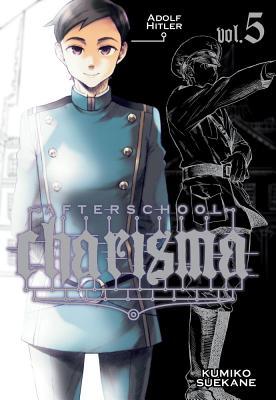
Review: I really wished the publishers and the authors would work harder in recapping the story thus far before continuing the story arc. It's a good thing that I reviewed my older review posts as well as checked out some other reviewers before diving into this latest volume. Volume 5 promised some answers, but like the nature of this entire manga series it provides more questions than answers.
  Volume 5 centers around the main questions of why clones, regardless if they are famous historical figures, are made? What is the purpose of St. Kleio Academy? Are the lives of clones entitled to make their own mark or are they predestined to follow their footsteps of their predecessor?
  The mysterious "Kai", who is an ordinary person that was cloned, is our peek inside St. Kleio Academy. Though set up like a school, the academy is a breeding farm that herds clones like cattle and sell them off to auctions. The clones are forced to follow their predecessor's footsteps (i.e. have the same accomplishments, skills, and even behavior/personality). If the clone is seen to be out of place, they are aborted and created anew. Kai is an interesting character, who makes you feel torn between feeling sorry for him and making you wonder what plans he has up his sleeves. As the main figure who catalyzed the clone rebellion (or is the rebellion just for the amusement of the Academy director?), he provides information to the current class of clones. Now whether this information is true or just another form of propaganda, that yet to be determined.
  In addition to Kai, we are given different scenarios of what clones can accomplish in this volume. The most striking clone for me in this series has been the young Hitler. Like his care-free personality, his youthful and innocent physical appears is very striking. There are two clone Hitlers explored. The first Hitler is a very talented young artist who has no political ambitions whatsoever. Once discovered this clone suddenly disappears and a new Hitler clone appears. The second Hitler clone is aware and appalled by his original's actions. He gives his whole life up to a religious institution and atones for his original's sins and dies a noble death. With these two versions of what could have been, we can't help but wonder if the old saying "history will repeat itself?" rings true.
  I really enjoy how the moral ambiguities of cloning as it lends itself to discussion and it's really what draws me to this series. I really want to know about what society needs these clones of historical figures for that they are producing them and auctioning them off like a meat market. What societal pressure is causing this? What exactly are they expected to do out there?

Rating: 4 stars

Words of Caution: There is some crude sexual humor, a brief scene of nudity, and violence. Recommended for older teens and adults only.

If you like this book then try: Afterschool Charisma Vol. 6 by Unwind by Neal Shusterman, Hetalia: Axis Powers by 
Rummanah Aasi
 Ever since I've seen the beautiful cover of Vessel and read the intriguing premise of the book, I couldn't wait to get my hands on a copy of the book. Often times beautiful book covers had led me astray, but Vessel did not. Brilliantly riveting and completely unique, Vessel, is one of my favorite fantasy reads from 2012.

Description (from Goodreads): Liyana has trained her entire life to be the vessel of a goddess. The goddess will inhabit Liyana’s body and use magic to bring rain to the desert. But Liyana’s goddess never comes. Abandoned by her angry tribe, Liyana expects to die in the desert. Until a boy walks out of the dust in search of her.
   Korbyn is a god inside his vessel, and a trickster god at that. He tells Liyana that five other gods are missing, and they set off across the desert in search of the other vessels. For the desert tribes cannot survive without the magic of their gods. But the journey is dangerous, even with a god’s help. And not everyone is willing to believe the trickster god’s tale.
  The closer she grows to Korbyn, the less Liyana wants to disappear to make way for her goddess. But she has no choice: She must die for her tribe to live. Unless a trickster god can help her to trick fate—or a human girl can muster some magic of her own.

Review:  On the surface, Vessel is a fantasy novel about a girl whose destiny is thwarted and must now find  her own way to help her people, but it can also be read as a parable about one's rite of passage to adulthood. Liyana, like everyone else in her clan, has accepted her tribe's way of life, their beliefs and traditions. She fully accepts her responsibilities of becoming a vessel allowing her goddess to possess her body in order to save the lives of her clan from the Great Drought that has plagued their land. Though she does not want to die, Liyana is fully aware that her one sacrifice can save many and isn't that a good reason enough? Despite a flawless summoning dance with a pure heart and intention, the goddess Bayla doesn't come as expected and thus puts everything that Liyana has been taught and told into question for the first time.
  The world building of Liyana's world is astounding. I applaud the author for going outside of the Euro-centric box for the setting of her novel. The idea of gods using human bodies as their vessels may be completely off putting, but Durst crafts compelling folktales that not only enhance her premise but draws you into her story. Take for example how the idea of Vessels came to be: A thousands of years ago, the people of the turtle made the desert their home and divided into several clans. As you can image living in a desert isn't very easy and many people died in the harsh climate. Those souls of the first dead wandered around our world until they found the Dreaming, i.e. the afterlife, where they remained and could not rest in peace because they saw how their people suffered in the desert. And so the souls of the dead ancestors, using the magic of the Dreaming, created the Gods – one for each clan. And now, every hundred years they send the Gods’ souls to walk around their people so they can help them survive and the only way for the gods can come to their clan is through the bodies of a vessel, a person who has connections to the Dreaming and to magic. It is this set up that makes us understand why it is extremely vital that these vessels must believe that the desert clans cannot survive without the magic of their Gods and they must die so that the clans can carry on living, but can these statements be upheld?
 As the story progresses, we not only discover why the gods are absent, but also meet vessels and of course the gods themselves. The vessels themselves are of various faiths: there are those who are blind followers, devout believers of their Gods, and even those who do not want to die or even care about their Gods. The Gods are also depicted in a similar fashion, some are benevolent while others who see their vessels as just an object to be possessed. Although we get to see a lot of the various gods throughout the story, the better developed deity is Korbyn who balances the desires of the gods and the vessels quite nicely. I found myself fascinated with these characters and I couldn't help but wonder if the gods even needed the bodies of the vessel to work their magic? Aren't gods suppose to have unlimited power? 
  The premise of Vessel lends itself to great discussions about tradition, faith, destiny and survival. The presence of the Emperor, a young, charismatic leader, brings a bit of politics to the table as well: should all the peoples unite against a common enemy? Or should they fight for their independence no matter what? What sacrifices are you willing to make as a leader and to whose benefit? There is no easy solution to these questions and as such none is presented here.
  There is also an incredible amount of importance given to stories and storytelling within this world. The tales refer back to how we use myths and stories to make sense of our world, but are they suppose to be taken as truths or lessons? And if so, what lessons are you suppose draw from them?
    In addition to the incredible premise and masterful world building, the characters are phenomenal: our protagonist Liyana, the big-hearted trickster god Korbyn, the other vessels Pia, Fennick, Raan, and the mysterious Emperor himself. Liyana is a heroine that I instantly loved and it was so hard to see her being tested constantly in so many ways throughout the book. Right from the start, she is abandoned by her clan (but given the tools to survive by her loving family) and abandoned by her goddess. Though it was very easy for her to given up hope and accept her fate, she fights to stay alive. Even when she is joined by the trickster god Korbyn, Liyana remains calm and in control, grounded in her own sense of self and always remembering her job as a vessel. While some readers disliked Liyana for being so practical, I loved this about her. I'm so tired of reading heroines who make stupid decisions to put themselves in harm or who are recklessly impulsive. Liyana thinks things through, evaluating different situations and then takes logical steps. I also loved how her perceptions of both her world and herself change over the course of the novel. The once fatalistic Liyana now clings stubbornly to her desire to live along with coming to terms of her faith.
  The other vessels are brought to life and given depth. Fennick is the stubborn and brawny warrior with a heart of gold. Pia is the beautiful and ironically blind songstress who is a spoiled princess at first, but a true pure and perceptive soul.  Korbyn is the beguiling trickster who never fails to charm us with his charismatic personality and who also comes to care for Liyana as more than just the vessel for his beloved Bayla. Raan is the fiesty and the realist of the group and serves as the catalyst to Liyana's own personal growth. Raan is the only one that voices her defiance of being a vessel, who questions why she must die and plays an important role during the book's pivotal climax. The mysterious Emperor is an interesting leader who is a foil to Liyana's own leadership skills. While I did like learning about the Emperor, I wished he was a bit more fleshed out which prevented me from giving this book a five star rating. 
   Like the plotting, the romance of Vessel is complicated yet satisfying as feelings and relationships shift throughout the story. While the romance angle is present, it does not overwhelm Liyana's important journey. Thankfully, she remains a level headed, intelligent heroine who doesn't give up her senses because of a good looking boy. The pace of the book gradually increases as you learn more about Liyana's world and her true limitations. If you put aside the fantastical premise, Liyana's eye-opening journey, both literal and metaphorical, is something that any reader can identify. Vessel is a fabulous book that wraps up nicely in the end, leaving us a bit disappointed about not being able to revisit Durst's wholly original and utterly memorable world.

Rating: 4.5 stars

Words of Caution: There are some disturbing images and sensuality. Recommended for Grades 7 and up.

If you like this book try: Seven Kingdom series by Kristin Cashore, Girl of Fire and Thorns by Rae Carson, Seraphina by Rachel Hartman
Rummanah Aasi
  Happy Halloween Everyone! I've been reading a few Halloween themed picture books to get into the spirit.   Be sure to check out part 1 and part 2 for books you may want to read next year with your little ones! Today I'll be reviewing Scary, Scary Halloween by Eve Bunting, The Fierce Yellow Pumpkin by Margaret Wise Brown, Zen Ghosts by Jon J. Muth, and Night Fright Flight by Laura Kraus Melmed.


Description: A band of trick-or-treaters and a mother cat and her kittens spend a very scary Halloween.

Review: This book is a treat! A suspenseful mystery with enough creepy moments to keep the young kids interested. Two sets of stark green eyes begin Bunting's teasingly scary poem describing a parade of creatures that moves down the path on Halloween night. More mysterious sets of green eyes appear nervously and we get to hear more voices as they view the creepy pedestrians. It turns out the anxious watchers appear to belong to a mother cat and her kittens, who, when the monsters trick-or-treaters in costume are gone, prowl the night for their own brand of fun. Deep, dark nighttime backdrops make the bursts of color in costumes, jack-o'-lanterns, and candle-lit faces especially vibrant. The scenes play out across double spreads that adeptly lead the eye from left to right. This book would make a great read-aloud on Halloween.

Rating: 4 stars

Words of Caution: None. Recommended for Grades K to Grade 2

If you like this book try: Bone Soup by Cambria Evans (best suited for Grades 1-2), The Little Old Lady Who Was Not Afraid of Anything by Linda Williams, The Three Bears' Halloween by Kathy Duval


Description: A little pumpkin dreams of the day when he will be a big, fierce, yellow pumpkin who frightens away the field mice as the scarecrow does.

Review: This book is better suited for younger children who are just beginning to grasp the basic concepts of Halloween. Seasonal changes are discussed as well as baby steps to suspenseful moments are well plotted throughout the story as the simple pumpkin transforms in a spooky one. Older readers, however, will find this book a bit boring and would want their stories with larger doses of fright.

Rating: 3 stars

Words of Caution: None. Recommended for Grades Preschool to Grades 1.

If you like this book try: The Biggest Pumpkin Ever by Steven Kroll, Pumpkin Heads! by Wendell Minor


Description: On Halloween night, Stillwater the giant panda tells Karl, Addy, and Michael a spooky and unusual story. Based on a Zen koan.

Review: I've not heard of the Zen picture book series by this author so I had no idea what to expect in reading this book. While I did get the anticipated ghost story which was unique, I was left scratching my head. I later realized that there is an author's note explaining a Zen koan. A koan is a spiritual riddle. While I would not choose this one as a read-aloud because the ghost story doesn't have much oomph and action to keep readers entertained, I do think this would be a good choice in reading about ghost stories from Eastern culture as well as learning about Zen Buddhism and philosophy. Though filled with gorgeous colors and illustrations, this book may be a bit too cerebral for younger children and would be better appreciated by older readers.

Rating: 3.5 stars

Words of Caution: None. Recommended for Grades 6 and  up.

If you like this book try: The Three Questions by Jon Muth, Zen Ties by Jon Muth, and Zen Shorts by Jon Muth


Description: On her way to Halloween trick-or-treating, a witch makes room on her broom for a group of fiendish friends.

Review: If you are looking for scary but not too scary for 3-4 year olds, Fright Night Flight is a good choice. The rhyming text is really fun. The full-spread illustrations are rich with color and amusing detail, which will draw their attention while they listen to the story. You could ask them questions about who the witch will pick up next. The classic scary characters such as the vampire and werewolf are drawn in a nonthreatening cartoon style that will not scare young children.

Rating: 3.5 stars

Words of Caution: None. Recommended for Preschool to Grade 1.

If you like this book try: Room on the Broom by Julia Donaldson and Alex Scheffler and In the Haunted House by Eve Bunting
Rummanah Aasi
  Await Your Reply by Dan Chaon is not a book I would have probably chosen on my own, but I have seen it on several library's summer reading suggestions. I did pick the book up as it selected by a member of the book club I recently joined.

Description (from the publisher): The lives of three strangers interconnect in unforeseen ways - and with unexpected consequences - in acclaimed author Dan Chaon's gripping, brilliantly written new novel. Longing to get on with his life, Miles Cheshire nevertheless can't stop searching for his troubled twin brother, Hayden, who has been missing for ten years. Hayden has covered his tracks skillfully, moving stealthily from place to place, managing along the way to hold down various jobs and seem, to the people he meets, entirely normal. But some version of the truth is always concealed. A few days after graduating from high school, Lucy Lattimore sneaks away from the small town of Pompey, Ohio, with her charismatic former history teacher. They arrive in Nebraska, in the middle of nowhere, at a long-deserted motel next to a dried-up reservoir, to figure out the next move on their path to a new life. But soon Lucy begins to feel quietly uneasy. My whole life is a lie, thinks Ryan Schuyler, who has recently learned some shocking news. In response, he walks off the Northwestern University campus, hops on a bus, and breaks loose from his existence, which suddenly seems abstract and tenuous. Presumed dead, Ryan decides to remake himself - through unconventional and precarious means

Review: When I started Await Your Reply, I wasn't sure if I would like it. The disjointed narrative structure took a while to get use to, especially when I found myself rereading certain sections over and over again with a sinking feeling that I must have missed something because the transition to other characters were whiplash fast. It's not until reflecting on the story and having an insightful book discussion did I seem to actually digest the story.
  Await Your Reply may be set up like your ordinary suspense/thriller read, but it was unexpectedly philosophical which was a nice surprise and added a complex layer to the story. The book's central theme of the mutability of identity, which Dan Chaon explores through three seemingly (at first) unrelated narratives is absorbing. To narrow this broad theme a bit further is analyzing the extent of how identity is influenced, reinforced, or even granted to a person by others - especially those others whom we consider authority figures. Can a soul have more than one identity? Don't we all have multiple personalities if we put in different social situations? If so, can the personalities be completely separate?
  In a way the three stories in Await Your Reply are each examining the dangers of relying to heavily on others for one's sense of self. If you define yourself as a function of someone else, what happens when that someone else is not who you think they are? What if they disappear from your life and you have to go back to square one? Ryan, whom we meet in a gruesome introduction, has just met a man claiming to be his real father and so estranges himself from his newly-discovered-to-be-adoptive parents. Lucy is unable to cope with the death of her parents, abandons her sister, and runs away with a high school teacher in hopes of starting a new life full of possibilities  And Miles is lost and struggling to find his metaphorical phantom limb, his missing twin brother, who he's realizing has become insane. The characters, some invoking sympathies while others make us pensive, appalled, are constantly awaiting the reply of the other - the real father, the older lover, the missing twin brother to help make them whole  because they cannot close the loop on their own selves until that feedback is received.
  I enjoyed the deeper aspect of the book, while I wasn't too thrilled with the suspense part of the book. The first have of the book is extremely slow and that's where the philosophical portion takes root. The second half is more plot heavy and moves quickly. Unfortunately, the author doesn't spend much time showing the intimacy of the different relationships posed in the book, which I think could have added more depth to the story. Out of the three story threads presented, the Miles/Hayden tale was the most enjoyable to me, but I couldn't really figure out the timeline of those events as it jumped around quite a lot. The Lucy/George tale had a hint of Lolita in the story, but didn't the relationship didn't really do much as you couldn't really see the chemistry between these two supposed romantic couples. I felt that the Ryan/Jay story suffered a bit from not really have a lot for the characters to do, but kept suspense in the novel as their stories seemed to always end on cliffhangers until we returned to these characters.
  If you're looking for a meaty suspense read, I would give Await Your Reply a try. The plot twist and how these three different story lines converge is interesting though it might take patience to get there. Overall, I enjoyed it much more than I originally thought.

Rating: 3.5 stars

Words of Caution: Strong language, suggestions of sex, and strong violence. Recommended for mature teens and adults only.

If you like this book try: I Know This Much is True by Wally Lamb, Blame by Michelle Huneven, American Rust by Philipp Meyer 
Rummanah Aasi
Just a quick note: I will be on vacation when this review posts. I may not or may not have internet access during vacation, but I will play catch-up with your blogs and comments when I get back. 

 Most stories that I've read are generally about people competing with others, but Derek Kirk Kim asks us a different question: what if the person you're trying to up is actually yourself? What kind of person do you want to be and if you saw future self, how would you embrace yourself? All of these philosophical questions and more are discussed in the part coming of age/fantasy, romantic comedy graphic novel called Good As Lily.


Description: Following a strange mishap on her 18th birthday, Grace Kwon is confronted with herself at three different periods in her life. The timing couldn't be worse as Grace and her friends desperately try to save a crumbling school play. Will her other selves wreak havoc on her present life or illuminate her uncertain future?


Review: Grace Kwon's friends throw her a surprise 18th birthday party with a picnic in the park. There they meet a strange vendor who refuses to sell them ice cream, but sells them a pig-shaped pinata instead. When it finally breaks after falling on Grace's head, she learns that it's empty much to her disappointment. Later that night, when she returns to the park, she meets a little girl, a young woman, and an old woman who look eerily like her. It turns out that all of them are named Grace Kwon at different parts of her life, a six year old toddler, a woman in her twenties, and an elderly woman. Now Grace must deal not only with the philosophical concept of encountering her past and future selves, but also with the day-to-day chaos that they create. Each of Grace's selves are dealt well for the most part as the child stealing snacks, the senior citizen smoking cigarettes, and the young woman hitting on Grace's drama teacher. I would have liked the three selves interact more with Grace herself but they are kept at a distance. Grace, the teen, is naturally confused and exhausted seeing her past and future go out of control. The black-and-white pictures are simply drawn, but manage to convey all the emotional highs and lows of this story. The title refers to a subplot so small that readers might not recognize the reference until they've finished the book and taken some time to digest it. Part coming of age, part magical realism, and part romance, Good as Lily has different things to offer different readers.

Rating: 3.5 stars

Words of Caution: There is some sexual innuendos in the book. Recommended for Grades 8 and up.

 If you like this book try: Same Difference by Derek Kirk Kim
Rummanah Aasi
  I will say that Mondays are not my favorite day of the week. It's hard to get your mindset back on track after a relaxing weekend. I do, however, look forward to sharing my excitement reading manga with other bloggers and finding out new series to try. Thanks to Alison over at Alison Can Read for her meme of Manga Mondays. 


Description (back cover of the manga): Featured on the manga cover-Florence Nightingale (1820– 1910) British nurse who made tremendous contributions to the modern nursing system. Received her nursing education in Germany before serving as chief nurse in a London hospital. Drafted into military service during the Crimean War, Nightingale strove to improve sanitation amid the wretched conditions of the military field hospital she managed. Also recognized as a pioneering statistician for her tireless compilation of statistical materials. During her military service, her beneficence and dedication to her hospital rounds at night earned her the nicknames “ the Lady with the Lamp” and “ the Angel of the Crimea.”

Review: Unlike the first three volumes, Volume 4 of Afterschool Charisma is filled with non-stop action. The identities of the terrorists who quietly executed a vicious attack on St. Kleio Academy. Spoiler! The assassins are in fact an older generation of the exact same clones in the school. Many are left dead in the aftermath, picked off one by one. The Almighty Dolly, which was said to protect them, is rendered useless and a scam. 
  There are of life changing moments for some of our clones. Shiro's nightmare is now his reality. We finally know what happened to Marie Curie who "left" the academy because she didn't want to pursue the sciences like her original but music. We also see the psychotic wheels rolling in Adolf Hitler's clone, which we all know is not a good thing at all. 
 Though we do have a few answers, I'm still lost in the dark like our clones and have tons of questions. Why are the clones made every generation? Why are they made? Who is making them? How are they making them? Who is the head of this terrorist group and why bother eliminating the clones when they are constantly made? As you can tell, my head was spinning in all directions. The book ends with a clone ready to tell us how this all began. For me it's a terrible cliffhanger, since I can't get a hold of volume five yet from the library, but I'm dying to know! 

Rating: 4.5 stars

Words of Caution: Rated T+ for strong violence and some strong language. Recommended for older teens and up.

If you like this book try: Afterschool Charisma Vol. 5 by Unwind by Neal Shusterman, Hetalia: Axis Powers by
Rummanah Aasi
  I will say that Mondays are not my favorite day of the week. It's hard to get your mindset back on track after a relaxing weekend. I do, however, look forward to sharing my excitement reading manga with other bloggers and finding out new series to try. Thanks to Alison over at Alison Can Read for her meme of Manga Mondays.

 Description: Featured on the manga's cover -Napoleon Bonaparte (1769–1821) Leader of France during the first French Empire. Became known as a hero for his victories as a general and went on to seize absolute control of the state in a coup d'état. As emperor, Napoleon's rule spanned almost all of Europe, but opposition to his rule grew widespread after his army suffered a bitter defeat by the cruel Russian winter, leading to his eventual seizure and exile. Even then, Napoleon managed to return to power for a time, only to be exiled once again. He died on Saint Helena Island. 

Review: Volume 3 of Afterschool Charisma digs a little deeper into the psychological aspects of cloning. When clone President Kennedy was assassinated, clones began to seriously think about their own fates. A few dared to question their purpose while some tried to commit suicide because they couldn't handle the pressure and great expectations to be just like their clones. Unlike his clone friends, Shiro Kamiya, the sole human student at St Kleio's Academy, a private and heavily guarded boarding school attended by the clones of historical figures, he never thought twice about his identity. He was absolutely sure about his own humanity until he suddenly meets an older research assistant who looks like his doppelganger. Was Shiro a clone all along? If so, why was he raised as a human all along?  As you can tell, I had a zillion questions flying at me at once after this shocker, but things get much more complicated.
   While Shiro is having an identity crisis, the clones are working on their last minute preparations for their big presentations. The biggest show stopper is testing the power of the Almighty Dolly, by saving Joan of Arc from burning at the stake. The tension builds as Rasputin and his followers recreate Joan of Arc's death sentence and escalates as assassins burst onto the scene to kill all of St Kleio clones. While the assassins don't really talk much in this volume, you can't help but notice that they look really familiar. 
   Afterschool Charisma is a series that will give you brain cramps after you are done, which to me isn't a bad thing. My questions are usually an indication of how much I'm invested in the story and the characters. I enjoy being in the dark and not having all the answers as I try to come up with my own solution and then discover interesting twists that I didn't expect. This volume has definitely a lot more action and kept me flipping the pages.

Rating: 4 stars

Words of Caution: Rated T+ for mature themes, violence, some language, and brief nudity. Recommended for mature teens and adults only.

If you like this book try: Afterschool Charisma Vol. 4 by Unwind by Neal Shusterman, Hetalia: Axis Powers by
Rummanah Aasi
  I will say that Mondays are not my favorite day of the week. It's hard to get your mindset back on track after a relaxing weekend. I do, however, look forward to sharing my excitement reading manga with other bloggers and finding out new series to try. Thanks to Alison over at Alison Can Read for her meme of Manga Mondays.


Description (from Goodreads): JOAN OF ARC (1412-1431)
A patriotic young French maiden. After beginning to hear voices at the age of 13, Joan led the French army in the liberation of Orleans in the Hundred Years' War against Britain. But not long afterward, she was convicted of heresy by a religious tribunal and burned to death at the stake.

Review: Afterschool Charisma is one of those books that leave you with more questions than answers. If it was a print book, I would be extremely frustrated and abandoned it by now, but as a manga format I think this approach works well mainly because the visuals builds the suspense, a sense of foreboding, and even hints at the answers. 
  Unfortunately, the description I could find only gives you information about Joan of Arc, which is very important in this volume, but it doesn't tell you much about the plot of the book. There were a lot of interesting subplots in this book, some of which came out of nowhere and others that I had suspected.
  Shiro has been given two major responsibilities. His first duty is to play host to the mysterious head of the school, Mr. Rockwells. We aren't given much information about Mr. Rockewells, who seems to be very important to the academy though it isn't clear on what exact position he holds. He appears to be reckless, has adopted a young girl, and has no respect for the clones. He’s in town for the festival where the clones show off their yearly projects. Shiro's second duty is to be on suicidal watch after a clone attempts to commit suicide. 
  While Shiro is doing his best to balance his time and attention between his two duties, there is a strong religious storyline that caught my attention. Since the assassination of clone President Kennedy, the clones have been concerned about their safety. A cult ran by clone Rasputin have raised a beanie-baby like sheep cleverly named the almighty dolly as a their protector since they have no family or god of their own. It's been said that the almighty dolly will protect the clone's life as well as separate their ties with their original's lives. Along with the religious overtone, there is a hint that the  the dolls might be used for spying on the clones. Of course to really drive the significance of the almighty dolly home, there has to be a demonstration of its power. Joan of Arc has been chosen by Rasputin to be ‘symbolically burnt at the stake’. I don't think you have to read the next volume of this manga to see what happens next. There is lots to think about this manga once you are finished. 
 As a note, I will say that this manga isn't as fast paced as other books go. The plot subtly grows and gets more complex with each volume. I will make your head spin and keep you guessing until you can get the next volume in your hands.

Rating: 4 stars

Words of Caution: Rated T+ for nudity, language, and violence in this volume. Recommended for mature teens and up. 


If you like this book try: Afterschool Charisma Vol. 3 by Unwind by Neal Shusterman, Hetalia: Axis Powers by  
Related Posts with Thumbnails