Showing posts with label Religion. Show all posts
Rummanah Aasi
Description:
 Traces the intense bond of three orphaned siblings who, after their parents die, are left to raise one another. The youngest, Kausar, grapples with the incomprehensible loss of their parents as she also charts out her own understanding of gender; Aisha, the middle sister, spars with her "crybaby" younger sibling as she desperately tries to hold on to her sense of family in an impossible situation; and Noreen, the eldest, does her best in the role of sister-mother while also trying to create a life for herself, on her own terms.
    As Kausar grows up, she must contend with the collision of her private and public worlds, and choose whether to remain in the life of love, sorrow, and codependency that she's known or carve out a new path for herself. When We Were Sisters tenderly examines the bonds and fractures of sisterhood, names the perils of being three Muslim American girls alone against the world, and ultimately illustrates how those who've lost everything might still make homes in one another.

Review: I am a fan of Fatimah Asghar's poetry and I was super excited to hear that they would be releasing a debut novel at the end of 2022. When We Were Sister is a deeply personal, lyrical, and heartbreaking read. Using vignettes and poetry, Asghar has created a story that follows three young orphaned Pakistani sisters who have to fend for themselves and group. 
    After their father is murdered, Noreen, Aisha, and Kausar are taken in by their Uncle, their mother's brother, who keeps them completely separate from his own family, an ex-wife and their two sons who live in a rather well off home. The girls are enticed by the promise of a "zoo", but it's really a run down one bedroom apartment that has a hallway of neglected animals and is infested by roaches and mice. Uncle forgets to supply their refrigerator with food and takes the girls' government checks and deposits them into his own account for stock and gambling investments. Since Uncle leaves for long periods of time, Noreen is defaulted as "sister-mother" and to the best of her ability takes care of her sisters. Aisha is the typical rebellious middle child and Kausar, our narrator, is the sensitive wide eyed sister who tries to appease everyone. Each sister does her best in navigating their own grief, either channeling it through their studies in hopes of leaving their grungy apartment in hopes of a new future, into their art, or into simmering anger that it threatening to spill out. 
   The fragmentary nature of the book may not appeal to some readers, but it worked for me. When I picked up the book, I found myself reading quickly and rereading lines that were full of haunting images and pulsing with heartache. Since Asghar's background is poetry, it's clearly evident that they were very conscious and precise with their wording. The spaces between the sentences and the silence between the sisters speak volumes. I actually would have liked the book to be a bit longer. It's conclusion has a time jump that seems added on. I would liked to have witnessed each sister's journey during their time apart and brought back together again, but still I did enjoy this very intimate story about grief, family, sisterhood, and coming of age.

Rating: 4 stars

Words of Caution: There is strong language, a scene of sexual assault, and guardian negligence and abuse. 

If you like this book try: On Earth We're Briefly Gorgeous by Ocean Vuong, All My Rage by Sabaa Tahir
Rummanah Aasi
Description: In this moving picture book, author Hena Khan shares her wishes for her children: With vibrant illustrations and prose inspired by the Qur'an, this charming picture book is a heartfelt and universal celebration of a parent's unconditional love.

Review: I have read and enjoyed several picture books and middle grades by Hena Khan. Her latest picture book, Like the Moon Loves the Sky, is equally enjoyable. The concept of this book is very simple: a mother's universal well wishing of happiness, security, love, and simply the best for her child. The book reads like a prayer with the repetitive word of "InshaAllah" an Arabic word that I have used all of my life. InshaAllah translates to "God Willing" and it is implied for the future. Although the specific word is in Arabic, many other languages and cultures have their own word to express this common theme. The book begins with the child as an infant and as the story progresses so does the child who is always surrounded by friends and family. 
  While the picture book's concept is simple, it manages to do so much more. It normalizes a word that all Muslims and non-Muslim Arabs use. It also showcases the universality of a parent's love for their child while also celebrating diversity and ones own culture. There is no hidden agenda. The palate of orange, blue, and yellow are bright and vivid, but also an extension of the character's skin tone and clothes. Familiar Arabic words are seen in the background. Like the Moon Loves the Sky is a beautiful, heartfelt story that will serve both as a mirror and a window.

Rating: 4 stars

Words of Caution: None. Recommended for PreK-Grade 1.

If you like this book try: In My Anaana's Amautik by Nadia Sammurtok


Description:
 No matter who you are or where you’re from, everyone is welcome here. From grandmothers reading lines of the Qur’an and the imam telling stories of living as one, to meeting new friends and learning to help others, mosques are centers for friendship, community, and love. M. O. Yuksel’s beautiful text celebrates the joys and traditions found in every mosque around the world and is brought to life with stunning artwork by New York Times bestselling illustrator Hatem Aly.

Review: For Muslims around the world the mosque is much more than a place for worship. It is a place where a community is created, a gathering place for social and educational events, a place where issues are discussed and resolved, and where Muslim traditions are upheld and celebrated. No matter where the mosque is located in the world, it serves these purposes globally. 
  In My Mosque provides readers who are unfamiliar a peek into what is often and mistakenly perceived as mysterious and exclusive. In simple text and beautiful illustrations the author and the illustrator shows the diversity and commonalities of different mosques around the world. There are a variety of mosques that are used as inspiration for the book and the illustrator perfectly captures the gorgeous Islamic artwork and geometrical designs, highlighting its uniqueness along with similarities. A chorus of diverse abilities, age, skin tones, and sizes joyously describe their mosque and what it means to them.  Though the mosques aren't labeled in the book, they are identified in the back matter along with more information on mosques, a glossary, and an author's note. This book brought me so much joy and I'm so happy that it exists.   

Rating: 5 stars

Words of Caution: None. Recommended for PreK-Grade 1

If you like this book try: All Are Welcome by Alexandra Penfold
Rummanah Aasi
Description: 
Danyal Jilani doesn't lack confidence. He may not be the smartest guy in the room, but he's funny, gorgeous, and going to make a great chef one day. His father doesn't approve of his career choice, but that hardly matters. What does matter is the opinion of Danyal's longtime crush, the perfect-in-all-ways Kaval, and her family, who consider him a less than ideal arranged marriage prospect.
   When Danyal gets selected for Renaissance Man--a school-wide academic championship--it's the perfect opportunity to show everyone he's smarter than they think. He recruits the brilliant, totally-uninterested-in-him Bisma to help with the competition, but the more time Danyal spends with her...the more he learns from her...the more he cooks for her...the more he realizes that happiness may be staring him right in his pretty face.

Review: Syed M. Masood's debut novel More than a Pretty Face is an ambitious romantic comedy, coming of age story that bites more than it can chew. Danyal Jilani relies too much on his good looks and charms to breeze through high school by putting in as little effort as possible. He dreams of a future where he is a chef and having the school's most beautiful girl, Kaval Sabsvari, as his wife. Life instead has other plans for Danyal. His confidence is shaken when Danyal is forced to participate in an exclusive, extremely competitive school-wide academic competition called the Renaissance Man competition in which the winner receives $5,000. With his grades suffering and Kaval's attention wavering, Danyal seizes this opportunity to become worthy of her. Since Danyal is 19 years old, marriage is starting to become a consideration, he is introduced to Bisma, an intriguing bridal candidate with a deeply painful past that involves an impulsive decision and a tainted reputation. Danyal and Bisma progress from acquaintances to friends to possibly something more. Along the way Danyal finds out what is important to him including a history lesson that involves the atrocities of the 1943 Bengal Famine and provides a critique of his own community. 
  I mostly enjoyed More than a Pretty Face, but there are blunders that felt clunky and under developed. Some of the jokes in the book verge on insulting such as asking Bisma if she is a porn star when she unveils her painful past. I also found Bisma's extreme, impulsive decision hard to believe though I can try to see how Masood was trying to address how important reputation is a cornerstone in the Pakistani culture along with the hypocrisy within the community though it isn't quite successfully fleshed out in the book. Though it was admirable to showcase a variety of Pakistani Muslim teens who practice their religion on a spectrum, his portrayal of Sohrab veers dangerously and uncomfortably towards the caricature of a budding extremist instead of a teen who is a proudly devout Muslim teen. Similarly, there is a subplot which involves Danyal and his father's tumultuous relationship. Danyal's father is another caricature who has a scowl fixated on his face and disapproves of his culinary pursuits because of its lack of financial security. This plot line is wrapped up too quickly and the moment when Danyal's father shows he is proud of his son does not land as it intends. Despite these setbacks, I did find Danyal endearing and I liked watching his relationship with Bisma blossom. I look forward to reading more from Masood in the future and seeing more books with Pakistani characters in YA.  

Rating: 3.5 stars

Words of Caution: There is some strong language, mentions of underage drinking, sex, and a sex tape. Recommended for Grades 9 and up.

If you like this book try: Frankly in Love by David Yoon, When Dimple Met Rishi by Sandhya Menon
Rummanah Aasi
Description:
 Frustrated by a day full of teachers and classmates mispronouncing her beautiful name, a little girl tells her mother she never wants to come back to school. In response, the girl's mother teaches her about the musicality of African, Asian, Black-American, Latinx, and Middle Eastern names on their lyrical walk home through the city. Empowered by this newfound understanding, the young girl is ready to return the next day to share her knowledge with her class.

Review: I absolutely loved this picture book and I wished I had this book when I was younger. Like the main character of the book, I too have a name that often gets stuck in people's throats. My name has been butchered countless times and I have grown numb to the pain it causes. I had teachers who would never say name, but would only give me visual cues if they were talking to me.  My name is very hard to Anglicize and I even tried a nickname "Rum" which I thought would prevent the mispronunciation and help lessen the blow, but I started to distance myself from the nickname because that is not me.
   At the end of the first day of school, a young Black Muslim protagonist, shares her sorrow with her mother over her teacher and classmates' inability to pronounce her name. Her mother's response lifts the girl's-and readers'-spirits by illuminating the resonating meaning and power of diverse names from many different cultures through song. As the gently rendered scenes of this heartfelt talk unfold, Uribe's expressive details capture the musicality of different names. Fine, swooping lines and blooming silhouettes of pastel color flow through each page, matching the mother's musical notes and the young child's growing sense of understanding and confidence in her ability to pass this lesson on to others. When again confronted with a verging microagression, the young child gives a teachable moment to her teacher and class of how to pronounce her name, Kora-Jalimuso, and others as a songThe book concludes with a glossary and a pronunciation guide, emphasizing the beauty and significance of all the names featured.  This beautiful affirming book reminds us that we all deserve to have our names pronounced correctly and that names are an important part of our identity and cultural heritage.

Rating: 5 stars

Words of Caution: None.

If you like this book try: Alma and how she got her name by Juana Martinez-Neal, Always Anjali by Sheetal Sheth


Description:
 With her new backpack and light-up shoes, Faizah knows the first day of school is going to be special. It's the start of a brand new year and, best of all, it's her older sister Asiya's first day of hijab--a hijab of beautiful blue fabric, like the ocean waving to the sky. But not everyone sees hijab as beautiful, and in the face of hurtful, confusing words, Faizah will find new ways to be strong.

Review: Faizah is excited for her first day of school but even more excited for her older sister, Asiya. Asiya is starting sixth grade with her brand-new blue hijab. As Faizah walks to the school in her new light-up shoes and backpack, she admires her sister who looks like a princess in her blue head scarf. When the sisters approach the school there is a wide ranging reactions to Asiya's hijab. Some students celebrate with her, some are ambivalent, and some faceless, nameless bullies taunt her with insults calling her hijab a "tablecloth". Their mother has prepared her daughters with wise words and how to respond. I found Faizah's rebuttal to the bullies and questions about her sister's hijab to be most profound from whispers of correcting misconceptions to a much louder, confident voice as the story progresses. 
   The illustration and the colors are just as powerful as words conveying the passionate message of how to be proud of one's culture, individuality, and religion and how to stay strong and keep one's faith. This is an empowering book for young readers who can see themselves in Asiya or know someone like her. I also love how unapologetic the book is displaying Asiya's strength and the sister's joy. I would have liked a bit of back matter in explaining the hijab to younger readers. 

Rating: 4 stars

Words of Caution: None.

If you like this book try: Under My Hijab by Hena Khan, My Mommy's Khimar by Jamilah Thompkins-Bigelow
Rummanah Aasi
Description:
 Nima doesn't feel understood. By her mother, who grew up far away in a different land. By her suburban town, which makes her feel too much like an outsider to fit in and not enough like an outsider to feel like that she belongs somewhere else. At least she has her childhood friend Haitham, with whom she can let her guard down and be herself. Until she doesn't.
   As the ground is pulled out from under her, Nima must grapple with the phantom of a life not chosen, the name her parents didn't give her at birth: Yasmeen. But that other name, that other girl, might just be more real than Nima knows. And more hungry.And the life Nima has, the one she keeps wishing were someone else's. . .she might have to fight for it with a fierceness she never knew she had.

Review: Nima is a Muslim, working class, a daughter of a single mother, and implied Sudanese American who feels invisible and unmoored. She lacks ties to her native land, not speaking Arabic fluently nor does she feel American as her bullies constantly remind her of her accent and calling her a terrorist because of her Muslim faith. Nima lives alone with her hijabi mother; her only friend is an energetic boy in her building named Haitham, who feels like a sibling. As rising Islamophobia in their suburban American community increases both the bullying at school and Haitham who is physically assaulted in a hate crime, Nima longs for the life she believes she would have had if she had been named Yasmeen as her mother originally planned. She constantly plays the "what if?" game in which she imagines a life of happiness and belonging that are captured in old family photos. With her desire to become Yasmeen growing, Nima begins seeing glimpses of her other self while beginning to disappear. Nima's introspection and the constant feeling of not being 'enough' is beautifully and heartbreaking captured in verse. Readers, especially those who are immigrants, may find Nima and her pain and search for a 'home' to be highly relatable and palpable.  
   There is a dash of magical realism that is introduced halfway into the book. After a string of incidents leaves her feeling desolate, Nima meets Yasmeen, launching both into their parents' past and a battle between reality and what could be begins to form. I found the magical realism a bit hard to follow at times, especially the way it ends and the segue-way back to reality; however I understand the purpose of having Nima's visions of 'possibilities' manifest in the book and finally coming to the conclusion of self acceptance and being enough. Elhillo is a renowned and award winning poet and slam poet performer. Her skillful lyricism and carefully chosen words are artfully profound and achingly beautiful. I read this book a bit slowly than I normally do in order to savor her words. She is definitely an author to follow and I can not wait to see what she writes next.

Rating: 4 stars

Words of Caution: There is a physical assault related to a hate crime, bullying, and failed attempts of sexual assault. Recommended for Grades 9 and up.

If you like this book try: The Poet X by Elizabeth Acevedo, Every Body Looking by Candice Illoh
Rummanah Aasi
Description: Mads is pretty happy with her life. She goes to church with her family, and minor league baseball games with her dad. She goofs off with her best friend Cat, and has thus far managed to avoid getting kissed by Adam, the boy next door. It's everything she hoped high school would be... until all of a sudden, it's not. Her dad is hiding something big--so big it could tear her family apart. And that's just the beginning of her problems: Mads is starting to figure out that she doesn't want to kiss Adam... because the only person she wants to kiss is Cat. Just like that, Mads's tidy little life has gotten epically messy--and epically heartbreaking. And when your heart is broken, it takes more than an awkward, uncomfortable, tooth-clashing, friendship-ending kiss to put things right again. It takes a whole bunch of them.

Review: There is a lot that I liked about the National Book Award graphic novel finalist, Kiss Number 8, specifically its attempt to address transphobia, sexuality, religion, and hypocrisy, but the execution of the story fell flat for me. Amanda lives in a conservative community with her deeply religious parents. Her social circle includes her friends from Catholic school, Cat, Adam, and Laura, but her best friend is her father. After overhearing a phone conversation and a mysterious letter that upsets him, Amanda realizes that he's hiding something and assumes he is having an affair, but her parents refuse to answer her questions, leaving her angry and betrayed. While dealing with the turmoil at home, Amanda also ponders why her first seven kisses, all with boys, aren't as stirring as kiss number eight, with Laura, and why she feels something deeper than friendship for Cat. While both of these subplots occur simultaneously, there is an explosive confrontation with her parents and grandparents lead to a difficult realization, shaking up all of Amanda's familial relationships and friendship.
  I thought the narrative for this graphic novel was a bit convoluted and both subplots seemed underdeveloped to me. The secrets behind Amanda's trans-grandparent was the strongest of the two story lines, but it was resolved too quickly as the characters spend more time proclaiming their trans- and homophobic views and then suddenly changed their way of thinking towards the end. I also was really confused about Amanda's 'crush' on Cat as I didn't see any indication of her questioning her sexuality until it was blatantly expressed by Jess and even then it is still unclear. I also did not appreciate Cat's character as there were strong undertones male characters slut-shaming her and her being a truly awful friend. I liked the art's retro feel and thought it was strong when depicting the contrast between truth and lies, but I was also a bit confused as to the time period of the graphic novel. The earlier panels seem to indicate that the story takes place post 2000, but the characters use IM and old phones. While I appreciated what the graphic novel was trying to do, it felt very surface level to me.

Rating: 3 stars

Words of Caution: There is some strong language, transphobic and homophobic slurs, crude sexual humor, a brief scene of sex and nudity, undertones of slut shaming, and scenes of underage drinking. Recommended for Grades 9 and up.

If you like this book try: Honor Girl by Maggie Thrash
Rummanah Aasi

Description: Nahri’s life changed forever the moment she accidentally summoned Dara, a formidable, mysterious djinn, during one of her schemes. Whisked from her home in Cairo, she was thrust into the dazzling royal court of Daevabad—and quickly discovered she would need all her grifter instincts to survive there.

Now, with Daevabad entrenched in the dark aftermath of a devastating battle, Nahri must forge a new path for herself. But even as she embraces her heritage and the power it holds, she knows she’s been trapped in a gilded cage, watched by a king who rules from the throne that once belonged to her family—and one misstep will doom her tribe..

Meanwhile, Ali has been exiled for daring to defy his father. Hunted by assassins, adrift on the unforgiving copper sands of his ancestral land, he is forced to rely on the frightening abilities the marid—the unpredictable water spirits—have gifted him. But in doing so, he threatens to unearth a terrible secret his family has long kept buried.

And as a new century approaches and the djinn gather within Daevabad's towering brass walls for celebrations, a threat brews unseen in the desolate north. It’s a force that would bring a storm of fire straight to the city’s gates . . . and one that seeks the aid of a warrior trapped between worlds, torn between a violent duty he can never escape and a peace he fears he will never deserve.


Review: Chakraborty’s debut novel The City of Brass was one of my favorite books from 2018 and its stunning sequel, The Kingdom of Copper, does not disappoint. While you can read Kingdom of Copper independently of the first book, I would not recommend doing so because you would lose out on the various alliances and the character growth of our main characters. The setting of this amazing Middle Eastern inspired fantasy is Daevabad, a legendary Eastern city protected by impervious magical brass walls and ruled by King Ghassan, whose Geziri ancestors overthrew the Daevas and captured Suleiman’s seal, which tempers magic. To this bubbling pot of tensions, the powerful djinn warrior Dara conveyed young Daeva healer Nahri; in the process they developed feelings for one another.
  Kingdom of Copper takes place five years later. King Ghassan’s younger son, Prince Ali is exiled, Dara is gone, and King Ghassan has forced Nahri to marry Muntadhir or witness the slaughter of the city’s Daevas unless she cooperates. Chakraborty deftly works three subplots concerning our three main characters masterfully until the crescendo of the climax. For most of the book, I had no idea how all of these subplots would add up until the puzzle pieces came together slowly as the book unfolds. There are many twists and turns that I did not expect to happen. Alliances shifts constantly throughout the novel and characters are hardly what they appear to be. The contentious clashes between racial, familial, magical, and religious alliances and divides is what keeps me glued to the pages. This book ends in a cliffhanger and I have absolutely no theories of what will happen in the conclusion, which is very rare for me. I will counting down the months until the conclusion is released. If you are looking for a non Eurocentric or American centric fantasy read, I highly recommend this series. It has plenty of action, adventure, slow burning romance, and political intrigue.

Rating: 4.5 stars

Words of Caution: There is some strong violence, language, and sexual innuendo in the book. Recommended for teens and adults.

If you like this book try: Empire of Gold by S.A. Chakraborty (April 2020),
Bloodprint by Ausma Zehanat Khan, The Dark Carvan Cycle series by Heather Demetrios, Daughter of Smoke and Bone series by Laini Taylor, Ember in the Ashes series by Sabaa Tahir
Rummanah Aasi

Description: Ayesha Shamsi has a lot going on. Her dreams of being a poet have been set aside for a teaching job so she can pay off her debts to her wealthy uncle. She lives with her boisterous Muslim family and is always being reminded that her flighty younger cousin, Hafsa, is close to rejecting her one hundredth marriage proposal. Though Ayesha is lonely, she doesn’t want an arranged marriage. Then she meets Khalid who is just as smart and handsome as he is conservative and judgmental. She is irritatingly attracted to someone who looks down on her choices and dresses like he belongs in the seventh century.
When a surprise engagement between Khalid and Hafsa is announced, Ayesha is torn between how she feels about the straightforward Khalid and his family; and the truth she realizes about herself. But Khalid is also wrestling with what he believes and what he wants. And he just can’t get this beautiful, outspoken woman out of his mind.

Review: Ayesha at Last has been pitched as a Muslim Pride and Prejudice retelling, but I would describe it as an homage to the Jane Austen classic featuring Muslim characters set in Toronto, Canada. Smart, witty, and aspiring poet Ayesha Shamsi juggles her dreams and the stifling expectations of her tight-knit Toronto's Indian-Muslim community. Instead of pursuing her artistic passion, she picks a practical career as a high school teacher in order to pay back her financial loans to her uncle and watches as her flighty younger cousin, Hafsa, collects marriage proposals like trading cards. Ayesha is the non-desirable type as she is an outspoken feminist, and ancient according to the desi marriage clock.
  After a misunderstanding, Ayesha pretends to be Hafsa while planning a youth conference, where she is required to collaborate with conservative Khalid, a newcomer to the area. Ayesha pegs Khalid as rigid and judgmental on their first meeting because of his white robes, long beard, and ultra-conservative behavior. She doesn't object to arranged marriages, but believes compatibility is important, and she scorns Khalid's complacency with accepting his mother's choice of bride. Khalid pegs Ayesha as those types of Muslims who appear devout but goes to bars and interacts with men. The clash of these two opposing viewpoints on how to practice their religion is a constant tension between Khalid and Ayesha. As Ayesha and Khalid work on the conference together, Khalid learns to accommodate different viewpoints. 
  Family loyalty and reputation are a recurring theme throughout the novel. Khalid is overly reliant on his mother and completely passive about his future so long as it appeases his mother as his family's reputation was rocked by his rebellious sister Zareena. Ayesha is trapped between being loyal to uncle and aunt while being a pushover to her spoiled and immature cousin. I loved this book for its candid yet critical view of the social pressures facing young Muslims as well as the universal question of "What makes a good and bad Muslim?" which all Muslims ask themselves. I appreciated the author's inclusion of Muslims of a wide faith range from the devout to the secular as they are without figure pointing of what they should be. There are plenty of laugh out loud moments, mostly at the cost of Khalid's comment in not getting with the 21st century and abundant cultural references, which elevates Ayesha at Last beyond just another Austen adaptation/retelling. Along with witty social critique there are other serious issues that the author does not shy away from such as workplace discrimination, alcoholism, and abortion. I did, however, think the ending was a bit rushed and I selfishly wanted an epilogue, but this is one of my favorite books that I have read this summer and I highly recommend it.

Rating: 4.5 stars

Words of Caution: A pornography website featuring younger age girls is mentioned in the book along with crude humor, mentions of drugs and alcohol, and language. Recommended for Grades 10 and up.

If you like this book try: Pride, prejudice, and other flavors by Sonali Dev
Rummanah Aasi
Description: Set in 1491 during the reign of the last sultanate in the Iberian peninsula, The Bird King is the story of Fatima, the only remaining Circassian concubine to the sultan, and her dearest friend Hassan, the palace mapmaker.

Hassan has a secret--he can draw maps of places he's never seen and bend the shape of reality. When representatives of the newly formed Spanish monarchy arrive to negotiate the sultan's surrender, Fatima befriends one of the women, not realizing that she will see Hassan's gift as sorcery and a threat to Christian Spanish rule. With their freedoms at stake, what will Fatima risk to save Hassan and escape the palace walls?

  As Fatima and Hassan traverse Spain with the help of a clever jinn to find safety, The Bird King asks us to consider what love is and the price of freedom at a time when the West and the Muslim world were not yet separate.

Review: The Bird King is a historical fantasy set during the final days of the Reconquista in Spain.  According to outsiders Fatima has had a relatively pampered life in the Alhabra palace, but Fatima has never experienced freedom, serving the sultan of Granada as his favorite concubine in the palace harem and his mother as her close companion. Her "security" is jeopardized as the sultan prepares to surrender his lands to Ferdinand and Isabella, rulers of the recently united Spain and she inadvertently betrays her beloved friend Hassan to the Inquisition, which believes him to be a sorcerer.
  Hassan is a gay cartographer who regularly prays and meditates and has a narrow but powerful magic: He can create new shortcuts between places with his maps as well as draw locations he has never seen, including some which don’t become real until he draws them. Fatima and Hassan make a desperate escape, aided by capricious jinn, but the Inquisition seems always to be just behind them. Their only possible refuge might lie in the fragment of an old poem called the Conference of Birds (a real and very popular Sufi poem in Persian) which the two companions have pored over since childhood, about the mysterious island of Qaf, hidden refuge of the king of birds.
  The Bird King started a bit slow for me, but once Fatima and Hassan were on the run I was easily pulled into Wilson's story. The world building is well-constructed, but I would have loved to have explored more of the jinns that Wilson created. I found the jinns to be fascinating. The real focus of the story however is the character development, particularly that of Fatima's growing understanding of the nature of freedom and responsibility. Wilson also delicately explores the concept of a love outside the physical through the complex and very genuine relationship shared by Fatima and Hassan. Luz, the Dominican lay sister who serves as an Inquistor for the Holy Office is terrifying and one questions her evil nature. As Fatima and Hassan reach the island of Qaf, the story also becomes an allegory of the contentious debate of immigration and freedom. Bringing all of today's relevant topics makes The Bird King a thoughtful and beautiful historical fantasy.

Rating: 4 stars

Words of Caution: There is some language, strong violence including a scene of attempted rape, disturbing images, and mentions of torture. Recommended for older teens and adults only.

If you like this book try: City of Brass by S. A. Chakraborty, The Golem and the Jinni by Helene Wecker, and Uprooted by Naomi Novik
Rummanah Aasi
Description: Grandma wears it clasped under her chin. Aunty pins hers up with a beautiful brooch. Jenna puts it under a sun hat when she hikes. Zara styles hers to match her outfit. As a young girl observes six very different women in her life who each wear the hijab in a unique way, she also dreams of the rich possibilities of her own future, and how she will express her own personality through her hijab.

Review: The hijab or veil is the visual clue for the Islamic faith. It has been a source of controversy both within the Muslim community as well as the Western tradition. Hena Khan's beautifully diverse and illustrated picture book explores the various ways women wear or do not wear the hijab. A young, unnamed girl narrates and observes the women in her lives in public situations where they wear hijab and other situations where they do not. The narrator pays particularly close attention as to how the hijab revolves around the wearer's personality and their environment. For instance the narrator's Grandma's hijab is nicely folded when she is at work baking, but she fixes her hair in a bun when she is at home. Jaleel’s illustrations are vibrant, beautiful, and paired well with the text. I loved how the illustrator took note of the various ways a hijab is styled. Though there is no specific ethnicity mentioned, the reader can tell that the family is most likely multiracial as various characters have various skin tones. Body diversity and age are also mentioned in the story, which I appreciated. Under My Hijab is direct and simple to understand without hiding any nefarious agendas. An endnote provides further information about hijab, what the word means, when women choose to wear it, why they choose to wear it, and that some women, like the author of the book, choose not to wear it. I am so glad picture books like this are made available. I would love to see more book like this published.

Rating: 4 stars

Words of Caution: None.

If you like this book try: Mommy's Khimar by Jamilah Thompkins-Bigelow


Description: A young girl plays dress up with her mother’s headscarves, feeling her mother’s love with every one she tries on. Charming and vibrant illustrations showcase the beauty of the diverse and welcoming community in this portrait of a young Muslim American girl’s life.

Review: This delightful picture book gives us a glimpse into a young African American Muslim girl’s family and community as she walks around in “Mommy’s khimar,” or headscarf. Our energetic main character loves wearing her mother's khimar, imagining it transforms her into a queen, a star, a mama bird, a superhero. Note how all of these imaginings are very different from the Western stereotypes of oppression. Adults in her life delight in her appearance in the bright yellow khimar, including her Arabic teacher at the mosque, who calls it a “hijab,” and her Christian grandmother, who visits after Sunday service and calls out “Sweet Jesus!” as she scoops her granddaughter into her arms. Though her grandmother practices a different religion, the family loves one another. The illustrations feature soft pastel colors with dynamic lines and gently patterned backgrounds that complement the story’s joyful tone. I also loved the addition of cultural details that will serve as mirrors to those who share the cheerful protagonist’s culture and a window that will enlighten readers who don’t. With a universal message of love and community, this book is a winner.

Rating: 4 stars

Words of Caution: None.

If you like this book try: Yo Soy Muslim by Mark Gonzalez, Under My Hijab by Hena Khan
Rummanah Aasi
Description: A marvel: something you find amazing. Even ordinary-amazing. Like potatoes—because they make French fries happen. Like the perfect fries Adam and his mom used to make together.

An oddity: whatever gives you pause. Like the fact that there are hateful people in the world. Like Zayneb’s teacher, who won’t stop reminding the class how “bad” Muslims are. But Zayneb, the only Muslim in class, isn’t bad. She’s angry. When she gets suspended for confronting her teacher, and he begins investigating her activist friends, Zayneb heads to her aunt’s house in Doha, Qatar, for an early start to spring break. Fueled by the guilt of getting her friends in trouble, she resolves to try out a newer, “nicer” version of herself in a place where no one knows her. Then her path crosses with Adam’s.

Since he got diagnosed with multiple sclerosis in November, Adam’s stopped going to classes, intent, instead, on perfecting the making of things. Intent on keeping the memory of his mom alive for his little sister. Adam’s also intent on keeping his diagnosis a secret from his grieving father. Alone, Adam and Zayneb are playing roles for others, keeping their real thoughts locked away in their journals. Until a marvel and an oddity occurs. Marvel: Adam and Zayneb meeting. Oddity: Adam and Zayneb meeting.

Review: I really enjoyed Ali's debut novel, Saints and Misfits, and was really looking to reading her contemporary romance Love from A to Z. Love from A to Z has all of the traits of what I love in a great contemporary romance: enjoyable characters, a coming of age story where the characters find themselves, a great setting, and of course romance. What elevates Love from A to Z for me personally is that it also unabashedly addresses Muslim identity and features two Muslim teens who fall in love. This is a love story which I found myself quite nicely represented.
   Zayneb Malik is a high school senior, hijabi though not extremely religious, who has high ambitions of attending the University of Chicago. When she gets suspended over an incident with an Islamophobic teacher, she starts her spring break early, leaving her town in Indiana to visit her aunt in Doha, Qatar. Her trip is an odd combination of relaxation while also giving her the chance to simmer her emotions down as Zayneb is very hot headed.
   Also on the way to Doha, via London, is Adam Chen, returning to his dad and sister. He stopped attending his college classes two months earlier after he was diagnosed with multiple sclerosis, the same illness his mother had, and instead he has been making various things. Interestingly, Adam and his remaining family converted to Islam when he was eleven years old or so. As Adam and Zayneb spend time together, their feelings for one another intensify.
  I love how the story is told in alternating viewpoints through the characters' journal entries, each divided into sections of Marvels and Oddities (the good and the bad). The journal entries allows the reader to get a closer look at Zayneb and Adam's emotions and thoughts. Ali does a great job in explaining how relationships work in an Islamic context as the two don't indulge in their physical desire, which is not easy. Muslim identity and culture are authentically and unapologetically infused throughout without overexplanation but are still accessible for a wide audience. Cultural appropriation, racism, the effects of war, and the impact of everyday Islamophobia are all explored with nuance. The only thing I wanted more from this book is the exploration of Zayneb's Islamophobic teacher. I also loved the inclusion of family, particularly that of Aunt Nandy who is not Muslim and Adam's kid sister. Love from A to Z is a great, diverse contemporary romance read.

Rating: 4 stars

Words of Caution: There is some strong language, Islamophobic and racist comments. Recommended for Grades 8 and up.

If you like this book try:
Rummanah Aasi
Description: Melati Ahmad looks like your typical moviegoing, Beatles-obsessed sixteen-year-old. Unlike most other sixteen-year-olds though, Mel also believes that she harbors a djinn inside her, one who threatens her with horrific images of her mother’s death unless she adheres to an elaborate ritual of counting and tapping to keep him satisfied.

But there are things that Melati can't protect her mother from. On the evening of May 13th, 1969, racial tensions in her home city of Kuala Lumpur boil over. The Chinese and Malays are at war, and Mel and her mother become separated by a city in flames.

With a 24-hour curfew in place and all lines of communication down, it will take the help of a Chinese boy named Vincent and all of the courage and grit in Melati’s arsenal to overcome the violence on the streets, her own prejudices, and her djinn’s surging power to make it back to the one person she can’t risk losing.


Review: The Weight of Our Sky is an intense historical fiction novel set during the May 1969 race riots in Kuala Lumpur, Malaysia, an event that I had no prior knowledge before reading this book. The political tensions between the Chinese residents and the Malays have reached a critical breaking point, each spurred by their own politicians. The riots break out while she's at the movies one afternoon, and Melati is saved and sheltered by a compassionate Chinese family, but she constantly imagines the worst for her mother while waiting for the chance to return home. Melati experiences acts of brutal cruelty and everyday heroism. She is racked with guilt as her best friend is taken away by an execution squad and killed. Melati's new acquaintances from both Chinese, Indian, and Malays risk their lives to offer her aid. Melati's severe obsessive compulsive disorder is exacerbated by the stress of her experiences and the anxiety of the unknown, which pushes her to her breaking point. Melati Ahmad sees her OCD as a tragedy-invoking djinn that can only be appeased through counting and tapping rituals; if she doesn't complete them, Melati fears, her mother will die a terrible death. The manifestation of a mental illness through a djinn is very common in Islamic tradition where mental illness is barely understood and poorly treated, especially in this era. What I really appreciated about this book is that Melati is not stunted by her mental illness. She continues to persist, her determination to reunite with her mother and help others in need gives her the inner strength to hold on. While her illness is not magically cured at the end, she is more open to talk about it and there is hope that she can find medication and help. I also appreciated that the author does a great job in informing the reader of the visceral, volatile setting without resulting to info dumping and bias. The secondary characters from different ethnic backgrounds are fully dimensional and balanced. The Weight of Our Sky is not an easy novel as it tackles death, racism, mental health issues, and riot violence, but these inclusions are necessary to portray contentious moment in time that is hardly discussed outside of Malaysia.

Rating: 4 stars

Words of Caution: There is some language, and strong violence that take place mostly off the page but is alluded to in the story.

If you like this book try: Turtles All the Way Down by John Green, Under Rose-Tinted Skies by Louise Gornall
Rummanah Aasi
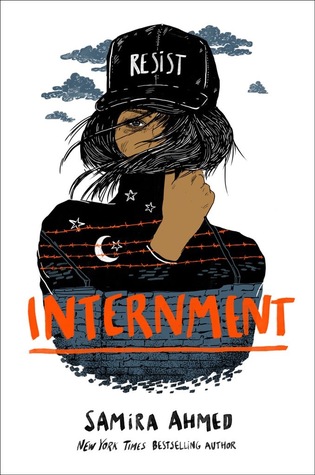
Description: Rebellions are built on hope.

Set in a horrifying near-future United States, seventeen-year-old Layla Amin and her parents are forced into an internment camp for Muslim American citizens.

With the help of newly made friends also trapped within the internment camp, her boyfriend on the outside, and an unexpected alliance, Layla begins a journey to fight for freedom, leading a revolution against the internment camp's Director and his guards.


Review: I was not a fan of Samira Ahmed's debut novel, Love, Hate, and Other Filters, which I read for last year's Ramadan Reading Challenge, but after seeing the many starred reviews for her sophomore novel I decided to give it a chance and lowered my expectations. Internment has a powerful and horrifyingly very possible premise in which in the near fifteen minutes of the future Muslim Americans have been registered and detained in internment camps because they have been labeled as a threat to the United State's security. They are sent to internment camps where their constitutional rights have been stripped and they are forced to comply.
  I had a very hard time getting into the novel as the themes of inequality, privilege, and activism among many others are very heavy handed. I had to remind myself that this novel is not written for readers who are well informed with our current politics, but those who are completely oblivious to it. With this in mind I was able to overcome my first hurdle.
   My second hurdle for this book is the weak execution of the novel that had so much potential to be better. There is  a lot of telling instead of showing in this novel. Ahmed misses the opportunity to explore several key items that could have brought the book to life such as the actual politics from both the policy makers and those protesting against the Muslim ban, tying the internment camps to the actual camps during World War II to emphasize that history is actually repeating itself, exploring the intersectionality of the Muslim community which she attempts to do but barely skims the surface, and finally, but most importantly creating an activism movement that slowly builds and brings the Muslim community together rather than having a couple of reactive teens do things haphazardly.
  I also wanted to dig in deeper to the characters. Layla is a sarcastic teen who doesn't know when to shut up and when to have an interior monologue. She constantly puts her family in danger because she throws a temper tantrum that she can't speak to her boyfriend David, which sets the novel in motion. I understand her rage and her desire to do something, but she is dangerously impulsive and naive to the point of stupidity to think that her actions do not have consequences. She does grow and show bravery towards the last half of the book, however, other characters especially the guards who oppose their commands are not explored. The teen led activism could have been stronger and inspirational like the #Neveragain movement, but it was handled sloppily. The Director is also a cartoonish villain and one dimensional. Despite my issues with this book, I do think Internment is an important read because of its premise, but I wish it read like a novel rather than an author's soapbox. 

Rating: 3 stars

Words of Caution: There is some strong language and scenes of strong physical abuse. Recommended for Grades 9 and up.

If you like this book try: When the Emperor Was Divine by Julie Otsuka
Rummanah Aasi
Description: When Huda meets Hadi, the boy she will ultimately marry, she is six years old. Both are the American-born children of Iraqi immigrants, who grew up on opposite ends of California.

Hadi considers Huda his childhood sweetheart, the first and only girl he's ever loved, but Huda needs proof that she is more than just the girl Hadi's mother has chosen for her son. She wants what the American girls have--the entertainment culture's almost singular tale of chance meetings, defying the odds, and falling in love. She wants stolen kisses, romantic dates, and a surprise proposal. As long as she has a grand love story, Huda believes no one will question if her marriage has been arranged.

But when Huda and Hadi's conservative Muslim families forbid them to go out alone before their wedding, Huda must navigate her way through the despair of unmet expectations and dashed happily-ever-after ideals. Eventually she comes to understand the toll of straddling two cultures in a marriage and the importance of reconciling what you dreamed of with the life you eventually live.


Review: First Come Marriage is a heartfelt, engaging story about culture expectations clashing with reality. Huda Al-Marashi is a Shia Iraqi American who grew up in America and with the the romantic, impractical, Americanized belief that rings and proposals and wedding-day highs laid the foundation for a loving marriage, which she encountered time after time in television and movies. These romantic notions often collided with her conservative Islamic family values. Before marriage, Al-Marashi believed that a traditional, family-sanctioned union to a boy from her same background would lay the foundation for a happy life. Her lived experience, however, requires Al-Marashi to unlearn both of sets of beliefs.She often felt that her marriage to Hadi, a childhood friend and fellow Iraqi American, did not live up to her high expectations. Hadi's lack of romantic gestures before and after her marriage was often a source of contention in their relationship. For years, she struggles to explain her marriage angst to her husband and wants him to figure it out on his own. This resentment grows to a boiling point when Hadi is accepted to medical school in Mexico, forcing Al-Marashi to move to Mexico; suspend her own graduate work; and struggle to fill large blocks of empty, lonely time. The pair is constantly fighting until the brink of divorce. By self reflection and exposing a long list of what she got wrong, including her own beliefs and the idea that her husband is an extension of herself rather than his own person, Al-Marashi finally gets to what’s right.
  I found this memoir to be an easy read. The author's high school and college experiences were highly relatable. There were many moments where I understood her frustration, having too grown-up with the rituals of attending prom (which I never did nor did I resent not attending) and wondering about a happily ever after that everyone seems to get in books, television, and movies. I wished there was a bit more insight towards the last half of the book. Regardless, I enjoyed it and read it in one sitting.

Rating: 4 stars

Words of Caution: There are brief mentions of sex and some language. Recommended for older teens and adults.

If you like this book try: Love in a Headscarf by Shelina Zahra Janmohamed
Rummanah Aasi

Description: Xiomara Batista feels unheard and unable to hide in her Harlem neighborhood. Ever since her body grew into curves, she has learned to let her fists and her fierceness do the talking. But Xiomara has plenty she wants to say, and she pours all her frustration and passion onto the pages of a leather notebook, reciting the words to herself like prayers—especially after she catches feelings for a boy in her bio class named Aman, who her family can never know about. With Mami’s determination to force her daughter to obey the laws of the church, Xiomara understands that her thoughts are best kept to herself.

So when she is invited to join her school’s slam poetry club, she doesn’t know how she could ever attend without her mami finding out, much less speak her words out loud. But still, she can’t stop thinking about performing her poems. Because in the face of a world that may not want to hear her, Xiomara refuses to be silent.


Review: Poet X is a coming-of-age story from the streets of Harlem. Xiomara Barista is a Afro-Dominican, teenage poet seeking to express herself. X has loved writing down her thoughts, but  unfortunately she doesn’t get to share them with her family, due to her mother’s strict Catholic religious upbringing. When X starts questioning her faith and realizes her brother is hiding his own secrets from their mother, she starts figuring out how she can stand up for herself and her beliefs. The novel in verse is mostly introspective as X explores other poignant themes facing girls today, such as body politics, slut shaming, unwanted attention from men, how women treat one another and subtly discusses the toxic strong black women trope.
  I liked X as a character and there are verses that stood out to me that made me pause and reflect. I did, however, felt wanting more from the book as I finished it. I wanted more of a discussion and appearance of her X's family. X's mother has a big influence on her though she is not given much page time and her father is noticeably absent. X's brother who is the opposite of her fierce and aggressive attitude and after we learn of his big secret the plot thread goes nowhere. Poet X does affirm Acevedo as a writer to watch out and I look forward to reading more from her in the future.

Rating: 4 stars

Words of Caution: There is some strong language, mention of drug usage and sex. Recommended for Grades 9 and up.


If you like this book try: Gabi, A Girl in Pieces by Isabel Quintero, The Disturbed Girl's Dictionary by NoNieqa Ramos
Rummanah Aasi

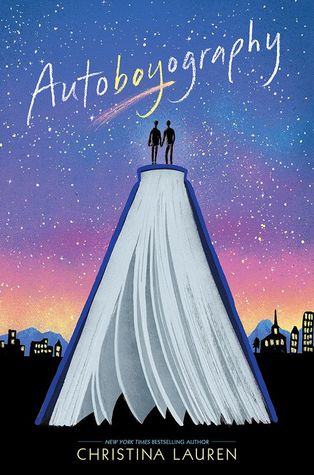
Description: Three years ago, Tanner Scott’s family relocated from California to Utah, a move that nudged the bisexual teen temporarily back into the closet. Now, with one semester of high school to go, and no obstacles between him and out-of-state college freedom, Tanner plans to coast through his remaining classes and clear out of Utah.
   But when his best friend Autumn dares him to take Provo High’s prestigious Seminar—where honor roll students diligently toil to draft a book in a semester—Tanner can’t resist going against his better judgment and having a go, if only to prove to Autumn how silly the whole thing is. Writing a book in four months sounds simple. Four months is an eternity.
  It turns out, Tanner is only partly right: four months is a long time. After all, it takes only one second for him to notice Sebastian Brother, the Mormon prodigy who sold his own Seminar novel the year before and who now mentors the class. And it takes less than a month for Tanner to fall completely in love with him.

Review: Tanner's family moved from California to Provo, Utah, where they are one of the few non-Mormon families in town. Tanner's mother left the Mormon church in college after the church refused to acknowledge and accept her lesbian sister and Tanner's father is a nonpracticing Jew. Although Tanner's family is extremely supportive of his bisexuality, they all agree Tanner should keep his sexual identity under wraps in his ultra-conservative town. With only one semester until graduation, Tanner is prepared to coast his senior year with no drama. When his best friend Autumn dares him to sign up for a seminar where students must write a book in four months, Tanner's carefree plans come to a halt when Sebastian Brothers walks into his life.
  Sebastian is mentoring the school's legendary novel writing seminar, after having his own class novel bought for publication. Tanner is wrapped up in Sebastian, but Sebastian is the son of the Mormon bishop. Sebastian slowly opens up to Tanner and through Sebastian we get to learn about the Mormon church. Lauren does a great job in not painting members of the Mormon church as one dimensional villains but as complex people with their own individual strengths and flaws. It is very tricky to discuss the conflict between sexuality and religion, but Lauren takes a balance approach. While I can not comment on how accurate the Mormon depiction is represented in the book, I do have a little clearer understanding of the religion. 
    As Sebastian begins to return Tanner's flirtation, questions arise about how far he's willing to push his faith and how satisfied Tanner can be in the shadows. The romance between Sebastian and Tanner is incredibly sweet though I wished it was not insta-love. Regardless, all of the characters are highly relatable and the plot is thoroughly engaging. There are bittersweet moments along with the happy sighs of contentment. While sexual identity and faith are important themes in Autoboyography, the book is also about family, friendship, acceptance, and being true to yourself.

Rating: 4.5 stars

Words of Caution: There is some strong language, homophobic slurs, and a fade to black sex scene. Recommended for Grades 9 and up.

If you like this book try: Georgia Peaches and Other Forbidden Fruit by Jaye Robin Brown, Aristotle and Dante Discover the Secrets of the Universe by Benjamin Alire Saenz
Rummanah Aasi

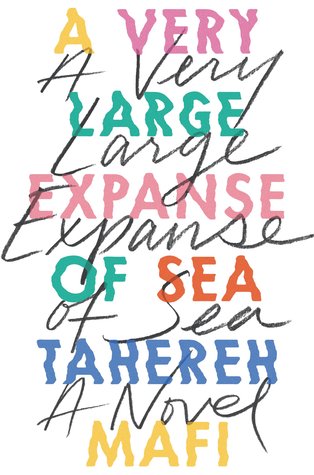
Description: It’s 2002, a year after 9/11. It’s an extremely turbulent time politically, but especially so for someone like Shirin, a sixteen-year-old Muslim girl who’s tired of being stereotyped.
  Shirin is never surprised by how horrible people can be. She’s tired of the rude stares, the degrading comments—even the physical violence—she endures as a result of her race, her religion, and the hijab she wears every day. So she’s built up protective walls and refuses to let anyone close enough to hurt her. Instead, she drowns her frustrations in music and spends her afternoons break-dancing with her brother. 
   But then she meets Ocean James. He’s the first person in forever who really seems to want to get to know Shirin. It terrifies her—they seem to come from two irreconcilable worlds—and Shirin has had her guard up for so long that she’s not sure she’ll ever be able to let it down.


Review: I have been eagerly anticipating Tahereh Mafi's latest contemporary novel centering on Islamophobia called A Very Large Expanse of Sea. A Very Large Expanse of Sea is a deeply personal read for me as a Muslim American and it mostly succeeds.
  Shirin has never settled at any school. She has been constantly moving due to her father's job being relocated. Being an Iranian Muslim who wears hijab and taking the brunt of repeated cruelty because of her hijab, has further alienated Shirin and made her extremely jaded and cynical. She has learned to protect herself from xenophobic threats and insults by being distant and guarded. She only plans to get through high school as quickly and fade into the background until she meets Ocean James, who sees more than just her headscarf and is charmingly persistent about learning who she is, from her love of music to her burgeoning skills on the break dancing team her brother starts. While Shirin is drawn to Ocean’s honesty, she is terrified of a possible future: Would a "tentative relationship" even succeed? What happens to him when he is confronted by the hate she receives? Would he stand by her at her utmost vulnerable state?
   I really liked Shirin’s sharp, crisp, and honest voice as she narrates her story. Constantly dealing with racist and Islamophobic threats has made her abrasive and standoffish. Mafi clearly demonstrates the common comments Muslims teens deal with daily. Mafi holds nothing back when she openly addresses many common misconceptions about Islam and what it means to be a woman of color in the face of racism. I admired how Shirin takes a stand on practicing her faith and makes the reader understand that it is her choice to wear the hijab. I would have loved if she discussed why she  wears the hijab as everyone has a different reason. I also enjoyed the warm and supportive relationship Shirin has with her older brother.
  My biggest issue with A Very Large Expanse of Sea is that there is a lot of telling and less of showing. For example, there is a small but important scene in which Shirin meets another Muslim girl who does not wear hijab at her school, who mentions that she is also dealing with Islamophobic comments. This would have been a wonderful opportunity to show this moment in the narrative and focus on a friendship between these two characters. I also was disappointed that we are told about Ocean instead of fleshing out his character. I did not have a good grasp on him as a character, which lead me to not really feel invested in his and Shirin's relationship.  
 A Very Large Expanse of Sea is a compelling and compulsive read. It is one of the strongest Muslim #ownvoices contemporary books that are out right now. While not every Muslim reader who picks up this book will agree with Shirin's decisions and/or actions, it will serve a mirror for many of them. While readers may be disappointed in the romance, it will certainly enlighten them. 

Rating: 4 stars

Words of Caution: There is some strong language in the book. Recommended for Grades 8 and up.

If you like this book try: The Lines We Cross by Randa Abdel-Fattah, Love, Hate, and Other Filters by Samira Ahmed
Rummanah Aasi

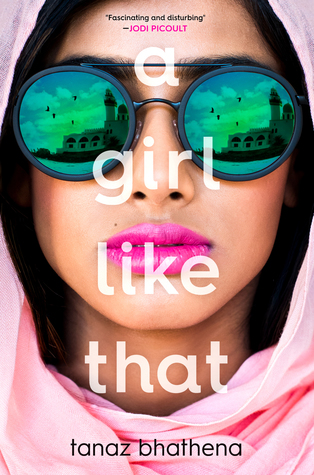
Description: Zarin Wadia is many things: a bright and vivacious student, an orphan, a risk taker. She’s also the kind of girl that parents warn their kids to stay away from: a troublemaker whose many romances are the subject of endless gossip at school. You don't want to get involved with a girl like that, they say. So how is it that eighteen-year-old Porus Dumasia has only ever had eyes for her? And how did Zarin and Porus end up dead in a car together, crashed on the side of a highway in Jeddah, Saudi Arabia? When the religious police arrive on the scene, everything everyone thought they knew about Zarin is questioned. And as her story is pieced together, told through multiple perspectives, it becomes clear that she was far more than just a girl like that.

Review: When Zarin and her friend Porus die in a car accident in Jeddah, Saudi Arabia, everyone, from the religious police to Zarin's classmates and neighbors, is suspicious. What were Porus and Zarin doing? Was Porus one of Zarin's many romantic liaisons? Only the deceased teens know the truth, and as their spirits hover above the wreckage, they look back on what led up to this point.
  Zarin has been doomed since her illegitimate birth. She is the daughter of an Indian gangster and a bar dancing "loose" Parsi mother. Her origins are a shameful secret to her family and follows her like a black cloud over her head. Raised by aunt and uncle, Zarin moves to Mumbai, India to Jeddah, Saudi Arabia for work and hopes of escaping rumors of Zarin's mother's death. In Jeddah Zarin's domineering, abusive, and paranoid aunt fears Zarin will follow the same path as her mother, keeps a tight grip on Zarin, removing all signs of physical femininity from her haircut to her clothes and shielding her from boys and men, to no avail. Zarin defies convention, dating boys and smoking, developing a bad reputation at school. It was only after reconnecting with Porus, a Parsi friend from Mumbai, whomoved to Jeddah for work, that Zarin began to reconsider her behavior—and her capacity for love.
  Bhathena's debut tackles rape culture in Saudi Arabia and for the most part does it quite well. The book addresses double standards and the gender expectations among men and women. Men are expected to demonstrate their masculinity by taking what they want and being aggressive. Women are expected to be "pure" and submissive. The narrative is split between five points of view: Zarin, Porus, Zarin's ex-boyfriend Abdullah; his righteous sister, Mishal, and Farhan, Abdullah's best friend and the popular student on whom Zarin nurses a crush. All of these points of views attempt to give the reader a multi-layered view of Zarin's reputation. Due to the numerous voices, it was hard to distinguish between the many voices and witness character development especially from Mishal and Farhan when they want to repent for their actions. The timeline between past and present jumps around and was confusing to follow.
      What I found troubling with A Girl Like That is the treatment of its Muslim characters. With the exception of the angelic Porus, the Muslim males are stereotyped and one dimensional. Abdullah follows his father's behavior of tossing one girl aside and moves on to the next when he is unable to have sex with her. Farhan takes this behavior to the extreme and uses the date rape drug to make scores on his "man card" even though he seems to be desired by virtually every female he sees. The drug dealer who supplies Farhan is also Muslim. While rape culture is unfortunately not limited to one country, due to the lack of wide range of male characters the book dangerously implies that it is limited to one group of men.
   Similarly, Muslim women are not complex characters either. Mishal is Abdullah's sister who bullies and harasses Zarin by spreading rumors about Zarin around social media and in school. The other female classmates are also bullied for their wayward actions and some are survivors of sexual assault though their stories are not talked about nor are they believed. It is also hinted at several times that Zarin's aunt suffers from mental illness but it is also not addressed in the story. Overall A Girl Like That tackles an important subject and gives the reader a lot to think about. I just wished it was more nuanced, fleshed out, and balanced. 

Rating: 3 stars

Words of Caution: The novel contains graphic descriptions of abuse and sexual assault. Recommended for Grade 10 and up.

If you like this book try: What Girls Are Made Of by Elana K. Arnold, Story of a Girl by Sara Zarr
Rummanah Aasi

Description: Nahri has never believed in magic. Certainly, she has power; on the streets of 18th century Cairo, she’s a con woman of unsurpassed talent. But she knows better than anyone that the trade she uses to get by—palm readings, zars, healings—are all tricks, sleights of hand, learned skills; a means to the delightful end of swindling Ottoman nobles.
  But when Nahri accidentally summons an equally sly, darkly mysterious djinn warrior to her side during one of her cons, she’s forced to accept that the magical world she thought only existed in childhood stories is real. For the warrior tells her a new tale: across hot, windswept sands teeming with creatures of fire, and rivers where the mythical marid sleep; past ruins of once-magnificent human metropolises, and mountains where the circling hawks are not what they seem, lies Daevabad, the legendary city of brass, a city to which Nahri is irrevocably bound.
  In that city, behind gilded brass walls laced with enchantments, behind the six gates of the six djinn tribes, old resentments are simmering. And when Nahri decides to enter this world, she learns that true power is fierce and brutal. That magic cannot shield her from the dangerous web of court politics. That even the cleverest of schemes can have deadly consequences. After all, there is a reason they say be careful what you wish for...

Review: The City of Brass is a rich Middle Eastern fantasy series opener. The story is told from two points of view. Nahri is a young con woman who lives on the streets of 18th-century Cairo. She has the unique ability to diagnose and heal diseases without any proper training and uses this talent to swindle Ottoman nobles by pretending to wield supernatural powers she doesn’t believe in. During a exorcism con gone wrong, she accidentally summons a mysterious djinn warrior named Dara, whose magic is both real and incomprehensibly powerful. Dara insists that Nahri is no longer safe and they  must travel to Daevabad, a legendary eastern city protected by impervious magical brass walls. At Daevabad Nahri is astonished to learn that she is the daughter of a legendary healer of the Nahid family, a once powerful family who ruled Daevabad until it was overthrown by the Ghassan clan who stole Suleiman’s seal, which nullifies magic. It is very surprising and suspicious when the current Ghassan king welcomes her. The second point of view belongs to Prince Ali, the king's younger son, Prince Ali, who is caught in between fealty to his father and the throne and his moral duty to help the Shafit, the lower and oppressed class of djinn who are of mixed blood of djinn and humans.
  The City of Brass is a complex, multilayered story that centers on the kingdom's deeply divisive religious, political, and racial tensions. The world building is excellent as clues are sprinkled evenly throughout the story will leaving mysteries that need to be solved. I loved the inclusion and infusion of Middle Eastern culture throughout the novel. Though Daevabad is fictional, I can see how different Middle Eastern countries and cultures have influenced it, which is credited to the author's attention to detail and her research of this geographical region. The magic and terrifying creatures used in this book feel new. I am thrilled that this story is fresh and original and not a derivative of Game of Thrones with a dash of djinns instead of dragons. My only complaint is that I wish the glossary was a bit more fleshed out particularly with the various djinn tribes whose names can be confusing at times.
 The characters are flawed, three dimensional, and enigmatic. There are many times where the characters surprised me with their actions and unveiling a part of their backstories made my opinions of them change constantly. These characters are not kept in clean boxes of good and evil. Nahri is a cunning and fiercely independent woman. Though she can hold her own in Cairo, she is very much a novice in Daevabad and has to learn how to play the court's political game in order to outwit the king who would very much want her to be his pawn. Similarly, Prince Ali is constantly questioning how Daevabad should be ruled much to the chagrin of his father who rules with an iron fist. Dara’s emerging history and personality grow more and more bewildering and ambiguous.
  The story's pace is a bit slow going as we learn along with Nahri as she journeys to Daevabad, but once she is at court the story takes off. There are a few character inconsistencies (mostly new information about the characters that appear out of nowhere without any hints or allusions) and subplots that are not flushed out as I had hoped, especially with Prince Ali's older carefree brother, but they didn't take my enjoyment away from this story. I just wanted to know more and I hope we do because there were huge reveals in the end along with a shocking cliffhanger that has me on the edge of my seat. I can not wait for book two.

Rating: 4.5 stars

Words of Caution: There is strong violence and language in the book. Recommended for teens and adults.

If you like this book try: The Kingdom of Copper (The Daevabad Trilogy #2) coming out 2019, Bloodprint by Ausma Zehanat Khan, The Dark Carvan Cycle series by Heather Demetrios, Daughter of Smoke and Bone series by Laini Taylor
Rummanah Aasi

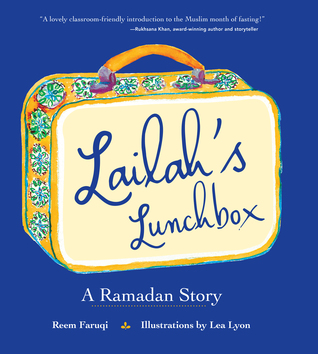
Description: Now that she is ten, Lailah is delighted that she can fast during the month of Ramadan like her family and her friends in Abu Dhabi, but finding a way to explain to her teacher and classmates in Atlanta is a challenge until she gets some good advice from the librarian, Mrs. Carman.

Review: Lailah recently moved from Abu Dhabi to Peachtree City, Georgia, and while she misses her friends back in the Middle East, she is very excited to be old enough to fast during Ramadan. Lailah is in a difficult situation. She is the new kid in school and also different from her classmates. How can she participate in Ramadan when no one in class knows what it is and what if she is the only one fasting? When her mother gives Lailah a note excusing her from lunch, Lailah hides the note when it is time to give it to her teacher Mrs. Penworth, and she has to endure the tempting smells of food and kind offers of her classmates to share lunch. After escaping to the library, the school librarian encourages Lailah to write down her feelings and share them with her teacher. After all, who knows what could come of sharing her culture?
 Lailah's Lunchbox is a story that will hit home to a lot of younger Muslims and it also reminded me of my own childhood explaining why I would not eat and drink for an entire month to my classmates and teachers in school. Lailah's is proud of her religion and culture, but is unable to express herself until a librarian advises her to explain her feelings. This picture book is a great introduction to Ramadan for both young Muslims and non-Muslims.The large, often full-page watercolor illustrations provide gentle details that add depth to the text. A note and glossary round out the story, giving context from the author's life and information about Islamic culture. A great addition to a growing number of books that educate about Islam without being preachy or heavy handed.

Rating: 4 stars

Words of Caution: None. Recommended for Grades 1-3.

If you like this book try: Moon Watchers: Shirin's Ramadan Miracle by Reza Jalali,


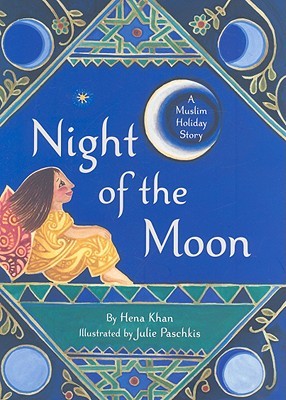
Description: Yasmeen, a seven-year-old Pakistani-American girl, celebrates the Muslim holidays of Ramadan, "The Night of the Moon" (Chaand Raat), and Eid. With lush illustrations that evoke Islamic art, this beautiful story offers a window into modern Muslim culture—and into the ancient roots from within its traditions have grown.

Review:  Yasmeen's mother points out the little sliver of the crescent moon to remind her of the beginning of a new month of Ramadan. The significance of the moon is directly correlated to the lunar Islamic calendar. As Yasmeen moves through the month and the moon changes its shape, she learns the lessons of the celebration. Night of the Moon expertly captures the spirit of observing Ramadan, the holiest month of the Islamic calendar, and celebrating Eid Al-Fitr, the festival that marks the end of Ramadan. I loved how the author weaves information about the cultural traditions of Ramadan and Eid along with Yasmeen's love of her family and growing understanding of her role in the outside world. The gentle and reflective text reflects the simple arc of the month focusing on the spirit rather than being bogged down to the minute details. The illustrations are colorful and stunning incorporating a lot of Islamic art. The Night of the Moon is a warm, lovely, educational read and highly recommended.

Rating: 4 stars

Words of Caution: None. Recommended for Grades 1-3.

If you like this book try: It's Ramadan, Curious George by Hena Khan
Related Posts with Thumbnails