Showing posts with label Culture. Show all posts
Rummanah Aasi
Description:
A memoir about food, body image, and growing up in a loving but sometimes oppressively concerned Pakistani immigrant family.

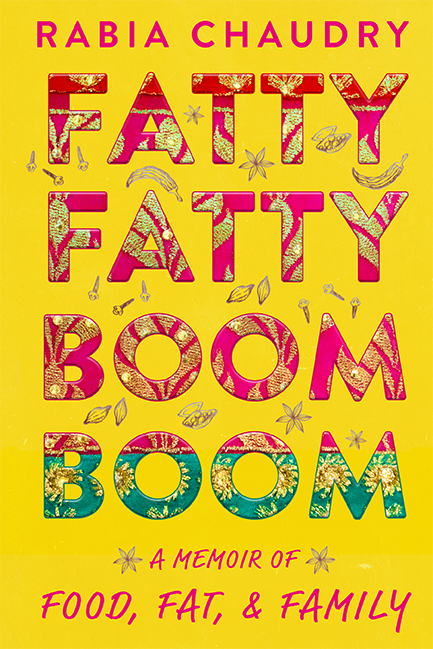
Review: Rabia Chaudry may be a familiar name to you if you follow the Undisclosed podcast or followed the Adnan Syed trial that was highlighted in the Serial podcast. In her candid and engaging memoir, she recounts how her life has been shaped and complicated by her relationship with food and culture.
   Born in Lahore, Pakistan, and raised in the U.S. by Muslim immigrant parents, Chaudry was subject to myths of American greatness and capitalism when it came to nutritional supremacy that favored processed foods (i.e. junk food, fast food restaurants, etc) as well as baby formula over breast milk. The foods that Rabia consumed reflected simultaneously high class from the lens of her Pakistani relatives, but also a low class from the lens of a U.S. viewer.  
    As Rabia grew up from a healthy chubby baby to the heaviest student in her grade, body image has always haunted her. After years of internalizing fatphobia and being told repeatedly by her family comments that her weight made her undesirable, Rabia married the first man who approached her. Unfortunately, this was not a healthy relationship as she endured an abusive husband and suffered years of disordered eating. 
   Rabia does go on a journey of self healing seeking therapy and constructs a healthy relationship with food, and spends time with relatives who support rather than shame her, becomes a turning point. The goal turns from being thin to one of being healthy. She wonders where she walks on the side of body positivity, fat acceptance, and weight loss. Overall, I really enjoyed her candidness and critique of Pakistani culture when it comes to body image which not only entails weight but also colorism and beauty standards. I applaud this realistic story of self acceptance. I also enjoyed looking at the various recipes that are found at the back of the book. 

Rating: 4 stars

Words of Caution: There are scenes of fatphobia, disordered eating, colorism, and domestic abuse. 

If you like this book try: Shrill by Lindsey West, Hunger by Roxane Gay, Heavy by Kiese Laymon
Rummanah Aasi
Description:
 Living in a new country is no walk in the park―Nao, Hyejung, and Tina can all attest to that. The three of them became fast friends through living together in the Himawari House in Tokyo and attending the same Japanese cram school. Nao came to Japan to reconnect with her Japanese heritage, while Hyejung and Tina came to find freedom and their own paths. Though each of them has her own motivations and challenges, they all deal with language barriers, being a fish out of water, self discovery, love, and family.

Review: Himawari House is a slice of life graphic novel that I absolutely adored. The premise of the graphic novel is very simple: The Himawari House is a shared house in Tokyo and we follow the lives of its residents as they live abroad. The graphic novel itself, however, is anything but simple. This is a character driven graphic novel and each section devotes its page time to one of the female characters.
    Nao, is a biracial Japanese American teenager (her mother is Japanese and her father is white), arrives in Tokyo for a gap year. While growing up in America, Nao has slowly rejected her Japanese heritage. She forgets the language and presses her mother to speak English. She stops bringing Japanese food for lunch in a bento box because her classmates loudly complain that it is too smelly and weird. Now Nao is hoping that her gap year will allow her to reconnect with her heritage.
 As Nao arrives at Himawari House, she quickly befriends her female roommates Tina, who is Chinese Singaporean, and homesick Hyejung, who is Korean and her two male Japanese roommates, Shinichi and Masaki, who are brothers. Like Nao, Tina and Hyejung are also trying to learn Japanese and on a larger scale, come to Japan to make sense of their lives. 
   Tina is very energetic yet she struggles to study and pass her Japanese classes, mainly because she spends most of her time trying to pay for the school's tuition by working. Hyejung came to Japan to find herself as she made the first active decision in her life. She was tired of pleasing her parents, broke up with an uncaring lover, and needed to start over. Hyejung struggles with balancing her own desires and the desires of her parents who she has been estranged from for a year.
  As we spend time with these friends, we learn about the Japanese life and culture-combini, izakaya, obaachans, cherry blossoms, and matsuri. I found learning about Japanese culture to be utterly fascinating. What really touched my heart, however, is Becker's focus on language and identity. Interestingly, the speech bubbles are written with Japanese characters and subtitled English underneath. Not all words, however, are translated, which heightens the disconnect the characters have while learning the Japanese language.  There are countless intersecting modes of communication even within Nao's social circle: Tina's Singlish, Hyejung's thickly accented English are not created to make fun of the characters, but call to attention on accents and their paths to Japanese acquisition. Nao often wonders if she can label herself Japanese even when she can't speak the language fluently or has correct Japanese grammar (I also struggle with the same question as my Urdu is not fluent and my grammar is atrocious). I also loved the contrast of Masaki's fluent written but poorly spoken English against those of the girls. Masaki is constantly mistaken for being rude or arrogant because he does not interact with his other roommates, but his aloofness is due to his self consciousness of speaking English.  
  I fell in love with these enduring characters instantly and it was very hard to say goodbye as I finished the book. I only wished that we got an epilogue. I also wanted to know more about the brothers too. If you love stories of character growth, self discovery, and friendship then I highly recommend picking up this graphic novel. 

Rating: 4.5 stars

Words of Caution: There is some scenes of casual racism from Nao's American classmates, some panels suggest sexual situations but nothing graphic is seen on page, Tina is harassed at her waitress job and there is drinking. Recommended for Grades 9 and up.   

If you like this book try: The Dischantments by Nina LaCour, Loveboat, Taipei by Abigail Hing Wen
Rummanah Aasi
Description:
 As the only Indian American kid in her small town, Lekha Divekar feels like she has two versions of herself: Home Lekha, who loves watching Bollywood movies and eating Indian food, and School Lekha, who pins her hair over her bindi birthmark and avoids confrontation at all costs, especially when someone teases her for being Indian.
    When a girl Lekha’s age moves in across the street, Lekha is excited to hear that her name is Avantika and she’s Desi, too! Finally, there will be someone else around who gets it. But as soon as Avantika speaks, Lekha realizes she has an accent. She’s new to this country, and not at all like Lekha. To Lekha’s surprise, Avantika does not feel the same way as Lekha about having two separate lives or about the bullying at school. Avantika doesn’t take the bullying quietly. And she proudly displays her culture no matter where she is: at home or at school.
    When a racist incident rocks Lekha’s community, Lekha realizes she must make a choice: continue to remain silent or find her voice before it’s too late.

Review: Like many first generation immigrants, Indian American Lekha is having trouble with navigating her two worlds. Lehka's family is the only Indian American family in her predominantly white suburb of Detroit. She is comfortable in expressing her Indian culture and flavorful foods at home. When she is at school, however, she tries her best to fade in the background and silence her voice as her classmates mock her for her bindi shaped-birthmark on her forehead. She allows teachers and students to mispronounce her name and to make disrespectful comments about her heritage. Lekha knows she should speak out but wouldn't that just make the situation worse?
  When a new Indian American family-with a daughter Lehka's age-moves to her neighborhood, she is thrilled, assuming that her new friend Avantika will also struggle like Lekha, but Avantika confidently talks about her family and traditions at school and fights back against microaggressions. Lehka is simultaneously inspired and confused. As she begins taking tentative steps toward speaking up about what matters to her, a classroom assignment to write an opinion piece becomes the catalyst for embracing her identity. 
  I could relate a lot to both Lekha's and Avantika's characters. The safety in being invisible is real and strong. Sadly, that's how I acted in my predominately white high school. What is most distressing is that I acted subconsciously and started with the best things such as clothes and music. It took me a while to reach Avantika's confidence but I am still working on it. There are two scenes that really hit me hard in the book such as downplaying a holiday that should be celebrated and decorating for the holiday. Lekha pleads with her parents to not put up a swastika (which in India represents prosperity, well being, and good luck) and on their family door for Diwali in fears of it being misinterpreted as a Nazi symbol. Both of these scenes highlight what it feels like to the "other" and having to feel that you can only choose one side (assimilation) and not both. I also appreciated that Avantika is not perfect. She also has her struggle in confronting colorism by using skin bleach cream to lighten her skin and standing up to her mother. I wish this was also explored more and we see Avantika use her own voice to speak out against internalized racism. 
 Despite these issues, American as Paneer Pie is a good book club pick where students can talk about race/ethnicity, microaggressions, and assimilation. Things do not wrap up in a bow at the end, but Lekha is starting to use her voice and stand up for herself.
 
Rating: 4 stars

Words of Caution: There is some bullying and microaggressions present in the book. There is also a racist incident in the book. Recommended for Grades 4 and up.

If you like this book try: Amina's Voice by Hena Khan, A Place at the Table by Saadia Faruqi and Laura Shovan
Rummanah Aasi
Description: Estefania "Stef" Soto is itching to shake off the onion-and-cilantro embrace of Tia Perla, her family's taco truck. She wants nothing more than for her dad to get a normal job and for Tia Perla to be put out to pasture. It's no fun being known as the "Taco Queen" at school. But just when it looks like Stef is going to get exactly what she wants, and her family's livelihood is threatened, she will have to become the truck's unlikely champion.


Review: Stef Soto, Taco Queen is a delightful quick read that will make you hungry as well as warm you up. Estefania “Stef” Soto is the daughter of hardworking, rule-abiding Mexican-American parents; she is a skilled artist, but at school she’s best-known for Tía Perla, their family food truck. When not stationed at parks or convenience stores, Papi can be found driving it to and from school to chauffeur Stef, which humiliates her. Stef is an only child who speaks Spanish at home and finds herself translating for her dad from time to time. Stef yearns for independence like being home alone and having a cell phone, but her parents argue that she is not old enough. She is aware that her parents work extremely hard. For Papi Tía Perla is his pride and joy, a symbol of his hard work and their American Dream. Mami works evenings as a cashier at the open-all-night grocery store. 
  The book moves from an ordinary middle grade novel into a story with more depth and meaning. The depletion of art-class supplies in art class leads to a student-driven fundraiser. A new city-government rule threatens the family's food-truck business. Both of these plot-lines allow Stef to use her voice and stand up for important issues. Woven through the story are Spanish words and phrases, which gives the book its authenticity and nod to the Mexican culture. There is also diversity among the other characters too. I couldn't help but cheer for Stef Soto, her family, and Tía Perla. The book is so short and I wanted to spend more time with the characters. Just a friendly warning, don't read this book if you're hungry. 

 Rating: 4 stars

 Words of Caution: None. Recommended for Grades 3 and up.

 If you like this book try: The Epic Fail of Arturo Zamora by Pablo Cartaya, The First Rule of Punk by Cecila C. Perez
Rummanah Aasi
Description:
 There was and there was not, as all stories begin, a princess cursed to be poisonous to the touch. But for Soraya, who has lived her life hidden away, apart from her family, safe only in her gardens, it’s not just a story.

As the day of her twin brother’s wedding approaches, Soraya must decide if she’s willing to step outside of the shadows for the first time. Below in the dungeon is a demon who holds knowledge that she craves, the answer to her freedom. And above is a young man who isn’t afraid of her, whose eyes linger not with fear, but with an understanding of who she is beneath the poison.

Soraya thought she knew her place in the world, but when her choices lead to consequences she never imagined, she begins to question who she is and who she is becoming human or demon. Princess or monster.

Review:  Combining Persian mythology, Zoroastrianism, and using the framework of "Sleeping Beauty", 
Bashardoust has created a feminist, queer fairy tale retelling of her own. For two centuries, the ancestors of the shah of Atashar have ruled under the protection of the legendary magical bird, the simorgh. The simorgh has not been seen for many years, the nobility is losing faith in the young shah, and attacks by monstrous divs are becoming ever more organized. Soraya, the shah’s twin sister, carries poison in her veins and lives, hidden in the shadows of the palace garden. Soraya's poison is lethal and with the slightest touch she can kill any living being. She longs for companionship and a normal life, but feels a growing urge to hurt and kill and has nightmares of transforming into a div. When a handsome young soldier named Azad captures a parik, a female demon who attacks the shah, Soraya finds herself increasingly attracted to both man and monster. The parik may hold Soraya's answer on how to lift her curse, but it will not be easy. Azad eagerly offers help, but can Soraya trust him and will she be willing to betray her family to free herself? 
  Girl, Serpent, Thorn is a slow burn story with a mesmerizing world building steeped in Persian culture. The focus of the story is on Soraya's personal growth and her morally complex quest for identity, asking what she wants of herself rather than what society asks of her. Her character arc is exciting to witness. Soraya is flawed, insecure, and vulnerable but we can understand her position and the predicaments in which she finds herself. I very much appreciated that Soraya is not the only strong female character in the story, but her support is also from strong female allies and secondary characters. Although the romance is present in the story, it is subdued. I wish Soraya's biromantic feelings were a bit more fleshed out. The ending is a bit stretched out, but satisfyingly complete. There are some predictable turns in the plot, but one twist did in fact take me by surprise. Readers looking for more diverse fantasy standalone reads might want to pick this one up. 

Rating: 4 stars

Words of Caution: There is some strong violence. Recommended for Grades 8 and up.

If you like this book try: A Thousand Nights by E.K. Johnston, Red Hood by Elana Arnold, Damsel by Elana Arnold 
Rummanah Aasi
Description:
 Paloma Marquez is traveling to Mexico City, birthplace of her deceased father, for the very first time. She's hoping that spending time in Mexico will help her unlock memories of the too-brief time they spent together. While in Mexico, Paloma meets Lizzie and Gael, who present her with an irresistible challenge: The siblings want her to help them find a valuable ring that once belonged to beloved Mexican artist Frida Kahlo. Finding the ring means a big reward -- and the thanks of all Mexico. What better way to honor her father than returning a priceless piece of jewelry that once belonged to his favorite artist!

Review: Paloma Marquez is a biracial (Mexican and white) twelve year old girl from Kansas City, Kansas. When her mother is given the opportunity to do a fellowship in Mexico, Paloma isn't too thrilled about spending her vacation in Mexico, but she hopes this trip will connect her to her deceased father, whom she has no memories of, and to reconnect with her Mexican heritage during her first trip to his homeland. While staying in the Coyoacán neighborhood of Mexico City, Paloma explores Casa Azul, artist Frida Kahlo’s childhood home–turned-museum, and instantly becomes a fan of Frida’s artwork. Paloma is supposed to take Spanish classes and art history classes, but there’s a mystery unfolding in Casa Azul. Kahlo’s peacock ring is missing, and it is imperative that Paloma and her new friends, local siblings Gael and Lizzie, find it before it is too late. But Gael and Lizzie, who pose as Paloma’s Spanish tutors from the university, are not who they seem and they might have an agenda of their own. 
  Me, Frida, and the Secret of the Peacock Ring is a fun blend of mystery and art. Though the mystery is not overly intricate and complex, it is engaging. The inclusion of Spanish words adds depth to the story and highlights the rich Mexican culture. Readers who are unfamiliar with Spanish will not feel lost since translations and context clues follow the words. Hand this to budding fans of mystery, especially those looking for diverse detectives. 

Curriculum Connection: Art, History/Culture, and World Language

Rating: 4 stars

Words of Caution: None. Recommended for Grades 4 and up.

If you like this book try: Chasing Vermeer by Blue Balliett, 
Rummanah Aasi
Description:
 In this deeply inspiring book, Winona Guo and Priya Vulchi recount their experiences talking to people from all walks of life about race and identity on a cross-country tour of America. Spurred by the realization that they had nearly completed high school without hearing any substantive discussion about racism in school, the two young women deferred college admission for a year to collect first-person accounts of how racism plays out in this country every day--and often in unexpected ways.

Review: Tell Me Who You Are is a travelogue with an equity and social justice lens written in a format very similar to the Humans of New York project. The collection is inspiring, jarring, and eye opening, but written in a very approachable and readable format. Before starting college, the young authors Winona Guo and Priya Vulchi spent a gap year traveling across the country asking one hundred and fifty people the same question: “How has race, culture, or intersectionality impacted your life?” Intersectionality means the overlapping parts of one's identity which includes their race, class, gender, sexuality, religion, ethnicity, nationality, ability, age, and physical appearance. Each response includes the interviewee's picture along with their answer and an eloquent, insightful commentary from the authors as well as footnotes and definitions that will help the reader understand the context of the interviewee's response. The book covers a wide range of responses from those who have dealt with some type of ostracism from society due to that individual's identity. Some of the eye-opening chapters include individuals who genuinely believe racism does not exist and those who encountered virulent racism. Another revealing chapter is a Japanese woman who recanted her family's experience in living at an internment camp and accepting that was the way of their life instead of challenging or fighting it. I also very much appreciated the numerous voices of indigenous people's who are often forgotten and ignored.
     An introduction informs the reader that the authors embarked on their own journey learning and talking about race from their own personal struggles with racism. Both authors had founded CHOOSE (princetonchoose.org) “as a platform for racial literacy,” on which they shared stories from interviewees in the Princeton area; they had spoken at schools; and they had given a TED talk. Their yearlong investigation deepened and widened their perspective. The book's back matter is also important and it includes additional resources and ten conversational norms to help the reader navigate an open and honest conversation. Talking about race, culture, and identity is hard and very uncomfortable for everyone. We have to lean into the discomfort and talk openly, honestly about the United State's systemic racism if we want to see social change. If you are looking for a read that touches upon race and intersectionality, but do not have a lot of time to do a deep dive-in read definitely check out Tell Me Who You Are

Rating: 4 stars

Words of Caution: There is some strong language including racial and homophobic slurs. Recommended for teens and adults.

If you like this book try: American Like Me edited by America Ferrera,  The Good Immigrant by Nikesh Shukla
Rummanah Aasi
Description:
Camino Rios lives for the summers when her father visits her in the Dominican Republic. But this time, on the day when his plane is supposed to land, Camino arrives at the airport to see crowds of crying people. In New York City, Yahaira Rios is called to the principal’s office, where her mother is waiting to tell her that her father, her hero, has died in a plane crash.
    Separated by distance—and Papi’s secrets—the two girls are forced to face a new reality in which their father is dead and their lives are forever altered. And then, when it seems like they’ve lost everything of their father, they learn of each other.

Review: Clap When You Land grapples with family secrets, toxic masculinity, and grief among its many themes. The book is in verse and written from alternating perspectives of Camino and Yahaira. In clear and distinct voices we are introduced to both young women who are very different but they have one thing in common: their father. 
    Camino Rios lives in the Dominican Republic and yearns to go to Columbia University in New York City, where her father works most of the year. She works as her curandera aunt's assistant who helps those with medical issues and can not afford hospital expenses. Camino is a well aware that her future is limited in the Dominican Republic and had high hopes that her father would sponsor her to come to the United States. 
    Yahaira Rios lives in Morningside Heights and idolizes her father. She is a chess champion, a game her father had taught her and a metaphor for how Yahaira must act in order to successfully navigate the world. She has not spoken to her father since the previous summer, when she found out he has another wife in the Dominican Republic. Camino and Yahaira do not know of each other's existence and their lives collide when their father dies in an airplane crash with hundreds of other passengers heading to the Dominican Republic. 
  Camino and Yahaira grieve the tragic death of their vibrant father, which also coming to terms with a complex and messy family, which he has kept a secret for almost twenty years. Both girls express the limitations they have when it comes to socio-economic privileges. Interestingly, both girls struggle to confront and defend themselves against toxic masculinity. Camino is stalked like a prey by a local pimp who is waiting for the desperate moment to 'save' her and sell her as a profit. Yahaira also has no control of her body when a stranger sexually molests her on a public train. Acevedo brings their fear, terror, and anger into sharp, clear prose. Though absent in the story, the half sisters' father is three dimensional and flawed but well loved. 
  Some readers have mentioned that it was hard separating Camino and Yahaira's chapters, but I had no such problem. Both girls live in very different environments and have very different upbringings. Camino's verses flows like water using many Spanish words that do not interfere with the rhythm. Yahaira's section is much more urgent with more breaks and spaces to indicate her thought and emotional processes as if she is playing a game of chess. 
  There are two poems that I loved in this book that really struck a chord with me. The first poem is about gender expectations of Yahaira's parents on how she should behave. This poem highlights the dichotomy that girls continue to struggle with today. The second poem is claiming a nationality that you feel in your soul and in your bones though the land may not claim you because you are not native to it.
 Clap When You Land is my favorite Elizabeth Acevedo book thus far. It is emotional, raw, honest, and a must read.

Rating: 4.5 stars

Words of Caution: There is some strong language, a scene of attempted sexual assault, and a scene of groping on a public train. Recommended for Grades 8 and up.

If you like this book try: Turtle Under Ice by Juleah Del Rosario, Untwine by Edwidge Danticat, Under the Mesquite by Guadalupe Garcia McCall 
Rummanah Aasi
Description: Emilia Torres has a wandering mind. It's hard for her to follow along at school, and sometimes she forgets to do what her mom or abuela asks. But she remembers what matters: a time when her family was whole and home made sense. When Dad returns from deployment, Emilia expects that her life will get back to normal. Instead, it unravels.
   Dad shuts himself in the back stall of their family's auto shop to work on an old car. Emilia peeks in on him daily, mesmerized by his welder. One day, Dad calls Emilia over. Then, he teaches her how to weld. And over time, flickers of her old dad reappear. But as Emilia finds a way to repair the relationship with her father at home, her community ruptures with some of her classmates, like her best friend, Gus, at the center of the conflict.

Review:  I have enjoyed every book by Pablo Cartaya thus far and Each Tiny Spark is no exception. This time Cartaya has been inspired by his own daughter and created a story that centers around a young Latinx girl named Emilia Rosa Torres. Emilia has inattentive type ADHD, which causes her trouble in keeping up with schoolwork and concentrating on one thing at a time, but her software-developer mother and super involved abuelita help her keep on task. Days before her father’s return to their Atlanta suburb from his most recent deployment, her mother goes on a business trip, leaving Emilia with her distant father and her abuela to take care of her. She struggles to juggle and understand her father's mood swings, her friend troubles, and her looming assignments all on her own. When a social studies project which debates whether or not students from a poor school be allowed to go to her school opens Emilia's eyes to injustices past and present, Emilia begins to find her voice and use it to make an impact on her community.
  Each Tiny Spark tackles tough subjects such as immigration, PTSD, and microaggressions sensitively and appropriately through the lens of a budding tinkerer and activist. Conversations on race and gender crop up through the narrative as Emilia’s grandmother likes to emphasize her family’s European heritage while her mother insists of celebrating her culture's Yoruba's roots. All of these larger issues are effortlessly woven in with skill and humor, as is the Spanish her family easily mixes with English. Emilia often doesn't understand the complex questions that surround her, but she asks insightful questions which is important for young readers to understand. This is another great realistic fiction book from Cartaya that will spark discussion, help build empathy, and offer a lot of food for thought after the last page.

Rating: 4 stars

Words of Caution: None. Recommended for Grades 4 and up.

If you like this book try: Fish in a Tree by Lynda Mullaly Hunt, Merci Suárez Changes Gears by Meg Medina
Rummanah Aasi

Description: When a school presentation goes very wrong, Alaine Beauparlant finds herself suspended, shipped off to Haiti and writing the report of a lifetime. You might ask the obvious question: What do I, a seventeen-year-old Haitian American from Miami with way too little life experience, have to say about anything? Actually, a lot.

Thanks to "the incident" (don't ask), I'm spending the next two months doing what my school is calling a "spring volunteer immersion project." It's definitely no vacation. I'm toiling away under the ever-watchful eyes of Tati Estelle at her new nonprofit. And my lean-in queen of a mother is even here to make sure I do things right. Or she might just be lying low to dodge the media sharks after a much more public incident of her own...and to hide a rather devastating secret.

All things considered, there are some pretty nice perks...like flirting with Tati's distractedly cute intern, getting actual face time with my mom and experiencing Haiti for the first time. I'm even exploring my family's history--which happens to be loaded with betrayals, superstitions and possibly even a family curse. You know, typical drama. But it's nothing I can't handle.

Review: Alaine Beauparlant is an ambitious, driven Haitian American senior living in Miami with her divorced psychiatrist father. Alaine has her sights set on following the footsteps of her renowned journalist mother by majoring in journalism at Columbia. With mere months to go before graduation, Alaine’s world starts unraveling as mother has a meltdown live on-air and becomes the talk of the town. To make things even worse, Alaine royally messes up a school presentation that leave her on the verge of expulsion. Alaine 's punishment is to go to Haiti for two months, volunteer to work for her aunt's charity that provides financial help to Haitian children in need, and write a report about what she has learned. Alaine wants to go to Haiti to learn more about her own roots, but would rather it be on her own terms. During her time in Haiti, Alaine’s life is transformed as she unearths family histories and secrets that allow her to get to know the ailing mother, who has been absent from a large part of her life.  In the process, she discovers an even deeper love for the ancestral homeland that she had only known from afar.
   I really liked Alaine as a character. She is incredibly sharp and witty, but under her tough exterior she really wants a normal, healthy relationship with her mother. Alaine admires her mother's tenacity and hard work that led her to be a leading news anchor for a popular politics show, but at the same time Alaine feels as if she is always on the low priority list for her mother. When she receives heartbreaking news about her mother's health, Alaine hopes to use her time to not resent her mother but to get to know her as a person.
  Before Dear Haiti, Love Alaine I did not know much about the Haitian culture, but I learned a lot from reading this book. The book addresses the fact that Haiti is one of the poorest countries in the Western Hemisphere, but also demystifies some of the common untruths about the country. I appreciated Alaine becoming aware of her own privileges as she meets other people in Haiti. I also found Alaine's dark family history to be a fascinating part of this book and I really liked how the authors used the concept of a family curse as a way to infuse a light thread of magical realism into this otherwise realistic fiction book.
  The book has a nice balance between humor and seriousness. The varied formats, such as emails, texts, and letters, add interest and serve to make the story feel modern and make Alaine's voice seem more intimate. The various formats did not disrupt the follow of the book, but rather kept the plot moving at a brisk pace. Dear Haiti, Love Alaine is a delightful story of family and finding one's roots.

Rating: 4 stars

Words of Caution: There is some strong language, allusions to rape and sex, and underage drinking. Recommended for Grades 9 and up.

If you like this book try: Love from A to Z by S.K. Ali, American Street by Ibi Zoboi
Rummanah Aasi

Description: It begins with a mystery. Sylvie, the beautiful, brilliant, successful older daughter of the Lee family, flies to the Netherlands for one final visit with her dying grandmother--and then vanishes.
Amy, the sheltered baby of the Lee family, is too young to remember a time when her parents were newly immigrated and too poor to keep Sylvie. Seven years older, Sylvie was raised by a distant relative in a faraway, foreign place, and didn't rejoin her family in America until age nine. Timid and shy, Amy has always looked up to her sister, the fierce and fearless protector who showered her with unconditional love.
But what happened to Sylvie? Amy and her parents are distraught and desperate for answers. Sylvie has always looked out for them. Now, it's Amy's turn to help. Terrified yet determined, Amy retraces her sister's movements, flying to the last place Sylvie was seen. But instead of simple answers, she discovers something much more valuable: the truth. Sylvie, the golden girl, kept painful secrets . . . secrets that will reveal more about Amy's complicated family--and herself--than she ever could have imagined.

Review: Amy Lee is living in her parents’ cramped Queens apartment when she gets a frantic call from Lukas Tan, the Dutch second cousin she’s never met. Her successful older sister, Sylvie, who had flown to the Netherlands to see their ailing grandmother, is missing. Amy, the sheltered and favored sister, must put aside her own short comings as she looks into Sylvie’s disappearance. As Amy digs deeper she uncovers Sylvie's secrets such as separation from her husband and her unemployment at a prestigious law firm. And when Amy finally musters up the courage to travel to the Netherlands for the first time, why do her relatives—the Tan family, including Lukas and his parents, Helena and Willem—act so strangely whenever Sylvie is brought up?
  Amy’s search is interlaced with chapters from Sylvie’s point of view from a month earlier as she returns to the Netherlands, where she had been sent as a baby by parents who couldn't afford to keep her, to be raised by the Tans. There are also chapters written from Amy's and Sylvie's Mother's point of view which adds a layer of suspense to the story. As Amy navigates fraught police visits and her own rising fears, she gradually uncovers the family’s deepest secrets, some of them decades old.
  Unfortunately, I did not find this story very compelling as a whole. I can see what the author was trying to do in pitting two sisters who grew up in two different environments to show how race, family, and culture played in their lives. I, however, skimmed most of Amy's point of view because she was not an interesting character to me. The book really shines with Sylvie's chapters are we got to see how immigrants, particularly the Chinese, were treated in Netherlands, which unfortunately is no different than their treatment in the U.S. Sylvie's character is much more three dimensional and I would have loved this book more if it was solely written from her point of view. The Ma, Amy's and Sylvie's mother, chapters did not add much besides more soap opera melodrama. The mystery was a bit underwhelming since I figured it out before Amy. I had hoped for more introspection and less melodrama in this story.

Rating: 3 stars

Words of Caution: There is some language and allusions to statutory rape and domestic violence. Recommended for older teens and adults.

If you like this book try: Everything I Never Told You by Celeste Ng
Rummanah Aasi

Description: Ayesha Shamsi has a lot going on. Her dreams of being a poet have been set aside for a teaching job so she can pay off her debts to her wealthy uncle. She lives with her boisterous Muslim family and is always being reminded that her flighty younger cousin, Hafsa, is close to rejecting her one hundredth marriage proposal. Though Ayesha is lonely, she doesn’t want an arranged marriage. Then she meets Khalid who is just as smart and handsome as he is conservative and judgmental. She is irritatingly attracted to someone who looks down on her choices and dresses like he belongs in the seventh century.
When a surprise engagement between Khalid and Hafsa is announced, Ayesha is torn between how she feels about the straightforward Khalid and his family; and the truth she realizes about herself. But Khalid is also wrestling with what he believes and what he wants. And he just can’t get this beautiful, outspoken woman out of his mind.

Review: Ayesha at Last has been pitched as a Muslim Pride and Prejudice retelling, but I would describe it as an homage to the Jane Austen classic featuring Muslim characters set in Toronto, Canada. Smart, witty, and aspiring poet Ayesha Shamsi juggles her dreams and the stifling expectations of her tight-knit Toronto's Indian-Muslim community. Instead of pursuing her artistic passion, she picks a practical career as a high school teacher in order to pay back her financial loans to her uncle and watches as her flighty younger cousin, Hafsa, collects marriage proposals like trading cards. Ayesha is the non-desirable type as she is an outspoken feminist, and ancient according to the desi marriage clock.
  After a misunderstanding, Ayesha pretends to be Hafsa while planning a youth conference, where she is required to collaborate with conservative Khalid, a newcomer to the area. Ayesha pegs Khalid as rigid and judgmental on their first meeting because of his white robes, long beard, and ultra-conservative behavior. She doesn't object to arranged marriages, but believes compatibility is important, and she scorns Khalid's complacency with accepting his mother's choice of bride. Khalid pegs Ayesha as those types of Muslims who appear devout but goes to bars and interacts with men. The clash of these two opposing viewpoints on how to practice their religion is a constant tension between Khalid and Ayesha. As Ayesha and Khalid work on the conference together, Khalid learns to accommodate different viewpoints. 
  Family loyalty and reputation are a recurring theme throughout the novel. Khalid is overly reliant on his mother and completely passive about his future so long as it appeases his mother as his family's reputation was rocked by his rebellious sister Zareena. Ayesha is trapped between being loyal to uncle and aunt while being a pushover to her spoiled and immature cousin. I loved this book for its candid yet critical view of the social pressures facing young Muslims as well as the universal question of "What makes a good and bad Muslim?" which all Muslims ask themselves. I appreciated the author's inclusion of Muslims of a wide faith range from the devout to the secular as they are without figure pointing of what they should be. There are plenty of laugh out loud moments, mostly at the cost of Khalid's comment in not getting with the 21st century and abundant cultural references, which elevates Ayesha at Last beyond just another Austen adaptation/retelling. Along with witty social critique there are other serious issues that the author does not shy away from such as workplace discrimination, alcoholism, and abortion. I did, however, think the ending was a bit rushed and I selfishly wanted an epilogue, but this is one of my favorite books that I have read this summer and I highly recommend it.

Rating: 4.5 stars

Words of Caution: A pornography website featuring younger age girls is mentioned in the book along with crude humor, mentions of drugs and alcohol, and language. Recommended for Grades 10 and up.

If you like this book try: Pride, prejudice, and other flavors by Sonali Dev
Rummanah Aasi
Description: Rosa Santos is cursed by the sea-at least, that's what they say. Dating her is bad news, especially if you're a boy with a boat. But Rosa feels more caught than cursed. Caught between cultures and choices. Between her abuela, a beloved healer and pillar of their community, and her mother, an artist who crashes in and out of her life like a hurricane. Between Port Coral, the quirky South Florida town they call home, and Cuba, the island her abuela refuses to talk about.
   As her college decision looms, Rosa collides - literally - with Alex Aquino, the mysterious boy with tattoos of the ocean whose family owns the marina. With her heart, her family, and her future on the line, can Rosa break a curse and find her place beyond the horizon?

Review: Given the cover and the title, I expected Don't Date Rosa Santos to be your basic summery romantic comedy, but I was delightfully surprised to learn the story is so much more. Rosa Santos is Cuban American and has Cuba in her blood. Living in a seaside community in Southern Florida with her abuela, she knows only part of the family stories that tie her to Cuba where her ancestors lived, but not the actual country. Now that she is on her way to start college, Rosa's desire to learn more about her family roots, culture, and to Cuba has grown stronger and a source of tension between her mother and her grandmother. Both her mother and grandmother have experienced tragedies related to the sea, and they caution Rosa to stay away from the water at all costs.
  I adored Rosa who is a driven young woman with a set of plans. It was so refreshing to see her complete high school and attend community college to set her sights further. I loved how she had a plan set forth for her future as well as saving her local community  of a wide range of Latinx cultures from commercial builders. Most children of immigrants will see themselves in Rosa as wants to learn more about her roots. The relationship Rosa had with her mother, an artist who abandoned Rosa to travel the country, returns intermittently, and her abuela is complex and fascinating as each faced their own fears. The romance between Rosa and Alex, an attractive sailor who works by the docks, is incredibly sweet but it does not overwhelm the story. It was so nice to see that Alex is not the stereotypical Latinx male figure, but incredibly charming, sweet, and has a great knack for cooking. Don't Date Rosa Santos is a solid, own voices book in which the Latinx culture is celebrated and infused into a realistic fiction novel and the classic coming of age story. I love forward to reading more from this author.

Rating: 4 stars

Words of Caution: There is some minor language and scenes of underage drinking. Recommended for Grades 8 and up.

If you like this book try: The Universal Laws of Marco by Carmen Rodriguez
Related Posts with Thumbnails