Showing posts with label Marriage. Show all posts
Rummanah Aasi

Description: Ayesha Shamsi has a lot going on. Her dreams of being a poet have been set aside for a teaching job so she can pay off her debts to her wealthy uncle. She lives with her boisterous Muslim family and is always being reminded that her flighty younger cousin, Hafsa, is close to rejecting her one hundredth marriage proposal. Though Ayesha is lonely, she doesn’t want an arranged marriage. Then she meets Khalid who is just as smart and handsome as he is conservative and judgmental. She is irritatingly attracted to someone who looks down on her choices and dresses like he belongs in the seventh century.
When a surprise engagement between Khalid and Hafsa is announced, Ayesha is torn between how she feels about the straightforward Khalid and his family; and the truth she realizes about herself. But Khalid is also wrestling with what he believes and what he wants. And he just can’t get this beautiful, outspoken woman out of his mind.

Review: Ayesha at Last has been pitched as a Muslim Pride and Prejudice retelling, but I would describe it as an homage to the Jane Austen classic featuring Muslim characters set in Toronto, Canada. Smart, witty, and aspiring poet Ayesha Shamsi juggles her dreams and the stifling expectations of her tight-knit Toronto's Indian-Muslim community. Instead of pursuing her artistic passion, she picks a practical career as a high school teacher in order to pay back her financial loans to her uncle and watches as her flighty younger cousin, Hafsa, collects marriage proposals like trading cards. Ayesha is the non-desirable type as she is an outspoken feminist, and ancient according to the desi marriage clock.
  After a misunderstanding, Ayesha pretends to be Hafsa while planning a youth conference, where she is required to collaborate with conservative Khalid, a newcomer to the area. Ayesha pegs Khalid as rigid and judgmental on their first meeting because of his white robes, long beard, and ultra-conservative behavior. She doesn't object to arranged marriages, but believes compatibility is important, and she scorns Khalid's complacency with accepting his mother's choice of bride. Khalid pegs Ayesha as those types of Muslims who appear devout but goes to bars and interacts with men. The clash of these two opposing viewpoints on how to practice their religion is a constant tension between Khalid and Ayesha. As Ayesha and Khalid work on the conference together, Khalid learns to accommodate different viewpoints. 
  Family loyalty and reputation are a recurring theme throughout the novel. Khalid is overly reliant on his mother and completely passive about his future so long as it appeases his mother as his family's reputation was rocked by his rebellious sister Zareena. Ayesha is trapped between being loyal to uncle and aunt while being a pushover to her spoiled and immature cousin. I loved this book for its candid yet critical view of the social pressures facing young Muslims as well as the universal question of "What makes a good and bad Muslim?" which all Muslims ask themselves. I appreciated the author's inclusion of Muslims of a wide faith range from the devout to the secular as they are without figure pointing of what they should be. There are plenty of laugh out loud moments, mostly at the cost of Khalid's comment in not getting with the 21st century and abundant cultural references, which elevates Ayesha at Last beyond just another Austen adaptation/retelling. Along with witty social critique there are other serious issues that the author does not shy away from such as workplace discrimination, alcoholism, and abortion. I did, however, think the ending was a bit rushed and I selfishly wanted an epilogue, but this is one of my favorite books that I have read this summer and I highly recommend it.

Rating: 4.5 stars

Words of Caution: A pornography website featuring younger age girls is mentioned in the book along with crude humor, mentions of drugs and alcohol, and language. Recommended for Grades 10 and up.

If you like this book try: Pride, prejudice, and other flavors by Sonali Dev
Rummanah Aasi
Description: When Huda meets Hadi, the boy she will ultimately marry, she is six years old. Both are the American-born children of Iraqi immigrants, who grew up on opposite ends of California.

Hadi considers Huda his childhood sweetheart, the first and only girl he's ever loved, but Huda needs proof that she is more than just the girl Hadi's mother has chosen for her son. She wants what the American girls have--the entertainment culture's almost singular tale of chance meetings, defying the odds, and falling in love. She wants stolen kisses, romantic dates, and a surprise proposal. As long as she has a grand love story, Huda believes no one will question if her marriage has been arranged.

But when Huda and Hadi's conservative Muslim families forbid them to go out alone before their wedding, Huda must navigate her way through the despair of unmet expectations and dashed happily-ever-after ideals. Eventually she comes to understand the toll of straddling two cultures in a marriage and the importance of reconciling what you dreamed of with the life you eventually live.


Review: First Come Marriage is a heartfelt, engaging story about culture expectations clashing with reality. Huda Al-Marashi is a Shia Iraqi American who grew up in America and with the the romantic, impractical, Americanized belief that rings and proposals and wedding-day highs laid the foundation for a loving marriage, which she encountered time after time in television and movies. These romantic notions often collided with her conservative Islamic family values. Before marriage, Al-Marashi believed that a traditional, family-sanctioned union to a boy from her same background would lay the foundation for a happy life. Her lived experience, however, requires Al-Marashi to unlearn both of sets of beliefs.She often felt that her marriage to Hadi, a childhood friend and fellow Iraqi American, did not live up to her high expectations. Hadi's lack of romantic gestures before and after her marriage was often a source of contention in their relationship. For years, she struggles to explain her marriage angst to her husband and wants him to figure it out on his own. This resentment grows to a boiling point when Hadi is accepted to medical school in Mexico, forcing Al-Marashi to move to Mexico; suspend her own graduate work; and struggle to fill large blocks of empty, lonely time. The pair is constantly fighting until the brink of divorce. By self reflection and exposing a long list of what she got wrong, including her own beliefs and the idea that her husband is an extension of herself rather than his own person, Al-Marashi finally gets to what’s right.
  I found this memoir to be an easy read. The author's high school and college experiences were highly relatable. There were many moments where I understood her frustration, having too grown-up with the rituals of attending prom (which I never did nor did I resent not attending) and wondering about a happily ever after that everyone seems to get in books, television, and movies. I wished there was a bit more insight towards the last half of the book. Regardless, I enjoyed it and read it in one sitting.

Rating: 4 stars

Words of Caution: There are brief mentions of sex and some language. Recommended for older teens and adults.

If you like this book try: Love in a Headscarf by Shelina Zahra Janmohamed
Rummanah Aasi
Description: Raina Anand may have finally given in to family pressure and agreed to let her grandmother play matchmaker, but that doesn't mean she has to like it--or that she has to play by the rules. Nani always took Raina's side when she tried to push past the traditional expectations of their tight-knit Indian-immigrant community, but now she's ambushing Raina with a list of suitable bachelors. Is it too much to ask for a little space? Besides, what Nani doesn't know won't hurt her... As Raina's life spirals into a parade of Nani-approved bachelors and disastrous blind dates, she must find a way out of this modern-day arranged-marriage trap without shattering her beloved grandmother's dreams

Review: I was hoping for a fun, light, romantic comedy with The Matchmaker's List, but unfortunately I was disappointed by this debut novel. Raina Anand is raised by her Nani, her maternal grandmother, and terrified of not meeting Nani's expectations. Raina Anand isn’t exactly happy that she’s 29 and still single but Nani is scandalized. After getting over a heart wrenching break up, Raina finally agrees to let her nani set her up with a long list of eligible Indian bachelors, none of whom Raina actually likes. As her best friend, Shay, plans a wedding (that, in a terrible coincidence, is happening on Raina’s 30th birthday), the pressure is on for Raina to find a nice man—any nice man—and settle down. After a string of disastrous dates, Raina can’t let go of the one who got away, a dashing charmer named Dev who broke her heart with his inability to commit. Now that Dev’s back in the picture, but just as noncommittal as ever, Raina finds herself unable to stomach the endless list of bachelors. Eager to ease the pressure of being the perfect Indian granddaughter, Raina lets her Nani believe she’s a lesbian. Raina finds temporary relief, but her little white lie threatens most of her relationships.
  The Matchmaker's List is more of a drama than a romantic comedy. The author does a great job in exploring Raina's conflicting views of her culture and family. She wants to be her own person, but Nani's influence and the fear of being like her lost single mother quarantines Raina to her comfort zone. Even as she feels stifled by their expectations and pressure, she loves the strength of her community and how they always support one another through hard times. Raina’s desire to both please her family and stand up for herself is deeply relatable and it was the strongest aspect of the book. I loved watching Raina's character grow and soon realizes that she has never made a decision based on her own individual desires and dreams. Raina's self realization is what kept me reading. I also loved her relationship with Nani who I adored and loved. The romance unfortunately is a big let down. We are told of the romantic tension between Raina and an unexpected love interest, but I wanted it to be shown. I also did not buy her relationship with Dev which developed too quickly and ended abruptly for me. I would have also loved a more developed and nuisanced relationship with Raina and her mother, which was hinted at in the book. Overall a pleasant look at identity and culture, but short on the romance.

Rating: 3 stars

Words of Caution: There is some language, mentions of drug and underage drinking, and sexual situations. Recommended for older teens and adults only.

If you like this book try: For Matrimonial Purposes by Kavita Daswani, The Marriage Clock by Zara Raheem (July 2019)
Rummanah Aasi

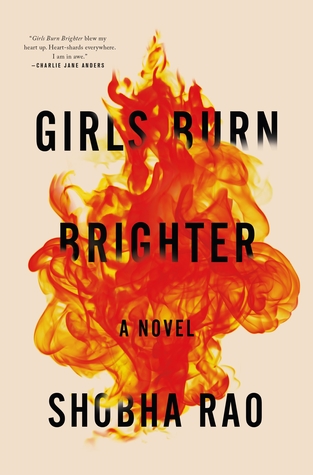
Description: When Poornima first meets Savitha, she feels something she thought she lost for good when her mother died: hope. Poornima's father hires Savitha to work one of their sari looms, and the two girls are quickly drawn to one another. Savitha is even more impoverished than Poornima, but she is full of passion and energy. She shows Poornima how to find beauty in a bolt of indigo cloth, a bowl of yogurt rice and bananas, the warmth of friendship. Suddenly their Indian village doesn't feel quite so claustrophobic, and Poornima begins to imagine a life beyond the arranged marriage her father is desperate to lock down for her. But when a devastating act of cruelty drives Savitha away, Poornima leaves behind everything she has ever known to find her friend again. Her journey takes her into the darkest corners of India's underworld, on a harrowing cross-continental journey, and eventually to an apartment complex in Seattle.

Review: Girls Burn Brighter is a story of sacrifice, exploitation, and reclamation, but most of all it is a story of true and enduring friendship. Poornima and Savitha are two friends and talented weavers who navigate poverty, abuse, and the relentless pressure to find suitable husbands in contemporary South India. In Indravalli their paths cross when Poornima’s father hires Savitha to help him meet the demand for new cotton saris. Savitha is very skillful with the charkha, the spinning wheel, and weaving with Poornima is respite from searching garbage dumps for metal and plastic to sell to support her family. Savitha finds in Poornima a sister and friend. Mourning the recent death of her mother from cancer, Poornima finds in Savitha a mother figure, a gifted storyteller, and a confidante. Though weaving brings their world together, a horrific crime tears them apart. Out in the world alone, with no knowledge of each other’s whereabouts, they must find a way to maneuver the cruelties lobbed at women with no education, little money, and a desire to want more from life in both India and the United States.
  Girls Burn Brighter is a difficult read that gets bleaker as it continues. There is no glimmer of happiness for neither woman as they find themselves in brutal circumstances and a constant fury of abuse, almost entirely at the hands of men. It is telling that there is not one redeemable male character in the entire book and those who have the potential to be so are problematic. There were many times I had to put the book down because I could not endure Poornima's and Savitha's pain and suffering. The narration alternates between Poornima's and Savitha’s points of view. I had no problems distinguishing the two voices because they were each distinct characters. What kept me reading is how resilient and brave Poornima and Savitha are as women whose indefatigable courage it took to escape their circumstances and their undying hope to reunite. I hated the abrupt and ambiguous ending mainly because I wanted to see these women happy after all they have endured. Girls Burn Brighter will make you uncomfortable and rage against the many injustices against women, it will also make you think. A great choice for book clubs and book discussions. 

Rating: 3.5 stars

Words of Caution: Domestic abuse, rape, violence, and human traffiking are heavily featured in the book. Recommended for mature teens and adults only.

If you like this book try: The Color of Our Sky by Amita Trasi  
Rummanah Aasi

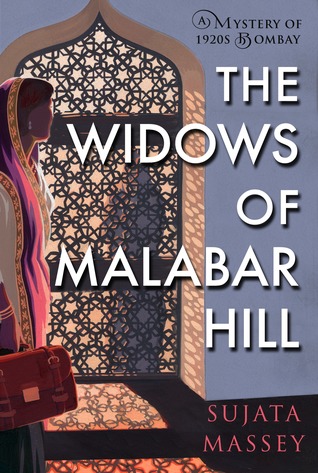
Description: Bombay, 1921: Perveen Mistry, the daughter of a respected Zoroastrian family, has just joined her father's law firm, becoming one of the first female lawyers in India. Armed with a legal education from Oxford, Perveen also has a tragic personal history that makes her especially devoted to championing and protecting women's rights.
  Mistry Law is handling the will of Mr. Omar Farid, a wealthy Muslim mill owner who has left three widows behind. But as Perveen goes through the papers, she notices something strange: all three have signed over their inheritance to a charity. What will they live on if they forefeit what their husband left them? Perveen is suspicious.
  The Farid widows live in purdah: strict seclusion, never leaving the women's quarters or speaking to any men. Are they being taken advantage of by an unscrupulous guardian? Perveen tries to investigate and realizes her instincts about the will were correct when tensions escalate to murder. It's her responsibility to figure out what really happened on Malabar Hill, and to ensure that nobody is in further danger.


Review: The Widows of Malabar Hill is the first installment of a new mystery series, set in Bombay in the 1920s. The book does a good job in establishing the diversity of colonial India particularly in class and religion. Perveen is a member of the Parsi community. She is extremely intelligent and is faced with constant obstacles for going against traditions, customs, and social mores of a being a professional woman. Perveen also belongs to an elite social class and is able to study law abroad at Oxford University. Though she is forbidden to become a lawyer because she is a woman, she still joins her father's law firm as a paralegal. I found the concept of studying law to be problematic considering there are many laws that are used in the book from Shariah, the Islamic law, the law of Paris, and the British law. So which law do you use to fight the case?   The mystery itself was okay though it took some time and patience to get it started. It allowed the reader to compare and contrast the various laws at play when it comes to marriage and family law. 
  There are two aspects of the book that did bother me. The first is the inclusion of religious slurs such as Mohammedian that are mentioned in the book. The term is offensive and inaccurate. I don't know why it was included in the book since the characters are educated enough to know that it is a wrong word to use. The second thing that also bothered me is the disjointed flashbacks that take place in 1917 that interrupt the flow of the present time. The transition between the two timelines are choppy at best and though it does provide backstory to Perveen's character, it comes across as a second story line in the book. After a while it becomes redundant and loses the book's focus. I really think the flashbacks could have been shorten and used more effectively and I hope this will be fixed in the later books. Due to the time period and the setting of the novel, I'm curious to see where this series will go.


Rating: 3 stars

Words of Caution: There is some religious slurs towards Muslims and Islam, a scene of physical assault and fade to black sex scenes. Recommended for adults.


If you like this book try: Rei Shimura mysteries by Sujata Massey
Rummanah Aasi
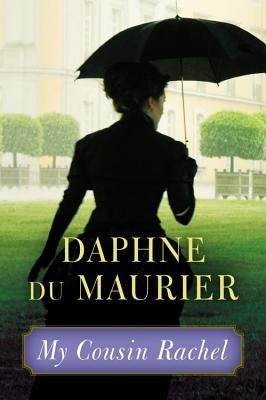
  I read and absolutely loved Rebecca by Daphne Du Maurier when I was a freshman in high school. It was the first book my school librarian recommended to me when I was looking for a book to capture my attention. Rebecca was my first foray into the romantic suspense genre and a book which I measured all other books in that genre. Du Maurier downplays the romance but takes a closer look into the human psyche. My Cousin Rachel does the same and the ending will leave you reeling.


Description: Orphaned at an early age, Philip Ashley is raised by his benevolent older cousin, Ambrose. Resolutely single, Ambrose delights in Philip as his heir, a man who will love his grand home as much as he does himself. But the cosy world the two construct is shattered when Ambrose sets off on a trip to Florence. There he falls in love and marries - and there he dies suddenly. Jealous of his marriage, racked by suspicion at the hints in Ambrose's letters, and grief-stricken by his death, Philip prepares to meet his cousin's widow with hatred in his heart. Despite himself, Philip is drawn to this beautiful, sophisticated, mysterious Rachel like a moth to the flame. And yet... might she have had a hand in Ambrose's death?

Review: My Cousin Rachel is the story of obsession, independence, sexuality, and guilt. The story is seen through the eyes of a young gentleman named Philip who is grieving over the loss of his cousin and father figure named Ambrose. Shortly before his death, Ambrose married the notorious and so-called black widow Rachel. Ambrose has completely smitten by Rachel though his health quickly deteriorated and died. There is some speculation that Rachel may be responsible for Ambrose death as she mysteriously leaves a trail of dead men behind her. Now Rachel goes to Cornwall to return the belonging of Ambrose to Philip. Philip has decided to hate Rachel and wants nothing to do with her at all, but when these two characters meet Philip begins to change his mind.
 Rachel is unlike any woman that Philip has seen. She does not restrict herself to the social mores that surround her and has had male companions. She is extremely intelligent, refined, and very far from the damsel in distress that people expect her to be because she is a widow. Rachel does not appear to be concerned with money though financial security appears rather quickly for her. As Philip tries to understand Rachel, he falls in love with her and becomes obsessed. His inexperience and immaturity is clear, but are his actions his own or is he being influenced? Is Rachel evil or not? These are the central questions that come into play when Philip's large inheritance comes into question.
 There are many ways you can analyze My Cousin Rachel, which is the main reason why I really enjoyed this book. The story slowly reaches a climax as we get pieces of both Philip and Rachel's back stories. The ending is a shocker and open ended, which might annoy some readers who like clear cut resolutions but it also lends itself to discussion. Definitely pick this up if you enjoy romantic suspense with Gothic undertones. The recent movie adaptation featuring Rachel Weisz and Sam Clafin is quite good and worth watching.  

Rating: 4 stars

Words of Caution: There are some disturbing images but nothing too graphic. Recommended to older teen readers and adults.

If you like this book try: Rebecca by Daphne Du Maurier, The Thirteenth Tale by Diane Setterfield or The English Wife by Lauren Willig,
Rummanah Aasi

Description: Five girls. Three generations. One great American love story. You Bring the Distant Near explores sisterhood, first loves, friendship, and the inheritance of culture--for better or worse. Ranee, worried that her children are losing their Indian culture; Sonia, wrapped up in a forbidden biracial love affair; Tara, seeking the limelight to hide her true self; Shanti, desperately trying to make peace in the family; Anna, fighting to preserve her Bengali identity--award-winning author Mitali Perkins weaves together a sweeping story of five women at once intimately relatable and yet entirely new.

Review: You Bring the Distant Near is a multi-generational read that centers around the complexities of navigating multiple cultures, the immigrant experience, and understanding the different generations. While it doesn't offer anything new to the common motif in immigrant stories, it does a nice job in highlighting the importance of finding ones home despite where you are in the world.
   The story opens in 1970s New York, where the Das family has immigrated from England in hopes of planting roots and finding acceptance. Sisters Tara and Sonia are two teen girls who crave personal freedom and they often go against their mother Ranee's strict and traditional Indian values. Older sister Tara is known for her looks and her charisma is contagious. She longs to be an actress. Younger sister Sonia is introverted, incredibly intelligent, and a budding feminist Sonia. The tumultuous relationship between Sunny and Ranee is at the heart of the novel, representing the clash and resistance of and ultimate blending of cultures. In the United States, Ranee struggles in vain to hold on to her "Indianness," not only for herself, but also for her children. I really enjoyed this first half of the book as I connected with Sunny and Ranee the most. I could easily understand their conflicts between personal desire and their responsibilities to their culture. I think this is the strongest aspect of the book. I also appreciated the complexities of race and culture when it came to interracial marriage and gender roles.
  The second half of the book jumps through time where both Tara and Sunny have established lives with marriage and children. We now follow the narratives of their daughters, Anna and Chantal respectively. It is only through her connection to her granddaughters, Chantal and Anna that Ranee finds redemption and transformation. For me the second half of the book falters a bit as Perkins tries to touch upon different issues hurriedly such as racial imposter syndrome (where a person from multiple cultures don't see themselves in any culture), Islamophobia, and American patriotism.
  Though I enjoyed the multi-generational aspect to the story, which is not common in YA litertature, I think the book might have been stronger if there were two companion novels. Chantal and Anna are mirror images of their mothers and I would have liked to see them grow as individuals. I would also have loved for the nuisance and complex themes be explored in more details. Overall, You Bring the Distant Near is an enjoyable read that many readers can see themselves and shines a light on an experience that is actually more familiar than we think.


Rating: 4 stars

Words of Caution: There is some minor language. Recommended for Grades 7 and up.

If you like this book try: The Joyluck Club by Amy Tan
Rummanah Aasi
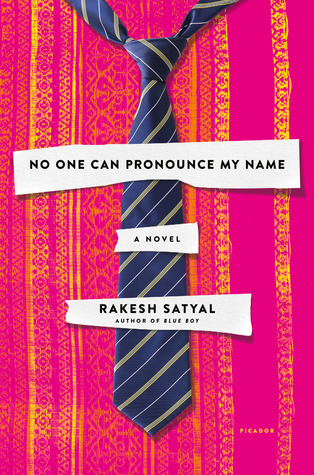
Description: In a suburb outside Cleveland, a community of Indian Americans has settled into lives that straddle the divide between Eastern and Western cultures. For some, America is a bewildering and alienating place where coworkers can’t pronounce your name but will eagerly repeat the Sanskrit phrases from their yoga class. Harit, a lonely Indian immigrant in his midforties, lives with his mother who can no longer function after the death of Harit’s sister, Swati. In a misguided attempt to keep both himself and his mother sane, Harit has taken to dressing up in a sari every night to pass himself off as his sister. Meanwhile, Ranjana, also an Indian immigrant in her midforties, has just seen her only child, Prashant, off to college. Worried that her husband has begun an affair, she seeks solace by writing paranormal romances in secret. When Harit and Ranjana’s paths cross, they begin a strange yet necessary friendship that brings to light their own passions and fears.

Review: I must admit that I was drawn to this book mostly because of its title. I have lost count on how many times my name has been mispronounced and misspelled. No Once Can Pronounce My Name is a slice of life book that explores what constitutes the identity of an Indian American. 
   The story revolves around two main characters who feel isolated in their own lives and are desperately seeking an awakening. Harit is a middle-aged department store salesman, who is still grieving over the loss of his sister. He takes care of his elderly mother and cross dresses in his deceased sister's clothing to show his mother that her daughter is still alive. Though the ruse isn't fooling anyone, it is heartbreaking to witness and acts as his catalyst to change to his life by becoming socially active. Ranjana is a loyal and obedient wife to her distant husband, and the mother of an American-born son, Prashant, a freshman at Princeton. Like Harit, her life has become cold and empty as she feels her identifiers as wife and mother become too confining. Ranjana rebels against Indian convention and strikes her independence by working outside the home, writing paranormal romance on the sly, and striking up male friendships, including one with Harit. Similarly, her son Prashant tries to meet cultural and parental expectations while asserting his independence. 
  I appreciated how the author captures his characters' experiences within a close-knit Indian community and offering a wide range of representation. Harit and Ranjana both slowly grow and become more rounded characters as they become more open minded and open to change around them. The book does drag in the middle and I found myself wanting to know more of the personal lives of the secondary characters such as Ranjana's husband and Harit's wise mother. I also liked the tongue-in-cheek criticism on being an author, the publishing world, and book shaming when it comes to the romance genre that was included in the book. Overall a decent read on the difficulties of immigrants assimilating to a new culture and redefining themselves.

Rating: 3.5 stars

Words of Caution: There is mature themes, sexual content, and drug use in the book. Recommended for adults only.

If you like this book try: The Turner House by Angela Flournoy, American Dervish by Ayad Akhtar, and  The Wangs vs. the World by Jade Chang
Rummanah Aasi
Description: Solimar Castro Valdez is eighteen and dazed with optimism when she embarks on a perilous journey across the US/Mexican border. Weeks later she arrives on her cousin's doorstep in Berkeley, CA, dazed by first love found then lost, and pregnant. This was not the plan. But amid the uncertainty of new motherhood and her American identity, Soli learns that when you have just one precious possession, you guard it with your life. For Soli, motherhood becomes her dwelling and the boy at her breast her hearth.
  Kavya Reddy has always followed her heart, much to her parents' chagrin. A mostly contented chef at a UC Berkeley sorority house, the unexpected desire to have a child descends like a cyclone in Kavya's mid-thirties. When she can't get pregnant, this desire will test her marriage, it will test her sanity, and it will set Kavya and her husband, Rishi, on a collision course with Soli, when she is detained and her infant son comes under Kavya's care. As Kavya learns to be a mother--the singing, story-telling, inventor-of-the-universe kind of mother she fantasized about being--she builds her love on a fault line, her heart wrapped around someone else's child.


Review: Despite the cheery title, Lucky Boy is a heart wrenching novel that humanizes the issue of illegal immigration. This timely book is told from two point of views of women who come from very different ethnic and socioeconomic differences though they both struggle with motherhood and the meaning of family. Their lives are intersected by one little boy and I'm hesitant to call him 'lucky' given the horrible circumstances that surround him. 
  Soli is an undocumented Mexican immigrant determined to start a new life in America. During her treacherous journey across the border, she ends up pregnant and single. Without other options, Soli lands a job cleaning houses for a well-to-do white family. Soli has an extremely hard time raising her son, Ignacio, without calling attention to herself. In a parallel story, Kavya is a non-traditional Indian daughter who has failed to live up to her mother's expectations. Kavya is desperate to start a family, but she is unable to conceive. Her tunnelvision of having children push her and her husband Rishi apart until they decide to adopt. Soli and Kavya's stories intersect when an accident puts Soli in police custody, Ignacio is taken away from her by social services and placed in foster care; Kavya and Rishi, are then selected as Ignacio's foster parents. 
 It was heartbreaking watching Soli being ripped away from Ignacio. My heart ached for both of them. We also learn of Soli's horrible treatment while she is placed in a detention center for undocumented immigrants. She undergoes physical abuse as well as being continually raped by one of her guards who is there to "protect her".
  I also felt for Kavya and Rishi as they try to learn how to become parents and how they fall in love with baby Ignacio. The heartbreaking journeys of these two women, bound by love of the baby boy, are the center of the novel. All of the characters are drawn complexly and the relationships depicted are nuanced. The expectations of what "happily ever after" should look like and the reality is also nicely explored throughout the book. Along with the heartache, there are moments of hope and light that are full of great depth and insight. Though the ending maybe be a bit melodramatic, I found it completely engrossing and would recommend it.

Rating: 4 stars

Words of Caution: There is strong language, mention of rape and molestation, and sexual situations. Due to mature themes, I would suggest this book to mature teen readers and adults only.

If you like this book try: The Secret Daughter by

Rummanah Aasi

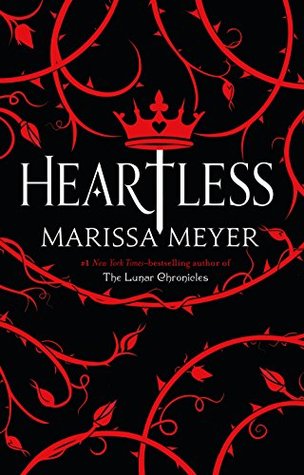
Description: Catherine may be one of the most desired girls in Wonderland and a favorite of the unmarried King, but her interests lie elsewhere. A talented baker, she wants to open a shop and create delectable pastries. But for her mother, such a goal is unthinkable for a woman who could be a queen.
At a royal ball where Cath is expected to receive the King’s marriage proposal, she meets handsome and mysterious Jest. For the first time, she feels the pull of true attraction. At the risk of offending the King and infuriating her parents, she and Jest enter into a secret courtship. Cath is determined to choose her own destiny. But in a land thriving with magic, madness, and monsters, fate has other plans.

Review: In Heartless Marissa Meyer provides an origin story of the evil Queen of Hearts in Carroll's classic Alice's Adventures in Wonderland. Before she was a megalomaniac who ordered people's heads cut off in a moments notice, she was Catherine, a spirited daughter of royalty, destined to wed the King of Hearts. Catherine detests her fated destiny and wants to exercise her free will in becoming a baker and having her own bakery with her best friend and longtime maid. I admired Catherine's temerity in establishing her wants and desires so openly. The clash between Catherine's dreams and her mother's relentless goal of making her daughter queen is the highlight of the book and done exceptionally well.
  The world building of a refined yet still whimsical realm of Wonderland is executed quite nicely. We see favorite characters such as the mercurial Mad Hatter, who in my opinion stole the show in his short page time, and the mysterious Cheshire whose one-liners accurately sums up the emotions of others and sets the scene. We are also have a new character, the court joker aptly called Jester whose earnest boyishness makes him far more charming than his royal boss and captures Catherine's heart instantly. The clandestine romance between Jest and Catherine is inevitable. To be honest I was not a fan of Jester and Catherine's romance. I didn't feel the chemistry between the two and I really think much of him besides his flirtatious behavior.
  I found the first half of the story very slow going and boring. The slow build up that pits Catherine against her mother gets repetitive at times. There are no other subplots to make the story suspenseful. I was actually more interested in Catherine when her darkness showed. Unfortunately, her descent into darkness felt rushed. Despite my issues with the pacing and the romance in the story, I enjoyed Heartless but not as nearly as much as I enjoyed Meyer's Lunar Chronicles.

Rating: 3.5 stars

Words of Caution: There are some disturbing images and scenes. Recommended for Grades 8 and up.

If you like this book try: Queen of Hearts by Colleen Oakes, The Darkest Part of the Forest by Holly Black, Stealing Snow by Danielle Paige, Dark Shimmer by Donna Jo Napoli
Rummanah Aasi

Description: Archer Magill has spent a lively five years of grade school with one eye out in search of grown-up role models. Three of the best are his grandpa, the great architect; his dad, the great vintage car customizer,; and his uncle Paul, who is just plain great. These are the three he wants to be. Along the way he finds a fourth--Mr. McLeod, a teacher. In fact, the first male teacher in the history of the school.
   But now here comes middle school and puberty. Change. Archer wonders how much change has to happen before his voice does. He doesn't see too far ahead, so every day or so a startling revelation breaks over him. Then a really big one when he's the best man at the wedding of two of his role models. But that gets ahead of the story.

Review: The Best Man is an adorable, funny, and insightful coming-of-age story that traces the milestones in Archer Magill's life from first to sixth grade while deftly addressing a variety of social issues. The book begins at a hilarious mishap when Archer was six year old and had to perform as ring bearer duties in a pair of muddy, too-tight shorts that have split open in the back. He recalls that he never wanted to participate in a wedding again until his two favorite people in the world get married. Archer has always had terrific male role models that he always looked up to: his father, as good at fixing problems as he is at restoring vintage cars; his stylish Uncle Paul; and his dignified grandfather Magill. He adds another person to his list when he meets his student-teacher Mr. McLeod, who accidentally causes a lockdown when he shows up at school in his National Guard uniform. Each of his role models teach Archer valuable lessons about prejudice, how to solve problems by talking them out, grieving, and gay rights. None of these values are heavy handed but are woven seamlessly into the narrative as Archer gains some wisdom on his own and by talking to others such as his mom and role models. Archer also realizes that his role models also have flaws just like he does. Overall this was a delightful, fun, quick story about friendship, family, and what it means to be a best man literally and metaphorically.

Rating: 4 stars

Words of Caution: There is a scene of bullying in which a student writes a homophobic slur on a character's forehead. Recommended for Grades 4 and up.

If you like this book try: Marco Impossible by Hannah Moskowitz, Lily and Dunkin by Donna Gephart
Rummanah Aasi
 Please note that this review is based on the advanced reader's copy of The Other Einstein which I received from Sourcebooks publishers (thank you!). The Other Einstein is now published and can be found in libraries and bookstores near you.

Description: What secrets may have lurked in the shadows of Albert Einstein’s fame? His first wife, Mileva “Mitza” Marić, was more than the devoted mother of their three children—she was also a brilliant physicist in her own right, and her contributions to the special theory of relativity have been hotly debated for more than a century.

In 1896, the extraordinarily gifted Mileva is the only woman studying physics at an elite school in Zürich. There, she falls for charismatic fellow student Albert Einstein, who promises to treat her as an equal in both love and science. But as Albert’s fame grows, so too does Mileva’s worry that her light will be lost in her husband’s shadow forever.


Review:  I picked up The Other Einstein due to my limited knowledge of Albert Einstein. I know that he was a renown and brilliant scientist, famous for E=mcsquared equation, the theory of relativity, and had unruly curly hair as depicted by his numerous photos. I did not know anything about his personal life so I knew nothing about his first wife Mileva Maric who was also a brilliant scientist in her own right. I had hoped that this book would shed some light on Einstein the man and Mileva, but it is hard to judge whether this book is successful on that account because it is based on a lot of speculation rather than actual facts.
 While I admire the author for highlighting a lesser known individual, The Other Einstein did not rise above a superficial, melodramatic re-imagining of the marriage of two intellectuals. The book suffers from the lack of character development and a plot that dragged quite a bit. In fact the actual conflict felt rushed and finally appears in the last half of the book.
  The book revolves around the relationship between Albert and Mileva, but I didn't feel any chemistry between the couple nor did I think it was a true partnership. Their relationship felt very much one-side from Mileva's perspective and Albert came across as a person who took advantage of his wife's intelligence. I often found myself frustrated with Mileva, who easily allowed herself to be marginalized for so little emotional and/or professional return. It is no doubt that Mileva was a victim of her own society in where a woman's ambition to have a career much less get an education with a degree was looked down upon, but I got the impression that she was pushed into education not because of how intelligent she is but because she was deemed un-marriageable due to her leg and that inferiority complex lead her to be with Albert. Otherwise I couldn’t understand what Mileva saw in Albert.  Though the author clearly states she does not intend to stain Albert's legacy, he does come across as cold, calculating, manipulative, and difficult individual.
 In addition to the issues I have about the marriage, I also struggled with was the science behind the story. Both Albert and Mileva are highly accomplished scientists, but we don't see this in the book besides the author telling us they are in a cafe chatting about other scientists and studies. Benedict shies away from the intricacies of their studies and profession. You simply can't write a book about Einstein's accomplishment and fame without talking about physics. This is especially important when the crux of the book is the possibility of Mileva being a co-author of the theory of relativity. In the book it appears that Mileva is the person who came up with the theory and Albert took her theory and plagiarized it.
  The Other Einstein is an ambitious story and asks an interesting question particularly when sexism in the workplace is a very lively topic today. I would recommend picking up the book if you are interested in the subject, but be aware that the book is heavy on the fiction and less on the historical.

Rating: 3 stars

Words of Caution: There is mention of sexual situations but nothing graphic. Suitable for teens and adults.

If you like this book try: Albert Einstein/Mileva Maric: The Love Letters edited by Jurgen Renn,
In Albert's Shadow: The Life and Letters of Mileva Maric, Einstein's First Wife by Milan Popovic,
Secret Traces of the Soul of Mileva Maric-Einstein by Alter and Svetlana
Rummanah Aasi
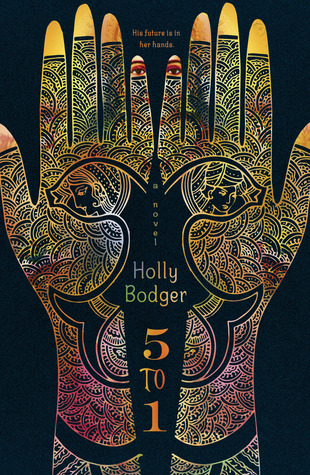
 I have dystopian burnout. It is not that I dislike this subgenre, but I have read a slew of dystopian books that in someway or in another is Hunger Games deja vu promising another blockbuster. As a result I have become bored and weary of the category of  dystopian. When I read about Holly Bodger's debut novel I didn't know what to expect and lowered my expectations. I'm relieved to find 5 to 1 to be an engaging dystopian novel set in India that poignantly explores gender politics. Please note that this review is based on the advanced reader's copy of the book provided by the publisher via Netgalley.

Description: In the year 2054, after decades of gender selection, India now has a ratio of five boys for every girl, making women an incredibly valuable commodity. Tired of marrying off their daughters to the highest bidder and determined to finally make marriage fair, the women who form the country of Koyanagar have instituted a series of tests so that every boy has the chance to win a wife.
  Sudasa doesn’t want to be a wife, and Kiran, a boy forced to compete in the test to become her husband, has other plans as well. Sudasa’s family wants nothing more than for their daughter to do the right thing and pick a husband who will keep her comfortable—and caged. Kiran’s family wants him to escape by failing the tests. As the tests advance, Sudasa and Kiran thwart each other at every turn until they slowly realize that they just might want the same thing.


Review: In order to enjoy 5 to 1 there are few things you have to keep in mind. First 5 to 1 is what I call a soft dystopian, there is not an emphasis on the world that Bodger created which ironically  works in the author's favor because the book's basis is steeped in reality of gender politics. Second, the book is not your average heart pounding action book, the book moves steadily yet slowly focusing more on character development. Third, there is no romance in the book which allows the author to show how the gender selection effects each gender without any rose tinted glasses placed upon the characters. Additionally this debut novel is told in alternating points of view, one in poetry and one in prose. Once you settle and acknowledge these differences from the usual dystopian tropes, you can enjoy the book for its uniqueness and see where it shines.
  Bodger explores a dystopian India in which gender selection has led to there being five boys for every girl. In generations past boys were the favored gender of infants and as a result female infant population dramatically decreased as they were aborted and disposed of, signaling debt and burden for families (sadly, this is really happening in several parts of Asia). A revolution took place and a matriarchal government is now in power. Now female babies are prized possessions and men's value are determined if they can help their wives produce girls. The subversion of the gender roles and expectations is exceptionally well done in 5 to 1 from the characters to the various Tests that the boys have to pass. 
  Throughout her novel Bodger doesn't support just one gender, but rather shows how the gender selection has negatively effected both genders equally. Neither men nor women benefited from their society. Nor is one more in control than the other.  Interestingly they are equally oppressed, which can be seen in the narrative style of the novel. Kiran, the male narrative, is written in captivating prose, which allows much wordier passages however he is limited in expressing his own desires outside of winning the Tests which he is forced to participate due to his gender and age. Similarly the beautiful poetry of Sudasa is appropriately jarring and nuanced, showing how on the outside she  may seem as if she is in control because she is a girl, but her voice is also reduced in how she expresses herself and her limited freedom. Bodger does well in infusing the Indian culture and lifestyle in her work, but I would have liked to have seen more particularly within Sudasa's family dynamics. A glossary of Hindi terms would also be a great addition particularly those who are unfamiliar with the language.
 While the lack of romance in 5 to 1 may disappoint readers, I think it is one of the strong aspects of the book. The Tests are suppose to be pointless and unromantic. The more appropriate importance is placed on personal freedom and choice. During the Tests both Sudasa and Kiran have an epiphany of their own desires and both shamelessly pursue their dreams, which I would have loved to see in a more flushed out epilogue. Despite these minor flaws, I thoroughly enjoyed 5 to 1 and I look forward to see what Bodger has in stored for us in future books.  

Rating: 4 stars

Words of Caution: There is some mild crude humor in the book and minor language. Recommended for strong Grade 7 readers and up.


If you like this book try: Matched series by Ally Condie
Rummanah Aasi
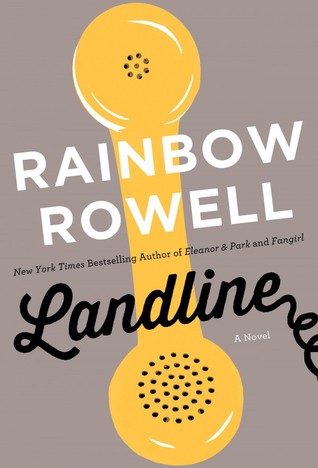
Stories usually end with a marriage and a presumably a happily ever after. What happens when that happily ever after seems to be falling apart at its seams? What lengths are you willing to go in order to salvage it? These are the questions that are posed in Rainbow Rowell's adult book titled Landline.

Description: Georgie McCool knows her marriage is in trouble;it has been in trouble for a long time. She still loves her husband, Neal, and Neal still loves her, deeply — but that almost seems beside the point now. Maybe that was always beside the point.
  Two days before they’re supposed to visit Neal’s family in Omaha for Christmas, Georgie tells Neal that she can’t go. She’s a TV writer, and something’s come up on her show; she has to stay in Los Angeles. She knows that Neal will be upset with her — Neal is always a little upset with Georgie — but she doesn't expect him to pack up the kids and go home without her. When her husband and the kids leave for the airport, Georgie wonders if she’s finally done it. If she’s ruined everything.
  That night, Georgie discovers a way to communicate with Neal in the past. It’s not time travel, not exactly, but she feels like she’s been given an opportunity to fix her marriage before it starts. Is that what she’s supposed to do? Or would Georgie and Neal be better off if their marriage never happened?


Review: Landline is an examination of a marriage on the verge of falling apart. Georgie McCool seems to have it all: two wonderful daughters, a loving husband, and a career as a TV writer which she loves.  The career opportunity of a lifetime has appeared, but now her marriage may be ending as a result. Fed up with her work excuses, her husband, Neal, heads to Nebraska for a family Christmas with their kids--without her. 
  The set-up for Landline is very similar to another contemporary novels that center around midlife struggles and marriages falling apart; however, Landline takes a magical realism turn when Georgie finds a way to talk to Neal of the past, before they got engaged through a landline phone. As the days leading up to Christmas tick by, Georgie goes back and forth between talking to the old Neal she fell in love with and avoiding her rapidly crumbling current life, she starts to realize that she might be able to undo the complications of the present and has to decide whether she wants to. 
  Like all of Rowell books that I've read, I loved the characters in this book. Georgie and Neal are extremely likable characters. I also loved watching how Georgie and Neal met and fell in love. The story moves quickly with smooth transitions between the past and the present. I wished we got a reason why the magical landline exists, but it is never mentioned. I also wanted to find out the thoughts and reflections of the present Neal who is always conveniently not picking up his cell phone anytime Georgie calls. 
  Compared to my previous Rainbow Rowell reads, Attachments and Eleanor and Park, I didn't like this one as much. It felt unfinished and a bit too simple without the complexity of adult love, despite the mysterious magical phone. Nonetheless, I'm always excited to see what Rowell comes up with next. 

Rating: 3.5 stars

Words of Caution: There is some strong language and allusion to sex. Recommended for mature teens and adults.

If you like this book try: One Plus One by Jojo Moyes, The Opposite of Maybe by Maddie Dawson, The Lover's Dictionary by David Levithan
Rummanah Aasi
 I was a big fan of Born Confused by Tanuja Desai Hidier, especially with its exploration of melding two cultures and finding your identity. I expected something similar with its sequel, Bombay Blues, but unfortunately I will had to add this one to my growing list of disappointing reads of 2014. Many thanks to the publisher and Netgalley for an advanced copy of this book.


Description: In Born Confused, Indian-American just-turned-17-year-old Dimple Rohit bhai Lala found love, friendship, art, and home where she least expected it. But a lot's gone on in the years that have followed. And what happens if what you thought you wanted wasn't what you wanted after all? As she learns during adventures that take her from India to New York to London and back, with a little luck and a lot of vision, the journey home might prove just as magical as what you left behind to make it.

Review:  Bombaby Blues had a lot of potential, but with its experimental narrative filled with characters once loved and now unfamiliar made this a very disappointing read. American born and of Indian descent, Dimple Lala travels to Bombay with her Indian parents and her longtime DJ boyfriend, Karsh Kapoor, to attend the wedding of a cousin, Sangita. Both Dimple and Karsh believed their trip to India will bring them closer as a couple, however, the trip puts a strain on their relationship. Dimple immerses herself in family, culture, photography, music, love, and a search for self; while Karsh embarks on his own spiritual journey.
  There are many, many pages filled with the sights and sounds of India that bring this book alive, however, many of the Hindi words included in the narrative are haphazardly translated. While I can understand having the 'lost in translation' feel to the story considering Dimple's hindi isn't very strong, I wish the author made a choice in translation and stuck to it. Since I was familiar with the Hindi language I didn't have any problems with the book, but I can definitely see where many readers get stumped.
  For majority of the book there is not a whole lot that happens, but then there is a rush of melodrama that takes up space. We see Sangita abruptly announces she is not marrying but instead pursuing a burgeoning art career. Sangita's sister, Kavita, opens up to the family about her homosexuality. Dimple struggles to understand her unraveling relationship with Karsh, but out of characteristic of her, has a spontaneous sexual affair with a random boy she dubbed as the "Cowboy" she just met. There is also the unveiling of a long kept secret of why Dimple's mother and her aunt don't get along well also tacked on.
   I was hoping a bit more of introspection from Dimple while we do get some, it is mostly in the form of stream of consciousness. The inclusion of the "Cowboy" completely threw me and I didn't understand his purpose at all since we know virtually nothing about him. I felt bored with this book and skimmed a lot of it in hopes that I was see a sliver of the characters that I loved in the previous book. Unfortunately, they were not found.

Rating: 2 stars

Words of Caution: There is strong language, brief discussions of sex, and a small sex scene. Recommended for Grades 10 and up.

If you like this book try: Shine, coconut, moon by Neesha Meminger, Skunk Girl by Sheba Karim
Rummanah Aasi
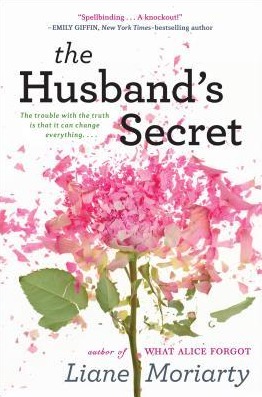
  The Husband's Secret has been on the New York Times Bestseller list for many weeks. The book is constantly checked out of my public library and many patrons have raved about the book. Naturally, I wanted to know what was so great about this book so I put myself on a long wait-list for the book. When I did finally get a chance to read it, I was disappointed and thought the story would be completely different.

Description: Imagine that your husband wrote you a letter, to be opened after his death. Imagine, too, that the letter contains his deepest, darkest secret—something with the potential to destroy not just the life you built together, but the lives of others as well. Imagine, then, that you stumble across that letter while your husband is still very much alive. . . .
   Cecilia Fitzpatrick has achieved it all—she's an incredibly successful businesswoman, a pillar of her small community, and a devoted wife and mother. Her life is as orderly and spotless as her home. But that letter is about to change everything, and not just for her: Rachel and Tess barely know Cecilia—or each other—but they too are about to feel the earth-shattering repercussions of her husband's secret.

Review: The Husband's Secret is a page turner and it doesn't take long for the reader to be enraptured by the story. Moriarty works the Pandora myth and the metaphor of the Berlin Wall quite nicely in her book. I didn't have any problems with the way the book was written, but I do have issues with books that deal with cheating/affairs, and choices without any consequences. The Husband's Secret hit all of these hot buttons for me and as a result, I didn't care for any of the characters nor did I find anything redeemable about them.
  The book contains three separate story lines that sort of come together. Cecila is what many would call the ideal wife. She strives to be perfect in every aspect of her life, but she is frustrated in that she can't seem to capture her husband's interest and intimacy. She jumps from one assumption to another about why they haven't been intimate. She finally gets her answer by finding a sealed letter written by her husband with strict directions of not opening it after he dies. Cecila's husband is very much alive and the temptation of what secret he is hiding is what fuels the book's suspense. Unfortunately, we find out the secret a little too early in the book which would have been fine except Moriarty didn't really go deeper beyond the surface of the truth.
  Like Cecila, Rachel is the role of a good mom whose daughter was murdered. The storyline of Tess, a young woman who finds out her husband and best friend/cousin are having an affair, does not serve any purpose to the book's story arc. Cecila and Rachel's plot lines are tightly connected while Tess's story line is more a coincidence. 
  I can see how the author tries to show how one might not really know their spouse, but the concept of justice and forgiveness which would have given this book more depth is glossed over. It almost comes across as a satire rather than a thought provoking book which left a bad taste in my mouth when I was finished it. The Husband's Secret was book that was not right for me and once again I was swept away by the hype. If it wasn't for the hype, I wouldn't have picked it up.

Rating: 3 stars

Words of Caution: There is some strong language, sexual situations and mature themes. Recommended for older teens and adults only.

If you like this book try: Necessary Lies by Diane Chamberlain, Dear Thing by Julie Cohen
Rummanah Aasi
  Many YA novels don't feature parents in a predominant roles in the story. Parents are either entirely absent or become like the teachers in the Peanuts comic strip who talk in gibberish. Corrine Demas's Returning to Shore is a refreshing realistic fiction book not about teen angst or high school drama, but rather a teen hoping to establish a connection with her estranged father during her summer vacation. Please note that this review is based on the advanced reader's copy I received from the publisher via Netgalley.

Description: Her mother's third marriage is only hours old when all hope for Clare's fifteenth summer fades. Before she knows it, Clare is whisked away to some ancient cottage on a tiny marsh island on Cape Cod to spend the summer with her father--a man she hasn't seen since she was three.Clare's biological father barely talks, and when he does, he obsesses about endangered turtles. The first teenager Clare meets on the Cape confirms that her father is known as the town crazy person. But there's something undeniably magical about the marsh and the island--a connection to Clare's past that runs deeper than memory. Even her father's beloved turtles hold unexpected surprises. As Clare's father begins to reveal more about himself and his own struggle, Clare's summer becomes less of an exile and more of a return.

Review:  Returning to Shore is a quiet, lovely story about a young girl reconnecting with her estranged father during her summer vacation. The book does not have much plot, but it is rather episodic which works well for this story. Clare is less than thrilled with her mother's plan to have her spend three weeks on a remote island with her biological father, Richard, when he mother jet sets on a honeymoon with husband number three. Clare hasn't seen her father in twelve years, and they only speak on Christmas.
 Unlike her mother, Richard isn't much of a conversationalist, but he also doesn't ignore Clare's presence. Richard's quiet demeanor is his way to give his daughter's space to adjust to living with him. What I appreciated the most in this story is the gradual closeness Clare and Richard achieve which I found to be realistic. Both are concerned they are not enough for each other and through Richard's work preserving the nests and habitat of the endangered Northern diamondback terrapin they find common ground and slowly develop a friendship and eventually toward an honest and loving relationship. Saving the endangered Northern diamondback terrapin becomes an allegory for Richard and Clare's relationship. What I also enjoyed is finding out small clues about Richard's past and the real reason he and Clare's mother divorced.
  One big flaw that I found in the book are some obnoxious secondary characters who are walking cliches who believe they are entitled and ignorant of things around them. I groaned ever time they appeared in the story and had to speed read those parts until I got back to Clare and Richard. Overall, I do recommend picking up Returning to Shore if you are interested in reading more YA books that focus on teen parent relationships.

Rating: 4 stars

Words of Caution: There is some minor language and a scene of underage drinking as well as some mature themes. Recommended for strong Grade 7 readers and up.

If you like this book try: Many Stones by Carolyn Coman, This Lullaby by Sarah Dessen
Rummanah Aasi
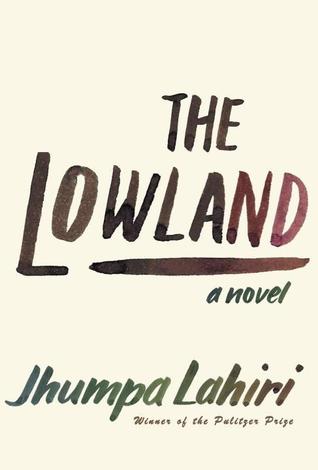
  I had really high hopes about Jhumpa Lahiri's latest book, The Lowland. When I found an ARC of it at this past summer's ALA conference in Chicago, I grabbed a copy and couldn't wait to start it. Then all the accolades and stellar reviews poured in and my expectations grew tenfold. Now I wished I had ignored everything and read it because surprisingly I felt underwhelmed about it all.

Description: Two brothers bound by tragedy; a fiercely brilliant woman haunted by her past; a country torn by revolution. A powerful new novel--set in both India and America--that explores the price of idealism and a love that can last long past death.
  Growing up in Calcutta, born just fifteen months apart, Subhash and Udayan Mitra are inseparable brothers, one often mistaken for the other. But they are also opposites, with gravely different futures ahead of them. It is the 1960s, and Udayan--charismatic and impulsive--finds himself drawn to the Naxalite movement, a rebellion waged to eradicate inequity and poverty: he will give everything, risk all, for what he believes. Subhash, the dutiful son, does not share his brother's political passion; he leaves home to pursue a life of scientific research in a quiet, coastal corner of America.
  But when Subhash learns what happened to his brother in the lowland outside their family's home, he comes back to India, hoping to pick up the pieces of a shattered family, and to heal the wounds Udayan left behind--including those seared in the heart of his brother's wife.


Review: The Lowland is one of those books that everyone seems to have loved this year, but I really didn't enjoy it. Its books like The Lowland that makes me wonder what am I missing whenever I read a glowing review. Personally, I think the book would have been much stronger if it was written as a collection of short stories rather than a novel. It has the slices of life feel to the story rather than a powerful, sweeping saga as its described on its book panel.
     The book starts off very slowly as Lahiri lays down her foundation for her novel. The Mitra brothers are inseparable even though they are complete opposites. Subhash is serious, cautious, and reliable, while Udayan is brash, impassioned, and rebellious. Suhbash is an upholder of traditional family roots of their quiet, middle-class Calcutta enclave and while Udayan questions everything. In college, Subhash studies chemistry, Udayan physics, but while Subhash prepares to go to America to earn his PhD, Udayan experiences a life-altering political awakening. 
  Unlike Lahiri's other books, there is a strong focus on politics in The Lowland. She takes time to set up the stage of the late 1960s, a time of international protest, but stops there. Udayan joins the Mao-inspired Naxalite movement, which isn't explained at all. All that I could understand from inferences is that the movement has socialism roots and demands justice for the poor. I wished Lahiri spent more time discussing the movement especially since it mattered so much to Udayan and that he was willing to alienate himself from his family. Instead of making the politics a theme of the story it comes across as a contrived plot device that drives the rest of the story. 
  Udayan also secretly marries self-reliant, scholarly Gauri, but we don't see this develop as all which also hinders not only the emotional impact of the story but rather another contrived plot device. Subhash’s indoctrination into American life and Rhode Island’s seasons and seashore is bracing and that of a typical immigrant story, while Udayan’s descent into the Naxalite underground, which stays firmly in the background, puts him in grave danger. 
 Most of the characters felt more touch and go for me to wrap my head around them. I only felt like I understood Gauri who is painted by many reviewers as the villain of the story. She is undoubtedly selfish and unabashedly ambitious, but also in a way victim of society. I didn't get the sense that she married Udayan and later Subhash because she loved either of them as a person but rather they were her ticket to a bright, independent future. She reminded me a lot of Edna from Kate Chopin's The Awakening. She made me wonder why can't female characters behave like male characters and be only seen as negative? Why is it that male characters can be jerks but still earn our sympathies while female characters will only remain as jerks and nothing else?
  As tragedies, and revelations multiply over the years, we do see the characters go through the psychological nuances of conviction, guilt, grief, marriage, and parenthood. I just wanted the book to dig a little deeper and not just scratch the surface of these themes. The Lowland is a decent read but I wanted and needed more especially from a very capable writer and one who was nominated for the Booker Prize this year. 

Rating: 3 stars

Words of Caution: There is some language, sexual situations, and mature themes. Recommended for adults only.

If you like this book try: The Age of Shiva by Manil Suri, The Marriage Plot by Jeffrey Eugenides, Cutting for Stone by Abraham Verghes
Rummanah Aasi
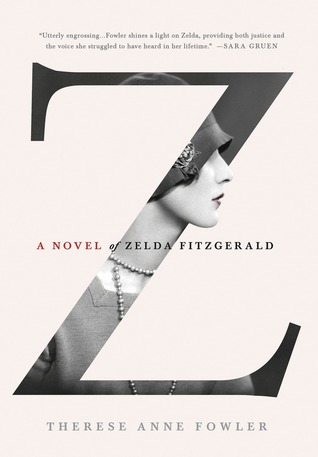
  There is a growing trend in historical fiction for adults that are revisiting the lives of famous artists/authors through the eyes of their wives/lovers. Loving Frank by Nancy Horan is a huge bestselling novel that centers on Frank Lloyd Wright and Martha Cheney was published in 2009. Two years later, The Paris Wife by Paula McLain, which details the love story between Ernest Hemingway and Hadley Mowrer, became a hot pick and this year's highly recommended novel Z details the lives of Zelda and F. Scott Fitzgerald. There are two more highly buzzed books set to release in a few months about Edgar Allen Poe in Mrs. Poe by Lynn Cullen and Robert Louis Stevenson in Wide Starry Sky by Nancy Horan.

Description: When beautiful, reckless Southern belle Zelda Sayre meets F. Scott Fitzgerald at a country club dance in 1918, she is seventeen years old and he is a young army lieutenant stationed in Alabama. Before long, the “ungettable” Zelda has fallen for him despite his unsuitability: Scott isn’t wealthy or prominent or even a Southerner, and keeps insisting, absurdly, that his writing will bring him both fortune and fame. Her father is deeply unimpressed. But after Scott sells his first novel, This Side of Paradise, to Scribner’s, Zelda optimistically boards a train north, to marry him in the vestry of St. Patrick’s Cathedral and take the rest as it comes.
  What comes, here at the dawn of the Jazz Age, is unimagined attention and success and celebrity that will make Scott and Zelda legends in their own time. Everyone wants to meet the dashing young author of the scandalous novel—and his witty, perhaps even more scandalous wife. Zelda bobs her hair, adopts daring new fashions, and revels in this wild new world. Each place they go becomes a playground: New York City, Long Island, Hollywood, Paris, and the French Riviera—where they join the endless party of the glamorous, sometimes doomed Lost Generation that includes Ernest Hemingway, Sara and Gerald Murphy, and Gertrude Stein.
   Everything seems new and possible. Troubles, at first, seem to fade like morning mist. But not even Jay Gatsby’s parties go on forever. Who is Zelda, other than the wife of a famous—sometimes infamous—husband? How can she forge her own identity while fighting her demons and Scott’s, too?


Review: Z: A Novel of Zelda Fitzgerald is a lovely, sad and compulsively readable book. It is a common misconception that Zelda Fitzgerald was the reason for F. Scott Fitzgerald's ruin, but Fowler does a great job in making Zelda a three dimensional character and a woman who is struggling to make her own identity outside of her husband's shadow. 
  It's very rare to completely disappear in a historical fiction novel, though details are present of the setting and ambiance you always get the sense that you are a distant from the characters. In Z Fowler's depiction of the Jazz Age is so immaculate that you don't merely revisit the time period but are virtually there witnessing the crazy dinner parties. The setting and details are exactly what we expected but the author goes beyond the superficial and gets to the heart of its subject matter.
  I was really surprised how much I liked Zelda as a character. Sure she was daring, unconventional, and self centered at times but she was also very traditional and paradoxically rooted in her Southern culture. The book briefly touches upon her childhood but mainly focuses on her life's whirlwind journey after she meets the handsome and charming Scott, a budding writer who is about to become famous. The lives Zelda and Scott shared were indulgent and decadent, leaving no securities for future emergencies. I couldn't help but shake my head in wonder how anyone could live their life so recklessly, but that was the rage of the Roaring Twenties. 
  The early years of their marriage are sublime, for both Scott and Zelda are high-spirited, passionate and deeply committed to each other. It's obvious that they adored one another, but there also many reflective moments where Zelda pauses to think how much Scott wanted her to play the role of a celebrity: always present wearing the most expensive and provocative clothes at parties, be charming but don't talk too much, and always try to bring the spotlight back to him. Zelda at first goes along with her husband, relishing the latest fashions, meeting, and even being a celebrity herself but she later realizes that Scott doesn't really want a wife present but a trophy to carry around. Soon all is temporarily forgotten when a chance to travel and live in Paris arises. There is a childlike awe in traveling to Paris, the hub of intellectual creativity, where they had an extensive and astonishing social circle that included Picasso and his mistress, with Cole Porter and his wife, with Gerald and Sara Murphy, Gertrude Stein and Alice B. Toklas, Ezra Pound and Jean Cocteau, Hemingway and Hadley. 
  With the success of This Side of Paradise, Scott quickly believes he is the greatest author alive, and life becomes an endless series of parties. His drinking escalates to the point where he was to drink in order to stay focused. The Fitzgerald's interactions with the Hemingway in particular highlights the flaws of both characters and their troubled marriage. Scott is so obsessed with being "the American author" that he catalyzes Zelda's own unhappiness and nervous breakdown, leading her to an asylum (she was misdiagnosed as a schizophrenic at the time and would now me diagnosed as having biopolar depression). We witness Zelda's increasing desperation to establish her own identity- she writes stories that Scott "claims" as his own to sell to the publisher when they desperately needed the money. She was also an artist who loved to paint and a great dancer. She in fact studied ballet and gets an invitation to join a dance company in Italy, but Scott won't allow her to leave. He bullies her, and she fights back. Their pull and tug relationship is made Zelda and Scott so alluring and memorable for readers. I know that as soon as I finished Z: A Novel of Zelda Fitzgerald, I wanted to read This Side of Paradise all over again. 

Rating: 4.5 stars

Words of Caution: There is language and sexual situations in the novel. Recommended for older teens and adults.

If you like this book try: The Romantic Egoists: Pictorial autobiography from the scrapbooks and albums of F. Scott and Zelda Fitzgerald edited by Matthew J. Bruccoli, The Paris Wife by Paula McLain, Call Me Zelda by Erika Robuck, Wide Starry Sky by Nancy Horan (released on January 2014)
Rummanah Aasi
  I've always been a fan of multicultural and immigrant reads. When I read the synopsis to Jennifer Zobair's Painted Hands, it hit close to home and I knew I had to read it. Many thanks to the publisher and Netgalley for a chance to read an advanced reader's copy of the book.

Description (from the Publisher): Muslim bad girl Zainab Mir has just landed a job working for a post-feminist, Republican Senate candidate. Her best friend Amra Abbas is about to make partner at a top Boston law firm. Together they've thwarted proposal-slinging aunties, cultural expectations, and the occasional bigot to succeed in their careers. What they didn't count on? Unlikely men and geopolitical firestorms. 
    When a handsome childhood friend reappears, Amra makes choices that Zainab considers so 1950s--choices that involve the perfect "Banarasi "silk dress and a four-bedroom house in the suburbs. After hiding her long work hours during their courtship, Amra struggles to balance her demanding job and her unexpectedly traditional new husband. Zainab has her own problems. She generates controversy in the Muslim community with a suggestive magazine spread and friendship with a gay reporter. Her rising profile also inflames neo-cons like Chase Holland, the talk radio host who attacks her religion publicly but privately falls for her hard. When the political fallout from a terrorist attempt jeopardizes Zainab's job and protests surrounding a woman-led Muslim prayer service lead to violence, Amra and Zainab must decide what they're willing to risk for their principles, their friendship, and love.

Review: Marketed as The Namesake meets Sex in the City, Jennifer Zobair's debut novel Painted Hands is thankfully much of the former than the latter book. Though the story follows three different women's journeys, at its very heart, Painted Hands, is an exploration of what it means to be a Muslim woman in the post 9/11 world. Though I was drawn to the subject matter because I closely identify with the characters given my own personal background, I was also a bit concerned on how the characters would be written and how the tricky subject of religion is discussed. I'm happy to say that the book went beyond my expectations. I loved and cared for the characters so much that I compulsively read it in one sitting. 
  Zobair creates a cast of characters that give a wide ranging and for many a new look at Muslim-American culture from a female perspective. Within her story about navigating love and life while balancing Muslim religious and cultural beliefs with an American way of life, Zobair provides an array of characters covering the spectrum between devout followers of Islam and those who reject the beliefs of family and childhood.
   The story is very simple as it follows a group of friends for more than a year as they juggle careers, political differences, the trials and tribulations of love and prejudice. Zobair deftly captures the conflict all women face between the desire to be true to themselves and their own beliefs and the struggle to meet the expectations of family and friends. I think it's super important that Zobair made these women intelligent career women who think critically and logically for themselves and are assertive. While I may not agree with some of their decisions and/or actions, I felt the characters were authentic and not caricatures that I've met over and over again in other multicultural reads.
  Even though I was wrapped up in the lives of her characters, what kept me glued to the pages is how Islam is explored, defended, and supported in the book. Zobair's characters aren't afraid to raise questions and think outside of the traditional box. It gave me a lot to ponder. I also very much appreciated on how the characters varied in their devoutness to Islam without any suggestions of whether they are good or evil, which probes the reader to think about the Muslim identity.
  Painted Hands balances a story of women without overdoing it on the politics and religion. It allows readers to be exposed to the lesser known and good side of Muslim-American culture and the politics of being Muslim in America. Ultimately, I think the book shows that no matter the differences we share, we all are trying to achieve the same goals.

Rating: 4 stars

Words of Caution: There is some language and sexual situations discussed. Recommended for mature teens and adults interested in exploring contemporary literature featuring Muslim protagonists.

If you like this book try: The Namesake by Jhumpa Lahiri, Life Isn't All Ha Ha Hee Hee by Meera Syal
Related Posts with Thumbnails