Showing posts with label Immigrants. Show all posts
Rummanah Aasi
Description:
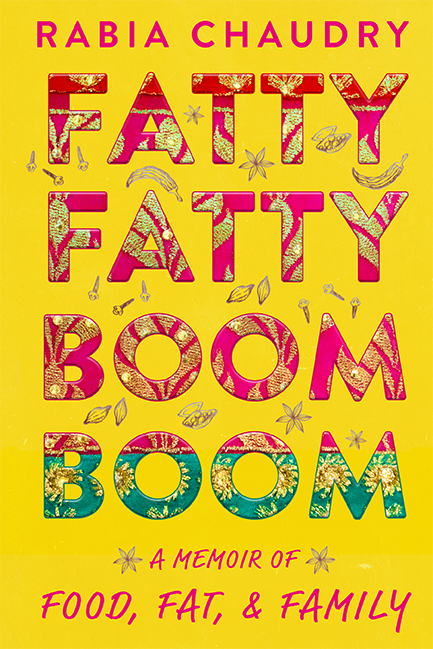
A memoir about food, body image, and growing up in a loving but sometimes oppressively concerned Pakistani immigrant family.

Review: Rabia Chaudry may be a familiar name to you if you follow the Undisclosed podcast or followed the Adnan Syed trial that was highlighted in the Serial podcast. In her candid and engaging memoir, she recounts how her life has been shaped and complicated by her relationship with food and culture.
   Born in Lahore, Pakistan, and raised in the U.S. by Muslim immigrant parents, Chaudry was subject to myths of American greatness and capitalism when it came to nutritional supremacy that favored processed foods (i.e. junk food, fast food restaurants, etc) as well as baby formula over breast milk. The foods that Rabia consumed reflected simultaneously high class from the lens of her Pakistani relatives, but also a low class from the lens of a U.S. viewer.  
    As Rabia grew up from a healthy chubby baby to the heaviest student in her grade, body image has always haunted her. After years of internalizing fatphobia and being told repeatedly by her family comments that her weight made her undesirable, Rabia married the first man who approached her. Unfortunately, this was not a healthy relationship as she endured an abusive husband and suffered years of disordered eating. 
   Rabia does go on a journey of self healing seeking therapy and constructs a healthy relationship with food, and spends time with relatives who support rather than shame her, becomes a turning point. The goal turns from being thin to one of being healthy. She wonders where she walks on the side of body positivity, fat acceptance, and weight loss. Overall, I really enjoyed her candidness and critique of Pakistani culture when it comes to body image which not only entails weight but also colorism and beauty standards. I applaud this realistic story of self acceptance. I also enjoyed looking at the various recipes that are found at the back of the book. 

Rating: 4 stars

Words of Caution: There are scenes of fatphobia, disordered eating, colorism, and domestic abuse. 

If you like this book try: Shrill by Lindsey West, Hunger by Roxane Gay, Heavy by Kiese Laymon
Rummanah Aasi
Description:
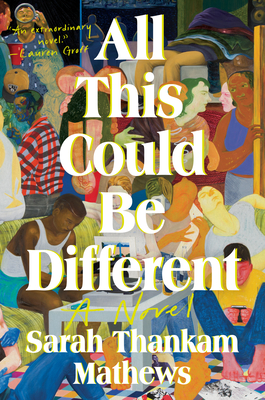
 Graduating into the long maw of an American recession, Sneha is one of the fortunate ones. She's moved to Milwaukee for an entry-level corporate job that, grueling as it may be, is the key that unlocks every door: she can pick up the tab at dinner with her new friend Tig, get her college buddy Thom hired alongside her, and send money to her parents back in India. She begins dating women--soon developing a burning crush on Marina, a beguiling and beautiful dancer who always seems just out of reach.
   But before long, trouble arrives. Painful secrets rear their heads; jobs go off the rails; evictions loom. Sneha struggles to be truly close and open with anybody, even as her friendships deepen, even as she throws herself headlong into a dizzying romance with Marina. It's then that Tig begins to draw up a radical solution to their problems, hoping to save them all.

Review: All This Could Be Different is a slice of life debut novel that fits into the category of "messy people, messy lives" or coming into adulthood. Sneha is a very internal character, some would say aloof, who takes stock in observations around her. She has created a defense mechanism in building walls around her and not disclosing personal information to anyone including her closest friends. She is in her twenties and is one of the very lucky few who has a decent job in Milwaukee working at an entry-level corporate job. We watch and follow her daily life as Sneha struggles to live her authentic life. 
  Alone in America, she is able to pursue her queer identity though she is still closeted to her conservative Indian parents. She is able to keep up the facade of being a dutiful daughter by sending money back home, but not disclosing to anyone that she has been sexually abused by her uncle or that her landlord is racist, refusing to turn on the heat and making appearances to her apartment without her consent. We watch as Sneha create and break fragile relationships. As her friend Tig advises, relationships of any kind are transactional, you give and take not just take, but how do you do that when you can't trust anyone?
  Matthews has beautifully captured the aimlessness and confusing years of being in your twenties when you know what the finish line looks like but you have no idea where you can find the starting line. There are many issues talked and discussed about the book such as the vulnerabilities of being an immigrant and a person of color- being afraid to speak up when injustice occurs in fears of being deported and/or losing your job- and how unresolved trauma seeps into your life and makes a lasting impact. This is a character driven novel that is more concerned with the big picture rather than the tiny details, which felt very realistic. I can't say that I liked Sneha per se, but I was drawn to her story and the community that she created. I did have a few questions that I wished were explored further, but overall I really enjoyed the writing of this book.  

Rating: 4 stars

Words of Caution: There is strong language, sexual situations, mentions of drug addiction and alcohol abuse, a police traffic stop that doesn't end well, and allusions to sexual abuse by a family member. Recommended for adults only. 

If you like this book try: Luster by Raven Leilani, Queenie by Candice Carty-Williams
Rummanah Aasi
Description:
 Real life isn't a fairytale. But Tiến still enjoys reading his favorite stories with his parents from the books he borrows from the local library. It's hard enough trying to communicate with your parents as a kid, but for Tiến, he doesn't even have the right words because his parents are struggling with their English. Is there a Vietnamese word for what he's going through? Is there a way to tell them he's gay?

Review: The Magic Fish is an exquisite example of how storytelling, art, and language come beautifully together. There are three distinct story lines running through this graphic novel and each are told in different color palettes. The present is depicted in a red palette in which Tiến and his mother learn to communicate through fairy tales when they are not able to have difficult conversations since Tiến does not speak fluent Vietnamese and his mother is not fluent in English. The brown palette is the older past in which Tiến's mother reflects on her own journey from leaving war-torn Vietnam and becoming a U.S. citizen. The blue palette are the fairy tale stories that we tell to help make sense of our situation and express our own desires. For Tiến it is to urgently share his secret of his sexual identity to his mother, but his mother is suddenly called to Vietnam to say farewell to her dying mother. 
   As a daughter of immigrant parents who is not fluent in her parents' native tongue, I really responded to the concept of this graphic novel. I did not find the different plot lines hard to follow and I loved how the fairy tales mirrored the obstacles and joys that take place in Tiến's and his mother's lives. Some of the fairy tales may seem familiar such as Cinderella and The Little Mermaid, but there is a Vietnamese twist to them. I also thought the approach to using fairy tales to tell an immigrant story of identity and culture to be refreshing. The artwork is absolutely gorgeous.  

Rating: 4 stars

Words of Caution: None. Recommended for Grades 7 and up.

If you like this book try: The Eternal Smile by Gene Luen Yang
Rummanah Aasi
Description:
 Ivy Lin is a thief and a liar—but you’d never know it by looking at her. Raised outside of Boston, she is taught how to pilfer items from yard sales and second-hand shops by her immigrant grandmother. Thieving allows Ivy to accumulate the trappings of a suburban teen—and, most importantly, to attract the attention of Gideon Speyer, the golden boy of a wealthy political family. But when Ivy’s mother discovers her trespasses, punishment is swift and Ivy is sent to China, where her dream instantly evaporates.
   
Years later, Ivy has grown into a poised yet restless young woman, haunted by her conflicting feelings about her upbringing and her family. Back in Boston, when she bumps into Sylvia Speyer, Gideon’s sister, a reconnection with Gideon seems not only inevitable—it feels like fate.
   
Slowly, Ivy sinks her claws into Gideon and the entire Speyer clan by attending fancy dinners and weekend getaways to the Cape. But just as Ivy is about to have everything she’s ever wanted, a ghost from her past resurfaces, threatening the nearly perfect life she’s worked so hard to build.

Review: White Ivy is a captivating coming of story that has light elements of a thriller that takes a critical look at race, class, and privilege. First generation Chinese American Ivy Lin has learned from a very young age to fend for herself by any means necessary. She was trained by her grandmother to become a a prolific petty thief who used the model minority stereotype to her advantage. As Ivy grows up she has yearned to achieve whiteness and everything that comes with it: privilege, class, wealth, and reputation. No matter how hard she tried to assimilate to her white suburban environment, she never fit in. She fantasized about her future and the American Dream which to her meant married to a wealthy white man and by proxy be embraced in the 'acceptable society'. 
  Presently Ivy is a decidedly unfulfilled first grade teacher in Boston. When she happens to run into Sylvia Speyer, the sister of her childhood crush, Gideon, Ivy is given an opportunity to achieve her dream once again. She worms her way into the orbit of Gideon’s wealthy family and schemes her way into Gideon’s heart. Her dreams are coming to fruition though there is friction as Gideon begins to pull away from Ivy, but Ivy does not mind as long as she gets the happy ending that she wants. Her security is however threatened when a man from her past, Roux Roman, resurfaces and threatens to air her dirty secrets. 
   White Ivy grabbed my attention right from the start. Though far from a likable character, Ivy shatters the model minority stereotype and is unabashedly ambitious. Her tenacity to claw her way into Gideon's social circle is mesmerizing and in a way admirable. She really reminded me of a blend between Jay Gatsby and Becky Sharp. Like Gatsby, Ivy despised her impoverish upbringing and always aspired to become the upper class. Though Gatsby pursued a persona and fought his way to try to win back an old flame, Ivy really does not care about her actual relationship with Gideon, but rather she is obsessed with what he represents (one can argue that Gatsby does the same). Like Becky Sharp, she has no qualms about what actions she must take to secure her future and her moral compass is always askew. The discussion of the complexities of class and privilege will hold the reader's attention as will the array of secondary characters that come and go in the book, most notably Roux who presents as a foil to Ivy. There are also sly comments about race that are read in between the lines of the story, though I wished they were a bit more prominent. Readers intrigued by the promise of the thriller aspects mentioned in the plot may be slightly disappointed as the elements are light and not the main focus of the story, but if you love complex character driven coming of age stories definitely give this debut a try. 

Rating: 4 stars

Words of Caution: There is strong language and sexual situations. Recommended for older teens and adults.

If you like this book try: What We Were Promised by Lucy Tan, The Chosen and the Beautiful by Nghi Vo, The Talented Mr. Ripley by Patricia Highsmith
Rummanah Aasi
Description: 
Jaime is sitting on his bed drawing when he hears a scream. Instantly, he knows: Miguel, his cousin and best friend, is dead.
  Everyone in Jaime’s small town in Guatemala knows someone who has been killed by the Alphas, a powerful gang that’s known for violence and drug trafficking. Anyone who refuses to work for them is hurt or killed—like Miguel. With Miguel gone, Jaime fears that he is next. There’s only one choice: accompanied by his cousin Ángela, Jaime must flee his home to live with his older brother in New Mexico.

Review: When his cousin Miguel is killed for refusing to join the Alphas, a notorious gang, Jaime and his cousin Ángela are targeted as the next recruits. With no other way out, their family decides to risk sending them alone to El Norte (i.e. United States) to live with Jaime’s brother, Tomás. The author does not shy away from the perilous journey from Guatemala; Jaime and Ángela face agonizingly real horrors: the fear of being discovered and deported; being locked in the sweltering heat of a rail car; running out of food and water; crossing paths with other even more dangerous gangs; and everything they might face in an unknown country. 
  The Only Road is a candid yet age appropriate tale about the plight of migrants that they may be hearing of from the news. The narrative is fast-paced with many moments accented by danger and uncertainty on Jaime and Ángela's journey. The story also incorporates Spanish words which lends authenticity to the story as well as remind readers that their is a distinction between how Spanish is spoken throughout Latin America. A glossary offers definitions, as well as pronunciation tips, for non-Spanish speakers. Diaz’s closing author’s note reminds readers that immigrants still endure journeys like Jaime and Ángela’s every day. This heartbreaking story will give readers a human face to an issue that is hotly debated in the news.

Rating: 4 stars

Words of Caution: There is strong violence in the book, however, it takes place off the page but the consequences and references to the violence are discussed in the book. Recommended for Grades 5 and up.

If you like this book try: Beast Rider by Tony Johnston 
Rummanah Aasi
Description: 
Five years after a suspicious fire killed his mother, a closeted Syrian American trans boy sheds his birth name and searches for a new one. He has been unable to paint since his mother's ghost has begun to visit him each evening. The only time he feels truly free is when he slips out at night to paint murals on buildings in the once-thriving Manhattan neighborhood known as Little Syria. One night, he finds the tattered journal of a Syrian American artist named Laila Z; whose past is intimately tied to his mother's--and his grandmother's--in ways he never could have expected. Following his mother's ghost, he uncovers the silences kept in the name of survival by his own community, his own family, and within himself, and discovers the family that was there all along. Please note: The author has clearly said that his main character is trans non-binary whose preferred pronouns are he/his.

Review: The Thirty Names of Night is a complex story with multiple layers. It is a story of visibility, being, and belonging. It is a story of artists who connected by unspoken personal histories. It is a story of immigrants trying to find themselves. It is a ghost story. It is a story about birds. It is a mystery. It is also possibly the most beautiful book that I have read thus far in 2021.
     In this exquisitely, lush, and lyrical book we follow two main story-lines that will ultimately converge. In one story line we follow an unnamed narrator (for majority of the book) in contemporary New York City who is struggling with gender dysphoria, coming to terms to his own gender identity, and grieving the loss of his mother who died tragically in an Islamophobic hate crime. The narrator is unnamed because the name he was given at birth no longer fits him. Our narrator is an artist who has a creativity block, because he is constant restricted to the limitations of art just like his gender. He longs to be limitless, label-less in a world that constantly wants to place people in neat boxes. During the day our narrator cares for his ailing grandmother and during the night he paints murals of birds across New York City as an homage to his ornithologist mother as well as to Laila Z, an artist his mother admired and whose journals he discovers. 
  Our second story line follows Laila Z, a Syrian artist whose story begins in 1920 in French occupied Syria. After her family immigrates to America, she becomes an acclaimed illustrator of birds. Through Laila Z's diary we see the construction of Little Syria and its people in New York City. There is a profound sense that there has always been people who identify as LGBTQ+ in Syria in which our narrator finds comforting. It is also through Laila Z that our narrator also finds the key to unlocking himself.
  It did not take me long to get absorbed by Thirty Names of Night. I found both narratives equally compelling. Though both story lines are written in the second person and addressed to another character, it did not deter me from connecting to the characters. I read these two story lines as confessionals that are much easier told to another person than to yourself. Having our main character be unnamed is powerful and highlights the importance of agency:

“I think to myself, It is terrifying to be visible, and then I think, I have been waiting all my life to be seen."

    Little Syria, an area that I was not familiar with at all until reading this book, also becomes a character in the novel. We follow the plights of the Syrian American community and watch how it evolves from a bustling cultural community that is slowly being destroyed by gentrification. The author does not shy away from Islamophobia, struggles with faith, nor the discourse surrounding the uncertainty of the Muslim community's inclusion of the LGBTQ+ individuals, which I appreciated. 

 I will confess that I did not follow all of the details surrounding ornithology, but I liked how birds was used metaphorically throughout the book. I also really liked the secondary characters, particularly our narrator's group of friends and I wanted to know more of them. Despite these minor issues, Thirty Names of Night is a beautiful book that you should definitely add to your reading piles.  


Rating: 4.5 stars

Words of Caution: There is some strong language, implied sex scene, and Islamophobic hate crimes. Recommended for older teens and adults. 

If you like this book try: On Earth We're Briefly Gorgeous by Ocean Vuong, How Much of These Hills are Gold by C. Pam Zhang
Rummanah Aasi
Description: 
Mia Tang thinks she’s going to have the best year ever. She and her parents are the proud owners of the Calivista Motel, Mia gets to run the front desk with her best friend, Lupe, and she’s finally getting somewhere with her writing! But as it turns out, sixth grade is no picnic: 

1. Mia’s new teacher doesn’t think her writing is all that great.
2. The motel is struggling, and Mia has to answer to the Calivista’s many, many worried investors.
3. A new immigration law is looming and if it passes, it will threaten everything—and everyone—in Mia’s life.

It’s a roller coaster of challenges, and Mia needs all of her determination to hang on tight. But if anyone can find the key to getting through turbulent times, it’s Mia Tang!

Review: Three Keys is a great sequel to Yang's delightful Front Desk. Things are really looking up for Mia Tang as starts middle school. Her family are now the proud owners of the Calivista Motel. The motel is doing well, but the racist and xenophobic rhetoric of a rising political campaign and upcoming election.  California's Prop 187 would ban undocumented immigrants from access to health care and public schooling and it is on the ballot. The book's plot does a great job in showcasing the progress and setbacks that Mia experiences such as personally being faced with microaggressions by her teacher in class and taking note of similar experiences by her classmates of color. There is also a discussion of assimilation and class in which Mia feels a sense of guilt of losing her Chinese culture that her parents hold so dearly and Mia's mom wanting to buy an expensive dress to in order to impress other Chinese women. Though her family does well in business, there are still close to poverty. 
  The struggles of undocumented immigrants hits closely to Mia as her friend Lupe reveals that her family is undocumented, creating a portrait of fear as her father is jailed. The impending vote has significant consequences for all immigrants, not just the Garcias, as racial threats increase. With the help of a cast of strong supporting characters, Mia bravely uses her voice and her pen to change opinions—with family, friends, teachers, and even voters. She also learns what it means to be a good ally: to listen, to care, and to continue fighting for what is right. This timely novel is a great read and make an excellent book discussion for younger readers. 

Rating: 4.5 stars

Words of Caution: There are microaggressions made by a teacher to her students of color and xenophobic comments. Recommended for Grades 4 and up

If you like this book try: The Land of the Cranes by Aida Salazar, Efren Divided by Ernesto Cisneros
Rummanah Aasi
Description:
 Omar and his little brother, Hassan, arrived in Dadaab, a refugee camp in Kenya, seven years ago. Their father was killed the day they left home, and they haven't seen their mother since they joined their neighbors who were fleeing to Dadaab. Now Omar is eleven and Hassan is nine, and Omar has quit school to look after his brother, who has an intellectual disability.
     When Omar is given the opportunity to return to school and carve out a future for himself and Hassan, he feels torn. He loves school and could have the opportunity to earn a coveted scholarship to a North American university--and with it a visa for himself and Hassan. But is it worth the risk and heartache of leaving his vulnerable brother for hours each day?

Review: When Stars Are Scattered is one of the best graphic memoirs that I have read thus far this year. We follow the day in the life of Omar Mohamed and his younger brother, Hassan, who live in the Dadaab Refugee Camp in Kenya and their dreams of being resettled in a new land like the United States. We learn early on that Omar has to take care of Hassan, who has a seizure disorder and is unable to talk. Both boys are looked after by their foster mother, Fatuma, an elderly woman assigned to them in their parents’ absence. The boys’ father was killed in Somalia’s civil war, prompting them to flee on foot when they were separated from their mother. They desperately hope she is still alive and looking for them, as they are for her. 
   The graphic memoir covers six years, during which Omar struggles with decisions about attending school, juggling his responsibilities as an older brother along with his personal desire to want more for his future. True to life, the graphic memoir depicts the highs of learning and making new friends along with the lows and the difficulties of keeping hope for a future when the present time is so dark and grim. Through Omar’s journey, and those of his friends and family members, readers get a close, powerful view of the trauma and uncertainty that attend life as a refugee as well as the faith, love, and support from unexpected quarters that get people through it. I would have loved to see Omar's new life in the United States, but we are told in a narrative of his achievements. When Stars Are Scattered is another personal and human story to a much controversial topic of immigration. Jamieson's illustrations and panels are easy to read and follow. She captures the emotions of Omar and his friends so effectively. If you have not picked up this graphic memoir yet, I highly recommend it.  

Rating: 4.5 stars

Words of Caution: Horrors of war are mentioned and most of the violence occurs off the page. There are a few instances of bullying portrayed. There are allusions to drug abuse and domestic violence. Recommended for Grades 5 and up.

If you like this book try: Stormy Seas by Mary Beth Leatherdale and for older readers The Unwanted by Don Brown
Rummanah Aasi

Description:
 For as long as she can remember, it’s been Robin and her mom against the world. Growing up in the 1990s as the only child of a single mother in Seoul, Korea, wasn’t always easy, but it has bonded them fiercely together.

So when a vacation to visit friends in Huntsville, Alabama, unexpectedly becomes a permanent relocation—following her mother’s announcement that she’s getting married—Robin is devastated. Overnight, her life changes. She is dropped into a new school where she doesn’t understand the language and struggles to keep up. She is completely cut off from her friends at home and has no access to her beloved comics. At home, she doesn’t fit in with her new step-family. And worst of all, she is furious with the one person she is closest to—her mother.

Then one day Robin’s mother enrolls her in a local comic drawing class, which opens the window to a future Robin could never have imagined.

 Review: Almost American Girl is a moving graphic memoir about belonging, family, immigration, and the love of art. Chuna's mother brought her to Albama, United States, under the pretense of another mother-daughter temporary trip. She is shocked and hurt to find that her stay in Alabama is actually permanent when her mother marries a man.  Now grappling with culture shock, bullying, and integrating into a new family, Chuna feels adrift. Her mother is still her hero, and she recognizes the sacrifices she has made in order for them to survive. Despite her attempts to join her new stepfamily, it is not easy and they are not very supportive. Chuna is also having a hard time at a predominate white school and is bullied for being Asian. It’s rough going though, especially when the rest of the Kims, her new stepfamily, are not very supportive. Understandably, Chuna feels isolated and out of place. She misses her friends and life in Seoul. It isn’t until her mother reminds her of her love of comics and drawing that Chuna becomes her own person, going by the name of Robin, and begins to thrive.
    The universal theme of desiring to belong and the common immigrant's plight to adjust to their new life isn't unique to this graphic novel, however, I very much appreciated a peek into the Korean culture. I did not know that there is a strong stigma against single-parent homes in Korea, which is the reason Robin is bullied in Korea. I also liked that Robin's mother, though flawed, was not a frequent stereotype of a quiet, submissive wife. Her mother is fiercely independent and did everything she could to help her daughter. The bond between her and Robin is the core for this graphic novel. Readers who enjoy graphic memoirs will find much to enjoy.

 Rating: 4 stars

 Words of Caution: There is some language, and scenes of bullying and racism. Recommended for Grades 7 and up.

 If you like this book try: Hey, Kiddo by Jarrett Krosoczka, The American Dream? by Shing Yin Khor
Rummanah Aasi
Description:
 The phenomenon of desperate refugees risking their lives to reach safety is not new. For hundreds of years, people have left behind family, friends, and all they know in hope of a better life. This book presents five true stories about young people who lived through the harrowing experience of setting sail in search of asylum: Ruth and her family board the St. Louis to escape Nazism; Phu sets out alone from war-torn Vietnam; José tries to reach the U.S. from Cuba; Najeeba flees Afghanistan and the Taliban; Mohamed, an orphan, runs from his village on the Ivory Coast. Aimed at middle grade students, Stormy Seas combines a contemporary collage-based design, sidebars, fact boxes, timeline and further reading to produce a book that is ideal for both reading and research. Readers will gain new insights into a situation that has constantly been making the headlines.

Review:  Story Seas is a slim book but its impact is strong, harrowing, heart wrenching, and ultimately hopeful. The book is composed of a packs a portrait of five adolescents from different parts of the world who escaped persecution, violence, and repressive regimes in search for a new homes. The timeline is between 1939 and 2006. In 1939 Ruth boards an ocean liner to escape the Nazis in Germany, but the ship is repeatedly turned away from many North and South American countries, including the United States. In the 1960s, José leaves with his family from Cuba, after the rise of Fidel Castro's power. In the 1970s during the aftermath of the Vietnam War, Phu leaves his family behind and flees Vietnam on a crowded boat, which was repeatedly attacked by pirates. About 2001 to 2006, Najeeba and her family flee the Taliban in Afghanistan, while Mohamed endures four horrendous years of being moved around by human traffickers before finally attaining freedom and stability in Italy.  
  Each of these first-person accounts bring immediacy, a personal touch, and urgency to their stories. It was nice to know that four of the former refugees are still alive and have shared their stories with the author. All of the stories have common themes of displacement, desperation, isolation, and persecution. This book will serve as a good introduction to the refugee crisis and readers will quickly realize that the refugee crisis is unfortunately not new. Sidebars provide historical context, and the asylum-seekers' first-person accounts bring immediacy and urgency to their stories. Some of the stories have updates about the individual. The collage-like artwork with magazine-style spreads contain maps, headlines, photos, and evocative images rendered in torn paper and thick ink scrawls is appealing to the eye and makes it an absorbing read. 

Rating: 4 stars

Words of Caution: The author does not sugarcoat the dangers the refugees faced including death and pirate attacks. Recommended for Grades 4 and up.

If you like this book try: In Search of Safety: voices of Refugees by Susan Kuklin
Rummanah Aasi
Description: The year is 1946, and the Lee family has moved from Chinatown to Downtown Metropolis. While Dr. Lee is eager to begin his new position at the Metropolis Health Department, his two kids, Roberta and Tommy, are more excited about being closer to the famous superhero Superman!

Tommy adjusts quickly to the fast pace of their new neighborhood, befriending Jimmy Olsen and joining the club baseball team, while his younger sister Roberta feels out of place when she fails to fit in with the neighborhood kids. She's awkward, quiet, and self-conscious of how she looks different from the kids around her, so she sticks to watching people instead of talking to them.

While the Lees try to adjust to their new lives, an evil is stirring in Metropolis: the Ku Klux Klan. The Klan targets the Lee family, beginning a string of terrorist attacks. They kidnap Tommy, attack the Daily Planet, and even threaten the local YMCA. But with the help of Roberta's keen skills of observation, Superman is able to fight the Klan's terror, while exposing those in power who support them--and Roberta and Superman learn to embrace their own unique features that set them apart.

Review: I am not a fan of Superman. I find him boring and one dimensional, but I am curious to see what Gene Luen Yang was going to do with this iconic superhero in his retelling of a popular 1940s radio drama. Superman Smashes the Klan takes on racism and white supremacy while also touching about the plight of immigrants' decision to assimilate in order to 'fit' in America. This graphic novel does a great job in explaining these difficult and important topics.
  The Lee family has moved from Chinatown to the Metropolis suburbs in 1946. Mr. Lee is excited to start his new job while Mrs. Lee struggles to remember to speak only English. Siblings Roberta and Tommy are also trying to settle into their new community. Roberta and Tommy face overt and subtle racism and they both have very different ways of dealing with microaggressions. Roberta is an introvert and the constant references to her otherness makes her withdraw further into herself. Tommy, due to his uncanny pitching skills, joins a local baseball team and wins friends, but uses self deprecating humor to deflect racial microaggressions and finds assimilation much easier. The theme of fitting in is a constant source of contention between Roberta and Tommy. 
  Yang does a great job in showing how systemic racism works in various and (unfortunately) authentic ways for instance one of their father's coworkers implies that the Lee family eats dog. A more overt and visual example is the a cross set ablaze on the Lee's front lawn by the Klan of the Fiery Kross (a hate group analog to the KKK) in order to intimidate them and drive them away. Interestingly, Superman's involvement in the Lee's story parallels Roberta's story. Like Roberta, Superman is not using all of his powerful abilities in hopes of fitting in Metropolis. He has a hard time accepting his own alien roots, because of his own fear and the xenophobia of others. The plot moves at a snappy pace full of action and a nice balance of humor and potential romance for Roberta.  
  The artwork of the graphic novel is a blend of manga and western artwork. The backgrounds echo the historical fiction setting and compliments the dialogue well. Superman is larger than life in his physical appearance but he is also approachable and relatable. The back matter which includes historical context and Yang's own family immigrant story is important and gives the graphic novel more depth. If more Superman graphic novels were written like this I may change my mind about him. 

Rating: 4 stars

Words of Caution: There are some racist slurs and racist depictions in the book, which are discussed and explained in the graphic novel's back matter. Recommended for Grades 6 and up.

If you like this book try: Miles Morales by Jason Reynolds, Wonder Woman: Tempest Tossed by Laurie Halse Anderson
Rummanah Aasi
Description: Jude never thought she’d be leaving her beloved older brother and father behind, all the way across the ocean in Syria. But when things in her hometown start becoming volatile, Jude and her mother are sent to live in Cincinnati with relatives.
  At first, everything in America seems too fast and too loud. The American movies that Jude has always loved haven’t quite prepared her for starting school in the US—and her new label of “Middle Eastern,” an identity she’s never known before. But this life also brings unexpected surprises—there are new friends, a whole new family, and a school musical that Jude might just try out for. Maybe America, too, is a place where Jude can be seen as she really is.

Review: Other Words for Home is a beautifully written novel in verse that covers war and displacement, resilience and adjustment to a new culture and country.  Growing up in a coastal town in Syria, Jude’s days revolve around her family and best friend, watching American romantic movies, and going to school. There is war looming in Syria and Jude’s brother, Issa, gets involved in the resistance movement. Jude and her mother leave Syria before the civil war peaks and move in with Uncle Mazin and his family in Cincinnati. The novel’s blank verse form works beautifully to capture Jude’s wide range of emotions as she leaves the only life she's known behind, dread with worry about her father and brother who are still in Syria and she adjusts to her new life in America. Friendships, complicated family relationships, microaggressions, Islamophobia, and a new language are just a few of the layers Warga weaves into Jude’s consciousness. Jude is keenly aware of the roles she embodies and the complexities associated with them. She is also becoming aware of the labels that are placed upon her in America such as "Arab American". Her voice is both wise and hopeful despite the obstacles that she faces. Her bravery is admirable and accessible. After a few emotional crescendos, the story is resolved with satisfying closure and believable new possibilities. I would not be surprised if this book pops up as a Newbery nominee.

Rating: 4 stars

Words of Caution: There is a hate crime in the book in which a Middle Eastern restaurant is vandalized and destroyed. There is also talk about menstruation and female puberty in the book. Recommended for Grades 4 and up.

If you like this book try: Refugee by Alan Gratz, Inside Out and Back Again by Thanhha Lai
Rummanah Aasi

Description: It begins with a mystery. Sylvie, the beautiful, brilliant, successful older daughter of the Lee family, flies to the Netherlands for one final visit with her dying grandmother--and then vanishes.
Amy, the sheltered baby of the Lee family, is too young to remember a time when her parents were newly immigrated and too poor to keep Sylvie. Seven years older, Sylvie was raised by a distant relative in a faraway, foreign place, and didn't rejoin her family in America until age nine. Timid and shy, Amy has always looked up to her sister, the fierce and fearless protector who showered her with unconditional love.
But what happened to Sylvie? Amy and her parents are distraught and desperate for answers. Sylvie has always looked out for them. Now, it's Amy's turn to help. Terrified yet determined, Amy retraces her sister's movements, flying to the last place Sylvie was seen. But instead of simple answers, she discovers something much more valuable: the truth. Sylvie, the golden girl, kept painful secrets . . . secrets that will reveal more about Amy's complicated family--and herself--than she ever could have imagined.

Review: Amy Lee is living in her parents’ cramped Queens apartment when she gets a frantic call from Lukas Tan, the Dutch second cousin she’s never met. Her successful older sister, Sylvie, who had flown to the Netherlands to see their ailing grandmother, is missing. Amy, the sheltered and favored sister, must put aside her own short comings as she looks into Sylvie’s disappearance. As Amy digs deeper she uncovers Sylvie's secrets such as separation from her husband and her unemployment at a prestigious law firm. And when Amy finally musters up the courage to travel to the Netherlands for the first time, why do her relatives—the Tan family, including Lukas and his parents, Helena and Willem—act so strangely whenever Sylvie is brought up?
  Amy’s search is interlaced with chapters from Sylvie’s point of view from a month earlier as she returns to the Netherlands, where she had been sent as a baby by parents who couldn't afford to keep her, to be raised by the Tans. There are also chapters written from Amy's and Sylvie's Mother's point of view which adds a layer of suspense to the story. As Amy navigates fraught police visits and her own rising fears, she gradually uncovers the family’s deepest secrets, some of them decades old.
  Unfortunately, I did not find this story very compelling as a whole. I can see what the author was trying to do in pitting two sisters who grew up in two different environments to show how race, family, and culture played in their lives. I, however, skimmed most of Amy's point of view because she was not an interesting character to me. The book really shines with Sylvie's chapters are we got to see how immigrants, particularly the Chinese, were treated in Netherlands, which unfortunately is no different than their treatment in the U.S. Sylvie's character is much more three dimensional and I would have loved this book more if it was solely written from her point of view. The Ma, Amy's and Sylvie's mother, chapters did not add much besides more soap opera melodrama. The mystery was a bit underwhelming since I figured it out before Amy. I had hoped for more introspection and less melodrama in this story.

Rating: 3 stars

Words of Caution: There is some language and allusions to statutory rape and domestic violence. Recommended for older teens and adults.

If you like this book try: Everything I Never Told You by Celeste Ng
Rummanah Aasi
Description: Set in 1491 during the reign of the last sultanate in the Iberian peninsula, The Bird King is the story of Fatima, the only remaining Circassian concubine to the sultan, and her dearest friend Hassan, the palace mapmaker.

Hassan has a secret--he can draw maps of places he's never seen and bend the shape of reality. When representatives of the newly formed Spanish monarchy arrive to negotiate the sultan's surrender, Fatima befriends one of the women, not realizing that she will see Hassan's gift as sorcery and a threat to Christian Spanish rule. With their freedoms at stake, what will Fatima risk to save Hassan and escape the palace walls?

  As Fatima and Hassan traverse Spain with the help of a clever jinn to find safety, The Bird King asks us to consider what love is and the price of freedom at a time when the West and the Muslim world were not yet separate.

Review: The Bird King is a historical fantasy set during the final days of the Reconquista in Spain.  According to outsiders Fatima has had a relatively pampered life in the Alhabra palace, but Fatima has never experienced freedom, serving the sultan of Granada as his favorite concubine in the palace harem and his mother as her close companion. Her "security" is jeopardized as the sultan prepares to surrender his lands to Ferdinand and Isabella, rulers of the recently united Spain and she inadvertently betrays her beloved friend Hassan to the Inquisition, which believes him to be a sorcerer.
  Hassan is a gay cartographer who regularly prays and meditates and has a narrow but powerful magic: He can create new shortcuts between places with his maps as well as draw locations he has never seen, including some which don’t become real until he draws them. Fatima and Hassan make a desperate escape, aided by capricious jinn, but the Inquisition seems always to be just behind them. Their only possible refuge might lie in the fragment of an old poem called the Conference of Birds (a real and very popular Sufi poem in Persian) which the two companions have pored over since childhood, about the mysterious island of Qaf, hidden refuge of the king of birds.
  The Bird King started a bit slow for me, but once Fatima and Hassan were on the run I was easily pulled into Wilson's story. The world building is well-constructed, but I would have loved to have explored more of the jinns that Wilson created. I found the jinns to be fascinating. The real focus of the story however is the character development, particularly that of Fatima's growing understanding of the nature of freedom and responsibility. Wilson also delicately explores the concept of a love outside the physical through the complex and very genuine relationship shared by Fatima and Hassan. Luz, the Dominican lay sister who serves as an Inquistor for the Holy Office is terrifying and one questions her evil nature. As Fatima and Hassan reach the island of Qaf, the story also becomes an allegory of the contentious debate of immigration and freedom. Bringing all of today's relevant topics makes The Bird King a thoughtful and beautiful historical fantasy.

Rating: 4 stars

Words of Caution: There is some language, strong violence including a scene of attempted rape, disturbing images, and mentions of torture. Recommended for older teens and adults only.

If you like this book try: City of Brass by S. A. Chakraborty, The Golem and the Jinni by Helene Wecker, and Uprooted by Naomi Novik
Rummanah Aasi
Description: Doaa and her family leave war-torn Syria for Egypt where the climate is becoming politically unstable and increasingly dangerous. She meets and falls in love with Bassem, a former Free Syrian Army fighter and together they decide to leave behind the hardship and harassment they face in Egypt to flee for Europe, joining the ranks of the thousands of refugees who make the dangerous journey across the Mediterranean on overcrowded and run-down ships to seek asylum overseas and begin a new life.
  After four days at sea, their boat is sunk by another boat filled with angry men shouting threats and insults. With no land in sight and surrounded by bloated, floating corpses, Doaa is adrift with a child’s inflatable water ring around her waist, while two little girls cling to her neck. Doaa must stay alive for them. She must not lose strength. She must not lose hope.

Review: A Hope More Powerful Than the Sea is a story of heartbreak, hope, and a human crisis. This memoir follows a teen Syrian refugee, Doaa Al Zamel’s perilous and personal journey to Europe in hopes of pursuing a future of peace and opportunities. Initially a subject of a TED talk by Melissa Fleming, the head of communications and chief spokesperson for the United High Commissioner for Refugees, the book expounds upon the topic. Doaa Al Zamel was only nineteen years old when she and her family flee from their homeland of Syria due to a civil war and a brutal government who crushed any opposition. The book gives a general yet clear understanding of the complexities of the ongoing Syrian civil war. The numbers of Syrian civilians who are either displaced or have been killed during the civil war is daunting and eye opening.
  We follow Doaa as she is awaken to the disparities of what has become of her homeland. She joined demonstrations and joined the rebellion which was sparked by the Arab Spring, but soon she realizes that revolution and the desire for change comes at a very high cost as her neighborhood is continuously shelled, held under martial law, and the lives of her family are at stake. The family seeks temporary shelter in Egypt, but soon the change of the Egyptian government had looked down upon refugees. The book has plenty of dark moments but there are also lighter ones such as Doaa finding love in the very unlikely place and hope once again bloomed in her heart for a new chance at life in Europe.
  Doaa left with the vaguely formed idea of making her way to asylum in Europe. The trip nearly cost her life. In the hands of smugglers, beset by rough seas and pirates, she survived a horrific shipwreck, so far among the deadliest in the annals of illegal migration from Africa to Europe. With the exception of a handful of survivors, all the other refugees including her fiance, died from either drowning, hypothermia, and/or dehydration. Set adrift at sea for four days, she barely survived while also saving the life of a toddler, earning awards from humanitarian agencies and calling renewed attention to the plight of refugees from Syria. Finally resettled in Sweden, Doaa’s story is one of the few refugee tales that seem to have a happy ending yet her struggles are far from over.
  I like how this book is very upfront and puts a personal face to a humanitarian crisis. There is no sentimentality attached to the story. Doaa is not propped as a role model from the get go. She is human who has flaws such as a being incredibly stubborn and having a bad temper. She is an ordinary woman who has gone through extraordinary and tragic events in her life. Her ordinariness is extremely important and a reminder for everyone to see that a refugee is a human being and no different from you and I. She is not a terrorist nor is she out to snatch away anyone's benefits, jobs, or rights away from them, but a symbol of hope. Doaa's story reminds us that a refugee is a human being not any other label that people attach to it, but an individual that wants freedom and the pursuit of happiness.

Rating: 4 stars

Words of Caution: There are scenes of sexual harassment, attempted sexual assault, strong violence of war, and disturbing images. Recommended for teens and adults only.

If you like this book try: The Unwanted by Don Brown, Escape from Syria by Samya Kullab
Rummanah Aasi

Description: Mia Tang has a lot of secrets.

Number 1: She lives in a motel, not a big house. Every day, while her immigrant parents clean the rooms, ten-year-old Mia manages the front desk of the Calivista Motel and tends to its guests.

Number 2: Her parents hide immigrants. And if the mean motel owner, Mr. Yao, finds out they've been letting them stay in the empty rooms for free, the Tangs will be doomed.

Number 3: She wants to be a writer. But how can she when her mom thinks she should stick to math because English is not her first language?

It will take all of Mia's courage, kindness, and hard work to get through this year. Will she be able to hold on to her job, help the immigrants and guests, escape Mr. Yao, and go for her dreams?

Review: Front Desk is a wonderful debut middle grade novel that explores a multitude of themes that are nicely woven into a story of activism. Mia Tang and her family has immigrated from China two years ago in dreams of starting over. After being fired from their restaurant jobs, Mia and her family are struggling to make ends meet and needing to live in their car, they are beyond thrilled to become motel managers for the Calivista MotelTheir dream job, however, is a nightmare after a series of setbacks for the Tang family. The washing machine breaks down. A customer’s car is stolen. Mia’s mother is beaten by robbers. Mr. Yao, the miserly and racist, motel manager mistreats the Tang family and cuts their wages at every turn. Meanwhile Mia is learning the unfair treatment and plight of immigrants as well as the gradual understanding of racism and prejudice in America. Mia is also fighting a personal battle among her peers who ridicule her for wearing thrift-shop clothes and her desire to be a writer when her mother insists she must study math because she can never compete with the natural English born students.
  I absolutely adored Mia. She is spunky and creative when it comes to solving her family's issues. She turns to activism to call out racist behavior and finds a way to help out poor immigrants find shelter. I was constantly rooting for her even when the competition of writing an essay to win a motel seemed like a very shady deal. I just wished we learned a little bit more from the people who stayed at the motel. This is a great book that demonstrates what persistence, creativity, and activism can do to change what seems like insurmountable situations.

Rating: 4.5 stars

Words of Caution: There are racist and anti-immigrant sentiments addressed in the book without any slurs. There is talk of a physical assault. Recommended for Grades 4 and up.

If you like this book try: Nowhere Boy by Katherine Marsh, Merci Suarez Changes Gears by Meg Medina
Rummanah Aasi

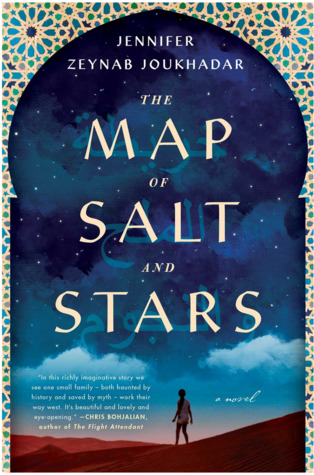
Description: It is the summer of 2011, and Nour has just lost her father to cancer. Her mother, a cartographer who creates unusual, hand-painted maps, decides to move Nour and her sisters from New York City back to Syria to be closer to their family. But the country Nour’s mother once knew is changing, and it isn’t long before protests and shelling threaten their quiet Homs neighborhood. When a shell destroys Nour’s house and almost takes her life, she and her family are forced to choose: stay and risk more violence or flee as refugees across seven countries of the Middle East and North Africa in search of safety. As their journey becomes more and more challenging, Nour’s idea of home becomes a dream she struggles to remember and a hope she cannot live without.
  More than eight hundred years earlier, Rawiya, sixteen and a widow’s daughter, knows she must do something to help her impoverished mother. Restless and longing to see the world, she leaves home to seek her fortune. Disguising herself as a boy named Rami, she becomes an apprentice to al-Idrisi, who has been commissioned by King Roger II of Sicily to create a map of the world. In his employ, Rawiya embarks on an epic journey across the Middle East and the north of Africa where she encounters ferocious mythical beasts, epic battles, and real historical figures.


Review: I really wanted to love The Map of Salt and Stars, but unfortunately I had a few issues with the book. There are two parallel stories running throughout the book. The contemporary story line is told by Nour, a twelve year old girl who has synthesia, and recalls her family's flight into exile from the Syrian civil war. The historical story line is narrated by Rawiya a girl of a similiar age in the twelfth century who is hoping to help her mother by disguising herself as a boy and working as an apprentice to al-Idrisi, a famous mapmaker, as he traveled around trade routes.
  Nour was born and raised in Manhattan by immigrant parents, her mother a cartographer and her father a bridge designer. Shortly after her father’s death from cancer in 2011, her mother moves Nour and her two older sisters, Huda and Zahra, to Homs, Syria, where they have relatives to help out. Soon civil war is underway and the family is not safe.  As the family takes flight, Nour comforts herself with a fairy tale–like story her father used to tell about Rawiya.
 While I enjoyed both stories and can definitely make the connections of symbolism and metaphors that run throughout the book, I did not get a firm grasp on the characters. Though I can empathize with the struggles and pain Nour's family goes through, I could not tell the characters apart and the plot dragged for me. The transition from Nour's and Rawiya's story was not smooth either and would abruptly weave in and out. Personally, I think the book would have been stronger if it just focused on story and fleshed out the characters instead of two. At times I would find Nour's story compelling at other times I found Rawiya's. It is fascinating to see both girls travel though Nour's purpose is to find refuge and Rawiya's a romantic adventure full of wonder and magic. The themes of finding a home both in the physical and spiritual sense will make this book a good candidate for book clubs.  I appreciated the lush imagery, but wanted something more concrete to grasp in this story.

Rating: 3.5 stars

Words of Caution: There is some language and a scene of attempted sexual assault. Recommended for older teens and adults.

If you like this book try: Dark at the Crossing by Elliott Ackerman, In the Shadow of the Banyan by Vaddey Ratner, Snow Hunters by Paul Yoon
Rummanah Aasi

Description: Fourteen-year-old Ahmed is stuck in a city that wants nothing to do with him. Newly arrived in Brussels, Belgium, Ahmed fled a life of uncertainty and suffering in Syria, only to lose his father on the perilous journey to the shores of Europe. Now Ahmed's struggling to get by on his own, but with no one left to trust and nowhere to go, he's starting to lose hope.
   Then he meets Max, a thirteen-year-old American boy. Lonely and homesick, Max is being bothered by a bully at school, he doesn't speak a word of French, and just can't seem to do anything right. But with one startling discovery, Max and Ahmed's lives collide, banding the boys together to help Ahmed survive. As their friendship grows, Ahmed and Max defy the odds, learning from each other what it means to be brave, and how hope can change your destiny.


Review: Ahmed and Max have been uprooted from their homes for very different reasons and form an unusual friendship built upon empathy and understanding in present-day Brussels. Ahmed flees war-torn Syria with his father after a bomb kills the rest of their family. His father jumps from the leaky raft he and other escaping refugees are on to prevent it from sinking in the middle of the Mediterranean. A rogue wave sweeps him away and he is presumed dead, adding to Ahmed's insurmountable grief and loss. A fellow refugee takes him in and they eventually join a refugee tent camp in Brussels, but anti-Muslim sentiment is running high in Belgium. When the tent city is shut down, Ahmed is terrified of being deported and takes shelter in the wine cellar of a home.
   The home is newly occupied by Max's family who has been transplanted from America to Brussels due to his father's job as a NATO contractor. Max is bullied in school for being an outsider and his poor French language skills. He becomes intrigued with the history of the house when he learns that a Jewish child was hidden in the basement during World War II. When Max discovers Ahmed and learns his story, the two form a tentative friendship at first. Max is not sure if Ahmed is a terrorist once he finds out that he is Muslim and from Syria like he has heard from his French tutor, but through common hobbies and interest, Max corrects his assumption and the two boys slowly open up to one another. Determined to keep Ahmed hidden, Max is determined help him in anyway that he can.
   Nowhere Boy is a timely novel that is at times heartbreaking and inspiring account of humanity. There is a small mistake in the mistranslated of the popular Muslim phrase in the book. Marsh utilizes both art and history to draw parallels in her story. The World War II story reminds us that hysteria and hate came at a grave consequence and asks us if we have learned from our mistakes of the past. The book skillfully discusses the perils of immigrants, openly addresses Islamaphobia, xenophobia, terrorism, and the Syrian Civil War with sensitivity and honesty. Max is a role model of standing up for what is right for young readers and all of us.

Rating: 4 stars

Words of Caution: There are mentions of bombings, war, and drownings of refugees on boats. There are also mentions of terror attacks in Paris, France and in Brussels, Belgium which unfortunately really occurred. Recommended for Grades 5 and up.

If you like this book try: Refugee by Alan Gratz, Sea Prayer by Khaled Hosseini
Rummanah Aasi

Description: In 1994, Yuyi Morales left her home in Xalapa, Mexico and came to the US with her infant son. She left behind nearly everything she owned, but she didn't come empty-handed. She brought her strength, her work, her passion, her hopes and dreams...and her stories.

Review: In this gorgeously illustrated memoir picture book, Morales recalls the time from her son's birth to their move to the United States from Mexico in the mid-1990s. In the foreign land mother and son encounter many barriers, which are common to the many obstacles immigrants face while trying to survive in a new country that doesn't readily welcome non-English-speaking people of color. The pair encounters respite at the public library where, with the help of librarians, they find a home in the children's section.
  The text is sparse though poetic and dreamlike. The artwork, in my opinion, speaks louder by capturing the wonder of childhood, learning, and discovery through books; however together the text and the magical art beautifully come together to celebrate literacy, language, and Mexican culture.   . Morales explains in an author's note that she and her son are not "Dreamers" in the modern sense-"young undocumented immigrants who were brought to the U.S. as children"-but dreamers in the sense of all immigrants who come to a new country. Also appended are a thorough list of the books referenced in the artwork and a fascinating note on how Morales created her artwork. I read this picture book twice, once for the lyrical text and then a second closer reading taking in the artwork. I think this is a very strong contender for Caldecott award this year.

Rating: 5 stars

Words of Caution: None. Recommended for K and up.

If you like this book try: The Journey by Francesca Sanna, Imagine by Juan Felipe Herrera


Description: Every kid in Lola's school was from somewhere else. Hers was a school of faraway places. So when Lola's teacher asks the students to draw a picture of where their families immigrated from, all the kids are excited. Except Lola. She can't remember The Island—she left when she was just a baby. But with the help of her family and friends, and their memories—joyous, fantastical, heartbreaking, and frightening—Lola's imagination takes her on an extraordinary journey back to The Island. As she draws closer to the heart of her family's story, Lola comes to understand the truth of her abuela's words: “Just because you don't remember a place doesn't mean it's not in you.”

Review: When Ms. Obi asks her diverse group of students to draw a picture of the country they are originally from, the children are excited except for Lola. Lola is adrift and does not know much about where she came from as she left the island as a child. As Lola talks to some of her neighbors from the Island to draw from their memories, she learns of bats as big as blankets, a place where people loved music and dancing, and amazing fruits. With all of these great things, Lola wonders, why did people leave? Reluctantly, Mr. Mir, the building superintendent, tells her of a Monster that fell upon their Island and did as he pleased for 30 years.
   The text is a bit heavy for a picture book, but it delightful to read. Lola's wonder and the author's humor shines. Though never mentioned by name, the country in question is the Dominican Republic, where Diaz was born. The Monster refers to the dictator Rafael Leónidas Trujillo. Lola learns from her assignment that "Just because you don't remember a place doesn't mean it's not in you." Espinosa's engaging vibrant mixed-media illustrations portray a thriving community living under the shadow of a metropolitan city. I enjoyed watching how Lola learns more about her Island, the illustrations cleverly incorporate a plethora of tropical plants and color, bringing to life both Lola's neighborhood and La Isla. A great picture book highlighting and celebrating diversity and identity.

Rating: 4 stars

Words of Caution: None. Recommended for K-3.


If you like this book try: Grandfather's Journey by Allen Say, The Day You Begin by Jacqueline Woodson
Rummanah Aasi

Description: Zarin Wadia is many things: a bright and vivacious student, an orphan, a risk taker. She’s also the kind of girl that parents warn their kids to stay away from: a troublemaker whose many romances are the subject of endless gossip at school. You don't want to get involved with a girl like that, they say. So how is it that eighteen-year-old Porus Dumasia has only ever had eyes for her? And how did Zarin and Porus end up dead in a car together, crashed on the side of a highway in Jeddah, Saudi Arabia? When the religious police arrive on the scene, everything everyone thought they knew about Zarin is questioned. And as her story is pieced together, told through multiple perspectives, it becomes clear that she was far more than just a girl like that.

Review: When Zarin and her friend Porus die in a car accident in Jeddah, Saudi Arabia, everyone, from the religious police to Zarin's classmates and neighbors, is suspicious. What were Porus and Zarin doing? Was Porus one of Zarin's many romantic liaisons? Only the deceased teens know the truth, and as their spirits hover above the wreckage, they look back on what led up to this point.
  Zarin has been doomed since her illegitimate birth. She is the daughter of an Indian gangster and a bar dancing "loose" Parsi mother. Her origins are a shameful secret to her family and follows her like a black cloud over her head. Raised by aunt and uncle, Zarin moves to Mumbai, India to Jeddah, Saudi Arabia for work and hopes of escaping rumors of Zarin's mother's death. In Jeddah Zarin's domineering, abusive, and paranoid aunt fears Zarin will follow the same path as her mother, keeps a tight grip on Zarin, removing all signs of physical femininity from her haircut to her clothes and shielding her from boys and men, to no avail. Zarin defies convention, dating boys and smoking, developing a bad reputation at school. It was only after reconnecting with Porus, a Parsi friend from Mumbai, whomoved to Jeddah for work, that Zarin began to reconsider her behavior—and her capacity for love.
  Bhathena's debut tackles rape culture in Saudi Arabia and for the most part does it quite well. The book addresses double standards and the gender expectations among men and women. Men are expected to demonstrate their masculinity by taking what they want and being aggressive. Women are expected to be "pure" and submissive. The narrative is split between five points of view: Zarin, Porus, Zarin's ex-boyfriend Abdullah; his righteous sister, Mishal, and Farhan, Abdullah's best friend and the popular student on whom Zarin nurses a crush. All of these points of views attempt to give the reader a multi-layered view of Zarin's reputation. Due to the numerous voices, it was hard to distinguish between the many voices and witness character development especially from Mishal and Farhan when they want to repent for their actions. The timeline between past and present jumps around and was confusing to follow.
      What I found troubling with A Girl Like That is the treatment of its Muslim characters. With the exception of the angelic Porus, the Muslim males are stereotyped and one dimensional. Abdullah follows his father's behavior of tossing one girl aside and moves on to the next when he is unable to have sex with her. Farhan takes this behavior to the extreme and uses the date rape drug to make scores on his "man card" even though he seems to be desired by virtually every female he sees. The drug dealer who supplies Farhan is also Muslim. While rape culture is unfortunately not limited to one country, due to the lack of wide range of male characters the book dangerously implies that it is limited to one group of men.
   Similarly, Muslim women are not complex characters either. Mishal is Abdullah's sister who bullies and harasses Zarin by spreading rumors about Zarin around social media and in school. The other female classmates are also bullied for their wayward actions and some are survivors of sexual assault though their stories are not talked about nor are they believed. It is also hinted at several times that Zarin's aunt suffers from mental illness but it is also not addressed in the story. Overall A Girl Like That tackles an important subject and gives the reader a lot to think about. I just wished it was more nuanced, fleshed out, and balanced. 

Rating: 3 stars

Words of Caution: The novel contains graphic descriptions of abuse and sexual assault. Recommended for Grade 10 and up.

If you like this book try: What Girls Are Made Of by Elana K. Arnold, Story of a Girl by Sara Zarr
Related Posts with Thumbnails