Showing posts with label Racism. Show all posts
Rummanah Aasi

Description:
 During her freshman year at college, Anna Xu investigates the unsolved on-campus murder of her former babysitter, as she and an old rival have to team up to look into the hate crimes happening around campus.

Review: Katie Zhao's thriller The Lies We Tell tackles important and timely topics. I can definitely see what the vision of what this book was suppose to be, but the execution of the story fell flat for me. 
   Anna Xu is a sheltered Chinese American freshmen college student who has recently returned from a summer visit in Beijing and will be starting school at Brookings University, a liberal college known for its elite, affluent, white alma mater. It is also known in the Asian community as the place for a cold case in which Asian-cued Melissa Hong, Anna's babysitter, was murdered seven years ago.  Anna, hoping for answers and closure, resolves to covertly investigate. 
  I had difficulty in believing Anna was a college freshmen. Her voice and actions were too young. I can understand having difficulty in making friends in a new environment and adjusting to a new environment, but Anna does not to have any common sense or street smarts. I didn't think she was capable of taking on an investigation. When she finds a suspicious app in which she can meet and make friends, she trusts it right away and discloses way too much information about herself.
 I also had issues with an unnecessary romance that didn't do anything for the story. In the book we learn about the rivalry between Anna's and Chris's family restaurants. We spend more time on their relationship than we do learning about Melissa's case. The thriller aspect of the story doesn't really start happening until about 60 percent of the book and once it started it was too rushed. I'm not sure how many readers would stick with this book. Some reviewers mentioned that the book is fast paced, but it wasn't for me. I found the mystery underwhelming because I figured it out early in the book. I did, however, like the themes the book touched on such as Anti-Asian discrimination and sexual fetishization of Asian women, but they didn't land powerfully as they should. The Lies We Tell wanted to be like a hybrid between Ace of Spades and a thriller by Tiffany D. Jackson, but ultimately it fell flat.  

Rating: 2 stars

Words of Caution: There is strong language, a racial slur is used, bullying, and racial stereotypes. Recommended for Grades 9 and up.

If you like this book try: Monday's Not Coming by Tiffany D. Jackson, Ace of Spades by Faridah Abike-Iyimide
Rummanah Aasi
Description:
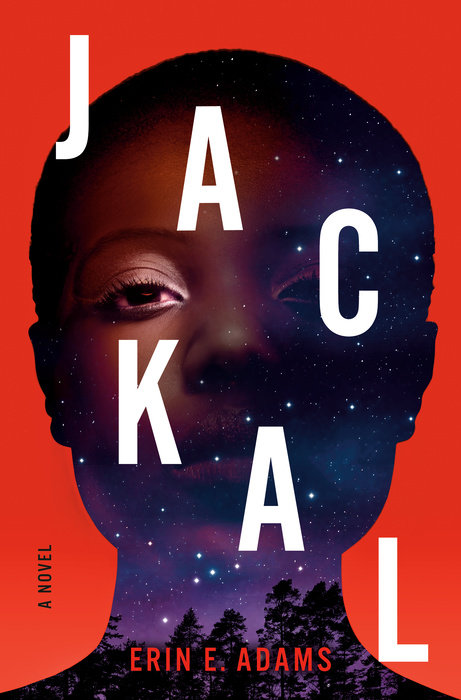
 Liz Rocher is coming home . . . reluctantly. As a Black woman, Liz doesn't exactly have fond memories of Johnstown, Pennsylvania, a predominantly white town. But her best friend is getting married, so she braces herself for a weekend of awkward and passive-aggressive reunions. Liz has grown, though; she can handle whatever awaits her. But on the day of the wedding, somewhere between dancing and dessert, the bride's daughter, Caroline, goes missing-and the only thing left behind is a piece of white fabric covered in blood.

Review: Jackal is a taut, debut thriller that is steeped in real life terror. For more than three decades, Black girls in the predominately white town of Johnstown, Pennsylvania have been killed and/or gone missing. The missing women's lives are forgotten or have been slandered which provides a convenient excuse for the police to not open an investigation. 
  The book is told in two narratives. In one narrative we follow our protagonist, Liz Rocher who has reluctantly returned to her hometown because of her best friend's wedding. Liz is one of the handful of Black residents and has constantly been berated with racial microaggressions. We learn that she has been seeking therapy and has recently ended a toxic relationship. The author does a good job in making the reader care for Liz as we get to know her past in small details throughout the story. 
  The second narrative is the "jackal", which is interestingly told in the second person narration. These chapters intersect Liz's story and provide its chilling atmosphere. It is through the jackal's chapter that we learn more about the young Black women who have been essentially hunted and preyed upon. 
  The two narratives intersect when Liz's godchild and best friend's biracial daughter goes missing and her Liz's mother is being threatened to leave her residence. Unable to let the police botch another investigation, Liz sets out to take on the town's entrenched racism and confront the jackal after she begins to recognize the pattern of the disappearances that others have ignored. 
  I had a hard time putting this thriller down. The suspense and horror that these Black women go through is certainly spine tingling. The mystery surrounding the jackal had me hooked and I was surprised to find a supernatural element woven throughout the story. The supernatural element didn't quite work for me, but it didn't hinder my engagement of the story. The real beast here is racism which will slowly kill you. I would definitely recommend this book to readers who enjoy thrillers with social commentary or movies like Jordan Peele's "Get Out" or "Us" or the television show "Lovecraft Country". 

Rating: 4 stars

Words of Caution: There is strong violence at times gory, language, and a fade to black sex scene. Recommended for older teens and adults.

If you like this book try: For teens try Monday's Not Coming by Tiffany D. Jackson, For adults try As The Wicked Watch by Tamaron Hall, Bluebird, Bluebird by Attica Locke
Rummanah Aasi
Description:
 Serene dreams of making couture dresses even more stunning than her mom’s, but for now she’s an intern at her mom’s fashion label. When her mom receives a sudden diagnosis of pancreatic cancer, all that changes. Serene has to take over her mother’s business overnight while trying to figure out what happened with her dad in Beijing. He left before she was born, and Serene wants to find him, even if it means going against her mom’s one request—never look back.
   Lian Chen moved from China to Serene’s mostly white Southern California beach town a year ago. He doesn’t fit in at school, where kids mispronounce his name. His parents don’t care about what he wants to do--comedy--and push him toward going to MIT engineering early. Lian thinks there’s nothing to stick around for until one day he starts a Chinese Club after school and Serene walks in. Worlds apart in the high school hierarchy, Serene and Lian soon find refuge in each other, falling in love as they navigate life-changing storms.

Review: After reading and enjoying several of books by Kelly Yang, I have become a fan. I immediately added Private Label to my reading pile without paying much attention to the book's description. This is a heavy read, but despite its heaviness I did find it thought provoking and enjoyable. 
  Like her other books thus far, Yang explores the themes of gender, racism, class, and identity. Serene and Lian both identify as Chinese Americans though they express themselves very differently. Serene has more or less assimilated to her mostly white affluent community and school. Due to her mother's well known designer brand and the fact that she can give designer clothes to friends and has the most popular boy as a boyfriend, she is accepted at the top of her school's social circles. Lian comes from a traditional, middle class Chinese family in which he is pushed to succeed in the STEM field and get into a cutthroat early admissions engineering program at MIT though he dreams of being a stand-up comic. Where Serene is at the top, Lian is constantly ridiculed and singled out for his "Asian-ness". 
    Serene's and Lian's worlds collide when Serene receives the life altering news that her mother has been diagnosed with stage three pancreatic cancer and she wants to reach out to her elusive father who lives overseas. Serene seeks out Lian's help through his Chinese club at school by learning Chinese though his club is actually a ruse for him to carve out private space to practice his stand-up for a local competition. I really enjoyed watching Serene's and Lian's relationship grow. They find acceptance, solace, and support in one another. It is their romance that buoys the novel that would otherwise be too dark. I found their conversation surrounding assimilation to be enlightening and often mirroring that of my own experience.
  Fashion does play a prominent role in the book, though I would argue it is less of a slapstick like "Devil Wears Prada" which is what the book comparison calls for. I loved the idea of embracing ones culture and expressing that in the fashion. I did, however, have to suspended my disbelief that a teen would take over her mother's brand, but that didn't hinder my enjoyment of this book. I thought it was a nice touch of Serene's journey of self discovery. If you are looking for a realistic fiction novel with vibrant characters and that balances the heaviness of coming of age with a romantic subplot do check this book out. 

Rating: 4 stars

Words of Caution: There is some language, scenes of racial microaggressions, sexting, and a fade to black sex scene. Recommended for Grades 9 and up.

If you like this book try: This Place is Still Beautiful by XiXi Tan, Picture Us in the Light by Kelly Loy Gilbert
Rummanah Aasi
Description:
 Ellice Littlejohn seemingly has it all: an Ivy League law degree, a well-paying job as a corporate attorney in midtown Atlanta, great friends, and a “for fun” relationship with a rich, charming executive—her white boss, Michael. But everything changes one cold January morning when Ellice goes to meet Michael and finds him dead with a gunshot to his head.
And then she walks away like nothing has happened. Why? Ellice has been keeping a cache of dark secrets, including a small-town past and a kid brother who’s spent time on the other side of the law. She can’t be thrust into the spotlight—again. But instead of grieving this tragedy, people are gossiping, the police are getting suspicious, and Ellice, the company’s lone Black attorney, is promoted to replace Michael. While the opportunity is a dream-come-true, Ellice just can’t shake the feeling that something is off.
When she uncovers shady dealings inside the company, Ellice is trapped in an impossible ethical and moral dilemma. Suddenly, Ellice’s past and present lives collide as she launches into a pulse-pounding race to protect the brother she tried to save years ago and stop a conspiracy far more sinister than she could have ever imagined.

Review: All Her Little Secrets is my first legal thriller that I have ever read. Since I had no expectations for the book, I ended up enjoying it a lot more. The author Wanda M. Morris is a corporate attorney and her expertise clearly shines through the book without resorting to legal jargon. I found the plot to be gripping and it quickly intensifies the further Ellice digs into the company. While Ellice does make impulsive decisions, you can actually understand her thought process as her backstory is slowly revealed. Though I had inklings on who was behind Michael's murder, the reasoning behind the company's shadier dealings caught me by surprised. 
  I did like Ellice with her flaws and all. I had a better understanding of how much she risked hiding her childhood secrets, her distrust in the police, and her moral compass. I did love her loving and supportive mother-figure Vera Henderson who practically raised Ellice and her brother. Morris effectively tackles workplace racism and sexism without it being heavy handed. 

Rating: 4 stars

Words of Caution: There is some strong language, a reference to sexual abuse of a child, at-home abortion, neglect, an alcoholic mother, microaggressions, misogyny. Recommended for Adults only.

If you like this book try: And Now She's Gone by Rachel Howzell Hall
Rummanah Aasi
Description:
 When two Niveus Private Academy students, Devon Richards and Chiamaka Adebayo, are selected to be part of the elite school’s senior class prefects, it looks like their year is off to an amazing start. After all, not only does it look great on college applications, but it officially puts each of them in the running for valedictorian, too.
Shortly after the announcement is made, though, someone who goes by Aces begins using anonymous text messages to reveal secrets about the two of them that turn their lives upside down and threaten every aspect of their carefully planned futures. As Aces shows no sign of stopping, what seemed like a sick prank quickly turns into a dangerous game, with all the cards stacked against them. Can Devon and Chiamaka stop Aces before things become incredibly deadly?

Review: Ace of Spades is an intense thriller that captivated me right from the first page. There are plenty of books out there that feature Black characters with a thriller/horror vibe that automatically get a comparison to Jordan Peele's debut film "Get Out". While the comparison often falls flat, Ace of Spades has legitimate "Get Out" vibes that are chilling, real, strong, and frankly disturbing.
    Senior year is off to a promising start for Niveus Private Academy students Chiamaka Adebayo and Devon Richards, who were both awarded prefect titles. Chiamaka is at the top of the popularity social chain. She comes from an affluent household, earns perfect grades, wears designer clothes, is working her way to getting a perfect boyfriend, and also getting into Yale, her dream school. Devon is a musician who comes from a working, single parent household, and due to being bullied relentlessly by his homophobic classmates at his old school, prefers to keep a low profile. Soon after the announcement is made, Chiamaka's and Devon's lives are turned upside down by anonymous texter, Aces, who divulges information that ruin their reputation and possibly their future. The chase to unmask Ace propels the story forward.
  The story is narrated by Chiamaka and Devon's alternating points of view. I immediately liked Devon's chapters. He is already such a vulnerable character but watching him get by hit invisible arrows was heartbreaking and infuriating. Though I liked Chiamaka as a character who is unapologetically ambitious and confident, her chapters took me a while to get invested in; only because I knew that despite her being of the same class status as the popular kids, she will always be "othered" because of the color of her skin, but once she came to that conclusion herself, her chapters became much more enjoyable. 
  While the setup for Ace of Spades sounds like your typical teen thriller, what elevates this thriller is Àbíké-Íyímídé keen insight on themes such as systemic racism, structural white supremacy, privilege, microaggressions, class, and homophobia. Like the movie "Get Out", there is this creepy, uncertainty that something is not right at Niveus Private Academy and the themes are a constant shadow that follow Chiamaka and Devon around, the part in which both of our main characters discover the reason behind Aces is horrifying. Each of these themes are discussed in length but not in a heavy handed way and like Chiamaka and Devon you begin to see the harm and trauma it causes. My only small problem with the book is its deus ex machina ending that was just too simple and convenient for an otherwise complex thriller. If you are like me and are extremely picky when it comes to mysteries/thrillers, definitely give this one a shot. I had a really hard time putting this book down and its twisty plot kept me on the edge of my seat the entire time I was reading it. I am definitely looking forward to whatever Àbíké-Íyímídé works on next.
  

Rating: 4.5 stars

Words of Caution: There is strong language, reference to sexual situations (occurs off the page), emotional and psychological torture, gaslighting, outing sexual orientation, and underage drinking and drug use. Recommended for Grades 9 and up.

If you like this book try: Time Will Tell by Barry Lyga, The Other Black Girl by Zakiyah Dalila Harris
Rummanah Aasi
Description:
 Nima doesn't feel understood. By her mother, who grew up far away in a different land. By her suburban town, which makes her feel too much like an outsider to fit in and not enough like an outsider to feel like that she belongs somewhere else. At least she has her childhood friend Haitham, with whom she can let her guard down and be herself. Until she doesn't.
   As the ground is pulled out from under her, Nima must grapple with the phantom of a life not chosen, the name her parents didn't give her at birth: Yasmeen. But that other name, that other girl, might just be more real than Nima knows. And more hungry.And the life Nima has, the one she keeps wishing were someone else's. . .she might have to fight for it with a fierceness she never knew she had.

Review: Nima is a Muslim, working class, a daughter of a single mother, and implied Sudanese American who feels invisible and unmoored. She lacks ties to her native land, not speaking Arabic fluently nor does she feel American as her bullies constantly remind her of her accent and calling her a terrorist because of her Muslim faith. Nima lives alone with her hijabi mother; her only friend is an energetic boy in her building named Haitham, who feels like a sibling. As rising Islamophobia in their suburban American community increases both the bullying at school and Haitham who is physically assaulted in a hate crime, Nima longs for the life she believes she would have had if she had been named Yasmeen as her mother originally planned. She constantly plays the "what if?" game in which she imagines a life of happiness and belonging that are captured in old family photos. With her desire to become Yasmeen growing, Nima begins seeing glimpses of her other self while beginning to disappear. Nima's introspection and the constant feeling of not being 'enough' is beautifully and heartbreaking captured in verse. Readers, especially those who are immigrants, may find Nima and her pain and search for a 'home' to be highly relatable and palpable.  
   There is a dash of magical realism that is introduced halfway into the book. After a string of incidents leaves her feeling desolate, Nima meets Yasmeen, launching both into their parents' past and a battle between reality and what could be begins to form. I found the magical realism a bit hard to follow at times, especially the way it ends and the segue-way back to reality; however I understand the purpose of having Nima's visions of 'possibilities' manifest in the book and finally coming to the conclusion of self acceptance and being enough. Elhillo is a renowned and award winning poet and slam poet performer. Her skillful lyricism and carefully chosen words are artfully profound and achingly beautiful. I read this book a bit slowly than I normally do in order to savor her words. She is definitely an author to follow and I can not wait to see what she writes next.

Rating: 4 stars

Words of Caution: There is a physical assault related to a hate crime, bullying, and failed attempts of sexual assault. Recommended for Grades 9 and up.

If you like this book try: The Poet X by Elizabeth Acevedo, Every Body Looking by Candice Illoh
Rummanah Aasi
Description:
 Drew Ellis recognizes that he is't afforded the same opportunities, no matter how hard he works, that his privileged classmates at the Riverdale Academy Day School take for granted, and to make matters worse, Drew begins to feel as if his good friend Liam might be one of those privileged kids and is finding it hard not to withdraw, even as their mutual friend Jordan tries to keep their group of friends together.

Review: Class Act is a companion graphic novel to Jerry Craft's Newbery Award winner New Kid and could be read on its own. Class Act follows Drew Ellis, a friend of Jordan, who also struggles with racial microaggressions and trying to fit in his predominately white and affluent Riverdale Academy. Craft points out other differences that separates Drew from his other classmates though some differences make a bigger impact than others. Drew is physically developed at a faster rate than Jordan and it is hinted in the graphic novel that Drew would now be considered a "dangerous man" in society. 
  What struck me the most in this graphic novel is the economic disparities in the graphic novel. Drew lives with his loving grandmother and they struggle to stay afloat financially. In contrast, his white and affluent friend Travis lives in a mansion-like house with a hired Latinx nanny and a Black driver though Travis parents are absent from his life. Another telling moment when a school visit from a predominately Black and Latinx students take in the differences between their school and Riverdale Academy.  
  The Class Act is another accessible and discussion starter graphic novel that highlights inequity, which younger readers are just beginning to be socially aware and question. 

Rating: 4 stars

Words of Caution: None. Recommended for Grades 4 and up. 

If you like this book try: Clean Getaway by Nic Stone
Rummanah Aasi
Description: 
Mia Tang thinks she’s going to have the best year ever. She and her parents are the proud owners of the Calivista Motel, Mia gets to run the front desk with her best friend, Lupe, and she’s finally getting somewhere with her writing! But as it turns out, sixth grade is no picnic: 

1. Mia’s new teacher doesn’t think her writing is all that great.
2. The motel is struggling, and Mia has to answer to the Calivista’s many, many worried investors.
3. A new immigration law is looming and if it passes, it will threaten everything—and everyone—in Mia’s life.

It’s a roller coaster of challenges, and Mia needs all of her determination to hang on tight. But if anyone can find the key to getting through turbulent times, it’s Mia Tang!

Review: Three Keys is a great sequel to Yang's delightful Front Desk. Things are really looking up for Mia Tang as starts middle school. Her family are now the proud owners of the Calivista Motel. The motel is doing well, but the racist and xenophobic rhetoric of a rising political campaign and upcoming election.  California's Prop 187 would ban undocumented immigrants from access to health care and public schooling and it is on the ballot. The book's plot does a great job in showcasing the progress and setbacks that Mia experiences such as personally being faced with microaggressions by her teacher in class and taking note of similar experiences by her classmates of color. There is also a discussion of assimilation and class in which Mia feels a sense of guilt of losing her Chinese culture that her parents hold so dearly and Mia's mom wanting to buy an expensive dress to in order to impress other Chinese women. Though her family does well in business, there are still close to poverty. 
  The struggles of undocumented immigrants hits closely to Mia as her friend Lupe reveals that her family is undocumented, creating a portrait of fear as her father is jailed. The impending vote has significant consequences for all immigrants, not just the Garcias, as racial threats increase. With the help of a cast of strong supporting characters, Mia bravely uses her voice and her pen to change opinions—with family, friends, teachers, and even voters. She also learns what it means to be a good ally: to listen, to care, and to continue fighting for what is right. This timely novel is a great read and make an excellent book discussion for younger readers. 

Rating: 4.5 stars

Words of Caution: There are microaggressions made by a teacher to her students of color and xenophobic comments. Recommended for Grades 4 and up

If you like this book try: The Land of the Cranes by Aida Salazar, Efren Divided by Ernesto Cisneros
Rummanah Aasi
Description:
 Vernell LaQuan Banks and Justyce McAllister grew up a block apart in the Southwest Atlanta neighborhood of Wynwood Heights. Years later, though, Justyce walks the illustrious halls of Yale University and Quan sits behind bars at the Fulton Regional Youth Detention Center. Through a series of flashbacks, vignettes, and letters to Justyce--the protagonist of Dear Martin--Quan's story takes form. Troubles at home and misunderstandings at school give rise to police encounters and tough decisions. But then there's a dead cop and a weapon with Quan's prints on it. What leads a bright kid down a road to a murder charge? Not even Quan is sure.

Review: Dear Justyce is a companion novel to Nic Stone's extremely successful debut novel Dear Martin. Both books could be read independently of each other. In Dear Justyce, Stone turns her critical eye to the broken and injust criminal justice system. Though Quan and Martin were both raised in the same neighborhood and came from fractured family homes, their lives were led in two completely different directions: Martin to an Ivy school and Quan from the school to prison pipeline. 
  With his father in prison, Quan works hard to excel in school, avoids his mother’s abusive boyfriend, and has the added responsibility to raise and protect his younger siblings. Fast-forward to the present is an incarcerated Quan, remembering the day his father was arrested two years after that meeting. While in custody, Quan writes to Justyce at Yale. Through "snapshots" and letters we learn the circumstances and decisions that led to Quan's arrest as well as his tumultuous friendship with Justyce. When Quan professes that he didn't commit the crime for which he was incarcerated, Justyce becomes committed to clearing his name. 
  Through Quan, we see not just an incarcerated Black youth, but as a whole, humanized person with their trauma, hopelessness, and awareness of the impact of racial disparities in their lives and how it shapes their future. Unlike Dear Martin, I had a hard time with the narrative structure of the book. Though I understand Stone's purpose, I felt the constant back and forth of the timeline took me out of the story and I was often confused as to when the event was taking place. I found Quan's letters to be powerful and compelling much more than the fairy-tale like ending of Quan's fate (which is incredibly heartbreaking to think of it that way and it is addressed in an author's note). Once again Justyce can be seen as the 'exceptional' Black man and his ability to help Quan needed a suspension of disbelief. Though I am happy with the uplifting ending, I don't think it would have made a stronger impact if Stone chose to stick with gritty reality. 
  I also wanted to point out having the gang be named "Black jihad" made me feel incredibly uncomfortable as a Muslim reader.  Jihad is often defined as 'holy war' in western media. Jihad simply means struggle. To use jihad as part of a gang name is to perpetuate the ideology that Islam and violence are intertwined, though that might have not been Stone's intention.  Like Dear Martin, I did wish the secondary characters were a bit fleshed out. Overall Dear Justyce has a great message, but for me it is not as strong as Dear Martin.

Rating: 3.5 stars

Words of Caution: There is some language, allusions to domestic abuse, and trauma. Recommended for Grades 9 and up.

If you like this book try: Punching in the Air by Yusef Salaam and Ibi Zoboi, Just Mercy by Bryan Stevenson, This is My America by Kim Johnson, The Other Wes Moore by Wes Moore
Rummanah Aasi
Description:
 As the only Indian American kid in her small town, Lekha Divekar feels like she has two versions of herself: Home Lekha, who loves watching Bollywood movies and eating Indian food, and School Lekha, who pins her hair over her bindi birthmark and avoids confrontation at all costs, especially when someone teases her for being Indian.
    When a girl Lekha’s age moves in across the street, Lekha is excited to hear that her name is Avantika and she’s Desi, too! Finally, there will be someone else around who gets it. But as soon as Avantika speaks, Lekha realizes she has an accent. She’s new to this country, and not at all like Lekha. To Lekha’s surprise, Avantika does not feel the same way as Lekha about having two separate lives or about the bullying at school. Avantika doesn’t take the bullying quietly. And she proudly displays her culture no matter where she is: at home or at school.
    When a racist incident rocks Lekha’s community, Lekha realizes she must make a choice: continue to remain silent or find her voice before it’s too late.

Review: Like many first generation immigrants, Indian American Lekha is having trouble with navigating her two worlds. Lehka's family is the only Indian American family in her predominantly white suburb of Detroit. She is comfortable in expressing her Indian culture and flavorful foods at home. When she is at school, however, she tries her best to fade in the background and silence her voice as her classmates mock her for her bindi shaped-birthmark on her forehead. She allows teachers and students to mispronounce her name and to make disrespectful comments about her heritage. Lekha knows she should speak out but wouldn't that just make the situation worse?
  When a new Indian American family-with a daughter Lehka's age-moves to her neighborhood, she is thrilled, assuming that her new friend Avantika will also struggle like Lekha, but Avantika confidently talks about her family and traditions at school and fights back against microaggressions. Lehka is simultaneously inspired and confused. As she begins taking tentative steps toward speaking up about what matters to her, a classroom assignment to write an opinion piece becomes the catalyst for embracing her identity. 
  I could relate a lot to both Lekha's and Avantika's characters. The safety in being invisible is real and strong. Sadly, that's how I acted in my predominately white high school. What is most distressing is that I acted subconsciously and started with the best things such as clothes and music. It took me a while to reach Avantika's confidence but I am still working on it. There are two scenes that really hit me hard in the book such as downplaying a holiday that should be celebrated and decorating for the holiday. Lekha pleads with her parents to not put up a swastika (which in India represents prosperity, well being, and good luck) and on their family door for Diwali in fears of it being misinterpreted as a Nazi symbol. Both of these scenes highlight what it feels like to the "other" and having to feel that you can only choose one side (assimilation) and not both. I also appreciated that Avantika is not perfect. She also has her struggle in confronting colorism by using skin bleach cream to lighten her skin and standing up to her mother. I wish this was also explored more and we see Avantika use her own voice to speak out against internalized racism. 
 Despite these issues, American as Paneer Pie is a good book club pick where students can talk about race/ethnicity, microaggressions, and assimilation. Things do not wrap up in a bow at the end, but Lekha is starting to use her voice and stand up for herself.
 
Rating: 4 stars

Words of Caution: There is some bullying and microaggressions present in the book. There is also a racist incident in the book. Recommended for Grades 4 and up.

If you like this book try: Amina's Voice by Hena Khan, A Place at the Table by Saadia Faruqi and Laura Shovan
Rummanah Aasi
Description:
 Donte wishes he were invisible. As one of the few black boys at Middlefield Prep, he feels as if he is constantly swimming in whiteness. Most of the students don't look like him. They don't like him either. Dubbed the "Black Brother," Donte's teachers and classmates make it clear they wish he were more like his lighter skinned brother, Trey. Quiet, obedient.

When an incident with "King" Alan leads to Donte's arrest and suspension, he knows the only way to get even is to beat the king of the school at his own game: fencing. With the help of a former Olympic fencer, Donte embarks on a journey to carve out a spot on Middlefield Prep's fencing team and maybe learn something about himself along the way.

Review: With Black Brother, Black Brother Rhodes elevates a sports novel with a message to tackle on timely and important issues such as systemic racism, colorism, and bullying. Donte is having a difficult time adjusting to life at Middlefield Prep as being one of the only black boys in a predominately white school. Donte and his brother Trey are biracial (black and white) though Donte is the darker of the two and is constantly bullied and taunted with being called "Black Brother, Black Brother". His brother Trey is white passing and thus passes through school with ease. 
     Donte's bullying is relentless and he undergoes a cyclic inner turmoil of yearning to be invisible, shame, confusion, and anger. On a day when Donte could not take the bullying anymore, he throws down his backpack in class in anger and he is then swiftly arrested by police and charged. The book actually opens with Donte awaiting judgement for his "crime". Thankfully, his crime is dismissed as Rhodes points out Donte's privilege in being well off, and how the court is willing to treat him differently after seeing his white father and white-passing brother. 
  We soon see Donte driven to beat his bully, Alan, the captain of the school fencing team at his own game, but learning how to fence evolves to a deeper longing for Donte to claim something for himself. This quest sets Donte and Trey off on a mission to find Mr. Jones, a black former Olympic fencer and Boston Boys and Girls Club employee, who agrees to teach them how to fence. Along the way, Donte makes friends, becomes an excellent fencer, and finds his place in the Boston area. 
  Donte's story is a good primer for younger readers on microaggressions. I appreciated how direct and honest Rhodes is in the depiction of how differently Donte and Trey are treated. I actually liked that the book began with the mistreatment of Donte and then smoothly transitioned with his fencing journey. Learning of the back story and discrimination of Mr. Jones brought these two plot lines quite nicely. The depiction of Donte's confidence growing with each lesson and as he makes friends at the Boys and Girls Club is also welcoming and exciting, showing hope for the future. As a reader who generally has a hard time reading the same sport story over and over again, it is nice to have one that has a strong social message along with the excitement of a sport that is often not written about. 

Rating: 4 stars

Words of Caution: There are scenes of bullying. Recommended for Grades 5 and up.

If you like this book try: Track series by Jason Reynolds
Rummanah Aasi
Description:
 Every week, Tracy Beaumont writes letters to Innocence X, asking the organization to help her father, an innocent Black man on death row. After seven years, Tracy is running out of time—her dad has only 267 days left. Then the unthinkable happens. The police arrive in the night, and Tracy’s older brother, Jamal, goes from being a bright, promising track star to a “thug” on the run, accused of killing a white girl. Determined to save her brother, Tracy investigates what really happened between Jamal and Angela down at the Pike. But will Tracy and her family survive the uncovering of the skeletons of their Texas town’s racist history that still haunt the present?


Review: Every week Tracy has been writing letters to Innocence X, a non-for-profit organization that helps those who are unjustly in jail for a crime they did not commit, on behalf of her father, who has been sentenced to death row in their home state of Texas and wrongfully accused of murder. With less than three hundred days, Tracy is in a race against time to free her father. Tracy holds on deeply to hope that  her father will be exonerated and people will recognize failures in our justice system. As if this was not hard enough, Tracy and her family are thrown for a second loop when her older brother Jamal, a track star, is accused of killing his secret white girlfriend. Could these two cases be connected? 
    Weaving together gripping murder mysteries and a heartfelt narrative about a girl trying to save her family, Johnson explores the systemic, generational effects of police brutality, mass incarceration, and racism on the Black community. The discussion of racism, both explicit and implicit, are not sugar coated  and will be poignant for many readers. My minor qualms of the novel is an unnecessary love triangle that is a bit distracting from the overall narrative. I also wanted a bit more discussion regarding the skeletons in the closet in regards to the big reveals in the book. Nonetheless, This is My America is timely, powerful, thought provoking, and Tracy is a budding activist who demands change.  

Rating: 4.5 stars

Words of Caution: There is some strong language, mentions of lynching, hate crime, and a scene of underage drinking at a party. Recommended for Grades 9 and up.

 If you like this book try: Just Mercy by Bryan Stevenson, Dear Justyce by Nic Stone, Punching the Air by Ibi Zoboi and Yusuf Salaam
Rummanah Aasi

Description:
 For as long as she can remember, it’s been Robin and her mom against the world. Growing up in the 1990s as the only child of a single mother in Seoul, Korea, wasn’t always easy, but it has bonded them fiercely together.

So when a vacation to visit friends in Huntsville, Alabama, unexpectedly becomes a permanent relocation—following her mother’s announcement that she’s getting married—Robin is devastated. Overnight, her life changes. She is dropped into a new school where she doesn’t understand the language and struggles to keep up. She is completely cut off from her friends at home and has no access to her beloved comics. At home, she doesn’t fit in with her new step-family. And worst of all, she is furious with the one person she is closest to—her mother.

Then one day Robin’s mother enrolls her in a local comic drawing class, which opens the window to a future Robin could never have imagined.

 Review: Almost American Girl is a moving graphic memoir about belonging, family, immigration, and the love of art. Chuna's mother brought her to Albama, United States, under the pretense of another mother-daughter temporary trip. She is shocked and hurt to find that her stay in Alabama is actually permanent when her mother marries a man.  Now grappling with culture shock, bullying, and integrating into a new family, Chuna feels adrift. Her mother is still her hero, and she recognizes the sacrifices she has made in order for them to survive. Despite her attempts to join her new stepfamily, it is not easy and they are not very supportive. Chuna is also having a hard time at a predominate white school and is bullied for being Asian. It’s rough going though, especially when the rest of the Kims, her new stepfamily, are not very supportive. Understandably, Chuna feels isolated and out of place. She misses her friends and life in Seoul. It isn’t until her mother reminds her of her love of comics and drawing that Chuna becomes her own person, going by the name of Robin, and begins to thrive.
    The universal theme of desiring to belong and the common immigrant's plight to adjust to their new life isn't unique to this graphic novel, however, I very much appreciated a peek into the Korean culture. I did not know that there is a strong stigma against single-parent homes in Korea, which is the reason Robin is bullied in Korea. I also liked that Robin's mother, though flawed, was not a frequent stereotype of a quiet, submissive wife. Her mother is fiercely independent and did everything she could to help her daughter. The bond between her and Robin is the core for this graphic novel. Readers who enjoy graphic memoirs will find much to enjoy.

 Rating: 4 stars

 Words of Caution: There is some language, and scenes of bullying and racism. Recommended for Grades 7 and up.

 If you like this book try: Hey, Kiddo by Jarrett Krosoczka, The American Dream? by Shing Yin Khor
Rummanah Aasi
Description: 
Oak Knoll, a tight-knit North Carolina neighborhood. Professor of forestry and ecology Valerie Alston-Holt is raising her bright and talented biracial son, Xavier, who is headed to college in the fall. Then the Whitmans buy the property next door. They are a family with new money and a secretly troubled teenage daughter. They raze the house and trees next door to build themselves a showplace. The two families quickly find themselves at odds: first, over an historic oak tree in Valerie's yard, and soon after, the blossoming romance between their two teenagers. What does it mean to be a good neighbor?

Review: A Good Neighborhood is a thoughtful examination of class, privilege, and race. The book's plot is simple, two neighbors dispute over a tree, but Fowler is more interested in the broader scope that features tangled, complex situations and their eventual, heartbreaking consequences. Told through an omnipresent narrator, we are about to witness a tragedy in the making as the Whitmans move next door to the Alston-Holts. 
Valerie Alston-Holt, a widowed African-American woman and ecologist, raises her biracial son Xavier by herself. She is privileged to have a house in a peaceful neighborhood. Valerie feels very strongly about an oak tree on her property. She already has a poor opinion of her new neighbor, local white TV celebrity Brad Whitman, as the house he is having built compromises an oak tree on Valerie’s property. Xavier reminds her to give their neighbors a chance, which she accepts and lends an olive branch by inviting Mrs. Whitman to her book club. After racist and misogynistic microaggressions made by Brad, and learning of his step-daughter Juniper took a purity vow, Valerie is very wary about her neighbors and cautions Xavier.  None of this deters Valerie’s son, Xavier, a gifted musician and honors student who’s headed to college in the fall, attraction and pursuing Juniper. The tragedy is catalyzed when Valerie sues Brad and his builder for the damage to the tree. 
  The plot, though simple, is skillfully executed and allows the reader to delve into each of the characters's complexities and flaws. Though as readers we may not agree with their decisions and choices, we can understand why the characters made their choices and decisions. There are at times when I think the book played it safe, especially when discussing race and class, but just gutsy enough to get the point across. Some readers maybe be puzzled that a tragedy happened because of a tree, but it's important to remember what that tree means to Valerie, Brad, and our social awakening of systemic racism. This book would make a great book club discussion.

Rating: 4 stars

Words of Caution: There is some strong language, including racial slurs. There are also allusions to sex, pedophilia, and suicide. Recommended for older teens and adults.

If you like this book try: Such a Fun Age by Kimberly Reid, Valentine by Elizabeth Wetmore
Rummanah Aasi
Description:
 In this deeply inspiring book, Winona Guo and Priya Vulchi recount their experiences talking to people from all walks of life about race and identity on a cross-country tour of America. Spurred by the realization that they had nearly completed high school without hearing any substantive discussion about racism in school, the two young women deferred college admission for a year to collect first-person accounts of how racism plays out in this country every day--and often in unexpected ways.

Review: Tell Me Who You Are is a travelogue with an equity and social justice lens written in a format very similar to the Humans of New York project. The collection is inspiring, jarring, and eye opening, but written in a very approachable and readable format. Before starting college, the young authors Winona Guo and Priya Vulchi spent a gap year traveling across the country asking one hundred and fifty people the same question: “How has race, culture, or intersectionality impacted your life?” Intersectionality means the overlapping parts of one's identity which includes their race, class, gender, sexuality, religion, ethnicity, nationality, ability, age, and physical appearance. Each response includes the interviewee's picture along with their answer and an eloquent, insightful commentary from the authors as well as footnotes and definitions that will help the reader understand the context of the interviewee's response. The book covers a wide range of responses from those who have dealt with some type of ostracism from society due to that individual's identity. Some of the eye-opening chapters include individuals who genuinely believe racism does not exist and those who encountered virulent racism. Another revealing chapter is a Japanese woman who recanted her family's experience in living at an internment camp and accepting that was the way of their life instead of challenging or fighting it. I also very much appreciated the numerous voices of indigenous people's who are often forgotten and ignored.
     An introduction informs the reader that the authors embarked on their own journey learning and talking about race from their own personal struggles with racism. Both authors had founded CHOOSE (princetonchoose.org) “as a platform for racial literacy,” on which they shared stories from interviewees in the Princeton area; they had spoken at schools; and they had given a TED talk. Their yearlong investigation deepened and widened their perspective. The book's back matter is also important and it includes additional resources and ten conversational norms to help the reader navigate an open and honest conversation. Talking about race, culture, and identity is hard and very uncomfortable for everyone. We have to lean into the discomfort and talk openly, honestly about the United State's systemic racism if we want to see social change. If you are looking for a read that touches upon race and intersectionality, but do not have a lot of time to do a deep dive-in read definitely check out Tell Me Who You Are

Rating: 4 stars

Words of Caution: There is some strong language including racial and homophobic slurs. Recommended for teens and adults.

If you like this book try: American Like Me edited by America Ferrera,  The Good Immigrant by Nikesh Shukla
Rummanah Aasi
Description: The year is 1946, and the Lee family has moved from Chinatown to Downtown Metropolis. While Dr. Lee is eager to begin his new position at the Metropolis Health Department, his two kids, Roberta and Tommy, are more excited about being closer to the famous superhero Superman!

Tommy adjusts quickly to the fast pace of their new neighborhood, befriending Jimmy Olsen and joining the club baseball team, while his younger sister Roberta feels out of place when she fails to fit in with the neighborhood kids. She's awkward, quiet, and self-conscious of how she looks different from the kids around her, so she sticks to watching people instead of talking to them.

While the Lees try to adjust to their new lives, an evil is stirring in Metropolis: the Ku Klux Klan. The Klan targets the Lee family, beginning a string of terrorist attacks. They kidnap Tommy, attack the Daily Planet, and even threaten the local YMCA. But with the help of Roberta's keen skills of observation, Superman is able to fight the Klan's terror, while exposing those in power who support them--and Roberta and Superman learn to embrace their own unique features that set them apart.

Review: I am not a fan of Superman. I find him boring and one dimensional, but I am curious to see what Gene Luen Yang was going to do with this iconic superhero in his retelling of a popular 1940s radio drama. Superman Smashes the Klan takes on racism and white supremacy while also touching about the plight of immigrants' decision to assimilate in order to 'fit' in America. This graphic novel does a great job in explaining these difficult and important topics.
  The Lee family has moved from Chinatown to the Metropolis suburbs in 1946. Mr. Lee is excited to start his new job while Mrs. Lee struggles to remember to speak only English. Siblings Roberta and Tommy are also trying to settle into their new community. Roberta and Tommy face overt and subtle racism and they both have very different ways of dealing with microaggressions. Roberta is an introvert and the constant references to her otherness makes her withdraw further into herself. Tommy, due to his uncanny pitching skills, joins a local baseball team and wins friends, but uses self deprecating humor to deflect racial microaggressions and finds assimilation much easier. The theme of fitting in is a constant source of contention between Roberta and Tommy. 
  Yang does a great job in showing how systemic racism works in various and (unfortunately) authentic ways for instance one of their father's coworkers implies that the Lee family eats dog. A more overt and visual example is the a cross set ablaze on the Lee's front lawn by the Klan of the Fiery Kross (a hate group analog to the KKK) in order to intimidate them and drive them away. Interestingly, Superman's involvement in the Lee's story parallels Roberta's story. Like Roberta, Superman is not using all of his powerful abilities in hopes of fitting in Metropolis. He has a hard time accepting his own alien roots, because of his own fear and the xenophobia of others. The plot moves at a snappy pace full of action and a nice balance of humor and potential romance for Roberta.  
  The artwork of the graphic novel is a blend of manga and western artwork. The backgrounds echo the historical fiction setting and compliments the dialogue well. Superman is larger than life in his physical appearance but he is also approachable and relatable. The back matter which includes historical context and Yang's own family immigrant story is important and gives the graphic novel more depth. If more Superman graphic novels were written like this I may change my mind about him. 

Rating: 4 stars

Words of Caution: There are some racist slurs and racist depictions in the book, which are discussed and explained in the graphic novel's back matter. Recommended for Grades 6 and up.

If you like this book try: Miles Morales by Jason Reynolds, Wonder Woman: Tempest Tossed by Laurie Halse Anderson
Rummanah Aasi
Description:
In a series of personal essays, prominent journalist and LGBTQIA+ activist George M. Johnson explores his childhood, adolescence, and college years in New Jersey and Virginia. From the memories of getting his teeth kicked out by bullies at age five, to flea marketing with his loving grandmother, to his first sexual relationships, this young-adult memoir weaves together the trials and triumphs faced by Black queer boys.

Review: All Boys Aren't Blue is an insightful and honest discussion of the intersections between race, gender, and sexuality. This memoir told in essays are centered in the author's own experiences as he navigates his own self-evolving identity in our world as a black queer young man. The memoir is divided into three sections following the author's childhood, adolescence, and current adulthood as he wrestles his pain and joy through life. He informs his reader that is not self involved to write a memoir at a very young age (33 years old), but had to write one in order to temporarily fill the vacuum of representation for young queer boys of color and to live his own truth. The journey of Johnson's activism is full of highs and lows as he understands the labels placed upon him by himself and by society. His essays and personal experiences touches upon many tough topics such as toxic masculinity, sexual abuse, institutional violence, and the dual fear of being both black and queer when both of these identities are neither safe. Though the topics are serious they add depth and realness to the essays and strengthens his call to all of us to help fight injustices in our society. I really appreciated his stance on the process of coming out to be cyclic instead of being finite and the necessity for inclusive sexual education that will help erase the stigma of queer relationships and ultimately help save lives. This is an important memoir that is a window for many and a critical mirror for black queer individuals. 

Rating: 4 stars

Words of Caution: The author includes homophobic and racial slurs and gives his reasoning for including them. There is also a frank and graphic depictions of sexual abuse as well as consensual sexual situations. Drug use and a friend's death by Recommended for teens and adults.  

If you like this book try: How We Fight for Our Lives by Saeed Jones, No Ashes in the Fire by Darnell L. Moore
Rummanah Aasi
Description: Zoe Washington isn’t sure what to write. What does a girl say to the father she’s never met, hadn’t heard from until his letter arrived on her twelfth birthday, and who’s been in prison for a terrible crime? A crime he says he never committed.
  Could Marcus really be innocent? Zoe is determined to uncover the truth. Even if it means hiding his letters and her investigation from the rest of her family. Everyone else thinks Zoe’s worrying about doing a good job at her bakery internship and proving to her parents that she’s worthy of auditioning for Food Network’s Kids Bake Challenge. But with bakery confections on one part of her mind, and Marcus’s conviction weighing heavily on the other, this is one recipe Zoe doesn’t know how to balance. The only thing she knows to be true: Everyone lies.

Review:  From the Desk of Zoe Washington is a timely and accessible read about institutionalized racism and injustice in the justice system for young readers. On her twelfth birthday, pastry chef Zoey gets a letter from her biological father, Marcus, whom she has never met and has been in prison her entire life. Despite her mother and step-father's wishes, Zoey is curious to learn more about Marcus and with the support of her grandmother writes back. Soon a tentative bond between Marcus and Zoe grows and Zoe's interest to learn more of Marcus' crime grows. After doing a brief search on the interest, Zoe uncovers that Marcus has been accused with murdering a college classmate. Marcus believes he is innocent and so does Zoe's grandmother, but what about Zoey and her parents? 
  I really appreciated how gracefully and sensitively this book handles a story about an incarcerated parent. Zoe is a compassionate heroine and though she is well aware her age is a barrier to finding the truth about Marcus, she becomes an activist by using her research skills, asking the tough questions that make adults around her uncomfortable, and utilizing her support network to the fullest extent. Zoe's frustrations with her best friend Trevor, who acts differently when he is with his friends, and her parent's differing viewpoints on Marcus make her relatable. I also loved the inclusion of the bakery aspect of the story as it highlights Zoe's creativity and balances out the serious topics with some lightness. I would definitely recommend this title to young readers who want to learn more about race and our flawed justice system.  

Rating: 4 stars

Words of Caution: There is mention of murder but no graphic descriptions and details are described. Recommended for Grades 4 and up.

If you like this book try: Just Mercy by Bryan Stevenson (Adapted for young readers edition), Harbor Me by Jacqueline Woodson, A Good Kind of Trouble by Lisa Ramee, The Season of Styx Malone by Kekla Magoon, and All Rise for the Honorable Perry T. Cook by Leslie Connor
Rummanah Aasi
 During this past school year I participated in a seminar called Seeking Educational Equity and Diversity (SEED) in an effort to educate myself about the social inequities and the systemic racism in our nation. SEED awakened a part of me that lay dormant due to the lack of vocabulary of how to express my frustrations and the shockingly repetitions of gas-lighting and internalized racism. I also discovered my own biases that I need to address. If you ever have an opportunity to participate SEED in the United States, I highly, highly recommend it. 

  I want to continue my journey of anti-racism. First to educate myself on the topic and then to find ways to implement it in my school curriculum. As our nation struggles to acknowledge that #Black Lives Matter, it is now evident that we have a lot of work to do to make our nation better and the work starts with us. There are tons of book lists created that offer suggestions on how to learn about race and racism and I urge you to take note of them and seek them out for yourselves. I really do hope these books remain in our forefront and in our social conscious. 

  I wanted to create a list for myself and hold myself accountable while I am on this journey. Given the fact that race is hard topic and we are still grappling with the Covid pandemic, I also want to practice self care. My goal is to read at least one anti-racist book per month. This is not a complete list as I am always adding more titles but a start. I hope you can join me.

Rummanah Aasi
Description: Long before George Takei braved new frontiers in Star Trek, he woke up as a four-year-old boy to find his own birth country at war with his father's -- and their entire family forced from their home into an uncertain future.

In 1942, at the order of President Franklin D. Roosevelt, every person of Japanese descent on the west coast was rounded up and shipped to one of ten "relocation centers," hundreds or thousands of miles from home, where they would be held for years under armed guard.

They Called Us Enemy is Takei's firsthand account of those years behind barbed wire, the joys and terrors of growing up under legalized racism, his mother's hard choices, his father's faith in democracy, and the way those experiences planted the seeds for his astonishing future.

Review: George Takei is famously known as the solo Asian American actor who played Sulu on the original Star Trek. In his beautifully and heart wrenching graphic memoir he revisits his childhood and his experience growing up in Japanese internment camps during World War II. Takei had not yet started school when he, his parents, and his younger siblings were forced to leave their home and report to the Santa Anita Racetrack for “processing and removal” due to President Franklin D. Roosevelt’s Executive Order 9066. The graphic memoir weave the daily slice of life of the Takei family while allowing readers to simultaneously experience the daily humiliations that they suffered in the camps and providing readers with a broader understanding of the federal legislation, lawsuits, and actions which led to and maintained this injustice. While the focus is largely on the Takei family as the parents struggle shelter their children from the danger and hatred they face and the childhood innocence of George and his brother offers some levity to the story, there is a also a good and fine balance displaying the heroes who fought against this civil rights injustice such as Fred Korematsu, the 442nd Regiment, Herbert Nicholson, and the ACLU’s Wayne Collins and the politicians who reveled in fear mongering and racism to ensure their power in the government.
  My only minor complaint about this graphic memoir is that its narrative structure is not consistent. It begins as a TED talk, but quickly loses that structure as Takei takes the reader into his childhood and then a big time jump into adulthood. Despite this minor quibble, this graphic memoir is an important part of U.S. History that is often overlooked and forgotten and should be read widely; however, its reality echoes loudly and clearly in our current political climate.

Curriculum Connection: U.S. History and English

Rating: 4 stars

Words of Caution: There is some minor language including racial slurs and some violent images. Recommended for Grades 8 and up.

If you like this book try: Fred Korematsu Speaks Up by Laura Atkins, for more graphic memoirs that talk about racism try the March series by John Lewis
Related Posts with Thumbnails