Showing posts with label Poetry. Show all posts
Rummanah Aasi
Description:
 Nima doesn't feel understood. By her mother, who grew up far away in a different land. By her suburban town, which makes her feel too much like an outsider to fit in and not enough like an outsider to feel like that she belongs somewhere else. At least she has her childhood friend Haitham, with whom she can let her guard down and be herself. Until she doesn't.
   As the ground is pulled out from under her, Nima must grapple with the phantom of a life not chosen, the name her parents didn't give her at birth: Yasmeen. But that other name, that other girl, might just be more real than Nima knows. And more hungry.And the life Nima has, the one she keeps wishing were someone else's. . .she might have to fight for it with a fierceness she never knew she had.

Review: Nima is a Muslim, working class, a daughter of a single mother, and implied Sudanese American who feels invisible and unmoored. She lacks ties to her native land, not speaking Arabic fluently nor does she feel American as her bullies constantly remind her of her accent and calling her a terrorist because of her Muslim faith. Nima lives alone with her hijabi mother; her only friend is an energetic boy in her building named Haitham, who feels like a sibling. As rising Islamophobia in their suburban American community increases both the bullying at school and Haitham who is physically assaulted in a hate crime, Nima longs for the life she believes she would have had if she had been named Yasmeen as her mother originally planned. She constantly plays the "what if?" game in which she imagines a life of happiness and belonging that are captured in old family photos. With her desire to become Yasmeen growing, Nima begins seeing glimpses of her other self while beginning to disappear. Nima's introspection and the constant feeling of not being 'enough' is beautifully and heartbreaking captured in verse. Readers, especially those who are immigrants, may find Nima and her pain and search for a 'home' to be highly relatable and palpable.  
   There is a dash of magical realism that is introduced halfway into the book. After a string of incidents leaves her feeling desolate, Nima meets Yasmeen, launching both into their parents' past and a battle between reality and what could be begins to form. I found the magical realism a bit hard to follow at times, especially the way it ends and the segue-way back to reality; however I understand the purpose of having Nima's visions of 'possibilities' manifest in the book and finally coming to the conclusion of self acceptance and being enough. Elhillo is a renowned and award winning poet and slam poet performer. Her skillful lyricism and carefully chosen words are artfully profound and achingly beautiful. I read this book a bit slowly than I normally do in order to savor her words. She is definitely an author to follow and I can not wait to see what she writes next.

Rating: 4 stars

Words of Caution: There is a physical assault related to a hate crime, bullying, and failed attempts of sexual assault. Recommended for Grades 9 and up.

If you like this book try: The Poet X by Elizabeth Acevedo, Every Body Looking by Candice Illoh
Rummanah Aasi
Description:
 This poem is a love letter to black life in the United States. It highlights the unspeakable trauma of slavery, the faith and fire of the civil rights movement, and the grit, passion, and perseverance of some of the world's greatest heroes. The text is also peppered with references to the words of Martin Luther King, Jr., Langston Hughes, Gwendolyn Brooks, and others, offering deeper insights into the accomplishments of the past, while bringing attention to the endurance and spirit of those surviving and thriving in the present.

Review: In his beautifully illustrated poem, The Undefeated, Kwame Alexander weaves the past and present triumphs and struggles of African Americans in the United States. Alexander does not shy away from pain and trauma such as enslavement and lends a voice for "unspeakable" who have lost their lives during the Middle Passage as well as the present abuse of police brutality. Despite these struggles, the book also does a marvelous job in also celebrating Black joy, achievements, and triumphs by highlighting popular individuals from a variety of fields such as artists, civil rights activists, poets, and writers. The book depicts recognizable individuals such as Gwendolyn Brooks, Jesse Owens, Dr. Martin Luther King Jr., but also lesser known but nonetheless remarkable individuals too such as Sarah Vaughan and Romare Bearden. 
   The text also has visual cues signal meaning as some words are in a larger font to signal signficance and others words that reference to movements or concepts are in italics. Nelson's illustrations are magnificent, photo-realistic and are rendered in oil. His attention to detail is incredible. The book concludes with an afterword from Alexander and a glossary of the individuals mentioned in the book. I would have liked a little more detailed back matter and a bibliography for further reading. Despite these quibbles, it is clear why The Undefeated was awarded the 2020 Caldecott, the 2020 Coretta Scott King Illustrator Award and was the 2020 Newbery Honor Book. 

Rating: 4 stars

Words of Caution: The poem does not shy away from the traumas of slavery and police brutality. Recommended for Grades 3 and up.

If you like this book try: Little Leaders: Bold Women in Black History by Vashti Harrison, Young, Gifted, and Black by Jamia Wilson
Rummanah Aasi
Description: Bestselling author Laurie Halse Anderson is known for the unflinching way she writes about, and advocates for, survivors of sexual assault. Now, inspired by her fans and enraged by how little in our culture has changed since her groundbreaking novel Speak was first published twenty years ago, she has written a poetry memoir that is as vulnerable as it is rallying, as timely as it is timeless. In free verse, Anderson shares reflections, rants, and calls to action woven between deeply personal stories from her life that she's never written about before.

Review: Like many readers my first introduction to Laurie Halse Anderson is through her powerful, heart wrenching debut novel, Speak, which I read during my first year of library school and it has resonated with me since then. I had no idea that the root of that novel stemmed from personal experience. In this powerful, timely, candid, and exquisite memoir told in free verse, Anderson delves into her past and that of her parents, sharing experiences of being a sexual assault survivor at the age of 13 and dealing with her father's PTSD and rageful episodes as a World War II veteran.
  Anderson's writing is clear, raw, and lyrical as she traces the years from her childhood to the start of her writing career, describing how the memory of her rape finally spurred her to write the truth and to become an activist against censorship and rape culture, which are both addressed in the book along with confusing social messages surrounding sexuality. Her road to reclaiming her voice and facing her demons is long, hard, and painful but also incredibly inspiring. Silence is a repeating theme throughout the memoir whether is it done subconsciously or forced upon in fear of not being believed. Shout should be required reading just like teaching consent should be required at all grade levels.

Rating: 5 stars

Words of Caution: There is strong language and candid discussions of sexual assault, sexual harassment, drug abuse, underage drinking, and domestic abuse. Recommended for Grades 9 and up.

If you like this book try:
Rummanah Aasi

Description: Ayesha Shamsi has a lot going on. Her dreams of being a poet have been set aside for a teaching job so she can pay off her debts to her wealthy uncle. She lives with her boisterous Muslim family and is always being reminded that her flighty younger cousin, Hafsa, is close to rejecting her one hundredth marriage proposal. Though Ayesha is lonely, she doesn’t want an arranged marriage. Then she meets Khalid who is just as smart and handsome as he is conservative and judgmental. She is irritatingly attracted to someone who looks down on her choices and dresses like he belongs in the seventh century.
When a surprise engagement between Khalid and Hafsa is announced, Ayesha is torn between how she feels about the straightforward Khalid and his family; and the truth she realizes about herself. But Khalid is also wrestling with what he believes and what he wants. And he just can’t get this beautiful, outspoken woman out of his mind.

Review: Ayesha at Last has been pitched as a Muslim Pride and Prejudice retelling, but I would describe it as an homage to the Jane Austen classic featuring Muslim characters set in Toronto, Canada. Smart, witty, and aspiring poet Ayesha Shamsi juggles her dreams and the stifling expectations of her tight-knit Toronto's Indian-Muslim community. Instead of pursuing her artistic passion, she picks a practical career as a high school teacher in order to pay back her financial loans to her uncle and watches as her flighty younger cousin, Hafsa, collects marriage proposals like trading cards. Ayesha is the non-desirable type as she is an outspoken feminist, and ancient according to the desi marriage clock.
  After a misunderstanding, Ayesha pretends to be Hafsa while planning a youth conference, where she is required to collaborate with conservative Khalid, a newcomer to the area. Ayesha pegs Khalid as rigid and judgmental on their first meeting because of his white robes, long beard, and ultra-conservative behavior. She doesn't object to arranged marriages, but believes compatibility is important, and she scorns Khalid's complacency with accepting his mother's choice of bride. Khalid pegs Ayesha as those types of Muslims who appear devout but goes to bars and interacts with men. The clash of these two opposing viewpoints on how to practice their religion is a constant tension between Khalid and Ayesha. As Ayesha and Khalid work on the conference together, Khalid learns to accommodate different viewpoints. 
  Family loyalty and reputation are a recurring theme throughout the novel. Khalid is overly reliant on his mother and completely passive about his future so long as it appeases his mother as his family's reputation was rocked by his rebellious sister Zareena. Ayesha is trapped between being loyal to uncle and aunt while being a pushover to her spoiled and immature cousin. I loved this book for its candid yet critical view of the social pressures facing young Muslims as well as the universal question of "What makes a good and bad Muslim?" which all Muslims ask themselves. I appreciated the author's inclusion of Muslims of a wide faith range from the devout to the secular as they are without figure pointing of what they should be. There are plenty of laugh out loud moments, mostly at the cost of Khalid's comment in not getting with the 21st century and abundant cultural references, which elevates Ayesha at Last beyond just another Austen adaptation/retelling. Along with witty social critique there are other serious issues that the author does not shy away from such as workplace discrimination, alcoholism, and abortion. I did, however, think the ending was a bit rushed and I selfishly wanted an epilogue, but this is one of my favorite books that I have read this summer and I highly recommend it.

Rating: 4.5 stars

Words of Caution: A pornography website featuring younger age girls is mentioned in the book along with crude humor, mentions of drugs and alcohol, and language. Recommended for Grades 10 and up.

If you like this book try: Pride, prejudice, and other flavors by Sonali Dev
Rummanah Aasi

Description: Xiomara Batista feels unheard and unable to hide in her Harlem neighborhood. Ever since her body grew into curves, she has learned to let her fists and her fierceness do the talking. But Xiomara has plenty she wants to say, and she pours all her frustration and passion onto the pages of a leather notebook, reciting the words to herself like prayers—especially after she catches feelings for a boy in her bio class named Aman, who her family can never know about. With Mami’s determination to force her daughter to obey the laws of the church, Xiomara understands that her thoughts are best kept to herself.

So when she is invited to join her school’s slam poetry club, she doesn’t know how she could ever attend without her mami finding out, much less speak her words out loud. But still, she can’t stop thinking about performing her poems. Because in the face of a world that may not want to hear her, Xiomara refuses to be silent.


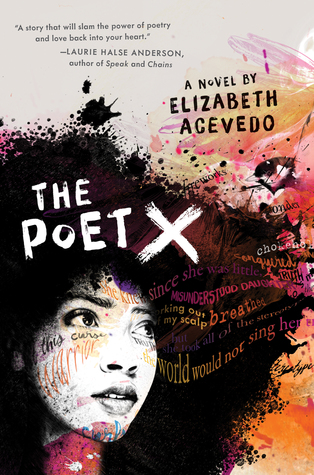
Review: Poet X is a coming-of-age story from the streets of Harlem. Xiomara Barista is a Afro-Dominican, teenage poet seeking to express herself. X has loved writing down her thoughts, but  unfortunately she doesn’t get to share them with her family, due to her mother’s strict Catholic religious upbringing. When X starts questioning her faith and realizes her brother is hiding his own secrets from their mother, she starts figuring out how she can stand up for herself and her beliefs. The novel in verse is mostly introspective as X explores other poignant themes facing girls today, such as body politics, slut shaming, unwanted attention from men, how women treat one another and subtly discusses the toxic strong black women trope.
  I liked X as a character and there are verses that stood out to me that made me pause and reflect. I did, however, felt wanting more from the book as I finished it. I wanted more of a discussion and appearance of her X's family. X's mother has a big influence on her though she is not given much page time and her father is noticeably absent. X's brother who is the opposite of her fierce and aggressive attitude and after we learn of his big secret the plot thread goes nowhere. Poet X does affirm Acevedo as a writer to watch out and I look forward to reading more from her in the future.

Rating: 4 stars

Words of Caution: There is some strong language, mention of drug usage and sex. Recommended for Grades 9 and up.


If you like this book try: Gabi, A Girl in Pieces by Isabel Quintero, The Disturbed Girl's Dictionary by NoNieqa Ramos
Rummanah Aasi

Description: Save the restaurant. Save the town. Get the girl. Make Abuela proud. Can thirteen-year-old Arturo Zamora do it all or is he in for a BIG, EPIC FAIL? For Arturo, summetime in Miami means playing basketball until dark, sipping mango smoothies, and keeping cool under banyan trees. And maybe a few shifts as junior lunchtime dishwasher at Abuela's restaurant. Maybe. But this summer also includes Carmen, a cute poetry enthusiast who moves into Arturo's apartment complex and turns his stomach into a deep fryer. He almost doesn't notice the smarmy land developer who rolls into town and threatens to change it. Arturo refuses to let his family and community go down without a fight, and as he schemes with Carmen, Arturo discovers the power of poetry and protest through untold family stories and the work of Jose Marti.

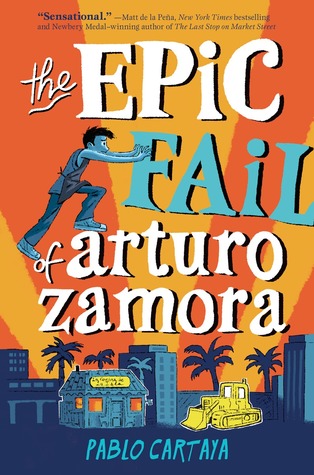
Review: The Epic Fail of Arturo Zamora is a warm and at times heartbreaking story filled with family, tradition, and community. Every summer Arturo is looking forward to a Miami summer filled with friends, ice cream, and working at his family’s popular restaurant, La Cocina de la Isla, but his plans get derailed from the start. Carmen, his mother’s goddaughter, comes to visit, and Arturo may have a crush on her. He is confused whether or not he and Carmen are related. His "promotion" at the restaurant is harder than he thought, and worst of all, his family’s plan to expand into an adjacent empty lot seems hopeless when flashy real-estate developer Wilfrido Pipo comes to town with plans of his own.
  Arturo hopes the community his abuela and abuelo loved for so long will support them, and with the help of his family, friends, and the work of Cuban poet and revolutionary hero José Martí, Arturo finds the strength to fight for what he believes in. I absolutely loved this book is organically filled with family and culture without feeling like it is checking a list of requirements. The characters are lively and Arturo's family comes to life and leave you feeling like they are part of your family. The story is also interspersed with letters, poems, and Twitter messages, offers a timely tale of a community steeped in tradition and multiculturalism, working together against encroaching gentrification. Arturo’s is a great narrator and one the reader can easily root for. This is a quick and uplifting read. A great choice for those looking for books to help celebrate Hispanic Heritage month.

Rating: 4 stars

Words of Caution: None. Recommended for Grades 4 and up.

If you like this book try: Merci Suarez Changes Gears by Meg Medina, Marcus Vega Doesn't Speak Spanish by Pablo Cartaya
Rummanah Aasi

 I wanted to post a book list of books from a variety of genres and reading levels in celebration of National Hispanic Heritage Month. National Hispanic Heritage Month commemorates the histories, cultures and contributions of American citizens whose ancestors came from Spain, Mexico, the Caribbean and Central and South America. If you would like to learn more, please visit the National Hispanic Heritage Month website.

 I've read quite a few of these titles and others are on my ever-growing to be read pile. This is by no means a comprehensive list. There are hundreds of titles out there to choose from. All of these titles are either feature Hispanic characters and/or are written by authors from Hispanic backgrounds. If I have reviewed the book, I will link my review.


Children's Picture and Chapter Books


 Mango, Abuela, and Me by Meg Medina: Mia’s Abuela has left her sunny house with parrots and palm trees to live with Mia and her parents in the city. The night she arrives, Mia tries to share her favorite book with Abuela before they go to sleep and discovers that Abuela can’t read the words inside. So while they cook, Mia helps Abuela learn English ("Dough. Masa"), and Mia learns some Spanish too, but it’s still hard for Abuela to learn the words she needs to tell Mia all her stories. Then Mia sees a parrot in the pet-shop window and has the perfect idea for how to help them all communicate a little better. An endearing tale from an award-winning duo that speaks loud and clear about learning new things and the love that bonds family members.

Juana & Lucas by Juana Medina: Juana loves many things — drawing, eating Brussels sprouts, living in Bogotá, Colombia, and especially her dog, Lucas, the best amigo ever. She does not love wearing her itchy school uniform, solving math problems, or going to dance class. And she especially does not love learning the English. Why is it so important to learn a language that makes so little sense? But when Juana’s Abuelos tell her about a special trip they are planning—one that Juana will need to speak English to go on—Juana begins to wonder whether learning the English might be a good use of her time after all.

Separate is Never Equal: Sylvia Méndez and Her Family's Fight for Desegregation by Duncan Tonatiuh: Almost 10 years before Brown vs. Board of Education, Sylvia Méndez and her parents helped end school segregation in California. An American citizen of Mexican and Puerto Rican heritage who spoke and wrote perfect English, Méndez was denied enrollment to a “Whites only” school. Her parents took action by organizing the Hispanic community and filing a lawsuit in federal district court. Their success eventually brought an end to the era of segregated education in California.

Niño Wrestles the World (Niño) by Yuyi Morales: Señoras y Señores, put your hands together for the fantastic, spectacular, one of a kind . . . Niño!

Fwap! Slish! Bloop! Krunch! He takes down his competition in a single move!

No opponent is too big a challenge for the cunning skills of Niño—popsicle eater, toy lover, somersault expert, and world champion lucha libre competitor!


Children/Middle Grade Reads


The Epic Fail of Arturo Zamora by Pablo Cartaya: For Arturo, summertime in Miami means playing basketball until dark, sipping mango smoothies, and keeping cool under banyan trees. And maybe a few shifts as junior lunchtime dishwasher at Abuela's restaurant. Maybe. But this summer also includes Carmen, a cute poetry enthusiast who moves into Arturo's apartment complex and turns his stomach into a deep fryer. He almost doesn't notice the smarmy land developer who rolls into town and threatens to change it. Arturo refuses to let his family and community go down without a fight, and as he schemes with Carmen, Arturo discovers the power of poetry and protest through untold family stories and the work of Jose Marti.

The Dreamer by Pam Muñoz Ryan: Neftali finds beauty and wonder everywhere: in the oily colors of mud puddles; a lost glove, sailing on the wind; the music of birds and language. He loves to collect treasures, daydream, and write--pastimes his authoritarian father thinks are for fools. Against all odds, Neftali prevails against his father's cruelty and his own crippling shyness to become one of the most widely read poets in the world, Pablo Neruda. This moving story about the birth of an artist is also a celebration of childhood, imagination, & the strength of the creative spirit. Sure to inspire young writers & artists.

The Lightning Queen by Laura Resau: Nothing exciting happens on the Hill of Dust, in the remote mountains of Mexico in the 1950s. There's no electricity, no plumbing, no cars, just day after day of pasturing goats. And now, without his sister and mother, eleven-year-old Teo's life feels even more barren. And then one day, the mysterious young Esma, who calls herself the Gypsy Queen of Lightning, rolls into town like a fresh burst of color. Against all odds, her caravan's Mistress of Destiny predicts that Teo and Esma will be longtime friends. Suddenly, life brims with possibility. With the help of a rescued duck, a three-legged skunk, a blind goat, and other allies, Teo and Esma must overcome obstacles-even death-to fulfill their impossible destiny.

Esperanza Rising by Pam Muñoz Ryan: Esperanza thought she'd always live with her family on their ranch in Mexico--she'd always have fancy dresses, a beautiful home, and servants. But a sudden tragedy forces Esperanza and Mama to flee to California during the Great Depression, and to settle in a camp for Mexican farm workers. Esperanza isn't ready for the hard labor, financial struggles, or lack of acceptance she now faces. When their new life is threatened, Esperanza must find a way to rise above her difficult circumstances--Mama's life, and her own, depend on it.

YA


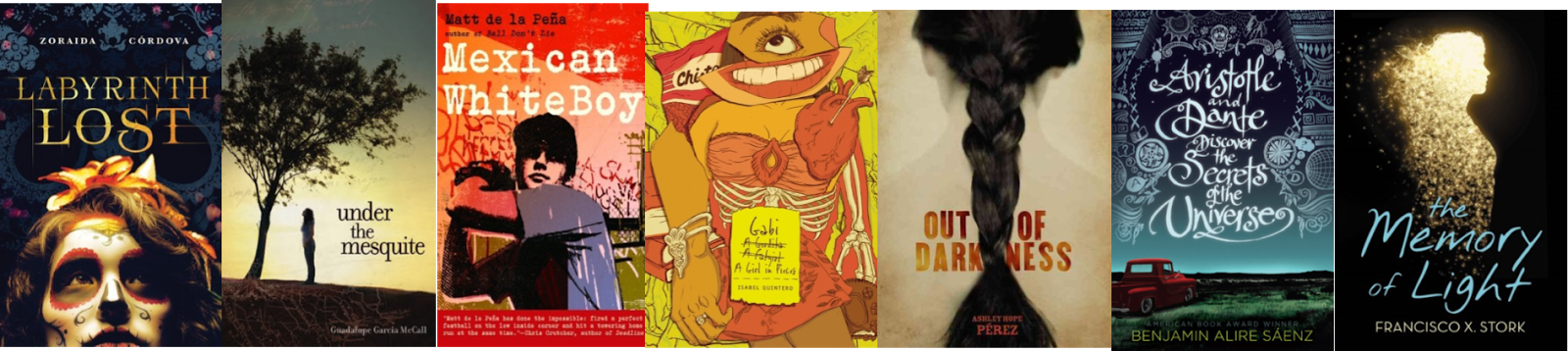
Labyrinth Lost (Brooklyn Brujas, #1) by Zoraida Córdova: Alex is a bruja, the most powerful witch in a generation…and she hates magic. At her Deathday celebration, Alex performs a spell to rid herself of her power. But it backfires. Her whole family vanishes into thin air, leaving her alone with Nova, a brujo boy she can’t trust, but who may be Alex’s only chance at saving her family.

Under the Mesquite by Guadalupe Garcia McCall: When Lupita learns Mami has cancer, she is terrified by the possibility of losing her mother, the anchor of her close-knit family. Suddenly, being a high school student, starring in a play, and dealing with friends who don't always understand, become less important than doing whatever she can to save Mami's life.
  While her father cares for Mami at an out-of-town clinic, Lupita takes charge of her seven younger siblings. As Lupita struggles to keep the family afloat, she takes refuge in the shade of a mesquite tree, where she escapes the chaos at home to write. Forced to face her limitations in the midst of overwhelming changes and losses, Lupita rediscovers her voice and finds healing in the power of words.

Mexican Whiteboy by Matt de la Peña: Danny's tall and skinny. Even though he’s not built, his arms are long enough to give his pitch a power so fierce any college scout would sign him on the spot. Ninety-five mile an hour fastball, but the boy’s not even on a team. Every time he gets up on the mound he loses it.
  But at his private school, they don’t expect much else from him. Danny’ s brown. Half-Mexican brown. And growing up in San Diego that close to the border means everyone else knows exactly who he is before he even opens his mouth. Before they find out he can’t speak Spanish, and before they realize his mom has blond hair and blue eyes, they’ve got him pegged. But it works the other way too. And Danny’s convinced it’s his whiteness that sent his father back to Mexico.
   That’s why he’s spending the summer with his dad’s family. Only, to find himself, he may just have to face the demons he refuses to see--the demons that are right in front of his face. And open up to a friendship he never saw coming.

Gabi, A Girl in Pieces by Isabel Quintero: Gabi Hernandez chronicles her last year in high school in her diary: college applications, Cindy's pregnancy, Sebastian's coming out, the cute boys, her father's meth habit, and the food she craves. And best of all, the poetry that helps forge her identity.

Out of Darkness by Ashley Hope Pérez: New London, Texas. 1937. Naomi Vargas and Wash Fuller know about the lines in East Texas as well as anyone. They know the signs that mark them. They know the people who enforce them. But sometimes the attraction between two people is so powerful it breaks through even the most entrenched color lines. And the consequences can be explosive.

Aristotle and Dante Discover the Secrets of the Universe by Benjamin Alire Sáenz: Aristotle is an angry teen with a brother in prison. Dante is a know-it-all who has an unusual way of looking at the world. When the two meet at the swimming pool, they seem to have nothing in common. But as the loners start spending time together, they discover that they share a special friendship—the kind that changes lives and lasts a lifetime. And it is through this friendship that Ari and Dante will learn the most important truths about themselves and the kind of people they want to be.

Memory of Light by Francisco X. Stork: Vicky Cruz shouldn’t be alive. That’s what she thinks, anyway—and why she tried to kill herself. But then she arrives at Lakeview Hospital, where she meets Mona, the live wire; Gabriel, the saint; E.M., always angry; and Dr. Desai, a quiet force. With stories and honesty, kindness and hard work, they push her to reconsider her life before Lakeview, and offer her an acceptance she’s never had. Yet Vicky’s newfound peace is as fragile as the roses that grow around the hospital. And when a crisis forces the group to split up—sending her back to the life that drove her to suicide—Vicky must find her own courage and strength. She may not have any. She doesn’t know.

Nonfiction 


When I Was Puerto Rican by Esmeralda Santiago: Esmeralda Santiago's story begins in rural Puerto Rico, where her childhood was full of both tenderness and domestic strife, tropical sounds and sights as well as poverty. Growing up, she learned the proper way to eat a guava, the sound of tree frogs in the mango groves at night, the taste of the delectable sausage called morcilla, and the formula for ushering a dead baby's soul to heaven. As she enters school we see the clash, both hilarious and fierce, of Puerto Rican and Yankee culture. When her mother, Mami, a force of nature, takes off to New York with her seven, soon to be eleven children, Esmeralda, the oldest, must learn new rules, a new language, and eventually take on a new identity. In this first volume of her much-praised, bestselling trilogy, Santiago brilliantly recreates the idyllic landscape and tumultuous family life of her earliest years and her tremendous journey from the barrio to Brooklyn, from translating for her mother at the welfare office to high honors at Harvard.

The Distance Between Us by Reyna Grande: When Reyna Grande’s father leaves his wife and three children behind in a village in Mexico to make the dangerous trek across the border to the United States, he promises he will soon return from “El Otro Lado” (The Other Side) with enough money to build them a dream house where they can all live together. His promises become harder to believe as months turn into years. When he summons his wife to join him, Reyna and her siblings are deposited in the already overburdened household of their stern, unsmiling grandmother. The three siblings are forced to look out for themselves; in childish games they find a way to forget the pain of abandonment and learn to solve very adult problems. When their mother at last returns, the reunion sets the stage for a dramatic new chapter in Reyna’s young life: her own journey to “El Otro Lado” to live with the man who has haunted her imagination for years, her long-absent father.

Frida & Diego: Art, Love, Life by Catherine Reef: Nontraditional, controversial, rebellious, and politically volatile, the Mexican artists Frida Kahlo and Diego Rivera are remembered for their provocative paintings as well as for their deep love for each other. Their marriage was one of the most tumultuous and infamous in history—filled with passion, pain, betrayal, revolution, and, above all, art that helped define the twentieth century.

The Surrender Tree: Poems of Cuba's Struggle for Freedom by Margarita Engle: It is 1896. Cuba has fought three wars for independence and still is not free. People have been rounded up in re-concentration camps with too little food and too much illness. Rosa is a nurse, but she dares not go to the camps. So she turns hidden caves into hospitals for those who know how to find her. Black, white, Cuban, Spanish—Rosa does her best for everyone. Yet who can heal a country so torn apart by war? Acclaimed poet Margarita Engle has created another breathtaking portrait of Cuba.

Twenty Love Poems and a Song of Despair by Pablo Neruda: Drawn from the most intimate and personal associations, Pablo Neruda's most beloved collection of poetry juxtaposes the exuberance of youthful passion with the desolation of grief, the sensuality of the body with the metaphorical nuances of nature.

Enchanted Air: Two Cultures, Two Wings by Margarita Engle: Margarita is a girl from two worlds. Her heart lies in Cuba, her mother's tropical island country, a place so lush with vibrant life that it seems like a fairy tale kingdom. But most of the time she lives in Los Angeles, lonely in the noisy city and dreaming of the summers when she can take a plane through the enchanted air to her beloved island. Words and images are her constant companions, friendly and comforting when the children at school are not. Then a revolution breaks out in Cuba. Margarita fears for her far-away family. When the hostility between Cuba and the United States erupts at the Bay of Pigs Invasion, Margarita's worlds collide in the worst way possible. How can the two countries she loves hate each other so much? And will she ever get to visit her beautiful island again?

Adult Fiction


The House of Spirits by Isabel Allende: Here is patriarch Esteban, whose wild desires and political machinations are tempered only by his love for his ethereal wife, Clara, a woman touched by an otherworldly hand. Their daughter, Blanca, whose forbidden love for a man Esteban has deemed unworthy infuriates her father, yet will produce his greatest joy: his granddaughter Alba, a beautiful, ambitious girl who will lead the family and their country into a revolutionary future.

How the García Girls Lost Their Accents by Julia Alvarez: Uprooted from their family home in the Dominican Republic, the four Garcia sisters - Carla, Sandra, Yolanda, and Sofia - arrive in New York City in 1960 to find a life far different from the genteel existence of maids, manicures, and extended family they left behind. What they have lost - and what they find - is revealed in the fifteen interconnected stories that make up this exquisite novel from one of the premier novelists of our time.

The Brief Life of Oscar Wao by Junot Díaz: Things have never been easy for Oscar, a sweet but disastrously overweight, lovesick Dominican ghetto nerd. From his home in New Jersey, where he lives with his old-world mother and rebellious sister, Oscar dreams of becoming the Dominican J. R. R. Tolkien and, most of all, of finding love. But he may never get what he wants, thanks to the Fukœ-the curse that has haunted the Oscar's family for generations, dooming them to prison, torture, tragic accidents, and, above all, ill-starred love. Oscar, still waiting for his first kiss, is just its most recent victim.

The Shadow of the Wind by Carlos Ruiz Zafón: Barcelona, 1945 - just after the war, a great world city lies in shadow, nursing its wounds, and a boy named Daniel awakes on his eleventh birthday to find that he can no longer remember his mother’s face. To console his only child, Daniel’s widowed father, an antiquarian book dealer, initiates him into the secret of the Cemetery of Forgotten Books, a library tended by Barcelona’s guild of rare-book dealers as a repository for books forgotten by the world, waiting for someone who will care about them again. Daniel’s father coaxes him to choose a volume from the spiraling labyrinth of shelves, one that, it is said, will have a special meaning for him. And Daniel so loves the novel he selects, The Shadow of the Wind by one Julian Carax, that he sets out to find the rest of Carax’s work. To his shock, he discovers that someone has been systematically destroying every copy of every book this author has written. In fact, he may have the last one in existence. Before Daniel knows it his seemingly innocent quest has opened a door into one of Barcelona’s darkest secrets, an epic story of murder, magic, madness and doomed love. And before long he realizes that if he doesn’t find out the truth about Julian Carax, he and those closest to him will suffer horribly.

The Book of Unknown Americans by Cristina Henriquez: After their daughter Maribel suffers a near-fatal accident, the Riveras leave México and come to America. But upon settling at Redwood Apartments, a two-story cinder block complex just off a highway in Delaware, they discover that Maribel's recovery--the piece of the American Dream on which they've pinned all their hopes--will not be easy. Every task seems to confront them with language, racial, and cultural obstacles. At Redwood also lives Mayor Toro, a high school sophomore whose family arrived from Panamá fifteen years ago. Mayor sees in Maribel something others do not: that beyond her lovely face, and beneath the damage she's sustained, is a gentle, funny, and wise spirit. But as the two grow closer, violence casts a shadow over all their futures in America.

One Hundred Years of Solitude by Gabriel García Márquez: One Hundred Years of Solitude tells the story of the rise and fall, birth and death of a mythical town of Macondo through the history of the Buendia family. Inventive, amusing, magnetic, sad, alive with unforgettable men and women, and with a truth and understanding that strike the soul.

Like Water for Chocolate by Laura Esquivel: A sumptuous feast of a novel, it relates the bizarre history of the all-female De La Garza family. Tita, the youngest daughter of the house, has been forbidden to marry, condemned by Mexican tradition to look after her mother until she dies. But Tita falls in love with Pedro, and he is seduced by the magical food she cooks. In desperation, Pedro marries her sister Rosaura so that he can stay close to her, so that Tita and Pedro are forced to circle each other in unconsummated passion. Only a freakish chain of tragedies, bad luck and fate finally reunite them against all the odds.
Rummanah Aasi
Description: In a thrilling adaptation of Edgar Allan Poe s best-known works, acclaimed artist-adapter Gareth Hinds translates Poe's dark genius into graphic-novel format. It is true that I am nervous. But why will you say that I am mad?
   In "The Cask of Amontillado," a man exacts revenge on a disloyal friend at carnival, luring him into catacombs below the city. In "The Masque of the Red Death," a prince shielding himself from plague hosts a doomed party inside his abbey stronghold. A prisoner of the Spanish Inquisition, faced with a swinging blade and swarming rats, can t see his tormentors in "The Pit and the Pendulum," and in "The Tell-Tale Heart," a milky eye and a deafening heartbeat reveal the effects of conscience and creeping madness. Alongside these tales are visual interpretations of three poems "The Raven," "The Bells," and Poe s poignant elegy to lost love, "Annabel Lee." The seven concise graphic narratives, keyed to thematic icons, amplify and honor the timeless legacy of a master of gothic horror."

Review: After tackling graphic novel adaptations of many classics such as Beowulf, The Odyssey, and various Shakespeare's plays, Gareth Hinds ambitiously takes on the challenge of reimagining the famous poems and stories of Edgar Allan Poe. The short stories in the graphic novel includes "The Masque of Red Death", "The Cask of Amontillado", "The Pit and the Pendulum", and the "The Tell-Tale Heart". Hinds also visualizes three of Poe's poems: Annabel Lee, The Raven, and The Bells.
 Before each story and poem, Hinds provides a legend with symbols that indicate the themes of the work such as death, disease, and scary sounds to set up the reader's anticipations. Hinds excels in creating a a dark canvas infused ominous shadows and striking reds that build up the suspense and madness throughout the graphic novel but especially in “The Cask of Amontillado,” where an unnamed narrator leads his enemy into being buried alive. My favorite short stories in this graphic novel adaptation and Poe's original work are both The Tell-Tale Heart" and "The Pit and the Pendulum" where we watch the psychological horror and drama unfold in front of our very own eyes. Hinds conceptualizes the famously grisly details while playing with visually striking splashes of color and sound to further accentuate the terror. 
  It was a big risk to take on Poe's poems in a graphic novel since they stray from the typical format but Hinds uses his drawings as to fill the page with illustrations and set the original text against them which allow Poe's words to take control. Also included are historical notes about Poe and Hind's rationale for his adaptation, which I found to be very useful and valuable if both independent reading or used in a classroom.

Rating: 4 stars

Words of Caution: There are disturbing images and dark themes mentioned throughout the graphic novel. Recommended for Grades 9 and up.

If you like this book try: The Complete Works of Edgar Allen Poe by Edgar Allen Poe, Through the Woods by Emily Carroll
Rummanah Aasi

Description: One day, a grandmother shouts, "LEAVE ME ALONE!" and leaves her tiny home and her very big family to journey to the moon and beyond to find peace and quiet to finish her knitting. Along the way, she encounters ravenous bears, obnoxious goats, and even hordes of aliens! But nothing stops grandma from accomplishing her goal--knitting sweaters for her many grandchildren to keep them warm and toasty for the coming winter.

Review: We all have a day where we need just a few moments of quiet to get things done and/or concentrate on a project. Well, we can all sympathize with Granny who just wants to knit sweaters in peace except she is constantly interrupted wherever she goes. The story has a Eastern European folktale vibe to it. It is incredibly funny and entertaining. The repetitive line of "Leave Me Alone!" makes it a good choice to read aloud. The picture books is filled with colorful images, all white except the aliens on the moon which stand out against the white pages. This contrasts well to the place where Granny finally finds peace. 
Rating: 4 stars

Words of Caution: None. Recommended for PreK to Grade 1.

If you like this book try: Grumpy Pants by Claire Messer


Description: As slaves relentlessly toiled in an unjust system in 19th century Louisiana, they all counted down the days until Sunday, when at least for half a day they were briefly able to congregate in Congo Square in New Orleans. Here they were free to set up an open market, sing, dance, and play music. They were free to forget their cares, their struggles, and their oppression. This story chronicles slaves' duties each day, from chopping logs on Mondays to baking bread on Wednesdays to plucking hens on Saturday, and builds to the freedom of Sundays and the special experience of an afternoon spent in Congo Square.

Review: This is a story that I have not heard before. In historic Louisiana, enslaved Africans were provided a half-day of rest each Sunday, and in New Orleans their official and legal gathering place was Congo Square. With two spare couplets for each day of the week, Weatherford tells readers what slavery looks like. We can see its brutality and inhumanity from the verses and the slow steady rhythm that builds until that peaceful Sunday.  I appreciated that the author didn't avoid talking about a tough subject, but does so respectfully while admitting the horrifying truths without the graphic details. The illustrations are bright and fully embrace the text that it describes. The slaves' bodies are made up of sharp angles in the slaves’ bodies while they work and they have a softer curves and angles as they relax and enjoy the dance. There is an author's note that provides historical context for the real place the book describes.

Rating: 4 stars

Words of Caution: None. Grades 1-3.

If you like this book try: Seeds of Freedom by Hester Brass


Description: In this glorious celebration of observation, curiosity, and imagination, Brendan Wenzel shows us the many lives of one cat, and how perspective shapes what we see. When you see a cat, what do you see?

Review: This picture book is a perfect example in teaching younger readers about perspective. The author uses the word saw to its fullest extent. The repeating phrase is "They all saw a cat" as a cat walks through the world and pages. Each page reveals how the creatures sees the cat. To the child, it is big-eyed and adorably fluffy; to the fish in the bowl, it’s two huge, blurry eyes; and to the bee, it is a series of faceted dots. To create these varied visions, Wenzel uses the spacious width of double-page spreads and a wide range of materials, including oil, pastels, watercolor, and pencils. He plays with perspective in other ways, too. A yellow bird looks down at the cat below, and a flea peers through a forest of fur. While the story is simple, the concept behind the book is thought-provoking and taken into consideration.

Rating: 4 stars

Words of Caution: None. Recommended for Grades PreK to Grade 2.

If you like this book try: Press Here by Hervé Tullet, I Want My Hat Back by Jon Klassen
Rummanah Aasi


Description: When Esquire magazine planned an issue to salute the American jazz scene in 1958, graphic designer Art Kane pitched a crazy idea: how about gathering a group of beloved jazz musicians and photographing them? He didn’t own a good camera, didn’t know if any musicians would show up, and insisted on setting up the shoot in front of a Harlem brownstone. Could he pull it off?

Review: Jazz Day is remarkable poetry collection in which the author recreates an iconic 1958 Harlem photograph spotlighting many famous jazz musicians in just 21 poems. The poems flows beautifully as the sets up the background starting with Kane's inspiration of the photograph to providing short glimpses of the musicians' biography. Since I don't listen to jazz, a lot of the musicians were new to me and I learned a great deal from the poems. My favorite part of the book is the illustrated reproduction of the famous photograph. The illustrator beautifully captures not only the photograph in great details in acrylic and pastel painting but also captures the tone and the excitement of the photo shoot in progress. There is also an extensive resources page with thumbnail biographies, list of source notes, and bibliography for further reading. Jazz Day is a great resource for teachers and librarians who would like to do a lesson on music and poetry.  

Curriculum Connection: Art, music, and poetry. 

Rating: 4 stars

Words of Caution: None. Recommended for strong Grade 3 readers and up. 

If you like this book try: Little Melba and Her Big Trombone by Katheryn Russell-Brown, Harlem Hell Fighters by J. Patrick Lewis


Description: Some girls are perfectly happy never doing anything out of the ordinary. But Addie was anything but ordinary. She longed for thrills and excitement! At a time when a young lady appearing onstage was considered most unusual, Addie defied convention and became a dancer. And when she married the world-famous magician Herrmann the Great, she knew she had to be part of his show. Addie wanted to shock and dazzle! She would do anything to draw the crowds, even agree to be shot out of a cannon. But when Herrmann the Great died, Addie couldn’t disappoint her loyal fans — the show had to go on. What could she do?

Review: Anything But Ordinary Addie is a very fun read. Like many people, I also thought women were only the magician's assistant, but this pictorial biography should me that I was very wrong. Adelaide Herrman was a 19th century female magician. From a very young age, Adelaide did not want to be just any ordinary girl. Her independent spirit fueled her passion to push the limits of her gender. She joined a dance troupe, later joined the circus, and  delighted crowds by riding the bicycle-like “boneshaker.” She was introduced to magic when she boarded a ship from Europe to the U.S. where she met her husband Herrmann the Great. After a tragedy, she transitioned from a magician assistant to an established magician. Like the subject, the illustrations of this pictorial biography are larger than life and very lifelike. The colors are vibrant and bold. Each page draws you in and you begin to feel as if you are in the 19th century and Adelaide is performing right before your eyes. In addition to great story and illustrations, I also loved the female empowerment message.

Rating: 4 stars

Words of Caution: None. Recommended for Grades 1 and up.

If you like this book try: Miss Mary Reporting by Sue Macy, The House that Jane Built by Tanya Lee Stone, Miss Moore Thought Otherwise by Jan Pinborough
Rummanah Aasi
Gabi, A Girl in Pieces by Isabel Quintero might be a hard sell to readers because of its unusual cover, but I think readers will gravitate to this book because of the fantastic and authentic voice of Gabi Hernandez.


Description: Gabi Hernandez chronicles her last year in high school in her diary: college applications, Cindy's pregnancy, Sebastian's coming out, the cute boys, her father's meth habit, and the food she craves. And best of all, the poetry that helps forge her identity.


Review: Gabi, a Girl in Pieces is a breath of fresh air and a book that you won't easily forget. Written in a diary format, Gabi chronicles and reflects upon all her moments during her final year of high school. The slice of life diary format style can be tricky to write because the author can easily slip into telling the story rather than showing it. In this case Gabi's fresh voice and interesting commentary on her family, friends, and her future is what makes the format work.
  Gabi's voice is fresh and funny. She is upbeat even even amid the exceptionally tough things going on in her life such as her drug addicted father, her pregnant best friend, and her best guy friend who just came out to her and is now homeless because of his sexual orientation. In the midst of the chaos, Gabi is interested in creating a future for herself. She wants to go to college and works hard to achieve her goal even though she hates Algebra 2 with a fiery passion. She gets frustrated with her traditional mother who insists on instilling Mexican tradition in her daughter's life. Gabi would also like to find the right boyfriend and have a nice romance in her senior year of high school.
  The reason I loved Gabi so much is that she became an universal voice despite of her physical appearance, her ethnicity, and even her gender. Yes, Gabi struggles with her weight, self perception and could be easily labeled as "a fat girl", but she doesn't obsess about it. Gabi loves to eat and she's not ashamed of being a person who loves to eat. More, though, Gabi isn't self-deprecating and doesn't believe a weight loss fundamentally changes her. In fact, there's no weight loss in here at all. Gabi comes to own who she is as she is and says that nothing else matters in terms of other people's perspectives about it. It's wholly refreshing. Instead of bowing to others perception of her, Gabi remains true to herself which is very hard to do when your 17/18 years old.
  Gabi's honesty is not only appealing but I also loved how strong and empowered Gabi was at the beginning and how much more she grows in the book. The weaving of Mexican culture into the story was also done quite well and adds a flavor to the story. While we may not agree with what Gabi's mother enforces or how her Tia consistently shaming Gabi, we are given a context to understand their point of view. I also appreciated that each supporting character is also nuanced and flawed which also made the story believable.
 I thoroughly enjoyed this book and I loved Gabi.  I really hope we get books that have characters like her. I cannot wait to see what Quintero writes next.

Rating: 4 stars

Words of Caution: There is some strong language, underage drinking, drug use mentioned, and frank discussion of sex. Recommended for Grades 9 and up.

If you like this book try: The Absolute True Diary of a Part Time Indian by Sherman Alexie, If I Ever Get Out of Here by Eric Gansworth, Yaqui Delgado wants to kick your ass by Meg Medina, Drown by Junot Diaz
Rummanah Aasi
  I've had books by Joan Bauer on my to be read shelf for quite some time. It's not until finishing and loving Almost Home did I realize how much I am missing by not picking up her books sooner. Don't be fooled by the book's adorable cover, Almost Home addresses serious issues but it also features a very strong and likable heroine named Sugar Mae Cole and a wonderful uplifting story of hope and resilience even when facing the darkest moments in ones life,

Description: When twelve-year-old Sugar's grandfather dies and her gambling father takes off yet again, Sugar and her mother lose their home in Missouri. They head to Chicago for a fresh start, only to discover that fresh starts aren't so easy to come by for the homeless. Nevertheless, Sugar's mother has taught her to be grateful no matter what, so Sugar does her best. With the help of a rescue dog, Shush; a foster family; a supportive teacher; a love of poetry; and her own grace and good humor, Sugar comes to understand that while she can't control the hand life deals her, she can control how she responds.

Review: Almost Home is a moving and powerful story of a young girl who overcomes adversity. Through months of homelessness and her mother's breakdown, sixth-grader Sugar Mae Cole and her puppy, Shush, demonstrate what it means to be sweet and resilient. It only took me just a few pages to love and root for Sugar, the writer of thank-you notes and poetry, dog-walker, parent-educator and trust-trainer who is forced to grow up quickly despite her very young age. Through her first-person narration with notes, emails and poems we are introduced to Sugar's family problems: an unreliable, gambling addict and alcoholic father and her enabling mother who has low self esteem and acts like a child. In addition to the problems at home, she is faced with the fact that she is homeless and without the support of her beloved teacher.
  While these serious topics could easily make Almost Home dark and filled with melodrama, Bauer addresses many important and sensitive issues with grace and frankness. Through her wonderful and heart wrenching poems, Sugar tries to sort out her own mixed emotions about how her life is unraveling right before her eyes. Thankfully, Sugar has adult role models who support her and give her glimpses of light in her dark world such as her grandfather, King Cole; Mr. B., the sixth-grade teacher who encourages her writing and stays in touch; and, finally, Lexie and Mac, experienced foster parents who provide a safe haven but know when to let go.
  Sugar's voice is convincing and realistic, both as storyteller and young writer; her natural good humor shines through despite the dark undertones of her story. There are many times when Sugar's poems or internal dialogue had me choked up with emotion and wanting to grab her from the pages and give her a hug. I'm grateful that Bauer did not shrink away from approaching tough issues and offers a great opportunity for a discussion. Quirky supporting characters, both human and dog, add to the book's appeal. Sugar is a very strong heroine that will be admired by both young and adult readers alike.

Rating: 5 stars

Words of Caution: Mature themes such as alcoholism, gambling addiction, depression, and domestic abuse are addressed in the book. Recommended for strong Grade 5 readers and up.

If you like this book try: Also Known as Harper by , How To Steal A Dog by Barbara O'Connor, Waiting For Normal by Leslie Connor, Dicey's Song by Cynthia Voight, Hound Dog True by Lisa Urban, and Keeping Safe the Stars by Sheila O'Connor
Rummanah Aasi
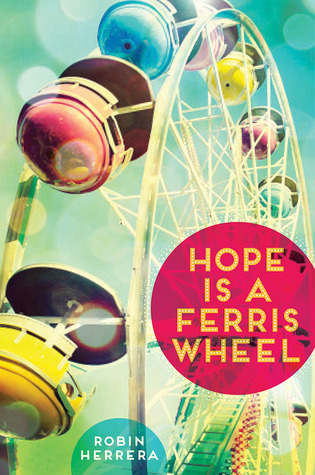
  Hope is a Ferris Wheel is about a girl named Star who is unique, determined, and spunky who maintains her optimism and hope despite the large obstacles that she has to overcome. Please note this is a review of the advanced reader's copy of the book provided by the publisher via Netgalley.

Description: Ten-year-old Star Mackie lives in a trailer park with her flaky mom and her melancholy older sister, Winter, whom Star idolizes. Moving to a new town has made it difficult for Star to make friends, when her classmates tease her because of where she lives and because of her layered blue hair. But when Star starts a poetry club, she develops a love of Emily Dickinson and, through Dickinson’s poetry, learns some important lessons about herself and comes to terms with her hopes for the future.

Review: Star Mackie is a quirky fifth-grader overflowing with hope. She really wants to make friends, but that seems like an impossible goal to achieve at her new school since she is teased for living in a pink trailer and having strangely layered blue hair. Her goth sister and closest ally, Winter, fuels Star’s hope of one day connecting with the father she has yet to meet.
  Inspired by her Winter, Star starts a school club in order to make friends, and along the way she develops a fascination with Emily Dickinson’s poetry and declares that to be the club’s focus. Star does everything she can to make the club work, and slowly her club develops an audience. When Star learns the shocking truth about her own family, Dickinson’s poetry helps her understand her crazy world and accept who she is.
  I had a hard time getting into Star's story. The plot meandered quite a bit and I was wondering where the story was going after finishing the first of the book. Star is adorable and delightful narrator, but quite often the secondary characters, particularly those who are vocal at her after school club steal the spotlight. I like how the inclusion of poetry added depth to the story, but Star sometimes come across as too naive as readers grasp her epiphanies two steps before she does.I also liked how Star's family's financial and domestic situations are not commonly found in most children books and are handled sensitively. Though Star faces many obstacles, the author never resolves to cloak her story into sadness but always shows Star being optimistic. 

Rating: 3 stars

Words of Caution: There is mention of teen pregnancy in the novel, but it is not explicit in detail. Recommended for Grades 4 and up.

If you like this book try: Almost Home by Joan Bauer, The Higher Power of Lucky by Susan Patron, Because of Win-Dixie by Kate DiCamillo
Rummanah Aasi
 There are different ways people grieve. Some clam up and want to be left alone while others use writing as catharsis, trying to articulate what can't be said verbally. Jenny Hubbard's latest novel, And We Stay, is a lyrical story that takes readers on a journey towards healing after a tragedy. Many thanks to the publisher for providing me an advanced reader's copy of this book via Netgalley.


Description: When high school senior Paul Wagoner walks into his school library with a stolen gun, he threatens his girlfriend Emily Beam, then takes his own life. In the wake of the tragedy, an angry and guilt-ridden Emily is shipped off to boarding school in Amherst, Massachusetts, where she encounters a ghostly presence who shares her name. The spirit of Emily Dickinson and two quirky girls offer helping hands, but it is up to Emily to heal her own damaged self.

Review: And We Stay is a beautifully and powerfully written novel about overcoming guilt,and healing after a tragic loss. Emily Beam is a new student at Amherst School for Girls. She enrolled in the school in January of her junior year and no one knows why. There are of course rumors circulating about her, but none of them come close to reality. Only Emily knows the tragic truth and ruminates about it quietly while scribbling away in her secret journal, each time revealing a bit more about the circumstances leading up to the day when her boyfriend entered the school library where she was working with her class, lured her into the stacks to talk, and then shot himself in the head.
  The book has an unique structure that may not work for some readers as it mixes prose and poetry as well as narrative tenses throughout the story. In past-tense flashbacks, readers learn the circumstances of Emily and Paul's relationship, while the poems Emily writes in her present-day environment infuse those same circumstances with newly realized perceptions. The narrative switches to present tense when it relates Emily's current life in boarding school, a fresh and unexplored world with emerging possibilities as well as potential pitfalls. 
  Due to the layered structure of the novel, the story's pacing is uneven though that might be intentional. I found the present to a bit slow to read, but I wanted to know what lead to the devastating events so I continued to read. Once the past is unveiled, I read the book quickly. I loved how Hubbard uses poetry to show Emily's the state of Emily's psyche. Poetry is very personal and Hubbard uses the right amount of words in length and in weight to show Emily's psyche. The poems are not to be skipped as they show Emily's extraordinary growth and talent as well as her connection to her namesake, Emily Dickinson, who lived and wrote just down the street from the boarding school, and draws on her spirit to pour her emotions onto paper. I learned a few interesting tidbits about Dickinson while reading this book too.
  And We Stay is a book that will receive critical acclaim though it may have a small readership. The book addresses hard hitting issues such as teen suicide, depression, and even abortion yet despite the heavy topics, it offers hope of a brighter future. Budding poets may particularly appreciate Emily's story, but there is certainly something for anyone looking for a good read with a strong, believable female lead who is working her hardest to overcome tragedy.

Rating: 3.5 stars

Words of Caution: There is some strong language, discussion and allusion to sex and abortion. Recommended for Grades 9 and up.

If you like this book try: Death, Dickinson, and the demented Frenchie Garcia by Jenny Torres Sanchez, You Don't Know Me by David Klass, 13 Reasons Why by Jay Asher, Looking For Alaska by John Green
Rummanah Aasi
  I got another great batch of picture books from the Monarch Book Awards.  The Monarch books are a great way to highlight some terrific books for K-3 readers. Today I'll be reviewing Swirl by Swirl, One, and Brothers at Bat.

Description (from Goodreads): A Caldecott medalist and a Newbery Honor-winning poet celebrate the beauty and value of spirals.What makes the tiny snail shell so beautiful? Why does that shape occur in nature over and over againbut also celebrate the beauty and usefulness of this fascinating shape.

Review: Swirl by Swirl is a wonderful introduction to natural science for young readers. The text is very simple, usually containing descriptive words to explain how nature has different spirals and the many ways it is used. The illustrations are amazing- eye catching, colorful, and full of such detail and color that I lingered on the pages much longer just to capture everything on the page. Fun and educational, Swirl by Swirl has now made me aware of the many spiral shapes around me after reading this book.

Rating: 4 stars

Curriculum Connection:
Science

Words of Caution: None.
Recommended for Grades K-3.

If you like this book try:
Over and Under the Snow by Kate Messner, A Butterfly is Patient by Dianna Hutts Aston


Description: Blue is a quiet color. Red’s a hothead who likes to pick on Blue. Yellow, Orange, Green, and Purple don’t like what they see, but what can they do? When no one speaks up, things get out of hand — until One comes along and shows all the colors how to stand up, stand together, and count.

Review:
One is a deceptively simply book that can be read on many levels. On the surface, young readers can learn about colors and counting. If you take a closer look, however, the book has a powerful message on the subject of bullying- how it feels to be bullied, actions to take to stop bullying, etc.
  The art in One is very minimalist. There is basically a dot and/swirls of watercolor paint to depict the characters in the story. Though the artwork isn't much to look at, the antibullying message will resonant with readers much longer.

Rating:
4 stars

Words of Caution:
None. Recommended for Grades K-2.

If you like this book try:
Zero by Kathryn Otoshi


Description (from Goodreads): The Acerra family had sixteen children, including twelve ball-playing boys. It was the 1930s, and many families had lots of kids, but only one had enough to field a baseball team . . . with three on the bench! The Acerras were the longest-playing all-brother team in baseball history. They loved the game, but more important, they cared for and supported each other and stayed together as a team. Nothing life threw their way could stop them.

Review:
Compared to today's standards, I come from a large family but I can't imagine living in a house of 15 other siblings. That's insane! Brothers at Bat is an engaging story that details the lives of the Acerra brothers who all played their favorite sport, Baseball, until the World War II in which they served the army and later when on with their lives. Based on a real family, I was unaware of the Acerras story and I liked how the book pulled me in since I'm not really a fan of baseball and gave a true sense of how closely knitted the family was. The illustrations definitely has a retro-feel that perfectly fits to the stories historical context. I'd definitely would recommend this book to young readers who enjoy sports.

Rating:
4 stars

Words of Caution:
None. Recommended for Grades 1-3.

If you like this book try:
We are the Ship by Kadir Nelson, Hey Batta Batta Swing! by Sally Cook
Rummanah Aasi
 I'm a bit behind on my children and middle grade reads, but I hope to catch up really soon. I find nonfiction books for kids really hard to circulate, but I've discovered some great titles that are fun, easy to read and educational. Both of the books below were featured on the Bluestem Book Award last year.

Description: Brothers Joe and Bob Switzer were quite different. Bob was a hard worker and planner who wanted to grow up to be a doctor. Joe dreamed of making his fortune in show business and loved magic tricks and problem-solving. When an accident left Bob recovering in the dark basement, the brothers began experimenting with ultraviolet light and fluorescent paints. Together they stumbled on a formula for colors that glows with an extra-special intensity-Day-Glo colors.

Review: I had no idea that fluorescent colors were created out of a bad experiment and business idea. Barton takes on the role of a cool and fun teacher and discusses how two brothers worked together to create the eye-popping hues. Joe Switzer figured out that using a black light to create a fluorescent glow could spruce up his magic act, so the brothers built an ultraviolet lamp. They began to experiment with various chemicals to make glow-in-the-dark paints. Soon Joe used fluorescent-colored paper costumes in his act and word got around. Through trial and error, the brothers perfected their creation. The story is written in clear and simple language. It reminded me a lot of my favorite science shows, Bill Nye the Science Guy, that incorporates fun and education seamlessly. The book also has lots of whimsical cartoons. While endpapers are Day-Glo bright, most of the story is illustrated in black, white, gray, and touches of color, culminating in vivid spreads. The Day-Glo Brothers is a fun story that is sure to be enjoyed by those who love science.

Rating: 4 stars

Curriculum Connection: Inventors, Science

Words of Caution: None. Recommended for Grades 3 and up.

If you like this book try: So you want to be an inventor? by Judith St. George, How nearly everything was invented by Jilly MacLeod

Description: When you’re a guy, nature is one big playground—no matter what the season. There are puddles to splash in the spring, pine trees to climb in the summer, maple seeds to catch in the fall, and icicles to swordfight with in the winter.
     Nature also has a way of making a guy appreciate important stuff—like how many rocks it takes to dam up a stream, or how much snow equals a day off from school.
So what kind of poetry best captures these special moments, at a length that lets guys get right back to tree-climbing and kite-flying? Why, guyku, of course!


Review: Poetry is very hard to understand and write. Haiku seems like a terrific way to introduce poetry to young readers and in the case of Guyku- to boys though girls will gravitate to this title too. Haikus are  deceptively simple and very accessible to almost any reader. The poems in this picture-book collection capture natural moments that young readers have while playing outdoors. Each season is addressed, and moments associated with spring such as riding bikes with baseball cards attached to the wheels to mimic the sound of a motorcycle brings the book to life and almost define spring. The artwork created by pen, ink, and watercolor illustrations mirror the simplicity of each entry and capture the expressions of the boys and their adventures honestly and charmingly. This book could easily work with students learning about the seasons as well as teach them about poetry in a fun way.  

Rating: 4 stars

Curriculum Connection: Poetry and seasons.

Words of Caution: None. Recommended for Grades 1-3.

If you like this book try: Don't Step on the Sky by Miriam Chaikin, Song of the water boatman by Joyce Sidman
Rummanah Aasi
 With less than a week left until Halloween, what better to excite the little ones about the holiday than to read them Halloween themed picture books? I've got several picture books ready to review and this is just the first installment. Be sure to come back and check out parts 2 and 3 next week! Today I'll be reviewing Monster Museum by Marilyn Singer, Boogie Knights by Lisa Wheeler, and Just Say Boo! by Susan Hood.


Description (from the publisher): Come in--if you dare--and meet the werewolf, Count Dracula, the mummy, and some of their slimy, screaming, slithering friends. They're just dying to show you a good time!

Review: Singer describes an array of scary apparitions and frightful figures in this "ghastly" collection of poems. Children take a field trip and walk through a museum filled with monsters. The poetic verses found below the illustrations cleverly describe the monsters in a variety of poetic forms including limericks.  Grimly's (yes, that's the illustrator's real last name) colorful caricatures add to the fun by diffusing scary illustrations with humor. Several of the monsters wend their way out to the parking lot-one even drives the school bus. The "Glos-Scary" helps to keep all of the creatures straight. This fresh, witty book will be popular for not-so-scary story times, as well as independent reading for kids who just love monsters.

Rating: 4 stars

Words of Caution: None. Recommended for Grades 1 through 5.

If you like this book try: Frankenstein Makes a Sandwich by Adam Rex, Boris and Bella by by Carolyn Crimi, Grimericks by Susan Pearson


Description (from the publisher): In this rip-roaring picture book, readers are invited to the party of the year, as all monsters large and small throw the most outrageous, most bodacious bash of them all--the Madcap Monster Ball.

Review: Monsters galore show up at a spooky castle for a whimsical Madcap Monster Ball and dance their hearts out. Upstairs seven knights with unusual names (Sir Veillance, Sir Prize, Sir Loin, Sir Round, Sir Cumference, Sir Ender, and finally my personal favorite, the lone Sir Vivorare awakened at various times to find out what all the commotion is about and join in the fun. At the same time, a young prince wakes up scared and cautiously investigates the noise. A wild and crazy time is had by all with the final spread picturing the knights back in their places dreaming of next year's ball and the prince is happily asleep in his bed. This book was hysterical and I loved the clever wordplay of the text which is filled with puns and double meanings that I think will work well for many age levels. The cartoon illustrations perfectly catch all of the high-flying whimsy with small figures dancing and whirling across each double-page spread. When the ball begins, the illustrations are monochrome, but when the seven knights join in, the style changes and more color is added. To enhance the surreal and chaotic nature of the story, many art styles are used on each page, but it all works fantastically well. Readers and listeners will want to return the book without being bored as there is so much to unravel.

Rating: 4 stars

Words of Caution: None. Recommended for Grades 1 through 5. 

If you like this book try: Bedtime at the Swamp by Kristyn Crow, Jumpy Jack & Googily by Meg Rosoff


Description: Young trick-or-treaters learn what to say in different Halloween situations.

Review: Halloween can be a frightening time for kids, but do you know what to do everything becomes too scary on this day? Just say Boo! This adorable story follows three young trick-or-treaters as they encounter frightening Halloween antics in their neighborhood when they go trick or treating. The story is simple and seasonable but the text is multi-functional and does a great job as it connects the traditions of the holiday (trick-or-treating), teaches manners (saying thank you), and shows what to do with a scared, teary toddler: Teach him to just say Boo! Advanced readers will find natural rhymes, use of alliteration, and strong images. Illustrated with an appropriate palette of fall colors and cozy images, the book embraces all good things about Halloween. 

Rating: 4 stars

Words of Caution: None. Recommended for preschool through Grade 1.

If you like this book try: It's Halloween Night! by Jennifer O'Connell and Ollie's Halloween by Olivier Dunrea
Rummanah Aasi
Just a quick note: I will be on vacation when this review posts. I may not or may not have internet access during vacation, but I will play catch-up with your blogs and comments when I get back. 

 I've got a bunch of picture books that I've read in the last few months that I still need to review. Today I have an ecclectic batch of books that range from tongue-in-cheek humor to incredibly creative to just plain adorable. Today I'll be reviewing How to Raise Mom and Dad by John Lerman, Mirror Mirror by Marilyn Singer, and How Rocket Learned to Read by Tad Hills.  


Description: With tongue placed firmly in cheek, this book follows an older sister as she dispenses advice to her brother on how to train their parents.


Review: I stumbled across this title looking for a humorous picture book to read. The title immediately grabbed my attention as did the description. A girl offers her younger brother some advice for dealing with Mom and Dad. All the admonitions parents tell their children are subverted and used in to train the adults. While I did find the book funny, I'm not sure if younger kids would get the humor as they are just learning how to behave but I do think older kids would definitely nod their head in agreement and understand the humor in the book. Pictures are of varying sizes and shapes and occasional word balloons extend the artwork. Overall, an enjoyable read that you might want to check out from your library.


Rating: 3 stars


Words of Caution: None. Recommended for K to 2nd grade.


If you like this book try: Would I Trade My Parents? by Laura Numeroff,  What Do Parents Do? (When You're Not Home) by Jeanie Ransom


Description: What’s brewing when two favorites—poetry and fairy tales—are turned (literally) on their heads? It’s a revolutionary recipe: an infectious new genre of poetry and a lovably modern take on classic stories. First, read the poems forward (how old-fashioned!), then reverse the lines and read again to give familiar tales, from Sleeping Beauty to that Charming Prince, a delicious new spin. Witty, irreverent, and warm, this gorgeously illustrated and utterly unique offering holds a mirror up to language and fairy tales, and renews the fun and magic of both.


Review: Mirror Mirror is incredibly innovative with marrying both poetry and well known fairy tales to create something completely new. The book contains reversos, or poems which have one meaning when read down the page and perhaps an altogether different meaning when read up the page. The reversos not only make the poems come to life, but also allows the reader to read from a different character's point of view of the same story. The 14 pairs of poems easily distinguished by different fonts and background colors allow changes only in punctuation, capitalization, and line breaks, as Singer explains in an author's note about her invented poetic form. I thought the book was challenging, stimulating, and fun. It was like playing a game with people I already know. I thoroughly enjoyed this book and give it to big thumps up.


Rating: 4.5 stars


Curriculum Connection: Great for Poetry and/or fairy tale unit. 


Words of Caution: None. Recommended for Grades 3 and up.


If you like this book try: Orange Pear Apple Bear by Emily Gravett, Clever Jack Takes the Cake by Candice Fleming


Description: A little yellow bird teaches Rocket the dog how to read by first introducing him to the "wondrous, mighty, gorgeous alphabet."


Review: How Rocket Learned to Read is such a cute book! Rocket is an endearing white dog with black spots loves chasing leaves and chewing sticks. He loves napping under his favorite tree, but his sleep is interrupted one spring day by a tiny yellow bird that designates him her first student. Rocket wants no part of her lessons, but the bird is determined to teach him to read. She ensnares Rocket by telling him a story that ends in a cliffhanger and he has to return each day to find out what happens next. Slowly, Rocket becomes the reluctant student and the tiny bird teaches him the alphabet. The two characters have a great time using the "mighty, gorgeous alphabet" to spell out all the things in Rocket's world. The bird leaves as winter approaches, but Rocket continues practicing, spelling everything in sight. And when Bird returns the following spring, a tail-wagging, eager-to-read student greets her with joy.
  The illustrations, rendered in oil and colored pencil, offer full pages, spreads, and oval vignettes. They are heart warming and depict Rocket in all his various moods. I loved the bird's enthusiasm but also related to Rocket's reluctance of interrupting his routine. I definitely think kids would relate to Rocket as they themselves are beginning readers too, plus the cast of characters are adorable and irresistible.


Rating: 4 stars


Words of Caution: None. Recommended for K to 2nd grade.


If you like this book try: How to Teach a Slug to Read by Susan Pearson, Reading to Peanut by Leda Schubert, Hooray for Reading Day! by Margery Cuyler
Related Posts with Thumbnails