Showing posts with label Author Interview. Show all posts
Rummanah Aasi
Today I am happy to introduce historical fiction and fantasy young adult author, Coreena McBurnie, who will talk to us about her new series Prophecy which retells the story of Antigone. Prophecy is the first book in the series and is now available. See below for more details about Prophecy and Coreena down below. 

Hi, Coreena. Thank you for stopping by the blog today for an author interview! Can you tell us about the journey that led you to write your book?

I had always wanted to write about Antigone, but wasn't sure where to start, especially because I envisioned a young adult novel and some of the subject matter is delicate -- like Antigone being the child of incest (her mother is her grandmother and her father is also her brother). I also really love Sophocles' plays involving Antigone -- she has always been one of my favourite characters from Greek myth -- and I wanted to do her justice. About four years ago, I was signed up to do National Novel Writing Month (a challenge to write 50,000 words in November) and didn't know what to write. I finally decided to tackle Antigone. I sat down and decided not to worry about what was in the Greek myth, that was all set and done, and instead decided to write without trying to tiptoe around the sticky issues. Once I did that, Antigone found her voice, one that was surprising even to me.

Why did you decide to retell the Oedipus myth from the point of view of Antigone when Antigone has a story of her own?

I decided to do this because I wanted to start the story at the beginning. Oedipus' and Antigone's stories are most famously told by Sophocles in his Oedipus plays, the last of which is called Antigone. My book, Prophecy, is the first of a planned trilogy mirroring these three plays. I wanted to get to the roots of Antigone's amazing sense of duty that we know her for and thought the place to start would be with the profound impact her family story must have had on her life.

Who is your favorite Greek god or goddess and why?

I love Athena, the goddess of wisdom. She is strong, independent, and smart, which has always appealed to me. She even has an owl as her animal symbol. And, her temple is the Parthenon in Athens -- an amazingly fantastic building!

What is your favorite Greek myth?

That's a tough one, but I'd probably have to say Theseus and the Minotaur because it is the first myth that I remember learning about way back in elementary school. I wrote a report on it and I was fascinated -- I think my love for Greek myth began there.

What are you reading at the moment and what do you think of it?

I have just started reading The Readers of Broken Wheel Recommend by Katarina Bivald, a Swedish author. So far it is very good, and promises to be a funny, quirky read. It's about a young Swedish woman who has never travelled before and is now visiting her elderly pen pal in a small town in Iowa called Broken Wheel. However, when she arrives, her pen pal friend has died, but the young woman ends up staying for her visit anyway. I am really enjoying Swedish writing in general right now because the sense of humour appeals to me.

What are the top 5 reasons readers should pick up Prophecy?


  • It has a powerful, strong, yet fallible heroine.
  • It takes place in ancient Greece and has gods and goddesses in it.
  • It is a fresh take on an old story that most people know.
  • Even though Antigone is an ancient Theban princess, her struggles to find herself and do what she thinks is best, despite what everyone else says, is pretty universal and applicable, even today.
  • I have studied Classical myth and culture for years, I even have degrees in Classical Studies, and I have put my love for Greek myth into this book.

About the Book

 A hidden prophecy.
 A chosen princess who speaks with snakes.
 A family duty.

Sixteen year old Princess Antigone, daughter of the infamous ancient Greek King Oedipus, wants to lead a normal life and fulfill her duty to the gods, her city, and her family, but fate has other plans. The Olympian gods bless her, the snakes talk to her, her parents want her to marry a foreign prince, her embroidery looks like burial shrouds for dogs, and she has fallen in love with the wrong boy. When the mysterious and devastating prophecies surrounding her family are revealed, Antigone must choose where her allegiance lies: With the gods who have betrayed her family but who she is obliged to serve? With her plague ridden city? With her family which lay in ruins? Or even with herself?


Find the Book at: Amazon | Smashwords | Kobo | iBooks | Barnes and Noble


About the Author

My name is Coreena McBurnie and, ever since grade 5 when I had to do a report on Theseus and the Minotaur, I have had a soft spot for Greek mythology. When I hit university, I was drawn to the Classical Studies department (earning both a BA & MA), where I explored the archaeology and culture of the ancient Greek and Roman worlds — and also where I managed to read Homer’s Odyssey, one of my absolute favourite books, in the original Greek, something which was thrilling for me (I know, sounds crazy, but the poetry and scope of the original text is amazing). After a lifetime of “what is that?”, “why did you study that?”, and “what can you do with a degree in Classical Studies?” I have decided to write novels based in ancient myth and to bring so many of the stories I love to life for a modern audience, with my own spin, of course.

Prophecy, Book 1 in the Antigone Series, is my first published novel. Currently I am working on Book 2 in the Antigone Series, called Fate. I am also in the middle of another novel about Clytemnestra who is notorious in Greek myth for killing her husband, Agamemnon, when he returned home from the Trojan War. I love exploring the motives of strong women in ancient myth.

I live in BC, Canada with my husband, our three kids, and our cat, in a beautiful part of the country, on two rivers, surrounded by ranches, near ski hills, and only a couple of hours drive to the ocean.

Rummanah Aasi


 I am happy to participate in The Bookminder blog tour by M.K. Wiseman. Many thanks to Xchyler Publishing and M.K. for inviting me on the blog tour. Below is an interview with M.K. If you are interested in The Bookminder, be sure to checkout the description, enter the giveaway below and follow the blog tour!


How did you come up with the concept of your story?

  In 2004 I had a very vivid dream that, afterward, wouldn't leave me alone. Said dream basically detailed out one scene from the story, something so different and captivating for me that it stuck. Now, it must be noted that I was not writing at that time, nor did I intend to write in any professional capacity. But as this one nugget of an idea would not let me be, I started to form a story around it – Why were these people doing what they were doing? Who were they?

I think that working in the Preservation Dept of the campus library system had bled into my subconscious and that is where the magick system that rules The Bookminder developed.


Please provide some insight into or a secret or two about your story.

The locations in Bookminder are real. Parentino truly did fall to ruins, while its twin fortification flourished. And while the town known as Dvigrad in the story did have another name, Moncastello, in keeping with the attitude of the characters in the story, I dropped the name from their fortification and merely called it Dvigrad. Call it a decision of character politics, if you will.

The tales of what actually happened to Dvigrad are a little muddled but history has the town mixed up in the middle of the Venice and Austrian conflict of the sixteenth century. And the town truly was abandoned due to plague—though history has that date at 1630 and Bookminder has it coming some 50-odd years later.

What was the most surprising part of writing this book?

The more I write (and this is, by far, the most writing I have yet done) the more I have come to realize that stories like to take on a life of their own. I used to hear that and scoff. But, in penning Bookminder, I found that sometimes an element would sneak into the narrative and then prove to be a stroke of brilliance in how it either foreshadowed a thing, or simply played a symbolic role. I kept looking at how things turned out going “but I'm not that smart!” or maybe “I've gotta just be lucky . . .” or “ . . . the story is asserting itself!” So I'm a convert to that philosophy, now.

What was the hardest part of writing your book, and how did you overcome it?

Point of View. Point of View. Point of View. I really love an omniscient narrator. I almost exclusively read omni POV. So to have to convert over to 3rd Person in service of the voice and narrative was a bit of a square peg / round hole issue for me. But the story is better served cutting out that distancing narrator that I so love. As to how I overcame it, I figured that as I'd put myself in the hands of professionals who wanted my book out there for the world, I had better do my part and learn and grow.

Who is your favorite author? Who has most influenced your work?

Two questions. Two answers:

Fav author? Have to go with Douglas Adams. His humor is superb. And while my brain tends to go a little sideways when reading his stories, that's part of my enjoyment of his very unique work. I appreciate that there really is no other author with his touch.

As for who has most influenced my work: Brian Jacques. While this may not seem the most obvious choice, hear me out. His Mariel of Redwall is the very first book that I remember being completely in love with. I read, of course, before that. Quite a bit. But this one book seemed to change reading for me. It became more than merely enjoyable. Stories could be transcendent, not mere personal experiences. Reading could link you to others. Maybe it was just the right book at a certain moment in my life. But I was a lucky enough kid to meet Mr. Jacques on more than one occasion at bookstore readings/signings. He became my author rockstar and it was his stories that changed how I thought of books which, in turn, has influenced my writing at a very deep level.


What's up next for you?
Hopefully we get to hear what happens next for the characters in Bookminder. Else I'd like to put the finishing touches on a couple of steampunk manuscripts I've been kicking around. But I'll keep writing for now. There are still a lot of stories in my head, a lot of characters.

The Book

Buy the book at: Amazon | Barnes and Noble | Indiebound


The Author 

Find M.K. at Facebook | Twitter | Pinterest


 We're celebrating the release of THE BOOKMINDER by M. K. Wiseman with a blog tour and Rafflecopter give-away! Visit each blog each day for more chances to win lots of great prizes. If you like epic fantasy, you'll love this coming-of-age tale of magic and wizards set in the Renaissance era.

January 9-16, 2016

Saturday, 01-09 Bookwhizz
Sunday, 01-10 M. K. Wiseman
Monday, 01-11 Perpetual Chaos of a Wandering Mind
Tuesday, 01-12 Are You Afraid of the Dark?
Wednesday, 01-13 Belart's Book Reviews
Thursday, 01-14 Dreams to Become
Semi-short Chic
Friday, 01.15 JD Spero
Books in the Spotlight
Saturday, 01-16 Creativity from Chaos
Rambling Reviews

Don't forget to enter our blog tour Rafflecopter give-away below, on the blogs above, on our Facebook page, or on Rafflecopter, with daily chances to win!


Rummanah Aasi
  Today I would like to welcome author Kai Strand to the blog to answer some questions about her book, King of Bad. If you are a fan of superheroes and can't get enough of them do check out King of Bad!

I really like that the King of Bad gives us the villain's point of view, which is rare in books that feature superheroes. Which villain, from print, TV or movie, would perfectly embody the SV Academy's motto? 


I think Joss Whedon’s Loki is the perfect embodiment of “Where you learn to be good at being bad.” We know Loki – by nature – is a trickster, but he does some downright despicable things and counters it with acts of heroism, verging on selflessness – or is the apparent selflessness really a means to a self-serving end? Tom Hiddleston’s interpretation of Joss’ Loki keeps you intrigued, beguiled, and guessing. I hope my series keeps readers guessing and wondering too.


  Jeff's perception of the SV Academy changes throughout the book, what is the one thing he would say the school has taught him about himself? 


Jeff has always been the bad boy. An emerging pyromaniac who has a way with the ladies. But nothing highlights how NOT bad you are like attending a school filled with super villains. Villains are selfish, self-centered. They plot and plan, use and abuse. They don’t have friends so much as useful acquaintances. They never consider how their actions impact anyone else. So the biggest thing Jeff wonders is if he’s bad enough for SVA?

 Jeff seems to be attracted to Oceanus and Mystic for different reasons. If he were to take them each on a date, what would they do? 


   First, he would be nervous before each date, but for two entirely different reasons. He’d want to impress Oceanus. He wouldn’t want to make Mystic mad. So the dates he’d plan – if he were to date both girls:


  Oceanus has water related superpowers so ideally, he’d like to take her to dinner at a restaurant with a patio overlooking an ocean, so she’d feel empowered, strong and in control. But they live in landlocked Idaho, so instead he’d try to recreate an ocean-side experience. Find a nice deserted lake. Maybe an old rock quarry. He’d surround it with sea lavender and somehow introduce the scent of sea salt to make her feel at home. He’d use his own ice superpower as often as possible, because she swoons every time she sees him make something with water from inside his own body. It would just be the two of them so that he could get to know everything about her.


   Mystic’s powers scare him to death. First of all her powers are psychic, which he has no defenses for. It’s a huge weakness of his. Second, her forte? Psychic sex. Ugh! Someone who can make you think you’ve already been with her and liked it! How is he supposed to know what memories to trust? So he’d want their date to be as busy and distracting as possible. Hopefully a loud rock concert or a busy play-off game of some sort would distract her from suaving him. If not, when he was caught drooling over her, at least he’d have the extra excuse that he’d been distracted.

If each of the main characters had the chance to date a person from the DC or Marvel Universe who would they pick and why?


As soon as Source met Jeff’s sister, Sandra, his world was complete. You could throw Wonder Woman at him and he’d never even notice.


If you can get Mystic’s focus (more like obsession) off of Jeff, I think she’d be intrigued by Marvel’s Magneto. He claims to be able to control minds – well, she’d love to show him how that’s really done. Beyond that, she’d appreciate his ability to manipulate the physical source of magnetism. It would complement her ability to manipulate emotional magnetism. Magneto would provide almost as much allure as Jeff and his place in the villain hierarchy. Almost.


I imagine that Oceanus would take the obvious route and fall for DC’s Aquaman. All things water turns her head and Aquaman has command of the ocean and its occupants. Eventually his goodness would likely bore her, but she’d learn a heck of a lot in the process.


Jeff is a work-in-progress. He likes all girls and is stupid enough to proceed without caution. He’d chase after (DC’s) Wonder Woman if someone carelessly threw her at his best friend, Source – only to be pummeled by her. Being conscious of his own appearance, he’d appreciate (Marvel’s) Medusa’s fabulous hair. He’s naturally attracted to girls on the edge of crazy, so (Marvel’s) Scarlet Witch would probably attract his attention, especially if he could steal her from that jerk of a super villain, Set. Being a girl of two worlds, (DC’s) Amethyst might draw his attention, though he’d have some trouble with the princess side of her – the girl equivalent to a pretty boy, which Jeff really despises. But Set might take a shine to her later and that alone – providing a cast-off for Set, for a change – would make Jeff happy.

Let say you were given the opportunity to shadow a student from the SV Academy, who would you select and why? 


If I were thinking logically, it would be Jeff’s best friend, Source. His superpower is to sense the powers in other Supers and help them develop them. He knows more about superpowers and how to ratchet them up than anybody else.


But the teenage girl inside me would follow Jeff’s rival, Set, around. I have such a crush on him! He’s drop dead good-looking, and knows it. He’s got total control over his weather powers, which is sexy as all get out. And he’s a bad boy. So, yeah, I’d probably shadow him everywhere, but not for the right reasons.

Thanks so much for answering my questions, Kai!


About the Book


 Jeff Mean would rather set fires than follow rules or observe curfew. He wears his bad boy image like a favorite old hoodie; that is until he learns he has superpowers and is recruited by Super Villain Academy – where you learn to be good at being bad. In a school where one kid can evaporate all the water from your body and the girl you hang around with can perform psychic sex in your head, bad takes on a whole new meaning. Jeff wonders if he’s bad enough for SVA.

He may never find out. Classmates vilify him when he develops good manners. Then he’s kidnapped by those closest to him and left to wonder who is good and who is bad. His rescue is the climactic episode that balances good and evil in the super world. The catalyst – the girl he’s crushing on. A girlfriend and balancing the Supers is good, right? Or is it…bad?


King of Bad, the Amazon bestseller is now in it’s 2nd edition with bonus material! Buy it in electronic or print format from.
Buy it: Whiskey Creek Press, Amazon, Barnes and Noble or get the SVA Box Set: Whiskey CreekPress, Amazon, Barnes and Noble


About the Author

When her children were young and the electricity winked out, Kai Strand gathered her family around the fireplace and they told stories, one sentence at a time. Her boys were rather fond of the ending, “And then everybody died. The end.” Now an award winning children’s author, Kai crafts fiction for kids and teens to provide an escape hatch from their reality. With a selection of novels for young adult and middle grade readers and a short story blog, Lightning Quick Reads, Kai entertains children of all ages, and their adults. Learn more about Kai and her books on her website, www.kaistrand.com.

Mailing List| Facebook| Twitter| Instagram| Goodreads

Rummanah Aasi
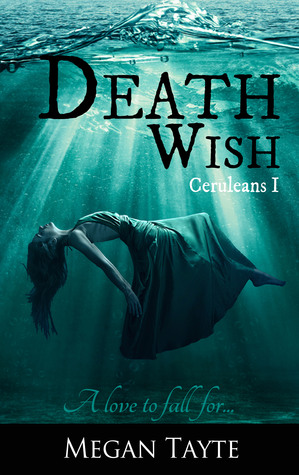
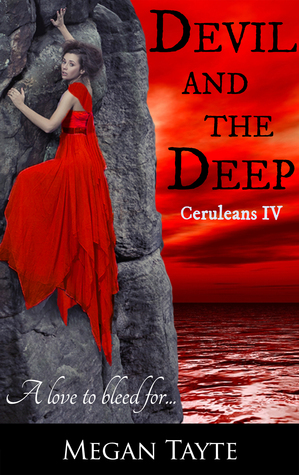
    Today I am happy to bring you an author interview with Megan Tayte, the author of the Ceruleans series. If you are a fan of paranormal romances and are looking for something new to read, check out her series and the excerpt from her latest book, Devil and the Deep, which releases today! Ms. Tayte was also generous in providing a giveaway, just fill out the Rafflecopter below.

In a few words can you tell us what Death Wish, the first book in the Ceruleans series, is about?

An isolated cove. A tragic suicide. A girl alone, but for two boys who’ll do anything to save her. A summer of discovery. Of conquering fear. Of falling in love. Of choosing life. Of choosing death. Of believing the impossible.


There are so many books in the paranormal romance genre. Why should readers pick up Death Wish?

Because if they start reading Death Wish, they may find they don’t want to stop. Common themes coming through in reviews of my books are ‘read it in one sitting’, ‘couldn’t put it down’ and ‘when’s the next one out – I need more now, dammit’. I write twisting, turning books with plenty of intrigue and suspense and drama. If that’s your cup of tea, you may like The Ceruleans.


What influenced your creation of The Ceruleans? What can you tell us about them without giving too much of the book away?

The series is quite personal to me, based on a mix of experience and fiction woven from my imaginings and ponderings. The setting – in a part of coastal Devon where I spent every summer as a child – was a key inspiration. But the story, about love and loss, light and darkness, good and bad, is based on my own efforts to make sense of a world in which people close to you can die; in which being true to yourself can be incredibly difficult; and in which love – for people, for places, for a way of being, for a passion and an ethos – is the only reason to hold on.


If you could match Death Wish with another paranormal romance readalike what would it be?

Well, one reviewer compared it favourably to Twilight, so I’ll guess I’ll go with that. But the story and characters are very different, and the mood is sometimes darker and sometimes much lighter. And the writing style is more creative. And the romance is different: more grounded in realism. And the paranormal world is more unsettling than appealing to the main characters. So, er, not that much like Twilight then...


 Love triangles are the bane of most readers’ existence. What is your biggest pet peeve as a reader and as a writer?

Characters that don’t feel real. Whether it’s a hero/ine, a foil, a villain or a secondary character, I want to believe in them. I don’t like perfect; I like perfectly flawed. That’s how I aim to write my characters: messily real. I don’t want to approach writing like a colouring book, shading neatly between the lines. I want to scribble madly over the picture, going right over the lines; I want to draw the picture for myself.


Excerpt from Devil and the Deep (Ceruleans #4)


It began with screaming. Shrill, ear-piercing, horrified screaming.

A girl shrieked, ‘Blood! Look, look – it’s everywhere!’ and pressed her hand to her mouth.

A man shouted, ‘Good grief!’ and another, ‘Great Scott!’

An old lady swooned gracefully and would have tipped over the balustrade of the riverboat had a lanky lad not caught her.

The cause of the excitement – a woman lying slumped on the long table on deck, cheek on her bread plate, headdress in the butter dish – twitched a little.

‘She’s alive!’ cried a lad beside her delightedly. ‘She moved!’

‘Did not,’ argued another.

‘Did too!’

‘Gentlemen,’ interjected a short, portly man with a twirly black moustache, ‘if you will forgive my intrusion, it must be noted that this woman has a bullet hole in her head and is logically, therefore, quite definitely deceased.’

Another old dear folded to the deck with a prolonged ‘Ohhhhhh’ and her husband grabbed a feathered fan and began wafting cool evening air in her face while calling, ‘Smelling salts – does anyone have any?’

I tried to keep a straight face. Really I did. I bit my bottom lip until I tasted my cherry-red lipstick. I pinched my leg through the cream satin of my gown. I dug my long cigarette holder into the sensitive flesh of my arm.

But it was no good.

The ‘What ho, chaps’ posh accents.

The buxom woman sagging in the arms of an elephant hunter wearing Converse All Stars.

The production of smelling salts in a bottle whose label read Pepto-Bismol.

The corners of the little round man’s moustache coming looser with his every word.

The fast-pooling puddle of pinkish blood on the bread plate, buffeted by the steady in-and-out breaths of the corpse.

Take it from a girl who’s really died – death on the River Dart, Devon, is hilarious.

‘Dear me, Ms Robson here appears to be quite overcome with shock,’ said the guy at my side suddenly, and he slipped an arm around me and turned me away. ‘Come, madam. Let us get some air.’

I smiled at him. Then grinned. Then choked back a guffaw. Thankfully, by the time full-scale hilarity hit me I’d been led to the rear of the boat, away from the rest of our party, and could bury my face in the bloke’s chest and shake mutely with laughter.

The gallant gentleman rubbed my back soothingly as I let it all out and said loudly, for the benefit of any onlookers, ‘There there, pignsey, there there.’

‘Pigsney?’ It was the final straw. My high-heeled sandals gave way and I melted into a puddle of mirth on the deck.

‘I’ll have you know, Scarlett Blake,’ hissed Luke, my boyfriend a.k.a. gallant gent, hoiking up his too-tight corduroy trousers so he could squat down beside me, ‘I Googled “old-fashioned terms of endearment” and pigsney’s a classic.’

I wiped tears from my eyes, dislodging a false eyelash in the process, and tried to catch my hiccupping breath as Luke went on.

‘Means pig’s eye. No idea why that’s appealing, but apparently in the seventeenth century, calling a lady pigsney was the very height of courting.’

Through his fake specs Luke’s blue eyes fixed me with a stare so earnest I almost managed to stop laughing.

‘But this is a Death on the Nile-Stroke-Dart murder mystery night, Luke,’ I managed to get out. ‘Set in the nineteen thirties, not the seventeen thirties.’

‘Ah,’ he said, ‘but my character tonight, Mr Fijawaddle, is a historical fiction writer, isn’t he? So as well as dressing like a brainy recluse – and I’m warning you now, I won’t hear another slur against this tweed jacket – he’d know all kinds of obscure terms. Like ginglyform and jargogle and nudiustertian and bromopnea and farctate and quagswag and philosophunculist.’

His showing off sobered me just enough to control the giggles. ‘You made those words up,’ I accused, poking a crimson talon into his mustard-yellow shirtfront.

He blinked at me innocently. ‘Did not. I told you before we left the house, I did my homework.’

I narrowed my eyes. ‘All right then, Mr Fijawaddle, what does that last word you said mean?’

‘Philosophunculist?’

‘Yes, that.’

‘Er…’ Luke gave me a sheepish grin.

‘Spill it,’ I said menacingly. As menacingly as a girl dressed up as a vintage Hollywood starlet with cute little pin curls and rouge aplenty can be, that is.

‘Philosophunculist,’ recited Luke. ‘Noun. A person who pretends to know more than they do in order to impress others.’

I threw my head back and laughed. ‘Busted!’

Luke slipped an arm around me and pulled me close. Really close.

‘Bet you like it when I use long words,’ he said huskily, eyes fixed on my too-red lips.

‘Bet you like it when I wear a clingy nightgown as a dress,’ I replied, eyes fixed on his too-kissable lips.

‘Brazen hussy,’ he growled at me.

‘Randy boffin,’ I murmured back.

Then neither of us said another word for quite some time.


Buy the book on Amazon.co.uk and Amazon.com


About Megan Tayte

Once upon a time a little girl told her grandmother that when she grew up she wanted to be a writer. Or a lollipop lady. Or a fairy princess fireman. ‘Write, Megan,’ her grandmother advised. So that’s what she did. Thirty-odd years later, Megan is a professional writer and published author by day, and an indie novelist by night. Her fiction – young adult romance with soul – recently earned her the SPR’s Independent Woman Author of the Year award. Megan grew up in the Royal County, a hop, skip and a (very long) jump from Windsor Castle, but these days she makes her home in Robin Hood's county, Nottinghamshire. She lives with her husband, a proud Scot who occasionally kicks back in a kilt; her son, a budding artist with the soul of a palaeontologist; and her baby daughter, a keen pan-and-spoon drummer who sings in her sleep. When she's not writing, you'll find her walking someplace green, reading by the fire, or creating carnage in the kitchen as she pursues her impossible dream: of baking something edible.

You can find Megan online at: her website, Goodreads, Facebook, Twitter, and Google+.


 a Rafflecopter giveaway
Rummanah Aasi
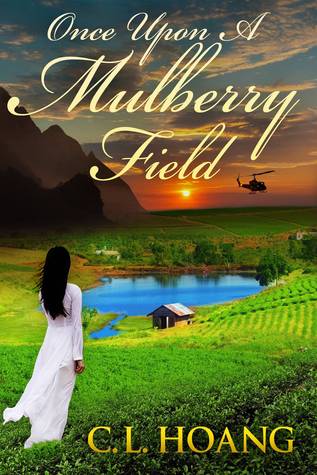
  I'm delighted to today to introduce you all to C.L. Hoang, who just released his new book today called Once Upon a Mulberry Field which is about a multicultural love story set during the Vietnam War. If you are a fan of historical fiction and/more mixed race romance, do take a look at the book.


What inspired you to write Once Upon a Mulberry Field?

I started the book as a nostalgia project for my father so that we could capture memories of our family’s earlier life in Saigon, Vietnam, during the war. As I researched that time period to ensure accuracy, I discovered another perspective of the war—as experienced by American service people who fought over there and by their families in the States. I ended up merging these two contrasting points of view, in hopes of providing a more complete picture of that turbulent chapter in the history of both countries. But rather than being a “war book,” Once Upon a Mulberry Field is first and foremost a love story—an ode to the old and the new homelands, and a celebration of the human spirit and the redemptive power of love.

In Once Upon a Mulberry Field, the main character, Roger Connors, is a U.S. Air Force physician sent to Vietnam during the height of the war. Why did you decide to tell the story from an American point of view?

In an attempt to be objective and to view things from a different perspective from the one I had known growing up, I chose to recount the events through the voice of an American soldier. Needless to say, it was an eye-opening experience.

Roger and his fellow USAF buddies have differing views about the war in Vietnam. What can you tell us about the atmosphere surrounding the war and the way it was viewed in both America and South Vietnam?

In South Vietnam, the war was about preventing communism from destroying the budding and fragile democracy—a matter of crucial survival. In America, it was a controversial and misunderstood war, with the unpopular draft and the constant drumbeat of violence and gore shown nightly on TV news heightening the tension and anxiety among the public. There was widespread misinformation and confusion, fanned by undeniable passions on all sides.

There are two women in Roger’s life: the beautiful Vietnamese widow, Lien, and his fiancée at home, Debbie. How would you characterize his relationship with each of these women? In your view, does he feel differently toward one or the other?

The two women symbolize the clashing worlds confronting Roger. Debbie represents the familiar, secure home setting where things are as they seem—tangible, comforting, as lovely and dependable as the sunny California weather. Lien, on the other hand, is the daughter of an exotic tropical land, beautiful and tragic, who appears and vanishes without warning, like a monsoon thundershower. Roger thus finds himself constantly in the grips of a struggle between stormy passion and lifelong friendship.

You interviewed a number of Vietnamese and American civilians and veterans as part of your research for this novel. What did you learn in these interviews and how did they influence the story you tell in Once Upon a Mulberry Field?

I learned that nothing is ever as black-and-white as we like to assume, and that truth is often inconvenient and blinded by the passions of the time. This insight gave me a more compassionate understanding of the characters and what they went through, no matter what their feelings about the war.

Are you working on another novel? If so, what can you tell us about it?

Vietnam is a beautiful country with a rich cultural heritage. I’d like to capture in writing some of that heritage as I still remember it—ancient folklore that highlights the universal human condition and spirit. It may come in the form of a new novel, or a collection of short stories.


About the book:


A mesmerizing debut novel, Once Upon a Mulberry Field tells a heartrending tale of American and South Vietnamese love at a time when both countries were torn apart by war. Set at Bien-Hoa Air Force Base near Saigon in 1967, at the height of the war and the Tet Offensive, the novel explores the blossoming romance between a U.S. Air Force doctor, Roger Connors, and Lien, a young Vietnamese widow working as a hostess at a Saigon club. As the war progresses and political offensives set the country in turmoil, Roger and Lien are forced into circumstances that tear them apart. Many years later, Roger receives a cryptic note from a long-lost Air Force buddy announcing the visit of an acquaintance from Vietnam. The startling news resurrects ghosts of fallen comrades and haunting memories of a decades-old secret that Roger and Lien once shared.


About the Author:


C. L. Hoang was born and raised in South Viet-Nam and came to the United States in the 1970s. He graduated from the University of California, Berkeley, and earns his living as an electronic engineer, with eleven patents to his name to date. Books, history, and travel are his hobbies, and "Once upon a Mulberry Field," a love story set at the height of the Vietnam War, is his first novel, a project from the heart that took six years to complete. For more information on C. L. Hoang or Once Upon a Mulberry Field, please visit: www.mulberryfieldsforever.com or www.amazon.com.
Rummanah Aasi
 Today I would like to introduce you to a award winning artist and author, J.B (Bridget) Chicoine, who has just released her first book, Portrait of a Girl Running, in a YA/New Adult series featuring Leila Sanders. The interview below gives us a glimpse into the author's latest novel and her main character.

Before we get to the interview, here is the description and the cover of Portrait of a Girl Running:

All Leila wants is to get through her senior year at her new high school without drawing undue attention. Not that she has any big secret to protect, but her unconventional upbringing has made her very private. At seventeen, she realizes just how odd it was that two men raised her—one black, one white—and no mother. Not to mention they were blues musicians, always on the move. When her father died, he left her with a fear of foster care and a plan that would help her fall between the cracks of the system. Three teachers make that impossible—the handsome track coach, her math teacher from hell, and a jealous gym instructor. Compromising situations, accusations of misconduct, and judicial hearings put Leila’s autonomy and even her dignity at risk, unless she learns to trust an unlikely ally.


What inspired you to write Portrait of a Girl Running?

Well, I have always been intrigued with unconventional relationships (romantic and otherwise) and what makes them endure or fizzle, especially when a lot is working against their success. Girl Running—and also Protégé—aren’t really about taboo relationships as much as they are about the twisted road that love sometimes takes, about letting to of old baggage and grabbing for something far more enduring that lust.

  In Portrait of a Girl Running, the main character, Leila, is seventeen and living on her own after being raised by two biracial fathers, both blues musicians. She plays blues piano herself, and later meets Clarence Myles, a math teacher, who also has an interest in the blues. What spurred your interest in this particular type of music?

I’ve always leaned toward having the blues, so maybe that genre just naturally appeals to. So, when I was developing Leila’s character, I didn’t want her to be typical 17-year-old, and blues is not typically what teenage girls listen to. Blues is unpretentious, like Leila, and I think it suits the tone of the story.

  At the novel’s start, Leila meets Ian Brigham before learning that he is a track coach at her new high school. They develop an obvious attraction for each other, which is an important plotline in the story. What made you want to write about a student/teacher relationship, and how would you characterize theirs?

Leila and Ian Brigham’s relationship is based on not just a physical attraction and compatibility, but on a growing emotional dependency. Although their developing relationship is a major plot point, Leila’s relationship with her curmudgeonly math teacher, Mr. Myles, ends up impacting her life more than Ian, filling her need of a true friend and father figure.

  Both Portrait of a Girl Running and its sequel, Portrait of a Protégé, take place in the Northeast. How integral is the setting to these two stories?

I think both of these stories could have taken place anywhere—I simply chose settings I was most familiar with. That said, the racial “geography”—the line between the black and white sides of town—is important in Girl Running. Millville, the fictitious town based on where I grew up, fits the criteria for that time period in a unique way.

  Leila has a number of interests, including running and painting. How does your own career as an artist inform your work?

I have to admit that Leila and I share a similar style of painting—very controlled and detailed. Of course, Leila is a far better artist at seventeen than I ever was. By the end of Protégé, she has conquered a lot of the fears I still struggle with, so I guess I tried on her daringness just to see how it felt.

 Are you working on another novel? If so, what can you tell us about it?

Yes—it is a psychological drama about a young man whose delusional mother believes he his blind. His story is told through an enigmatic young seamstress, hired to alter the young man’s trousers when he returns from England for his father’s funeral. It is set in New England, of course.

 About J.B. Chicoine

J. B. Chicoine was born on Long Island, New York, and grew up in Amityville during the 1960s and 70s. She has lived in New Hampshire, Kansas City and Michigan. She enjoys setting her stories in New England. She has been writing stories since she was a girl, but didn't complete a novel until she was nearly thirty. Since then, she has completed four more novels: Uncharted: Story for a Shipwright, Spilled Coffee, Portrait of a Girl Running and its sequel Portrait of a Protege
  J. B. Chicoine's novels are character driven, (though she does love a plot twist). As a watercolor artist, people are one of her favorite subjects. She says that developing a character is so much like painting a portrait--adding layers as she goes--creating depth. She also enjoys designing covers and binding her novels. She blogs about her painting and writing. When she's not writing or painting, she enjoys volunteer work, baking crusty breads and working of various projects with her husband. 
For more information about J.B., check out her art blog, writing blog, website, and on Goodreads
Rummanah Aasi
  Today I have the pleasure in introducing you to author H.L. Le Roy to the blog to reveal the cover of The Fountain of the Earth, which is the first book in his YA dystopian series of the same name as well as a chat with H.L. The Fountain of the Earth seems to be a promising series and it was published today by Tranquille Press!

Cover & Description

Terra Vonn is fighting to survive in a destroyed world,
surrounded by unspeakable horror . . .
and things are about to get much worse.


After witnessing the horrific murder of her mother, fifteen-year-old Terra Vonn has a singular focus—exacting revenge on the killers. But before she can complete her plan, savagery intervenes, and she is cast alone into a brutal post-apocalyptic world. As she trails the murderers south—through a land filled with cannibalistic criminals, slave traders, and lunatics—the hunter becomes the hunted. Terra quickly learns that she is not as tough or as brave as she thought she was. Worse, she may be the only one who stands between what little remains of civilization and destruction.


More Information at: Amazon / Goodreads


Author Interview with H.L.

Can you describe your book in ten words or less?

Only Terra Vonn can save what little remains of civilization.
How would you persuade readers who are a bit burnout on the dystopian genre to pick up your book?
 
It was important to me that this book be plausible. Everything in it could happen. In fact, many scientists warn that a Carrington class, or worse, solar storm could destroy civilization as we know it. You'll find no mysterious virus causing zombies, or vampires, just a frightening glimpse of a possible future.

Why did you decide to write from a female's point of view rather an a male's?
 
As I laid out the plot, I quickly discovered that the voice for The Fountain of the Earth needed to be a female who was easy to relate to, as well as easy to root for.  Ursula K. Le Guin once said, “that men and women can and do speak both to and for one another, if they have bothered to learn how.” So I find no dichotomy in writing from a female's point of view.
 
How would you describe Terra Vonn? What sets her apart from other heroines we might have seen before?
  
She is just fifteen but has seen terrible things in her brief life. And although she's subjected to casual cruelty in the beginning of the book, she quickly finds her strength. She knows she is likely to die if she doesn't find a way to adapt and survive.
 
What can we look forward to seeing in the second book of this series?

I've written nearly a third of book two, tentatively titled The Heralds of Juno. In it, war is coming, and Terra and all she loves with be deeply affected.
 
About H.L. Le Roy


H. L. (Holly) LeRoy is an American short story writer and novelist, author of the award winning Street Crimes anthology and the novel The Fountain of the Earth (Nov. 22, 2013), first in a series of young adult adventures. Born in San Jose, California, LeRoy currently resides in Pioneer, California with his family.

Learn more about H.L.: Blog, Twitter

Related Posts with Thumbnails