Showing posts with label Curriculum Connection. Show all posts
Rummanah Aasi
Description:
 Paloma Marquez is traveling to Mexico City, birthplace of her deceased father, for the very first time. She's hoping that spending time in Mexico will help her unlock memories of the too-brief time they spent together. While in Mexico, Paloma meets Lizzie and Gael, who present her with an irresistible challenge: The siblings want her to help them find a valuable ring that once belonged to beloved Mexican artist Frida Kahlo. Finding the ring means a big reward -- and the thanks of all Mexico. What better way to honor her father than returning a priceless piece of jewelry that once belonged to his favorite artist!

Review: Paloma Marquez is a biracial (Mexican and white) twelve year old girl from Kansas City, Kansas. When her mother is given the opportunity to do a fellowship in Mexico, Paloma isn't too thrilled about spending her vacation in Mexico, but she hopes this trip will connect her to her deceased father, whom she has no memories of, and to reconnect with her Mexican heritage during her first trip to his homeland. While staying in the Coyoacán neighborhood of Mexico City, Paloma explores Casa Azul, artist Frida Kahlo’s childhood home–turned-museum, and instantly becomes a fan of Frida’s artwork. Paloma is supposed to take Spanish classes and art history classes, but there’s a mystery unfolding in Casa Azul. Kahlo’s peacock ring is missing, and it is imperative that Paloma and her new friends, local siblings Gael and Lizzie, find it before it is too late. But Gael and Lizzie, who pose as Paloma’s Spanish tutors from the university, are not who they seem and they might have an agenda of their own. 
  Me, Frida, and the Secret of the Peacock Ring is a fun blend of mystery and art. Though the mystery is not overly intricate and complex, it is engaging. The inclusion of Spanish words adds depth to the story and highlights the rich Mexican culture. Readers who are unfamiliar with Spanish will not feel lost since translations and context clues follow the words. Hand this to budding fans of mystery, especially those looking for diverse detectives. 

Curriculum Connection: Art, History/Culture, and World Language

Rating: 4 stars

Words of Caution: None. Recommended for Grades 4 and up.

If you like this book try: Chasing Vermeer by Blue Balliett, 
Rummanah Aasi
Description: This nonfiction picture book explores art, desperation, and one man's incredible idea for saving ships from German torpedoes in World War I. Dazzle camouflage transformed ordinary British and American ships into eye-popping masterpieces.

Review: I know very little about World War I, but I learned a lot from Dazzle Ships: World War I and the Art of Confusion. This short picture book is packed with information and uses art, history, and the military in a very clever way. During World War I, the British were in danger of starving because so many German U-boats were sinking American and British supply ships. Norman Wilkinson, a Royal Naval Volunteer Reserve lieutenant-commander, had the idea to paint boats in such a manner as to confuse the German submarine captains, and the concept of "dazzle ships" was born.
 In accessible text and Ngai's stunning and vibrant illustrations, Barton chronicles the creation and implementation of the strategy, including the team of women artists who designed the patterns and the laborers who painted the ships. Readers learn that the wild, striped designs fooled the U-boat captains into thinking the Allies' ships were headed in opposite directions, thus leading to confusion and failed offenses for the Germans. I would have loved to have seen some texts from the German's perspective to see how successful this technique turned out to be and their thoughts on it. There is a lot of back matter at the end of the book that explains the detail process of the dazzling process.

Curriculum Connection: Art, Social Studies

Rating: 4 stars

Words of Caution: None. Recommended for Grades 3 and up.

If you like this book try: The Secret Project by Jonah Winter


Description: Meet Beauty, the bald eagle that made world news when she was injured, rescued and received a 3D-printed prosthetic beak. Follow Beauty's brave and inspiring story as she grows up in the wild, is rescued after being illegally shot, and receives a new beak specially engineered by a human team including a raptor biologist, engineer and dentist. Learn more about how bald eagles as a species came back from near extinction, and about nationwide efforts to conserve this American symbol.

Review: Beauty, a bald eagle, was shot in the face by a poacher and lost most of her upper beak. She was unable to eat, drink, or preen (keeping her feathers in top shape for protection and warmth), and would have died had she not been rescued. Since her beak did not regenerate, Beauty eventually made her way to a raptor center in Idaho, where she received and still receives continuous care. Coauthor Veltkamp, a raptor biologist (someone who studies birds of prey) and rehabilitator, worked with engineers, a dentist, and other animal experts to create an artificial beak by using a 3-D printer for Beauty. After arduous testing, an appropriate beak was created and attached. Beauty could now drink and eat on her own.
 I learned a lot of fun facts about bald eagles while reading this book. I had no idea that the bald eagle is the only bird of prey who has the ability to see in color, which is how they are able to track down their food. I also learned that the bald eagle has seven extra bones in their neck which allows them to rotate their necks all the way around. How cool is that?! Beauty and the Beak has outstanding full-page photographs of bald eagles and Beauty that accompany this uplifting account. It is amazing how far we have come with technology and how we reversed the near extinction of bald eagles in the U.S. The book's back matter includes resources for further study and additional information on the life cycle of eagles, and their habitats. 

Curriculum Connection: STEM
 
Rating:

Words of Caution: None. Recommended for Grades 3 and up.


If you like this book try: Winter's Tale: How One Little Dolphin Learned to Swim Again by Juliana Hatkoff

Rummanah Aasi
Description: Ebo: alone. His sister left months ago. Now his brother has disappeared too, and Ebo knows it can only be to make the hazardous journey to Europe. Ebo's epic journey takes him across the Sahara Desert to the dangerous streets of Tripoli, and finally out to the merciless sea. But with every step he holds on to his hope for a new life, and a reunion with his sister.

Review: Horror stories of immigrants trying to escape in order for a chance at a better life have graced several pages in the newspaper and online. Recent policy changes regarding immigration have reignited the hot topic of immigration in the United States and Europe. While some have welcomed immigrants, others have not.
Illegal is a resonating and timely graphic novel that humanizes an immigrant's plight. The graphic novel is told in two different timelines. In the present Ebo and his brother Kwame along with 12 other people are aboard a leaking dinghy made for six, are desperately trying to reach Italian shores. In the past timeline we are given a road map to all the steps Ebo and Kwame have taken to get to the dinghy: their parents have died, their sole caretaker Uncle Patrick is always drunk and unable to care for them, and their older sister Sisi has made her way to Italy in search of a better life. Both brothers want to reunite with her and get a fresh start. The transition between the two timelines are jarring. There were multiple of times where it took me out of the story. A linear narrative approach would have worked better.
   The brothers have endured a harrowing journey through the Sahara Desert to Tripoli, Libya, hoping to cross the Mediterranean and land as refugees. The horrors Ebo witnesses especially with the cruelties of human smugglers who value money more than human life, dehydration and hunger, as well as the impossibilities he survives constitute a haunting testimony to the human spirit. Though the graphic novel is not based on one particular person, but a composite of people who have endured this journey, it is eye opening, engaging, and will hopefully educate people that refugees are not statistics and no human is illegal.

Curriculum Connection: Social Studies (Current Events/Debate/Government), English, and Art

Rating: 3 stars

Words of Caution: There is some depiction of strong violence and disturbing images. Recommended for Grades 6 and up.

If you like this book try: Escape from Syria by Samya Kullab
Rummanah Aasi
Description: On August 29, 2005, Hurricane Katrina's monstrous winds and surging water overwhelmed the protective levees around low-lying New Orleans, Louisiana. Eighty percent of the city flooded, in some places under twenty feet of water. Property damages across the Gulf Coast topped $100 billion. One thousand eight hundred and thirty-three people lost their lives. The tale of this historic storm and the drowning of an American city is one of selflessness, heroism, and courage—and also of incompetence, racism, and criminality.

Review: In this slim graphic novel Brown is able to recount the horrifying events of Hurricane Katrina and its aftermath in New Orleans, Louisiana in 2005. Instead of focusing on individual stories, we are given a journalistic approach to the natural disaster. Told chronologically from the hurricane’s seemingly benign origin in West Africa, the story follows the storm almost hourly, revealing every misstep along the way that resulted in so much unnecessary loss and devastation. By the time Katrina passed over New Orleans, more than 1,400 people were dead and hundreds of thousands had fled the city. 
  The text is clear and easy to read, relying exclusively on data and statistics interspersed with quotes from residents, rescue crews, journalists, and news reports and not skirting away from the controversial incompetency of the government. There were many new to me facts that I learned in this graphic novel. The haunting imagery with its monochromatic panels, hits you viscerally as you hear from people who are battling oppressive heat and fear. There are pages that are wordless because the illustrations can only capture and convey the horrors that people suffered. Spare but gets the point across. I only wished that the graphic novel dug deeper into the issues that Hurricane Katrina raised to the surface and which unfortunately continues to rear its ugly head with Hurricane Maria.


Curriculum Connection: English, Science, and Social Studies

Rating: 4 stars

Words of Caution: There are images of bodies floating in water that may be too much for sensitive readers. Recommended for Grades 6 and up.


If you like this book try: A.D.: New Orleans After the Deluge by Josh Neufeld
Rummanah Aasi
Description: Some people think pink is a pretty color. A fluffy, sparkly, princess-y color. But it's so much more. Sure, pink is the color of princesses and bubblegum, but it's also the color of monster slugs and poisonous insects. Not to mention ultra-intelligent dolphins, naked mole rats and bizarre, bloated blobfish. Isn't it about time to rethink pink?

Review: Pink is for Blobfish is the perfect nonfiction pick for younger readers. They will be drawn to this book because it is weird and gross. Each creature is given a two-page spread with a  full-color, close-up photo of the creature with an approachable paragraph describing some of its key features, a fascinating fact, and basic features. There are many animals that I had never heard of before I read this book. I also enjoyed the author's comical voice throughout the book too. If you are struggling to get to younger readers to read nonfiction books, I would highly recommend this one.

Rating: 4 stars

Words of Caution: None. Recommended for Grades 1 and up.

If you like this book try: Glow: Animals with their own night-lights by W.H. Beck


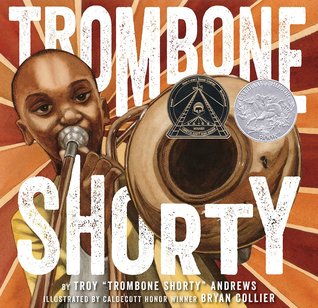
Description: Hailing from the Tremé neighborhood in New Orleans, Troy “Trombone Shorty” Andrews got his nickname by wielding a trombone twice as long as he was high. A prodigy, he was leading his own band by age six, and today this Grammy-nominated artist headlines the legendary New Orleans Jazz Fest.Along with esteemed illustrator Bryan Collier, Andrews has created a lively picture book autobiography about how he followed his dream of becoming a musician, despite the odds, until he reached international stardom.

Review: Trombone Shorty is an energetic and lively picture book autobiography of a contemporary multi-instrumentalist and vocalist Troy Andrews. The picture book is also a love story to Andrews' early years growing up in the Tremé neighborhood of New Orleans. Andrews yearned to become a musician like those in his family and the artists he saw perform all over New Orleans. He was so passionate about his dream that he and his friends made their own instruments out of recycled materials, played in the streets, and marched with bands. When one day he found a battered, discarded trombone bigger than he was, Andrews finally had a real instrument to play, and he practiced day and night, acquiring the nickname Trombone Shorty from his older brother. Trombone's defining moment was the time the great Bo Diddley pulled Andrews on stage to play with him during the New Orleans jazz festival. Collier's illustrations are incredible and using a variety of materials from watercolor, pen and ink, and collage artwork to complement the book's motion and rhythm of Trombone's music. Each spread offers a visual panoply of texture, perspective, and angles, highlighting the people and the instruments. While Andrews's continue to play, he will gain new admirers after reading this book.

Rating: 4 stars

Words of Caution: None. Recommended for Grades 1 and up.

If you like this book try: Louis Armstrong: A King of Jazz by Pat McKissack, Before John was a Jazz Giant: a song of John Coltrane by Carole Boston Weatherford


Description: What do you do when you see a spider?

a. Lay on a BIG spidey smoocheroo.

b. Smile, but back away slowly.

c. Grab the closest object, wind up, and let it fly.

d. Run away screaming.


If you chose b, c, or d, then this book is for you! (If you chose a, you might be crazy.)

I’m Trying to Love Spiders will help you see these amazing arachnids in a whole new light, from their awesomely excessive eight eyes, to the seventy-five pounds of bugs a spider can eat in a single year! And you’re sure to feel better knowing you have a better chance of being struck by lightning than being fatally bit by a spider. Comforting, right? No? Either way, there’s heaps more information in here to help you forget your fears . . . or at least laugh a lot!

Review: In this informative and amusing book the author is trying to overcome her arachnophobia with detailing accurate information about a wide variety of spiders from their various anatomy and capabilities in a humorous tone. I didn't mind that this book wasn't overly filled with facts, but I did like how it was presented in a scrapbook fashion with cartoon drawings, scrawls, and random lettering. Occasionally there are black splotches for when the author's phobia gets to her despite her good intentions of wanting to like spiders. Any book that manages to be entertaining while being informative is a winner for me.

Rating: 4 stars

Words of Caution: None. Recommended for Grades K-2.

If you like this book try: Disgusting Creatures by Elise Gravel
Rummanah Aasi
Description: After losing out on a spot on the local deaf team, William practiced even harder—eventually earning a position on a professional team. But his struggle was far from over. In addition to the prejudice Hoy faced, he could not hear the umpires' calls. One day he asked the umpire to use hand signals: strike, ball, out. That day he not only got on base but also changed the way the game was played forever. William “Dummy" Hoy became one of the greatest and most beloved players of his time!

Review: I never heard of William Hoy before picking this book up. What a remarkable story! Born in 1862, William Hoy could neither hear nor speak, but he loved and breathed baseball. Despite his disabilities, he was incredibly athletically gifted and became an outstanding major league baseball player during the late nineteenth century. It is said that he and along with other players are credited in creating a system of hand gestures as signs that are still used in baseball today. The illustrations remind of the old Popeye cartoons that are fun to look at and share the book's uplifting vibe and feel good message. This is a great story for baseball and sports fan to read. It would also work as a good read-aloud with younger readers.

Rating: 4 stars

Words of Caution: None. Recommended for Preschools to Grade 3 readers.

If you like this book try: Brothers at Bat: The True Story of an Amazing All-Brother Baseball Team by Audrey Vernick


Description: Supreme Court justice Ruth Bader Ginsburg has spent a lifetime disagreeing: disagreeing with inequality, arguing against unfair treatment, and standing up for what’s right for people everywhere. This biographical picture book about the Notorious RBG, tells the justice’s story through the lens of her many famous dissents, or disagreements.

Review: I Dissent is an informative picture book biography of Ruth Bader Ginsburg. The book traces the Justice's achievements as an intelligent, ambitious young girl to her position on the Supreme Court with an emphasis on dissenting in the face of inequality that Gingsburg faced as a Jewish woman. While the book does talk briefly about Gingsburg's social life, the focus for the majority of the book is her law career. The text is easy to understand sentences intended for its audience. The whimsical illustrations make the subject approachable and the use of bold typography highlight words such as protest, object, and dissent make the text come alive.

Rating: 4 stars

Words of Caution: None. Recommended for Grades 3 and up.

If you like this book try: Ruth Bader Gingsburg by Heather Moore Niver
Rummanah Aasi
Description: After the success of the Nashville sit-in campaign, John Lewis is more committed than ever to changing the world through nonviolence - but as he and his fellow Freedom Riders board a bus into the vicious heart of the deep south, they will be tested like never before.
  Faced with beatings, police brutality, imprisonment, arson, and even murder, the young activists of the movement struggle with internal conflicts as well. But their courage will attract the notice of powerful allies, from Martin Luther King, Jr. to Attorney General Robert F. Kennedy... and once Lewis is elected chairman of the Student Nonviolent Coordinating Committee, this 23-year-old will be thrust into the national spotlight, becoming one of the "Big Six" leaders of the civil rights movement and a central figure in the landmark 1963 March on Washington for Jobs and Freedom.

Review: While I enjoyed reading Book One of the March trilogy, I didn't learn anything new about the events covered in that volume. Book Two, though continues memorializing the civil rights movement, has a distinctly different tone. It is much darker as brutality and visceral hatred is on full display, but it also shows how the tensions within the movement of itself is starting to splinter and develop own separate factions. This second volume focuses on the dangerous freedom rides in 1961 as well as the monumental March on Washington in 1963.
  Continuing their nonviolent action meant facing potentially fatal consequences; Lewis and the freedom riders, for instance, all signed wills before they embarked on their historic ride, and Martin Luther King Jr. himself declined to participate. What I found particularly eye opening is how the politicians used the civil rights movement mainly for their own selves (ensuring votes, saving public face, etc) even if they may or may not agree with what the civil rights movement represented. The graphic illustrations powerfully captures the danger and tension in stunning cinematic spreads, which dramatically complement Lewis’ powerful story. There is no added melodrama in the story but real, raw, authentic account of history. The overlay of President Obama's inauguration with snapshot glimpses of the bloody, angry aftermath of the freedom rides in Montgomery, Alabama, makes you stop and reflect on the significance represented by Obama’s election and the sacrifices many made to achieve it. The story of the civil rights movement is told in several books and other mediums and sometimes in a legendary, mythologized tones. This graphic novel series keeps it grounded by people questioning their actions particularly with remaining true to the nonviolent movement versus taking action and resist, being a idealist like Dr. King or a realist like Malcolm X. Both viewpoints are presented and credited. This is an incredibly important graphic memoir that is a must-read.

Rating: 5 stars

Words of Caution: There is strong violence and the "n" word is used frequently and purposefully. Recommended for teens and adults.


Description: By Fall 1963, the Civil Rights Movement is an undeniable keystone of the national conversation, and as chair of the Student Nonviolent Coordinating Committee, John Lewis is right in the thick of it. With the stakes continuing to rise, white supremacists intensify their opposition through government obstruction and civilian terrorist attacks, a supportive president is assassinated, and African-Americans across the South are still blatantly prohibited from voting. To carry out their nonviolent revolution, Lewis and an army of young activists launch a series of innovative projects, including the Freedom Vote, Mississippi Freedom Summer, and a pitched battle for the soul of the Democratic Party waged live on national television. But strategic disputes are deepening within the movement, even as 25-year-old John Lewis heads to Alabama to risk everything in a historic showdown that will shock the world.

Review: This is the concluding volume in the critically acclaimed March graphic novel trilogy. The graphic novel opens with the heartbreaking and gut wrenching bombing of the Birmingham Baptist Church, where innocent children were murdered in the name of hatred and intolerance. The violence and tension among the activists in the civil rights movement are at an all time high. This graphic novel covers the Freedom Summer and President Johnson's eventual signing of the Voting Rights Act of 1965.
  Once again politics, protests, and marches are divided and their significance are explored in this volume. Opinions among the activists in the civil rights movement are varied. Many are rethinking of putting themselves in self-harm in marching is worth it. Others wonder if they should trust politicians who are only willing to meet them half way. There is a lot to take in and digest in this final volume and like the movement they cover in this graphic novel series the message of equal rights is long and hard journey that took immense sacrifices, time, devotion, and faith to succeed. While the series continues to shine the spotlight on President Obama's presidency as the light at the end of the tunnel, it is clear that we are far from ending the movement. This graphic novel series proves once again in the power of the people and the power to change. This is an essential read and bound to become a classic.

Rating: 5 stars

Words of Caution: There is strong violence and the "n" word is used frequently and purposefully. Recommended for teens and adults.

If you like these graphic novels try: Strange Fruit by Joel Christian Gill, The Silence of Our Friends by Mark Long and for nonfiction titles try Blood Brother by Rich Wallace, Across that Bridge by John Lewis
Rummanah Aasi

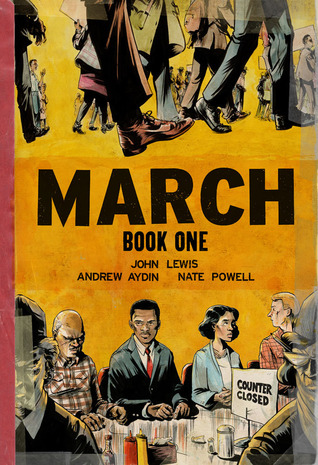
Description: March is a vivid first-hand account of John Lewis’ lifelong struggle for civil and human rights, meditating in the modern age on the distance traveled since the days of Jim Crow and segregation. Rooted in Lewis’ personal story, it also reflects on the highs and lows of the broader civil rights movement.

Book One spans John Lewis’ youth in rural Alabama, his life-changing meeting with Martin Luther King, Jr., the birth of the Nashville Student Movement, and their battle to tear down segregation through nonviolent lunch counter sit-ins, building to a stunning climax on the steps of City Hall.

Many years ago, John Lewis and other student activists drew inspiration from the 1950s comic book "Martin Luther King and the Montgomery Story." Now, his own comics bring those days to life for a new audience, testifying to a movement whose echoes will be heard for generations.


Review: March: Book 1 is told in the backdrop of Barack Obama's presidential inauguration, a monumental moment in U. S. History and a well suited time to reflect upon the Civil Rights Movement. In the first of three volumes, we get a quick introduction into the childhood of Senator Lewis and how he got involved in the non-violent activism. This volume is centered on the desegregation of lunchroom counters in the south. Lewis recounts his involvement in the peaceful protest from its inception to how the protestors prepared themselves for any and all types of reactions from the white southerners by having the protestors role playing and acting out verbal and physical abuse they might foresee and finally to the actual protest. While this volume doesn't add much to what I already knew about the protest from my history classes, it is a startling how non-violence resistance worked especially in today's world where violence, and in many cases ultra-violence, is a knee jerk reaction. It makes us stop and think if non-violence can/will work once again.  
  The artwork is solid and makes the people in the story come alive. There were a few panels in which I couldn't read the text as characters seem to be mumbling or whispering things, which may have been intentional by the artist. Overall, I can definitely see March: Book 1 and the rest of this trilogy be used as part of the classroom curriculum and if it's not, it definitely should be. In my opinion there is a detachment when we read about history in textbooks. We get caught up in learning facts to pass a test and don't necessarily take the time to digest the information and really learn from it. It certainly does not have the sense of immediacy and significance when it is told by a person who lived through the actual real life events. I will definitely finish this important trilogy.

Curriculum Connection: Social Studies and English

Rating: 4 stars

Words of Caution: There is some strong violence in the graphic novel and the "n" word appears quite frequently. Recommended for Grades 9 and up.

If you like this book try: March: Book Two by John Lewis, Strange Fruit by Joel Christian Gill, The Silence of Our Friends by Mark Long
Rummanah Aasi
Description: As a child in the late 1800s, Horace Pippin loved to draw: He loved the feel of the charcoal as it slid across the floor. He loved looking at something in the room and making it come alive again in front of him. He drew pictures for his sisters, his classmates, his co-workers. Even during W.W.I, Horace filled his notebooks with drawings from the trenches . . . until he was shot. Upon his return home, Horace couldn't lift his right arm, and couldn't make any art. Slowly, with lots of practice, he regained use of his arm, until once again, he was able to paint--and paint, and paint! Soon, people--including the famous painter N. C. Wyeth--started noticing Horace's art, and before long, his paintings were displayed in galleries and museums across the country.

Review: A Splash of Red is a biography picture book of self-taught African-American artist Horace Pippin. As a child, Pippin drew pictures at every opportunity, but due to his family's economic struggles he had less free time for art and instead picked up other jobs such as stacking grain sacks, shoveling coal at a rail yard, and he even served in the army in World War I. Despite a war injury to his right arm, Pippin adapted in order to continue drawing and painting, eventually leading to recognition and fame in the art world. Before reading this book I knew virtually nothing of Horace Pippin, but this book's great artwork infused many art techniques such as collages that blend thick, solid color blocks with motifs that reflect Pippin's inner emotions and his wide range of artwork from war scenes to that of children at play. What really stood out to me were the quotations from Pippin about the psychological scars of war and his artistic process which are are hand-drawn and further emphasizes that for Pippin art wasn't just a past-time, but his means for catharsis and trying to understand the world around him.

Curriculum Connection: Art and Black History Month

Rating: 4 stars

Words of Caution: None. Recommended for Grades K-3

If you like this book try: Art from Her Heart by Kathy Whitehead, Draw What You See by Kathleen Benson


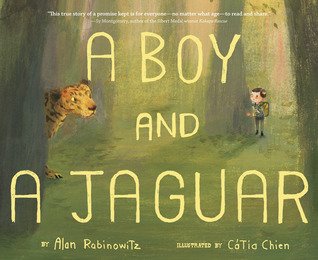
Description: Alan loves animals, but the great cat house at the Bronx Zoo makes him sad. Why are they all alone in empty cages? Are they being punished? More than anything, he wants to be their champion—their voice—but he stutters uncontrollably. Except when he talks to animals. Then he is fluent.

Review: A Boy and a Jaguar is a poignant autobiography in which author Alan Rabinowitz recalls the alienation he felt as a child who thought he was “broken” because he stuttered. While he had difficulties in speaking in class and around large groups of people, Alan could easily communicate with small groups of people and with animals. Thus his bond with and love for animals was born. As he grows up, Alan learns to both conquer and embrace the fact that he will always be a stutterer, and he soon becomes an advocate for animals.
 I really liked how the illustrations were a bit understated and more emphasis was given to the expressive faces that spoke more than the actual text. I also liked how the illustrator played around the sizes of the various characters of the book. For example, Alan is shown as this small boy who can easily be overlooked when he has to speak up in class and as his confidence grows so does he. The animals have a mystical and mysterious quality to them as Alan gazes into their eyes and "speaks" to them. I think this a great read that remind us that there are many ways to tell a story, with or without words.

Rating: 4

Words of Caution: None. Recommended for Grades K-3

If you like this book try: Can we save the tiger? by Martin Jenkins, The Tree Lady by H. Joseph Hopkins


Description: What is a haiku? It sounds like a sneeze. and isn't a lantern a light source? Actually, they are two types of ancient Japanese poetry.

Review: I always had difficulty in sparking interest in poetry for students, but If It Rains Pancakes makes poetry look fun and easy. In easy to understand language, the author explains two forms of Japanese poetry the hiaku and lantern poems. I was already familiar with hiaku, but I didn't know about lantern poems before this book. The examples of both forms of poetry are given withe a wide range of interests from a silly poem about a pet pig doing karate to the weather seasons. The illustrations like the poems are also fun and vibrant, complementing the poems nicely. If younger readers are having a hard time grasping the poem, they can use the illustrations as a reference and practice their inferring skills.

Curriculum Connection: English

Rating: 4 stars

Words of Caution: None. Recommended for Grades 1-3

If you like this book try: I Haiku You by Betsy Snyder, Guyku: A Year of Haikus for Boys by Bob Raczka
Rummanah Aasi


I am honored to participate in the blog tour for Deborah Hopinson's latest nonfiction title, Courage and Defiance: Stories of Spies, Saboteurs, and Survivors in World War II Denmark: Stories of Spies, Saboteurs, and Survivors in World War II Denmark. Many thanks to Provato Events for inviting me on the blog tour and to Scholastic for providing me an advanced reader's copy of the book.


Description: When the Nazis invaded Denmark on Tuesday, April 9, 1940, the people of this tiny country to the north of Germany awoke to a devastating surprise. The government of Denmark surrendered quietly, and the Danes were ordered to go about their daily lives as if nothing had changed. But everything had changed.
   Award-winning author Deborah Hopkinson traces the stories of the heroic young men and women who would not stand by as their country was occupied by a dangerous enemy. Rather, they fought back. Some were spies, passing tactical information to the British; some were saboteurs, who aimed to hamper and impede Nazi operations in Denmark; and 95% of the Jewish population of Denmark were survivors, rescued by their fellow countrymen, who had the courage and conscience that drove them to act.

Review: Courage and Defiance may seem like yet another World War II book at first glance, however; its focus is not on the plight of the Jews in Germany nor the rise and fall of the Nazis but rather the Danish Resistance movement in Denmark. Before reading this book, I had very little knowledge of the Danish Resistance and it did not take me long until I found myself fully immersed in this book. I learned quite a lot from this book, which is always a good sign for a well written nonfiction title.  
 Hopkinson explores the exciting and true story about ordinary people who put their lives on the line in order to take stand on a belief they strongly felt was wrong and to save their country from Nazi control. Thoroughly researched narrative nonfiction, Courage and Defiance zeroes in on several people who held various jobs in the Danish Resistance such as Niels Skov, a saboteur who set fire to the Nazi vehicles, Tommy Sneum who secretly photographed German radar equipment and then flew a plane to England with the evidence in order to warn the British Allies, and many others who joined the resistance in a nonviolent way by illegally publishing Frit Danmark, a publication that called on citizens to take action and resist the German occupation.
  There were many times I was on the edge of my seat in fear that the Danish Resisters would be caught by the Nazis. Some were indeed caught and killed, while others miraculously survived. Though I really enjoyed learning about various people from the movement, I did have a bit of a hard time remembering who was who as the figures came and went. Thankfully, there is a list of people provided in the back of the book that I could use as a reference. The book also contains a detailed bibliography of titles that are suitable for young readers and young adults as well as sources with a higher reading level. In addition to the bibliography there is also a map, a timeline, black and white illustrations that made history come alive, as well as a Danish pronunciation guide. 
  Courage and Defiance is a great addition to the already abundant books on World War II. Though marketed for elementary school and middle school, I can see many ways how this book could also be used at a high school level. Readers interested in history, but also curious about spies and intrigue will find lots to enjoy in the book.

Curriculum Connection: Social Studies

Rating: 4 stars

Words of Caution: There is discussion about the torture many have gone through in the concentration camps though not in graphic detail. Recommended for strong Grade 3 readers and up.

If you like this book try: Number the Stars by Lois Lowry, Darkness Over Denmark: The Danish Resistance and the Rescue of the Jews by Ellen Levine, His Name was Raoul Wallenberg by Louise Borden or The Boys Who Challenged Hitler by Phillip Hoose,


 Be sure to follow the blog tour on the following blogs to read more reviews, guest posts as well as interviews with Deborah Hopkinson!


DateStop on TourBlog
September 4, 2015ReviewThe Nonfiction Detectives
September 5, 2015ReviewFrom Tots to Teens
September 6, 2015ReviewWelcome to Book Wonderland
September 7, 2015ReviewGeo Librarian
September 7, 2015InterviewLaurieAnnThompson
September 9, 2015InterviewHooray4Books
September 10, 2015InterviewGreatKidsBooks
September 11, 2015ReviewBooksInTheSpotlight
September 12, 2015ReviewThe Children's War
September 14, 2015InterviewProvatoEvents
September 16, 2015ReviewMichelle Edwards
September 25, 2015Guest PostingKirby Larson's Blog
Rummanah Aasi
  I've been trying to diversify my reading by adding more nonfiction titles to the mix. I have a harder time selecting these book as oppose to fiction titles. I have to get over my preconceived notions that nonfiction equals boring and dry textbooks.


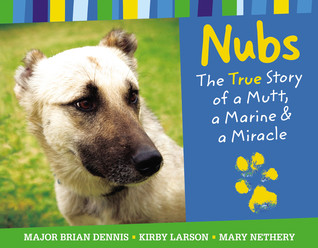
Description: Nubs, an Iraqi dog of war, never had a home or a person of his own. He was the leader of a pack of wild dogs living off the land and barely surviving. But Nubs's life changed when he met Marine Major Brian Dennis.
   The two formed a fast friendship, made stronger by Dennis's willingness to share his meals, offer a warm place to sleep, and give Nubs the kind of care and attention he had never received before. Nubs became part of Dennis's human "pack" until duty required the Marines to relocate a full 70 miles away - without him. Nubs had no way of knowing that Marines were not allowed to have pets.
So began an incredible journey that would take Nubs through a freezing desert, filled with danger to find his friend and would lead Dennis on a mission that would touch the hearts of people all over the world.


Review: Nubs was a nice, true, and uplifting story about a feral dog from Iraq that found a home in the United States. In October 2007, Border Transition Team 3/5/2 arrived at the border of Iraq and Syria. The team members were greeted by a pack of wild dogs, whose leader became known as "Nubs" because of his docked ears. He developed a bond with Dennis, and as the troops would come and go over the course of several weeks, they were always greeted by the dogs. Nubs exhibited signs of malnutrition and abuse yet he continued to seek food and companionship from the Marines, often trying to follow them when they'd leave. In December 2007, when the Marines relocated to the Jordanian border, Nubs embarked on a treacherous journey across the desert and, two days later, walked into the camp to join Dennis. Since the Marines couldn't have a dog on base, the story then continues on how arrangements and donations were made for Nubs to be sent to the United States. Because Marine regulations prohibit the keeping of pets in a war zone, Major Dennis and his men. The story is quick and the pacing is fast for younger readers who are interested in reading pet stories or inspiring stories featuring animals.

Rating: 4 stars

Words of Caution: None. Recommended for Grades 2 and up.

If you like this book try: Dogs on Duty by Dorothy Hinshaw Patent, Tara and Bella by Carol Buckley


Description: A vertible cinematic account of the catastrophe that decimated much of Chicago in 1871, forcing more than 100,000 people from their homes. Jim Murphy tells the story through the eyes of several survivors. These characters serve as dramatic focal points as the fire sweeps across the city, their stories illuminated by fascinating archival photos and maps outlining the spread of fire.

Review: I enjoyed reading the Great Fire since I didn't know a lot about the topic. The inclusion of real life characters and their personal accounts, maps, and illustrations are what brought this book alive for me.  Murphy traces the fire through its three horror-filled days as, fed by prairie winds, cinders from a Saturday night blaze, and structures (even streets and sidewalks) built almost entirely of wood, it consumed block after block of homes, businesses, and bodies, eventually leaving 100,000 people homeless. This was an engrossing read and one I would recommend to readers interested in learning the history of Chicago.

Curriculum Connection: Social Studies, Chicago History

Rating: 4 stars

Words of Caution: None. Recommended for Grades 5 and up.

If you like this book try: The Great Chicago Fire by Tria Smith, The Great Chicago Fire of 1871 by Paul Bennie


Description: Draws on stories from survivors and archival photographs to describe the history of the "Titanic" from its launch to its sinking.

Review: Hopkinson provides a great overview of the Titanic disaster for young readers without over-dramatizing, drawing unwarranted conclusions, or prolonging the ordeal. She uses real survivors as her "characters," whose voices relay many of the subsequent events, include crew members as well as travelers in first, second, and third class. I liked the inclusion of the characters from different social classes and walks of life. Chapter notes, sources, archival photos, a timeline, short biographies of those mentioned, and more are included. Hopkinson provides a bibliography at the end of the book with suggested readings for those who want to know more details of the Titanic disaster. I would highly recommend this book for readers who don't know much about the Titanic disaster but want to know the gist of what happened.

Curriculum Connection: Social Studies

Rating: 4 stars

Words of Caution: None. Recommended for strong Grades 5 readers and up.

If you like this book try: The Watch That Ends the Night by Allan Wolf, Distant Waves by Suzanne Weyn
Rummanah Aasi
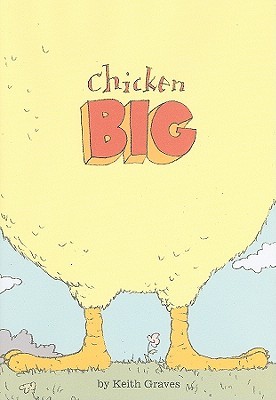
  I haven't reviewed picture books in a couple of months. I must fix that! Today I'll be reviewing Chicken Big by Keith Graves, The Gingerbread Man Loose  in the School by Laura Murray, and The Camping Trip That Changed America by Barbara Rosenstock.

Description: On a teeny little farm, in an itty-bitty coop, a very small hen laid a big, giant egg. And out of this egg came one big, humongous . . . something. "It's big!" clucked the little rooster. "It's enormous!" clucked the small chicken. "It's an elephant!" peeped the smallest chicken. "Run for your lives!" they cried. No matter how they try, these clueless chickens can't make sense of the gigantic new member of their family until he saves the day.

Review: As you could probably tell from the title and the description of the book, Chicken Big is a hilarious spin on the classic Chicken Little story. The book features a band of not-so-bright chickens who are confused by the presence of a giant chicken who just wants to be part of the gang. 
When this enormous chicken is born the others can not understand that the newly chick is really a chicken! They manage to call all the chick everything but a chicken after coming to some ridiculous conclusion as if the sky is falling or leaking, but luckily the large chicken manages to save the day by convincing them that it’s really just an acorn and that it’s just rain. The small chickens still don’t think he’s a chicken, until the day that the humongous chick rescues all the eggs from the hungry fox. Only a chicken could be so smart, kind, warm, and brave!
  The illustrations and layout of this book are similar to that of a graphic novel, with lots of speech bubbles and multiple panels per page. The text is suited for preschoolers and up who are familiar with the original Chicken Little story. I think the young readers would get a kick out of the humor and the crazy band of chickens.  Make sure to read the front and back of the cover, as well as the title page for more chicken-y humor. 
Curriculum Connection: This would work great in a unit where students are introduced to synonyms in language arts class. 

Rating: 4 stars

Words of Caution: None. Recommended for Grades K-3

If you like this book try: The King of Little Things by Bil Lepp,  Letting go by Janet Morgan Stoeke


Description: When a class leaves for recess, their just-baked Gingerbread Man is left behind. But he's a smart cookie and heads out to find them. He'll run, slide, skip, and (after a mishap with a soccer ball) limp as fast as he can because: "I can catch them! I'm their Gingerbread Man!"
With help from the gym teacher, the nurse, the art teacher and even the principal, the Gingerbread Man does find his class, and he's assured they'll never leave him behind again.
Review: This is a fun story about a gingerbread man who gets left behind and then searches all over the school (with some bumps along the way) for his class. The rhyming narrative is entertaining, but it doesn't always work and sometimes reads awkward. I was also not a big fan of the illustrations, they looked too juvenile but that might be the appeal for the younger readers. The story is presented in a graphic novel-style format, with lots of cartoonish frames and dialogue bubbles.
 I think this story would be great during the first week of school where kids are trying to become familiar with the school's geography. I can totally see teachers going to different parts of the school and finding 'notes' as to where the lost gingerbread man could be by making trips to the gym, library, and other rooms along the way back to their own classroom trying to find the lost gingerbread man. 

Rating: 3.5 stars

Words of Caution: None. Recommended for Grades K-1

If you like this book try: The Gingerbread Man Loose on the Fire Truck by Laura MurrayMy first day of school by P.K. Hallinan


Description: In 1903, President Theodore Roosevelt joined naturalist John Muir on a trip to Yosemite. Camping by themselves in the uncharted woods, the two men saw sights and held discussions that would ultimately lead to the establishment of our National Parks.

Review: Based on a true story of Roosevelt’s and Muir’s fateful camping trip, The Camping Trip That Changed America is a fun peek into a less often told history of the national park and how they came to be. I learned a lot from this book. 
Told in an engaging voice, the author chooses to introduce the two famous men as they were to their families, nicknames and all. Though they are unlike in so many ways, they both share a passion for the outdoors and outspoken about their beliefs, so it is fun to see them paired together, swapping stories, getting away from the normal busy day and take time to be with nature. 
 The author chooses vignettes from the camping trip and the tour of Yosemite that will inspire young readers today just as it did the President and provides a nice author’s note, quotes from the men, and further reading since this brief glimpse is sure to inspire further research. The illustrations have so much energy, making the characters and the story leap off the page. While simple, they pair well with the breezy text and capture the essence of Yosemite.

Curriculum Connection: Science and History

Rating: 4 stars

Words of Caution: None. Recommended for Grades 2-4.

If you like this book try: All the water in the world by George Ella Lyon, All the world by Liz Garton Scanlon
Rummanah Aasi
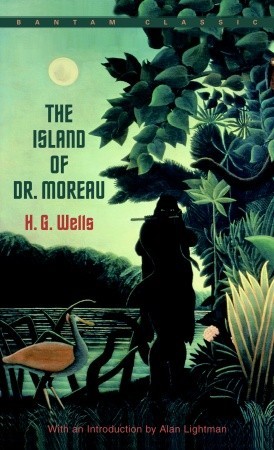
  I remember a really bad movie called The Island of Dr Moreau which featured Marlon Brando and Val Kilmer back in the 1990s as a kid and always thought it was so weird, but I didn't realize it was an adaptation of a book. It's not until hearing lots of publicity of Megan Shepherd's debut novel, The Madman's Daughter, a loosely adapted YA retelling of Well's original story did I decide to pick it up. The Island of Dr. Moreau is well worth picking up and reading, especially if you enjoy science fiction and Gothic horror.

Description: In The Island of Dr. Moreau a shipwrecked gentleman named Edward Prendick, stranded on a Pacific island lorded over by the notorious Dr. Moreau, confronts dark secrets, strange creatures, and a reason to run for his life. 

Review: Unsettling, bizarre, and most definitely ahead of his time, H.G. Well's lesser known novel, The Island of Dr. Moreau, is a very slim novel that tackles a variety of themes along with giving its readers a full dose of suspense, horror, and science fiction. Edward Prendick finds himself shipwrecked on an island with Doctors Montgomery and Moreau. Montgomery is the protege and follower of the Moreau, mad scientist and vivisectionist. A vivisectionist is someone who cuts and injures living animals for the purpose of scientific research. Beyond these scientists, Prendick finds himself intensely frightened (that's an understatement) by these creatures roaming around the island. 
  Prendick discovers that Moreau captures the island's animals and painfully turns them into half-men, then forces them to live by strict standards that he believes will overcome their bestial natures. These creatures of treated as subservient slaves, obligated to follow Moreau's commandments much like the Ten Commandments in which the number one rule is to not eat meat. It doesn't take a mad scientist to know that all of this is a recipe for disaster with horrible consequences. I really like how Wells juxtaposed the notion of bestial behavior by pitting the natural craving for meat against the humans conducting so-called 'experiments' just to see if things can be done. 
  Prendick finds himself in a predicament. Though appalled by Moreau's plan, he actually becomes a participant in Moreau's society of vivisection. Prendick is drawn to Moreau's brilliance and is enchanted by  the notion that Moreau could actually be right but that haze of illusion is cleared when the animals inevitably rebel and he becomes the last man on the island, watching the tortured animals return to their natures and throw off Moreau's pseudo-society. The true horror of the book isn't just the creatures no matter how strange they look, but rather the human monster who creates in the name of advancement.
 Though overlooked by other more popular horror novels such as Dracula and The Strange Case of Dr. Jekyll and Mr. Hyde, The Island of Dr. Moreau is relevant more now than ever with our outstanding and always progressing technology. Genetics, animal experimentation, psychology, colonization, imperialism, patriarchy, scientific chauvinism, religion, and ethical imposition are seriously and intelligently explored within the layers of the story. Wells' implied conclusions may be unsettling at times, but that is the point.

Curriculum Connection: Ethics, Science, and Debate

Rating: 4 stars

Words of Caution: The violence in the novel is quite tame compared to today's books, but I would still recommend this book to older readers due to the book's themes.

If you like this book try: Dr Franklin's Island by Ann Halm, The Madman's Daughter by Megan Shepherd, Frankenstein by Mary Shelley
Rummanah Aasi
  I'm almost at the end of my Monarch Award reading list. I love how these reading lists offer a wide range of subjects and genres. Today I'll be reviewing 11 Experiments That Failed by Jenny Offill, I Wanna New Room by Karen Kaufman Orloff, and I Want My Hat Back by Jon Klassen.

Description: Is it possible to eat snowballs doused in ketchup—and nothing else—all winter? Can a washing machine wash dishes? By reading the step-by-step instructions, kids can discover the answers to such all-important questions along with the book's curious narrator. Here are 12 "hypotheses," as well as lists of "what you need," "what to do," and "what happened" that are sure to make young readers laugh out loud as they learn how to conduct science experiments (really!).

Review: This was an unusual picture book as it didn't have your traditional narrative along with the text, but rather follows the scientific method of a curious child who comes up with bizarre and funny "What if?" experiments such as "What if you could eat snow and ketchup for an entire year?" Our little scientist follows through the failed experiment every time. Some of the experiments will require the reader to suspend disbelief, but I don't think they are meant to be taken seriously. I really do think there needs to be a tag line of "You should not try this at home" for any kids who might think these ideas are great. Overall a fun read but not the best picture book that I've read.

Rating: 3 stars

Curriculum Connection: Science

Words of Caution: None. Recommended for Grades K-2.

If you like this book try: 17 Things I'm Not Allowed to Do Anymore by Jenny Offill


Description: Ever since their baby sister came along, Alex has been forced to share a room with his little brother, Ethan, and it's a nightmare. Ethan always breaks stuff, snores like a walrus, and sticks crayons up his nose. No hardworking, well-behaved, practically grown-up boy like Alex should have to put up with that! Writing letters to his mom convinced her to let him get his pet iguana, so Alex puts pencil to paper again, this time determined to get his own room. Though all of his powers of persuasion can't get his dad to expand the house, he does come through with a fun alternative-a tree house!

Review: Anyone who has a sibling can definitely empathize with Alex. Alex has to share his room with his impossible, irritating younger brother Ethan in the wake of his new sister. Cleverly, Alex decides the best way to convince his parents is through a series of letters stating why he should have his own room and suggestions of how to improve it. His poor, exhausted mother defers the room debacle to her husband. The slapstick humor as seen through the colorful and zany watercolor images show Ethan turns into various loud and obnoxious creatures really captures Alex's wild imagination perfectly. Alex's persuasion letters are hilarious. The sibling anger and the final resolution are spot-on and give a gentle lesson on how to live together peacefully adds a nice touch. A definite child pleasing read and a good choice for a read-aloud.

Rating: 4 stars

Curriculum Connection: Language Arts- How to write a letter

Words of Caution: None. Recommended for Grades

If you like this book try: I Wanna Iguana by Karen Kaufman Orloff, The Pain and the Great One by Judy Blume


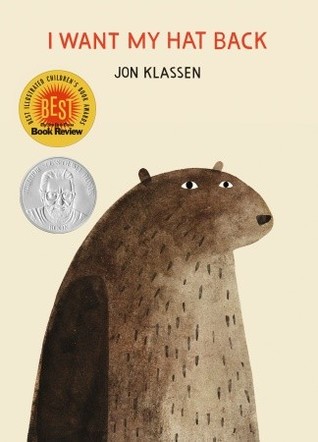
Description: A bear almost gives up his search for his missing hat until he remembers something important.

Review: Who says picture books are only for kids? I Want My Hat Back is a wonderful humorous read that can easily be enjoyed by adults and children. It reminded me of the classic Bugs Bunny cartoons that I use to love as a kid. A very polite yet oblivious bear goes on a search in the forest for his hat. He asks every animal that he meets and they all come up with the same question "No, I've not seen it" until a very suspicious rabbit seems to be a bit nervous and agitated when our bear asks him about his hat. With a hint of irony and youthful humor, Klassen has hit this book out of the ball park. The images are soft and incredibly cute and simple. You will definitely be laughing from the beginning to the end.

Rating: 4 stars

Words of Caution: There is a subtle darkness of what happens to the rabbit at the end of the book. Recommended for ages 4 and up.

If you like this book try: This Is Not My Hat by Jon Klassen, Beware of the Frog by William Bee, Knuffle Bunny by Mo Willems, Oh, No! by Candice Fleming
Rummanah Aasi
  I got another great batch of picture books from the Monarch Book Awards.  The Monarch books are a great way to highlight some terrific books for K-3 readers. Today I'll be reviewing Swirl by Swirl, One, and Brothers at Bat.

Description (from Goodreads): A Caldecott medalist and a Newbery Honor-winning poet celebrate the beauty and value of spirals.What makes the tiny snail shell so beautiful? Why does that shape occur in nature over and over againbut also celebrate the beauty and usefulness of this fascinating shape.

Review: Swirl by Swirl is a wonderful introduction to natural science for young readers. The text is very simple, usually containing descriptive words to explain how nature has different spirals and the many ways it is used. The illustrations are amazing- eye catching, colorful, and full of such detail and color that I lingered on the pages much longer just to capture everything on the page. Fun and educational, Swirl by Swirl has now made me aware of the many spiral shapes around me after reading this book.

Rating: 4 stars

Curriculum Connection:
Science

Words of Caution: None.
Recommended for Grades K-3.

If you like this book try:
Over and Under the Snow by Kate Messner, A Butterfly is Patient by Dianna Hutts Aston


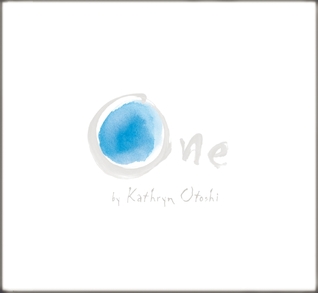
Description: Blue is a quiet color. Red’s a hothead who likes to pick on Blue. Yellow, Orange, Green, and Purple don’t like what they see, but what can they do? When no one speaks up, things get out of hand — until One comes along and shows all the colors how to stand up, stand together, and count.

Review:
One is a deceptively simply book that can be read on many levels. On the surface, young readers can learn about colors and counting. If you take a closer look, however, the book has a powerful message on the subject of bullying- how it feels to be bullied, actions to take to stop bullying, etc.
  The art in One is very minimalist. There is basically a dot and/swirls of watercolor paint to depict the characters in the story. Though the artwork isn't much to look at, the antibullying message will resonant with readers much longer.

Rating:
4 stars

Words of Caution:
None. Recommended for Grades K-2.

If you like this book try:
Zero by Kathryn Otoshi


Description (from Goodreads): The Acerra family had sixteen children, including twelve ball-playing boys. It was the 1930s, and many families had lots of kids, but only one had enough to field a baseball team . . . with three on the bench! The Acerras were the longest-playing all-brother team in baseball history. They loved the game, but more important, they cared for and supported each other and stayed together as a team. Nothing life threw their way could stop them.

Review:
Compared to today's standards, I come from a large family but I can't imagine living in a house of 15 other siblings. That's insane! Brothers at Bat is an engaging story that details the lives of the Acerra brothers who all played their favorite sport, Baseball, until the World War II in which they served the army and later when on with their lives. Based on a real family, I was unaware of the Acerras story and I liked how the book pulled me in since I'm not really a fan of baseball and gave a true sense of how closely knitted the family was. The illustrations definitely has a retro-feel that perfectly fits to the stories historical context. I'd definitely would recommend this book to young readers who enjoy sports.

Rating:
4 stars

Words of Caution:
None. Recommended for Grades 1-3.

If you like this book try:
We are the Ship by Kadir Nelson, Hey Batta Batta Swing! by Sally Cook
Rummanah Aasi
 I'm a bit behind on my children and middle grade reads, but I hope to catch up really soon. I find nonfiction books for kids really hard to circulate, but I've discovered some great titles that are fun, easy to read and educational. Both of the books below were featured on the Bluestem Book Award last year.

Description: Brothers Joe and Bob Switzer were quite different. Bob was a hard worker and planner who wanted to grow up to be a doctor. Joe dreamed of making his fortune in show business and loved magic tricks and problem-solving. When an accident left Bob recovering in the dark basement, the brothers began experimenting with ultraviolet light and fluorescent paints. Together they stumbled on a formula for colors that glows with an extra-special intensity-Day-Glo colors.

Review: I had no idea that fluorescent colors were created out of a bad experiment and business idea. Barton takes on the role of a cool and fun teacher and discusses how two brothers worked together to create the eye-popping hues. Joe Switzer figured out that using a black light to create a fluorescent glow could spruce up his magic act, so the brothers built an ultraviolet lamp. They began to experiment with various chemicals to make glow-in-the-dark paints. Soon Joe used fluorescent-colored paper costumes in his act and word got around. Through trial and error, the brothers perfected their creation. The story is written in clear and simple language. It reminded me a lot of my favorite science shows, Bill Nye the Science Guy, that incorporates fun and education seamlessly. The book also has lots of whimsical cartoons. While endpapers are Day-Glo bright, most of the story is illustrated in black, white, gray, and touches of color, culminating in vivid spreads. The Day-Glo Brothers is a fun story that is sure to be enjoyed by those who love science.

Rating: 4 stars

Curriculum Connection: Inventors, Science

Words of Caution: None. Recommended for Grades 3 and up.

If you like this book try: So you want to be an inventor? by Judith St. George, How nearly everything was invented by Jilly MacLeod

Description: When you’re a guy, nature is one big playground—no matter what the season. There are puddles to splash in the spring, pine trees to climb in the summer, maple seeds to catch in the fall, and icicles to swordfight with in the winter.
     Nature also has a way of making a guy appreciate important stuff—like how many rocks it takes to dam up a stream, or how much snow equals a day off from school.
So what kind of poetry best captures these special moments, at a length that lets guys get right back to tree-climbing and kite-flying? Why, guyku, of course!


Review: Poetry is very hard to understand and write. Haiku seems like a terrific way to introduce poetry to young readers and in the case of Guyku- to boys though girls will gravitate to this title too. Haikus are  deceptively simple and very accessible to almost any reader. The poems in this picture-book collection capture natural moments that young readers have while playing outdoors. Each season is addressed, and moments associated with spring such as riding bikes with baseball cards attached to the wheels to mimic the sound of a motorcycle brings the book to life and almost define spring. The artwork created by pen, ink, and watercolor illustrations mirror the simplicity of each entry and capture the expressions of the boys and their adventures honestly and charmingly. This book could easily work with students learning about the seasons as well as teach them about poetry in a fun way.  

Rating: 4 stars

Curriculum Connection: Poetry and seasons.

Words of Caution: None. Recommended for Grades 1-3.

If you like this book try: Don't Step on the Sky by Miriam Chaikin, Song of the water boatman by Joyce Sidman
Rummanah Aasi
  While I didn't get a chance to completely finish my Banned/Challenged reading challenge from last year, I did manage to squeeze in a few more reads before the challenge's deadline. I've read many stories about the following books but haven't actually read them until now.

Description: Fearing that her legal guardian plans to abandon her to return to France, ten-year-old aspiring scientist Lucky Trimble determines to run away while also continuing to seek the Higher Power that will bring stability to her life.

Review: It's a shame that one word overshadowed a great book. The Higher Power of Lucky is story of a young girl named Lucky who lives in tiny, poor town Hard Pan, California with her dog and the young French woman who is her guardian. Her mother died in a thunderstorm and her father handed her over to his first exwife, a French woman named Brigitte. With a personality that reminded Ramona Quimby, a character that I absolutely adored,  Lucky is contemporary and relate-able. She teeters between being a grown-up that can easily gather insects and scares away snakes without any hesitation yet she is vulnerable and fears that her guardian will leave her to return to France at any moment. Looking for solace, Lucky eavesdrops on the various 12-step meetings held in Hard Pan, hoping to discover her own higher power that will see her when she hits 'rock bottom'. Peppered with memorable secondary characters such as her best friend and crush, Lincoln, who has a fixation for tying knots, and a little, adorable yet pesky toddler named, Miles, who can relate to Lucky's fears. Patron's plotting is as tight as her characters are endearing. Lucky is a true heroine, especially because she's not perfect: she does some cowardly things, but she takes pains to put them to rights.

Rating: 4 stars

Reason why it was banned/challenged: There was a big controversy when the book was published, specifically because the word scrotum appears a handful of times throughout the book. Lucky first hears of the word while eavesdropping on a conversation when a character says he saw a rattlesnake bite his dog, Roy, on the scrotum. Many educators including elementary school librarians felt the inclusion of the "s-word" was highly inappropriate and unnecessary. They even called for the book to be removed from library shelves and some even thought the book should be stripped of its Newbery award. I, personally, feel that the inclusion of the word is a nod to Lucky's curiosity which natural for her age. Though she wonders what the word means as she thinks it's important, she isn't fixated on it and nor does it drive the story. Unfortunately, this controversy has overshadowed the book's importance. Most people including me had to really think of the book's real title instead of referring it as the book with the "S-word". To read more about the controversy, read the New York Times article and then the author's response as well as her interview.

Words of Caution: None. Recommended for Grades 3 and up.

If you like this book try: Lucky Breaks by Susan Patron, Walk Two Moons by Sharon Creech, Waiting for Normal by Leslie Connor


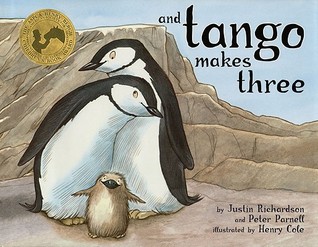
Description: At New York City's Central Park Zoo, two male penguins fall in love and start a family by taking turns sitting on an abandoned egg until it hatches.

Review: And Tango Makes Three is based on a true story about a charming penguin family living in New York City's Central Park Zoo. In this heartwarming story, readers will meet Roy and Silo, two male penguins, who are "a little bit different" than the other penguins. They cuddle and share a nest like the other penguin couples, and when all the others start hatching eggs, they too want to be parents. Determined and hopeful, they bring an egg-shaped rock back to their nest and proceed to start caring for it. They have little luck, until a watchful zookeeper decides they deserve a chance at having their own family and gives them an egg in need of nurturing. The dedicated and enthusiastic fathers do a great job of hatching their funny and adorable daughter. Done in soft watercolors, the illustrations set the tone for this uplifting story. The words are matched well with the illustrations and the message of tolerance and a broader definition of family is well received.

Rating: 4 stars


Reason why it was banned/challenged: And Tango Makes Three is frequently challenged since its publication of 2006. It has appeared on the list several times between 2006 and 2010 for the following reasons: homosexuality, religious viewpoint, and unsuited to age group. 

Words of Caution: None. Recommended for Pre-school to Grades 3. Though the book is about two male penguins, I don't see any agenda of imposing homosexuality to kids, but rather showing that a family no matter how family is designed all have the same concepts at its core: love, warmth, and tolerance. What are we telling kids who are raised by GLBT adults? That they aren't loved and they aren't normal? It amazes me that a simple book like Tango can generate so volatile opinions while TV shows like Modern Family that also features two male partners raising a child can garner so many accolades and be accepted by so many people.

If you like this book try: The Family Book by Todd Parr, The Very Best Daddy of All by Marion Dane Bauer

Description: A retelling of a mother's account of what happened to her family during the Flash that destroyed Hiroshima in 1945.

Review: Hiroshima No Pika is a striking picture book that details one of the horrific events of history: the dropping of atomic bomb in Hiroshima, Japan. The book is filled with watercolor paintings which reinforce the colors of flames and debris, vividly heightening this low-key text recounting the fictionalized experiences of a 7-year-old Hiroshima child and her mother after the 1945 "Hiroshima flash." The story told in precise and easy sentences send chills down your back with its easiness. Like most people, you only hear about the event but when you read Hiroshima No Pika, you are given a tiny glimpse of what true horror is really like.

Rating: 4 stars. Recommended for Grades 4 and up.

Curriculum Connection: Social Studies


Reason why it was banned/challenged:  According to the MVCC Libraries, the book was challenged because it "does not depict war as glorious (graphic depiction of   victims of bombing of Hiroshima).

Words of Caution: There is nudity and strong images of violence. The book does not shy away from the dark side of war: causalities, destruction, and an abrupt change to life. The pictures, though hard to take in because of how much is inflicted by the people of the story, show just enough detail of horror without going overboard. Though not a book that would used as a read-aloud, it would serve a great purpose in discussing World War II with mature students such as older elementary students and above who can understand the book and its context. 

If you like this book try: Baseball Saved Us by
Related Posts with Thumbnails