Showing posts with label Suicide. Show all posts
Rummanah Aasi


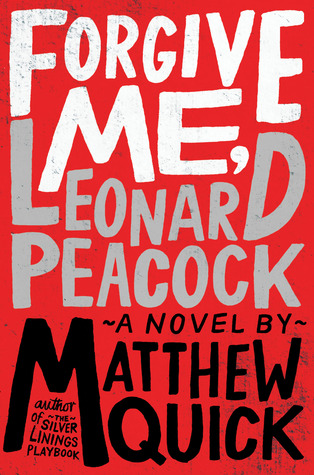
Description: Today is Leonard Peacock’s birthday. It is also the day he hides a gun in his backpack. Because today is the day he will kill his former best friend, and then himself, with his grandfather’s P-38 pistol.But first he must say good-bye to the four people who matter most to him: his Humphrey Bogart-obsessed next-door neighbor, Walt; his classmate, Baback, a violin virtuoso; Lauren, the Christian homeschooler he has a crush on; and Herr Silverman, who teaches the high school’s class on the Holocaust. Speaking to each in turn, Leonard slowly reveals his secrets as the hours tick by and the moment of truth approaches.

Review: Forgive Me, Leonard Peacock, is a striking coming of age novel that reminded me a lot of the J.D. Salinger's classic, The Catcher in the Rye, and Jay Asher's powerful debut novel 13 Reasons Why. In a gut-wrenching, opening chapter Leonard Peacock declares his intention for his 18th birthday: he is going to kill his former best friend and himself with his grandfather's gun.
  Leonard is a loner, an outcast, a misfit, who has a difficult time connecting with people. His parents are neglectful. His father is a washed-up, drug addict musician who has vanished and his mother is a self-absorbed, workaholic. The only real friend Leonard has is an elderly neighbor who spends his days smoking and watching Bogart movies. Leonard's anger, emotional pain, and brokenness build until he feels there is nothing left to do but end his life and the cause of his misery.
 The plot of the book centers around this 24 hour period as Leonard gives gifts to the four people who mean something to him and he reveals some of his anguish. There are many topics that Leonard touches upon such as bullying, hypocrisy, and religion in the book that will provoke discussion. While reading the book, I kept hoping someone would see Leonard's suicidal signs and intervene. Luckily his most admired teacher, Herr Silverman, picks up on Leonard's erratic behavior and offers to listen without any judgment, something which  Leonard so desperately needs.
 Quick does a great job in his use of flashbacks, internal dialogue, and interpersonal communication. Each of the four people that Leonard meets all have an important meaning in his life and used effectively in the story regardless of how time they spend on the page. Quick also captures teenage angst and alienation perfectly in Leonard's voice which at times is funny, on-point, cynical yet heart-rending. The suspense about what happened between Leonard and Asher is what kept me glued to the pages. The slow reveal builds tension until the heartbreaking climax unfolds and we finally learn about the emotional trauma that Leonard has endured. Many readers have struggled with Leonard's likability as a character, but I don't think that is the purpose of the book. Leonard is just an example of teens who are struggling with mental illness and desperately needs help. I think the book serves as a wake-up call about identifying suicidal signals and providing help to those in need.

Rating: 4 stars

Words of Caution: There is strong language, allusions to sexual abuse, and crude sexual humor. Recommended for Grades 9 and up.

If you like this book try: 13 Reasons Why by Jay Asher, The Perks of Being a Wallflower by Stephen Chbosky, The Catcher in the Rye by J.D. Salinger
Rummanah Aasi
 It has been a while since I did a post for Manga Mondays. Manga Mondays is a meme hosted by Alison at Alison Can Read where bloggers can share their passion for reading mangas. It's a great place to get new manga titles to try and to meet new bloggers. Instead of reviewing each volume separately, I'm going to review the entire series of Sand Chronicles since it is complete at 10 volumes. I hope you like this review format!


Description (of the first volume): After her parents get divorced, Ann Uekusa and her mother move from Tokyo to rural Shimane. Accustomed to the anonymity of city living, Ann can't get used to the almost overbearing kindness of the people in her mother's hometown. But when personal tragedy strikes, Ann discovers how much she needs that kindness.

Review: Sand Chronicles is a standout shojo (i.e. romance) manga that tackles series issues as such suicide, depression, betrayal, and infidelity although at times it tends to veer close to melodrama. In each volume there are series topics that are discussed and a nice character growth arcs for its cast of characters which gives this manga series more depth unlike the many silly, typical shojo mangas. The series is framed by the seasons and time a running theme throughout the manga. In the first volume 12 year old Ann Uekusa and her mother have been abandoned by Ann's debt-ridden father and forced to move from Tokyo to Ann's grandparents' home in Shimane. At first, Ann feels both oppressed by her mean, strict, conservative grandmother and totally out of place in a small town, but once she makes some friends she adapts quickly. When her disillusioned, depressed, and demoralized mother commits suicide, Ann leans on Daigo, the first boy her own age that she met in Shimane, and their budding romance becomes the series's focus. Ann and Daigo's romance is sweet and develops at a realistic speed. Though there is a necessary love triangle in this manga, it thankfully doesn't hold much weight. The real obstacles that Ann and Daigo's relationship faces are Ann's nightmare of becoming her mother and her failure to grieve her mother's death.
   Ann is an extremely likable character. An every girl who is forced to grow up faster and become an adult. She deals with normal every day situations from a rival girl who is scheming for Daigo's affections, stumbling through the mysteries of a relationship, both romantic and friendships. Daigo is the perfect boyfriend whose only fault is that he wears his heart on his sleeve. What impressed me with this series is that the fact that the secondary characters were also strong and dynamic pushing the plot forward and not making it stale.
 I like the artwork in this series with its delicate lines and the beautiful scenery which also becomes a landmark on these characters' rite of passage. I highly recommend reading this manga series if you prefer reading true to life scenarios with a sweet romance. A great pick for Sarah Dessen fans and a really good primer for reading Nana by Ai Yazawa (a manga series that nearly broke me).

Rating: 4 stars

Words of Caution: Due to mature themes, a few scenes of sexual situations, some nudity. I would recommend Sand Chronicles for high school readers and up.

If you like this series try: We Were There by , Nana by Ai Yazawa, Kimi Ni Todoke by
Rummanah Aasi
"As specimens go, they always get excited about me. I'm a good one. A show-stopper. I'm the kind of kid they'll still enquire about ten years later. Fifty-one placements, drug problems, violence, dead adopted mum, no biological links, constant offending. Tick, tick, tick. I lure them in to being with. Cultivate my specimen face. They like that."  
  Jenni Fagan's Panopticon is a book completely out of my comfort zone, but thoroughly intrigued me with quotes such as the one above. I knew when I picked this book up that I would face some of these issues:
  • This book isn't appealing, entertaining, fun read.
  • This book isn't going to be about a girl who beats, stands up to the system.
  • This book wouldn't have a happy ending or even closure.
  • This book wouldn't have characters that I would like or could even support.
So, you're probably wondering, why bother? Well, I listened to an author interview on NPR and was really interested in learning about how other countries deal with hard pressing issues such as foster care. While I didn't love this book as much as others, I definitely learned a lot from it.


Description: Anais Hendricks, fifteen, is in the back of a police car. She is headed for the Panopticon, a home for chronic young offenders. She can't remember what’s happened, but across town a policewoman lies in a coma and Anais’s school uniform is covered in blood. Raised in foster care from birth and moved through twenty-three placements before she even turned seven, Anais has been let down by just about every adult she has ever met. Now a counter-culture outlaw, she knows that she can only rely on herself. And yet despite the parade of horrors visited upon her early life, she greets the world with the witty, fierce insight of a survivor.
  Anais finds a sense of belonging among the residents of the Panopticon – they form intense bonds, and she soon becomes part of an ad hoc family. Together, they struggle against the adults that keep them confined. When she looks up at the watchtower that looms over the residents though, Anais knows her fate: she is an anonymous part of an experiment, and she always was. Now it seems that the experiment is closing in.

Review: Jenni Fagan's Panopticon is not for the faint of heart, especially if you don't like books that are gritty, dark, and you are offended by strong language and drug usage. The Panopticon is centered on the philosophical institution of corrective behavior created by an English philosopher in the 18th century.


The concept of the circular and open design prison is to allow a single watchman to observe
inmates of an institution without them being able to tell whether they are being watched or not. Although it is physically impossible for the single watchman to observe all cells at once, the fact that the inmates cannot know when they are being watched means that all inmates must act as though they are watched at all times, effectively controlling their own behavior constantly. In Fagan's book the Panopticon is a reference to Scotland's temporary holding pen for foster children who are waiting for their next foster home.
  Anais Hendricks is unlike any character I've met before. She is full of contradictions and her story broke my heart into tiny shards. Anais has been a foster child since she was a toddler. She doesn't remember her parents and comes up with her own birth stories, fantasizing that she is a lost rich heir waiting to be found or a child of French artists who met a tragic end. The blurb of the book is a bit misleading, leading readers to believe it's more of a mystery of what occurred the night that Anais was found bloodied and hauled off the police after her foster mother is found stabbed to death and a police officer has been brutally assaulted. Though we are given clues about that night and there is an ongoing investigation, things are left hazy either due to Anais's high on drugs and eventual blackouts or maybe she just doesn't want to talk about it. I'm not really sure, but honestly I found myself less intrigued by the mysterious night and more enraptured by Anais's ad hoc family of lost children, who come alive in Fagan's story and their own heartbreaking back stories are revealed. The book is really a slice of Anais's life in the foster care system in all its messy and ugly pieces from children committing suicide when they reach adulthood and can no longer be in the system, dying from AIDS after working as a prostitute to earn wages, etc.
  It took me a while to get into The Panopticon, for two reasons. One reason is that the book is written in a Scottish dialect. I didn't always understand the slang and I had to read the dialogue aloud the first few times just to get adjusted to the dialect. I wish there was an audiobook available for the book, but I couldn't find one. The second reason is that I could only take the intense subject matter for only a few pages but then I had to put it down. I did find the book well written and eye opening, but I'm honestly not sure who I would recommend it to perhaps readers who enjoy intense stories and like stories set outside of the U.S.  

Rating: 3.5 stars

Words of Caution: Strong language and drug usage throughout the book. Sexual situations and violence including rape. Recommended for adults only.

If you like this book try: Language of Flowers by Vanessa Diffenbaugh , White Oleander by Janet Fitch, Brewster by Mark Slouka
Rummanah Aasi
 There are different ways people grieve. Some clam up and want to be left alone while others use writing as catharsis, trying to articulate what can't be said verbally. Jenny Hubbard's latest novel, And We Stay, is a lyrical story that takes readers on a journey towards healing after a tragedy. Many thanks to the publisher for providing me an advanced reader's copy of this book via Netgalley.


Description: When high school senior Paul Wagoner walks into his school library with a stolen gun, he threatens his girlfriend Emily Beam, then takes his own life. In the wake of the tragedy, an angry and guilt-ridden Emily is shipped off to boarding school in Amherst, Massachusetts, where she encounters a ghostly presence who shares her name. The spirit of Emily Dickinson and two quirky girls offer helping hands, but it is up to Emily to heal her own damaged self.

Review: And We Stay is a beautifully and powerfully written novel about overcoming guilt,and healing after a tragic loss. Emily Beam is a new student at Amherst School for Girls. She enrolled in the school in January of her junior year and no one knows why. There are of course rumors circulating about her, but none of them come close to reality. Only Emily knows the tragic truth and ruminates about it quietly while scribbling away in her secret journal, each time revealing a bit more about the circumstances leading up to the day when her boyfriend entered the school library where she was working with her class, lured her into the stacks to talk, and then shot himself in the head.
  The book has an unique structure that may not work for some readers as it mixes prose and poetry as well as narrative tenses throughout the story. In past-tense flashbacks, readers learn the circumstances of Emily and Paul's relationship, while the poems Emily writes in her present-day environment infuse those same circumstances with newly realized perceptions. The narrative switches to present tense when it relates Emily's current life in boarding school, a fresh and unexplored world with emerging possibilities as well as potential pitfalls. 
  Due to the layered structure of the novel, the story's pacing is uneven though that might be intentional. I found the present to a bit slow to read, but I wanted to know what lead to the devastating events so I continued to read. Once the past is unveiled, I read the book quickly. I loved how Hubbard uses poetry to show Emily's the state of Emily's psyche. Poetry is very personal and Hubbard uses the right amount of words in length and in weight to show Emily's psyche. The poems are not to be skipped as they show Emily's extraordinary growth and talent as well as her connection to her namesake, Emily Dickinson, who lived and wrote just down the street from the boarding school, and draws on her spirit to pour her emotions onto paper. I learned a few interesting tidbits about Dickinson while reading this book too.
  And We Stay is a book that will receive critical acclaim though it may have a small readership. The book addresses hard hitting issues such as teen suicide, depression, and even abortion yet despite the heavy topics, it offers hope of a brighter future. Budding poets may particularly appreciate Emily's story, but there is certainly something for anyone looking for a good read with a strong, believable female lead who is working her hardest to overcome tragedy.

Rating: 3.5 stars

Words of Caution: There is some strong language, discussion and allusion to sex and abortion. Recommended for Grades 9 and up.

If you like this book try: Death, Dickinson, and the demented Frenchie Garcia by Jenny Torres Sanchez, You Don't Know Me by David Klass, 13 Reasons Why by Jay Asher, Looking For Alaska by John Green
Rummanah Aasi
Another slew of mini-reviews coming your way! Today is the adult edition of books that have been sitting on my bookshelf for too long and I've finally read them last year as part of the Off the Shelve Reading Challenge. Today I will be reviewing: The House on Mango Street by Sandra Cisneros, The Coast of Chicago by Stuart Dybek, and Nine Stories by J.D. Salinger.


Description: Told in a series of vignettes stunning for their eloquence, this vignette is Sandra Cisneros's greatly admired story of a young girl's growing up in the Latino section of Chicago.

Review: The House on Mango Street was chosen for the One Book, One Chicago program a couple of years ago. It is also used in two English classes at my high school. For these reasons alone, I purchased a copy but never actually sat down to read it. The book is very short and consists entirely of vignettes from the author's childhood in a poor section of Chicago. The writing is beautiful and spare. In just a short of space, no vignette is longer that 2 or 3 pages, we get a vivid image of her family, her neighborhood, and her neighbors. We also get a chance to see our world through a different type of racial lens. It really reminded me of my younger years living in a Chicago high rise apartment. The author carefully picks and chooses her words that are potent and evocative rather than exhaustively descriptive. Would high schoolers appreciate the book's message? It's hard to tell if they would appreciate the nostalgia of childhood, but I think they would definitely could relate to Esperanza's, the narrator of the story, desire to seek freedom and explore the outside world. 


Rating: 4 stars

Words of Caution: There are some allusions to sex, drug use, and violence in the book that happen off the page. For this reason, I think it is suitable for Grades 9 and up.

If you like this book try: Carmelo by Sandra Cisneros or How the Garcia Girls Lost Their Accent by Julia Alvarez


Description: A closer look at the bizarre mysteries of everyday life in Chicago's gritty ethnic enclaves during the 1960s and 1970s.

Review: The Coast of Chicago is another book used in my high school's English curriculum that I have not read before. I liked how this book was told from different parts of Chicago with a colorful cast of characters from different ethnicity, age, and gender. The book is composed of alternating long and short stories as the author recalls his old ethnic neighborhood, his early romances, and recounts a freaky urban legend about a young woman's body frozen in a block of ice. Each character stands on their own and you can feel the various emotions that they are going through. I actually preferred the short chapters that goes straight to the punch rather than the meandering longer stories which can be a bit much. Regardless, you can still pick out the important messages and themes in all of them.

Rating: 4 stars

Words of Caution: There is strong language, crude humor, and allusions to sex in the book. Recommended for Grades 10 and up.

If you like this book try: Chicago: City on the Make by Nelson Algren, Never  A City So Real: A Walk in Chicago by Alex Kotlowitz


Description: Since the publication of The Catcher in the Rye in 1951, the works of J.D. Salinger have been acclaimed for their humor, intensity, and their lack of phoniness. A collection of short fiction, Nine Stories contains works with those qualities that make Salinger such a well-loved author.

Review: The Catcher in the Rye had a huge impact on my life and it's a book that I never get tired of re-reading. I was afraid that I picked up another book from Salinger, it would diminish my love for Holden Caufield but I'm glad that I was wrong. Nine Stories was a mixed bag for me. I didn't love all of the stories and some of them just went over my head to be honest. The stories are varied ranging from a soldier struggling with post traumatic stress disorder after returning to war in the amazing, haunting, and gut wrenching "A Perfect Day for Bananafish" to the remarkable thought process of a child genius whom everyone thinks is sick in "Teddy". What I remember most of Salinger's writing is his uncanny ability to creating characters who mirror our problems and frustrations in trying to find a resolution.


Rating: 3.5 stars


Words of Caution: There is some language, some strong description of war violence, and other mature adult topics. Recommended for Grades 10 and up.


If you like this book try: What We Talk About When We Talk About Love by Raymond Carver, Self Help by Loorie Moore
Rummanah Aasi
  I read a bunch of books during the last half of December and wanted to do a few reviews before I get to the reviews of this year. I will be reviewing The Name of the Star by Maureen Johnson, Raw Blue by Kirsty Eagar, and Moonglass by Jessi Kirby in this post. I apologize in advance if you've been waiting a long time to read these reviews.
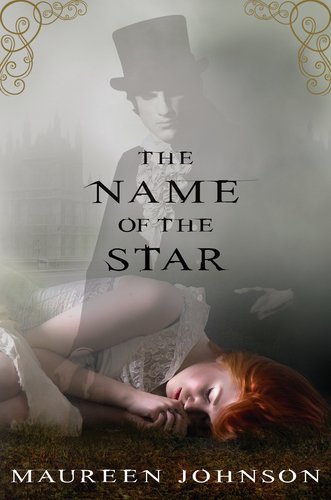

Description (from Goodreads): The day Louisiana teenager Rory Deveaux arrives in London marks a memorable occasion. For Rory, it's the start of a new life at a London boarding school. But for many, this will be remembered as the day a series of brutal murders broke out across the city, gruesome crimes mimicking the horrific Jack the Ripper events of more than a century ago.
   Soon "Rippermania" takes hold of modern-day London, and the police are left with few leads and no witnesses. Except one. Rory spotted the man police believe to be the prime suspect. But she is the only one who saw him. Even her roommate, who was walking with her at the time, didn't notice the mysterious man. So why can only Rory see him? And more urgently, why has Rory become his next target? In this edge-of-your-seat thriller, full of suspense, humor, and romance, Rory will learn the truth about the secret ghost police of London and discover her own shocking abilities.


Review: I was really disappointed with The Name of the Star, the first book in the Shades of London series by Maureen Johnson due to my high expectations for the book. I really like Maureen Johnson's contemporary books and her funny, quirky characters so I was a bit confused with her latest venture into a supernatural/paranormal series. While the book has a great premise, it lacked all the trademarks of a Johnson book such as great characterization and likable characters. I didn't find anything memorable about it. With the exception of the great and creepy presence of the Ripper himself, there wasn't much to look forward to. I figured out the twist, though it was clever, and knew how it ended. I think I will pick up the other books in this series, but I won't be rushing to read them.

Rating: 3 stars

Words of Caution: There is some language and some graphic violence. Recommended for strong Grade 7 readers and up.

If you like this book try: Ripper by Amy Carol Reeves (to be released in April 2012)


Description (from Goodreads): Carly has dropped out of uni to spend her days surfing and her nights working as a cook in a Manly cafĂ©. Surfing is the one thing she loves doing … and the only thing that helps her stop thinking about what happened two years ago at schoolies week.
   And then Carly meets Ryan, a local at the break, fresh out of jail. When Ryan learns the truth, Carly has to decide. Will she let the past bury her? Or can she let go of her anger and shame, and find the courage to be happy?


Review: Several of my awesome blogger buddies did a Kirsty Eagar Appreciation Week and have adored this book. Many thanks to Missie, The Unread Reader, for allowing me to borrow her book so I can read and review Raw Blue. Powerful, unflinching, realistic, and simplistically yet beautifully told. Raw Blue lives up to its perfect title hitting us in the gut with a horrible incident of rape that immediately puts us out of our comfort zone. Though the event has happened in the past and there isn't graphic detail description of it, it is crystal clear that Carly is still suffering through the consequences of shame, guilt, and anger. She has built a wall around herself and accepting the simple tokens of kindness around her is a huge step. Though a lot of the surfing background went over my head, I really enjoyed the story of Carly and Ryan. Both are realistically drawn, showing and balancing their good and bad sides, which is refreshing and honest. While the romance doesn't counterbalance Carly's darkness, it does provide her and the reader some hope that she will be okay in the future.

Rating: 4 stars

Words of Caution: There is strong language and a few small sex scenes in the book. Due to the mature content of the book, I would recommended for older teens and adults only.

If you like this book try: Pipers Son by Melina Marchetta, Speak by Laurie Halse Anderson, Just Listen by Sarah Dessen
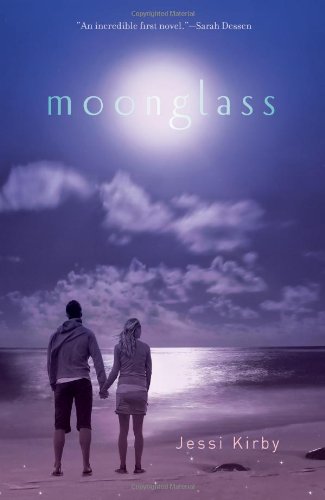

Description (from Goodreads): Anna's life is upended when her father accepts a job transfer the summer before her junior year. It's bad enough that she has to leave her friends and her life behind, but her dad is moving them to the beach where her parents first met and fell in love- a place awash in memories that Anna would just as soon leave under the surface.
   While life on the beach is pretty great, with ocean views and one adorable lifeguard in particular, there are also family secrets that were buried along the shore years ago. And the ebb and flow of the ocean's tide means that nothing- not the sea glass that she collects on the sand and not the truths behind Anna's mother's death- stays buried forever.


Review: I picked up Jessi Kirby's debut novel Moonglass after reading some pretty good reviews about the book. Unfortunately, I didn't feel the same as other bloggers. I felt like I read this book before with better characters and prose that made me feel some type of emotion. Moonglass is the story of Anna coming to terms with her mother's suicide. I didn't hate or love Anna, but I found her to be two different people at different parts of the book. At one moment, she is depressed, feels guilty of her mother's death and in the next moment she seems to be more worried about catching Tyler's, sweet and handsome lifeguard, attention. Speaking of romance, it is just a subplot that really goes no where besides the flirty glances and dialogue here and there. The book's climax is pretty obvious and the pacing is very slow. I had to put the book down numerous times and nothing stuck with me after I finished it.

Rating: 3 stars

Words of Caution: There is some language and a scene of underage drinking. Recommended for Grades 8 and up.

If you like this book try:  Fall for Anything by Courtney Summers, The Sky is Everywhere by Jandy Nelson, Truth About Forever by Sarah Dessen
Rummanah Aasi
 Ever since I read Nic's review of Saving June by Hannah Harrington, I had my eye on the book. When the opportunity to join the Saving June book tour arrived, I jumped at the chance to read it. Saving June is another good addition to the ongoing list of books that discuss grief in YA.

Description: Harper Scott's life changes forever after her sister, June, commits suicide. Harper discovers that her sister always wanted to go to California and so to honor her sister's memory, Harper and her best friend embark on an impromptu road trip. Things take an interesting turn when a mysterious boy who seems to have known June better than anyone knew insists on joining Harper and her best friend on their trip.

Review: I can't exactly pinpoint why I couldn't connect with this book. It's possible that I've read this type of book before and can't really pick out from the crowd. Generally, I don't mind a "sad book" as long as it stirs some kind of an emotion in me, but I really didn't feel anything while reading Saving June mainly because it didn't have enough depth for me.
  Harper is sixteen years old and she’s just lost her older, perfect, over-achieving sister June. Like many people, Harper only knew the exterior image of June but she's come too late to realize that really her sister had a hidden sadness that no one really understood. When Harper finds a mysterious mix CD in June’s room, it leads her to Jake, an eighteen year old music lover who has a knack for classic rock. As Harper begins to understand her sister, she hatches a wild plan to fulfill June’s last dream: to go to California.
   I had a hard time conjuring up a picture of Harper in my mind. She’s a girl who rebels in a knee-jerk reaction to her sister’s perfection. It's possible that Harper only acts that way because that's what is expected of her. She doesn’t have any deeply held beliefs or even her own taste in music. She came across as a sponge absorbing personalities of others but with no identity of her own. To me, I found her to be deeply insecure and have low self worth, which would have been fine if the author chose to explore this part of her character more. As a reader, we are repeatedly told how strong, stubborn, and so much healthier than her sister, but I didn't see it.
   Saving June is suppose to be Harper's journey through grief and self discovery, yet the book seems to be going into two different directions. The grief plot line is strong in the first few chapters of the book. I thought the opening scenes of June's funeral was well done. As the book continues and the plan is hatched to go to California, however, Harper's grief becomes secondary (more like in the background) to the love story angle featuring Jake. 
 Harper's grief didn't ring true to me. We see her run and collapse in tears many times. If she didn’t didn't this, I wouldn't have known if she is still grieving. And if she didn’t engage in reckless behavior such as drinking, smoking, and joining mosh pits, I wouldn't have known that she is full of angst.
The author had a lot of opportunities to depict emotional catharsis, but they are either ignored completely or magically solved.
  Needless to say, the grieving plot line fell completely flat for me. Thankfully, the romance between Harper and Jake held my attention. Their relationship grows steadily as they spend more time with one another and for the most part, I thought it what was somewhat realistic. I like the fact that Jake wasn't perfect. He too has some family baggage, which I wished the author explored more. His passion for music came out strong in the book too and I think all music lovers could easily relate to him. There were two things that bothered me about Jake. The first is that he's suppose to be this walking encyclopedia of music, but it seems as if he only listens to Top 40 classic rock. I mean who hasn't heard of The Rolling Stones, Bruce Springsteen, or Janis Jopin before? The second is that I really wanted to hand this guy Nicorette gum or at least breath freshner because he smokes like a fiend. I couldn't help but get squirrely every time he and Harper kissed. Personally, I don't find smoking guys attractive.
  Overall while I didn't hate this book, I thought it was okay in general. I laughed in a few places, I enjoyed a few quotes in the book, and there were swoony moments between Harper and Jake. I didn't have too much trouble finishing it. I would recommend this book to those who want to read about grief, death, and music without being overly heavy. 

 Again, I think my problem of the book could be me. If you're still on the fence about reading this one, I would definitely read another reviews on the Saving June blog tour. I know many others really enjoyed the book and couldn't get enough and I may be the only one who had a difficult time getting this book under my skin so take my review with a grain of salt.

Rating: 3 stars

Words of Caution: There is strong language, underage drinking and drug usage, as well as a semi-explicit sex scene. Recommended for Grades 9 and up.


If you like this book try: Hold Still by Nina LaCour, The Sky is Everywhere by Janet Nelson
Rummanah Aasi
  I was approached by indie writer Vanessa Morgan to review her novella, Drowned Sorrow, for my blog. According to the author's good reads page, the novella has been inspired by horror films such as Dark Water, Dead and Buried, The Wicker Man, and Dagon. A movie based on Drowned Sorrow is also in works. I received a free copy from the author in order to provide an honest review. 


Description (from the back of the book): Megan Blackwood has just lost her son in a terrible accident. Now she has come to Moonlight Creek with her teenage daughter Jenna, hoping a change of scenery might help to put her life back together. But something odd is going on in Moonlight Creek. When rain falls over the village, its inhabitants commit grisly murders, leaving the place deserted with the first rays of sunshine.
  Beneath the lake's surface, an eerie presence watches... and waits... Waits to reveal a tragic past drowned in mystery and fear. One that doesn't bode well for visitors. By the time Megan realizes that her daughter's life is in danger, it may be too late to escape.


Review: Let me preface this review by saying that I'm not a big horror reader. As I mentioned in my earlier posts, I don't consider slasher movies or things rich in gore, blood, and murder to be horror. What terrifies me is the subtleties of the story that seeps into your bones without you realizing it until you close the book or disturbing events that should shock you but don't. So with a pretty good book description of Drowned Sorrow, I hoped to read a fast paced, psychological thriller/horror novella but I ended up being disappointed. 
  Although the novella is less than 200 pages, I found myself putting it down quite often because I couldn't get into the story. Morgan introduces a cast of characters who stay at a eerie hotel named Willow Creek where people seem to disappear and really like water. Seriously, the only drink that is sold anywhere is water. We meet Megan and her daughter, Jenna, who are in mourning over a family member who has committed suicide. Distraught and filled with guilt, Megan's friend suggested she and her daughter spend sometime together on a resort. Along with Megan's and Jenna's stay at Willow Creek, there is Kenny who is seeking cancer treatment, and Mark, a teen who is caught in the middle of his parent's nasty divorce. All of these characters have the potential to be interesting, however, that's all that we ever know about them. There's not much character growth for any of them in the novella besides their introduction. As a reader, I need some character development to keep me interested.
  Besides the lack of character growth, I also had a few problems with the writing. There were some large questions in the book that were never answered such as: How did the village become the way it is? Why is water chosen to be dangerous? The book takes place in four days so when did the twist happen? I thought once Megan and Jenna were in the heart of the problems, we would get some details but none were given. I also thought the book's editing was done poorly. There were inconsistencies in the writing such as one sentence indicating there was no one on the beach, which was then followed by another sentence indicating that they were people there. I was quite confused and had to slow down my reading pace. I also can't make sense of the twist at the end of the book.
  I did, however, really like somethings about the book. The concept of taking something quite banal such as water and making it into something menacing is a fresh horror twist that probably hasn't been revisited in books since Jaws. The author's talent really showed through the ambiance of Willow Creek, which was definitely haunting, and the events that took place in the water was disturbing and well written. I loved how the villagers became one with the water, which I'm sure will give people who are afraid of the water even more reasons to justify their phobia. (Side note: I didn't find the book scary.)
  I clearly think I'm not the right reader for this book. Perhaps a movie adaptation with visuals will do the book more justice to the book than its editing did. Morgan definitely has the flare and talent for writing talent, which I'm sure will only improve as she writes more. If you're a fan of Stephen King or Dean Kootz, she is definitely an author to look out for and give Drowned Sorrow a chance.


Rating: 2 stars

Words of Caution: There is some language and frightening moments. Even though it is marketed to adults, I think this novella also has teen appeal so I would recommend it to Grades 10 and up.


If you like this book try: The Strangers Outside by Vanessa Morgan or The Red Church by Scott Nicholson
Rummanah Aasi
Hush by Eishes Chayil received starred reviews from Bulletin of the Center for Children's Books and Kirkus Reviews. It has also been selected as a William C. Morris YA Award nominee by the Young Adult Library Services Association this year. For those of you who are not familiar with the award, the William C. Morris YA Debut Award ( first awarded in 2009), honors a debut book published by a first-time author writing for teens. You can learn more about this award and see the other nominees here. After reading the reviews and hearing the news about the Morris award, I thought I would read Hush.


Description: In Borough Park, New York there is a closed community of Chassidims. The Chassidisms are a sect of ultra-Orthodox Jews. Their rules of life are very clear, some may call rigid, and are determined by the Torah. There are things that are never discussed amongst this community, particularly those against the members of its own community. When Gittel was ten old she witnessed her best friend, Devory, suffer from abuse but Gittel didn’t understand what truly happened. Now that she is an adult and understood the horrors that her best friend went through, she struggles to voice the incident, but the adults in her community try to persuade Gittel and themselves, that nothing happened. Forced to remain silent and carry several years of guilt, Gittel begins to question everything she was raised to believe and now she no longer wants to be hushed.

Review: Hush is a semi-autobiographical novel. The author Eishes Chayil is a pseudonym and she is a member of the Chassidic community who has written a searing narrative focusing on one Chassidic victim's abuse and one witness's torment over a period of six years. Gittel was only ten years old when she witnessed her best friend, Devory also ten, being abused. The narrative is composed of flashbacks between the events of 2003 and the present events of the year 2009. During these years, we see get a glimpse of the Chassidic traditions and way of life as well as see Gittel grow up and her friendship with Devory grow. What drives the story is Gittel’s guilt and confusion about what happened to Devory. Her frustration and horror intensifies when she is eventually married.
  Before reading Hush, I had absolutely no idea that there was such a sect of Judaism called Chassidism much less their traditions, beliefs, and practices. At times the reading was hard because the book is filled with Yiddish terms and expressions that took me a while to get adjusted to. I was also taken aback by the Chassidic community’s opinions of those who are not Jewish and how they address problems amongst its members. Family reputation is held in high regards and is upheld no matter what goes behind the scenes. Any problem, no matter how severe, that tarnishes the family’s reputation is never brought forward and is always either ignored or silenced. Abuse either by family members or even the rabbis at yeshiva (religious school) are not reported. These innocent young victims are forced to keep silent and their changes to their behavior due to the abuse they received are pegged as problem children.
   Gittel is an interesting character. She is at once naĂŻve about the outside world around her, yet she is a keen observer of her own community. For example, she has no idea of what sex is until she her marriage night. It is then that she realizes what abuse Devory endured yet she can’t distinguish that abuse with being intimidate with her husband. It is horrifying and shocking to see so many of the adults in her life to try and persuade her from being vocal about Devory. To deal with her tremendous guilt, she writes letters to Devory and very bravely visits the local police station where she attempts to tell the truth.
  Hush is not an easy read nor should it be given its content. It is shocking, horrifying, and heart wrenching, but it’s important that it is written. Its sole purpose, I believe, is to show that abuse of any kind does not have a set identity. It can happen to anyone regardless of their community, religion, race, economic status, etc. The author's writing style is simple and sparse, which works efficiently for this story showing Gittel’s naivetĂ© and her loss of innocence once she looks closely at her community . Like Gittel, we also try to figure out what happened, why, and what can be done. We feel her frustration and anger when she repeatedly told to be silent. We are also haunted by Devory’s ghost and know that we should not be silent of any abuse that we witness. Bravo to the author in writing a very important story that I’m sure will resonate with others who suffer silently and are not given justice.

Rating: 4 stars

Words of Caution: There are a few allusions to sex. Recommended for Grades 8 and up.

If you like this book try: Speak by Laurie Halse Anderson or The Chosen by Chaim Potok
Rummanah Aasi
  I had originally planned on reading America by E.R. Frank for this year's Banned Books Week. Unfortunately, I couldn't get to it on time, but I left it in my to be read soon pile and I'm glad that I did. America reminded me of stories and people that I knew while growing up in the inner city of Chicago. Kids who lost their innocence too quickly and had to become grown ups in order to survive. Kids who were lost, but instead of being found, found their place in jail or worse.

Description: America is a runaway boy who is being treated at Ridgeway, a New York hospital that specializes in rehab and mental health. After many years at the hospital, America finds himself opening up to one of the doctors on staff and revealing things about himself that he had always vowed to keep secret.

Review: America is a gritty, raw, real, and emotionally heartbreaking story. The story begins with a teenage America in a treatment facility after a failed suicide attempt. It alternates between the present mostly his therapy sessions with Dr. B. and the past. At first, the shift from present to past confused me mainly because the flashbacks were at bit unclear in the prologue. It finally cleared up as the chapters were clearly labeled "Then" and "Now".
    Born to a crack addict mother, America was raised by kindly Mrs. Harper, the nanny of a rich white foster family who gave him up due to his mixed race. The weekend before he starts kindergarten, he visits his birth mother in New York City, who abandons him in a seedy apartment with his two younger stepbrothers. He soon learns how to curse, steal, and be "bad" in order to avoid the wrath of his brothers and to prove his worth. One of the most heartbreaking scenes from America shows America desperately trying to find a phone to contact Mrs. Harper and writing her phone number everywhere so that he won't forget it.
   When the police find him years later and return him to Mrs. Harper, he's behind in school, swears constantly and has internalized the belief that he's bad. America is not a perfect character as he constantly reminds himself and the reader, but we can see that he is intelligent, artistic, and sweet.
 The novel is composed of America's gradual progress through therapy and it is very well done. America doesn't open up right away, but do to Mr. B's persistence and genuine concern for his patient he eventually does. The obstacles that he faced in his life are insurmountable, but unfortunately not far from what we read or see daily in our newspapers. Frank's ability to capture so much emotion in America's stream of consciousness and dreams makes this book remarkable and memorable. Like many gritty novels such as Push by Sapphire or any of Ellen Hopkins's works, there is no happy ending, but a long road of recovery. America is the story of forgiveness both of oneself and of others. . For example, when America works up the courage to visit Mrs. Harper in the nursing home, her walls are covered with angels she painted to look like him. A powerful, cathartic story told with brutal honesty and an unflinching look of how children get lost in the system that was created in order to protect them. It is also one of forgiveness both of oneself and of others.


Rating: 4.5 stars


Words of Caution: There is strong language throughout the book. Many scenes of underage drinking and drug use. There are also allusions to sexual abuse. I would recommend this book for Grades 9 and up.

If you like this book try: Push by Sapphire, Impulse by Ellen Hopkins, Identity by Ellen Hopkins, or Wrecked by E.R. Frank, Jude by Kate Morgenroth
Rummanah Aasi
   In my Jumped book review, I discussed how one of the main characters worked as an enabler to a bullying incident. Now, let's take a look at the victim's perspective by reviewing Julie Ann Peters' haunting and gut wrenching novel "By the time you read this, I'll be dead".

Description: Daelyn Rice who has been bullied throughout her entire life by the kids in her school. Her parents have moved her from school to school in hopes of Daelyn starting over. Instead of listening to their daughter, Daelyn resorts to suicide as an answer to the abuse she is suffering. She has more than once attempted suicide unsuccessfully, but plans to kill herself for once and for all by registering on an suicide website called "Through-the-light" where she hopes to gain the right information. Meanwhile Daelyn befriends an unusual boy named Santana, who is also dealing with suffering, tries to draw her out of her troubles. Is Santana successful and will Daelyn live to see another day?

Review: Although "By the time you will read this, I'll be dead" is a very slim book at a 198 pgs, it took me a long time to finish it. It's not that I didn't like it, but it Daelyn's pain was so intense and the way her mind works was so morbid that I had to step away for a little bit at a time. Peters does an excellent job in explaining the monotony of Daelyn's life, how her parents talk at her and not to her, and a little ray of hope or promise by introducing Santana. Daelyn is mute for majority of the book, due to the latest botched suicide attempt. Her silence speaks louder than words. She speaks of the horrors she has endured by typing them in on "Through-the-light" forum board. Though most don't read her comments, the act itself is cathartic. Though Daelyn is a sympathetic character, readers must understand that she is emotionally damaged, single-minded in her goal and an unreliable narrator.
    "By the time you read this, I'll be dead" is one of those books that parents should read with their children and the talk should generate lots of questions, especially whether or not Daelyn was an all too willing victim to bullying. We need to be reminded that words are heavier than sticks and stones. They do break bones and shatter individuals. Note: A reader's guide, research on bullying, and lists of suicide warning signs, hotlines, and websites are appended.
     I've read lots of reviews where readers were turned off by the ending of this book, but I thought the book could not have ended in any other way. I like to believe that Daelyn's has changed, but you let me know what you think when you finish "By the time you read this, I'll be dead."

Rating: 4.5 stars

Words of Caution: The methods of suicide appear in this book. Unfortunately, these methods can also be found easily on the Internet. I urge parents to read this book with their children. There is some language throughout the book.

If you like this book, try: 13 Reasons Why by Jay Asher
Related Posts with Thumbnails