I'm curious to read a manga, but where do I start?
Whenever I do a manga review, I always seem to find this question somewhere in the comments or from emails from readers. Manga is intimidating, especially for readers who have yet to become familiar with its format and artwork. The plethora of series available digitally and in print are overwhelming and can make your head spin.
I started reading manga about seven years ago. I found more and more of students reading it at the library and I was to curious to find out what had them hooked. I solicited series recommendations from librarians, friends, and students and then took a dive into manga. It took me a while to get adjusted to the reading format, but the more I read and enjoyed the easier it got.
I'm no expert when it comes to manga by any means. I take a lot of risks in jumping to series without much knowledge. I check out the New York Times Graphic Novel Bestsellers and see what's popular at other libraries and the internet. I typically give each manga series a three volume try. After three volumes, if I'm not invested in the characters or the story, I drop it and find something else. Like choosing an ordinary book to read, I select a manga series based on genre and book descriptions. Below are some titles that I've had my eye on to read and I think may be of interest to a reluctant manga reader or even a fluent manga reader who wants something new or different to read. I've tried breaking down the categories by genre, but you'll see that there are lots of cross-overs.
If you like historical fiction try these mangas:
 Lydia Carlton is a fairy doctor,one of the few people with the ability to see the magical creatures who share our world. During one of her rare trips to London to visit her father, Lydia’s quiet life is suddenly transformed when she is rescued from kidnappers by a mysterious young man! Edgar Ashenbert claims to be descended from the human ruler of the fairy kingdom, and he urgently needs Lydia’s help to find and claim his birthright, the legendary sword of the Blue Knight Earl. Things will never be the same for Lydia as she is pulled into a dangerous quest against dark forces!
 In the year 1863, a time fraught with violent social upheaval, samurai warriors of all walks of life flock to Kyoto in the hope of joining the Mibu Roshi--a band of warriors united around their undying loyalty to the Shogunate system. In time, this group would eventually become one of the greatest (and most infamous) revolutionary movements in Japanese history...the Shinsengumi! Into this fierce milieu steps Kamiya Seizaburo, a young, would-be warrior who, though lacking in combat experience, possesses a fiery enthusiasm to both aid the Mibu Roshi in their mission and to avenge his wrongfully murdered family. One of the group's most gifted (and immature) swordsman, the legendary Okita Soji, agrees to take Seizaburo under his wing. But what no one suspects, least of all Soji, is that Seizaburo is actually a girl named Tominaga Sei in disguise! Will she be able to become a warrior and hide her true identity?
 From birth, Cesare Borgia is surrounded by shadows. Damned by his own father and driven by the demons, his quest for power threatens to set the world of Renaissance Italy ablaze - unless one innocent person can drive away the poisonous shadows ravaging him! Enter the world of the Borgias, a world of unspeakable conspiracies and forbidden desires. A family whose murderous intrigues would make them infamous throughout history. A history written in blood... and a poison called Cantarella.
If you like fantasy try these mangas:
 Princess Nakaba of Senan is forced to marry Prince Caesar of the enemy country Belquat, tantamount to becoming a hostage. While Caesar is pleasing to the eye, he is also selfish and possessive, telling Nakaba outright: “You are my property.” With only her attendant Loki at her side, Nakaba must find a way to cope with her hostile surroundings, her fake marriage...and a mysterious power!
 Takashi Natsume can see the spirits and demons that hide from the rest of humanity. He has always been set apart from other people because of his gift, drifting from relative to relative, never fitting in. Now he is a troubled high school student who has come to live in the small town where his grandmother grew up. And there he discovers that he has inherited more than just the Sight from the mysterious Reiko.
 Hikaru Shindo is like any sixth-grader in Japan: a pretty normal school boy with a two-tone head of hair and a penchant for antics. One day, he finds an old bloodstained Ho board in his grandfather's attic - and that's when thing get really interesting. Trapped inside the Go board is Fujiwara-no-Sai, the ghost of an ancient Go master who taught the strategically complex bpard game to the Emperor of Japan many centuries ago. In one fateful moment, Sai becomes a part of Hikaru's consciousness and together, through thick and thin, they make an unstoppable Go-playing team. Will they be able to defeat Go players who have dedicated their lives to the game? Will Sai achieve the "Divine Move" so he'll finally be able to rest in peace? Begin your journey with Hikaru and Sai in this first volume of Hikaru no Go.
If you like mysteries/thrillers try these mangas:
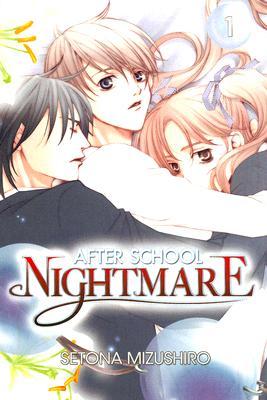 You have just awakened to find your darkest, ugliest secret revealed to classmates who would do anything to destroy you. This is what's happened to Ichijou Mashiro, whose elite school education turns into the most horrifying experience of his life when he's enlisted by a mysterious school nurse to take an after-hours class. Only those who pass the class will graduate, and the only way for Mashiro to pass is to enter into a nightmare world... where his body and soul will be at the mercy of his worst enemies. Can Mashiro keep his life-long secret - that he is not truly a "he" nor entirely a "she" - or will he finally be "outted" in the most humiliating way possible?
*I've read this one and it's fabulous. A big thumbs up if you like psychology and dream vs. reality. The story and characters are complex with each volume.

 Light Yagami is an ace student with great prospects - and he's bored out of his mind. But all that changes when he finds the Death Note, a notebook dropped by a rogue Shinigami death god. Any human whose name is written in the notebook dies, and now Light has vowed to use the power of the Death Note to rid the world of evil. But when criminals begin dropping dead, the authorities send the legendary detective L to track down the killer. With L hot on his heels, will Light lose sight of his noble goal...or his life?
*Death note was my first manga series I've read. It really opened my eyes on how complex mangas really are with its twisted story, characters, and story arc. I've yet to watch the anime, but I've heard very good things about it.
If you like realistic fiction and/or romance try these mangas:

Then one day he meets fellow student Megumi Noda, also known as Nodame. This oddball girl cannot cook, clean, or even read a music score, but she can play the piano in incomparable Cantabile style. And she teaches Chiaki something that he has forgotten: to enjoy his music, no matter where he is.
 School is Yukari's life until she is kidnapped one afternoon by a group of fashion students calling themselves "Paradise Kiss." Wooed by George, the group's leader and resident art snob, Yukari discovers the world of high-fashion and a beauty she never knew she had. One of the top-selling shojo titles in Japan, Paradise Kiss stretches the manga genre with a combination of exquisite artwork, high comedy, and coming-of-age angst.
*The mangaka of this manga also wrote Nana, which I enjoyed reading last year. I actually watched the anime of this series and really enjoyed it. I hope to read the manga series soon.
 Shy Georges never takes issue wth the boys at his religious school. He’s thoughtful, helpful, cool... even the teachers adore him! In fact, no one disagrees that he’s one of the most popular students in class. But when the tall and brooding new kid Robert comes crashing into his life, Georges is backed into a corner and forced to confront dark secrets long-hidden from those who thought they knew him best. Now, Georges has Robert questioning his faith, the bratty royal Freddy testing his nerves, and everyone else gossiping behind his back. With alliances formed and broken in the blink of an eye, can Georges emerge from the battle a true leader, or will his fragile world finally shatter under pressure?
As you can see, there are lots of genres and types of manga out there to choose from. I hope you found some series to try. If you've already read of any of these series, I'm curious to read your thoughts! As always, feel free to send me your questions about manga and I will try my best to answer them.
Labels:
Adult,
Fantasy,
Manga,
Manga Q & A,
Mystery,
Realistic Fiction,
Romance,
Thriller,
YA
3
comments
|
|







 Posts
Posts