Showing posts with label India. Show all posts
Rummanah Aasi
Description:
 After her life falls apart, recruitment consultant Layla Patel returns home to her family in San Francisco. But in the eyes of her father, who runs a Michelin starred restaurant, she can do no wrong. He would do anything to see her smile again. With the best intentions in mind, he offers her the office upstairs to start her new business and creates a profile on an online dating site to find her a man. She doesn’t know he’s arranged a series of blind dates until the first one comes knocking on her door.
   
As CEO of a corporate downsizing company Sam Mehta is more used to conflict than calm. In search of a quiet new office, he finds the perfect space above a cozy Indian restaurant that smells like home. But when communication goes awry, he's forced to share his space with the owner's beautiful yet infuriating daughter Layla, her crazy family, and a parade of hopeful suitors, all of whom threaten to disrupt his carefully ordered life.
  
 As they face off in close quarters, the sarcasm and sparks fly. But when the battle for the office becomes a battle of the heart, Sam and Layla have to decide if this is love or just a game.

Review: After a disastrous breakup, chaotic and passionate Layla Patel has hit rock bottom. She moves back home and starts her own recruitment agency in the office above her parents’ bustling restaurant. Layla's father has a heart attack before he is able to terminate the existing lease on Layla's new office space. He also doesn't have a chance to tell her that he posted her bio data on a desi dating/marriage website and selected 10 candidates for her to meet. 
  Unbeknownst to Layla, Sam Mehta, a CEO of a corporate downsizing company is also sharing the same office space. Sam is the opposite of Layla, organized, reserved, and overly confident. As expected these two clash constantly. They come up with a solution and truce which involves Sam acting as Layla's chaperone on her dates and if she finds a husband, he gets the office to himself. 
  This romantic debut has great characters. Layla and Sam have great chemistry. Their witty banter and chemistry fly off the page and was a joy to read. There is plenty of humor from Layla's horrendous dates and her noisy 'aunties' and family. It is an easy and quick read. I thoroughly enjoyed the first half of the book.
    The book, unfortunately, falls apart in the second half where it addresses the conflict. We are constantly told that Sam has one goal in mind: to avenge his sister who has suffered from domestic abuse which has left her in a wheelchair. The conflict is underdeveloped and what could have been an intriguing and much needed look at disability in the South Asian community, devolves to an ableist plot device. Though Sam's sister is present and has an off the page romance of her own, she is not given a voice and sufficient time to develop. I would have loved to learn more about her and Sam's family.
  A pet peeve of mine is when ethnic names, particularly South Asian ones, are Anglicized. I would have much preferred if Sam was called Samir, his full name (really, is it that difficult to say Samir?). I also left to wonder many times as to Layla's ethnicity and how she identifies as religiously, which were vague. There are times when comments about these aspects of her identity are made during her dates, but it is never clearly addressed.  
 In spite of these issues, Sara Desai shows a lot of potential as a writer and I am curious to see what she has in stored for her second novel which features one of the secondary characters in The Marriage Game

Rating: 3 stars

Words of Caution: There is strong language, sexual situations that are quite graphic, and allusions to domestic violence. Recommended for adults only.

If you like this book try: The Dating Game by Sara Desai (coming out in March 2021), The Trouble with Hating You by Sajni Patel
Rummanah Aasi
Description:
 As the only Indian American kid in her small town, Lekha Divekar feels like she has two versions of herself: Home Lekha, who loves watching Bollywood movies and eating Indian food, and School Lekha, who pins her hair over her bindi birthmark and avoids confrontation at all costs, especially when someone teases her for being Indian.
    When a girl Lekha’s age moves in across the street, Lekha is excited to hear that her name is Avantika and she’s Desi, too! Finally, there will be someone else around who gets it. But as soon as Avantika speaks, Lekha realizes she has an accent. She’s new to this country, and not at all like Lekha. To Lekha’s surprise, Avantika does not feel the same way as Lekha about having two separate lives or about the bullying at school. Avantika doesn’t take the bullying quietly. And she proudly displays her culture no matter where she is: at home or at school.
    When a racist incident rocks Lekha’s community, Lekha realizes she must make a choice: continue to remain silent or find her voice before it’s too late.

Review: Like many first generation immigrants, Indian American Lekha is having trouble with navigating her two worlds. Lehka's family is the only Indian American family in her predominantly white suburb of Detroit. She is comfortable in expressing her Indian culture and flavorful foods at home. When she is at school, however, she tries her best to fade in the background and silence her voice as her classmates mock her for her bindi shaped-birthmark on her forehead. She allows teachers and students to mispronounce her name and to make disrespectful comments about her heritage. Lekha knows she should speak out but wouldn't that just make the situation worse?
  When a new Indian American family-with a daughter Lehka's age-moves to her neighborhood, she is thrilled, assuming that her new friend Avantika will also struggle like Lekha, but Avantika confidently talks about her family and traditions at school and fights back against microaggressions. Lehka is simultaneously inspired and confused. As she begins taking tentative steps toward speaking up about what matters to her, a classroom assignment to write an opinion piece becomes the catalyst for embracing her identity. 
  I could relate a lot to both Lekha's and Avantika's characters. The safety in being invisible is real and strong. Sadly, that's how I acted in my predominately white high school. What is most distressing is that I acted subconsciously and started with the best things such as clothes and music. It took me a while to reach Avantika's confidence but I am still working on it. There are two scenes that really hit me hard in the book such as downplaying a holiday that should be celebrated and decorating for the holiday. Lekha pleads with her parents to not put up a swastika (which in India represents prosperity, well being, and good luck) and on their family door for Diwali in fears of it being misinterpreted as a Nazi symbol. Both of these scenes highlight what it feels like to the "other" and having to feel that you can only choose one side (assimilation) and not both. I also appreciated that Avantika is not perfect. She also has her struggle in confronting colorism by using skin bleach cream to lighten her skin and standing up to her mother. I wish this was also explored more and we see Avantika use her own voice to speak out against internalized racism. 
 Despite these issues, American as Paneer Pie is a good book club pick where students can talk about race/ethnicity, microaggressions, and assimilation. Things do not wrap up in a bow at the end, but Lekha is starting to use her voice and stand up for herself.
 
Rating: 4 stars

Words of Caution: There is some bullying and microaggressions present in the book. There is also a racist incident in the book. Recommended for Grades 4 and up.

If you like this book try: Amina's Voice by Hena Khan, A Place at the Table by Saadia Faruqi and Laura Shovan
Rummanah Aasi
Description: Raina Anand may have finally given in to family pressure and agreed to let her grandmother play matchmaker, but that doesn't mean she has to like it--or that she has to play by the rules. Nani always took Raina's side when she tried to push past the traditional expectations of their tight-knit Indian-immigrant community, but now she's ambushing Raina with a list of suitable bachelors. Is it too much to ask for a little space? Besides, what Nani doesn't know won't hurt her... As Raina's life spirals into a parade of Nani-approved bachelors and disastrous blind dates, she must find a way out of this modern-day arranged-marriage trap without shattering her beloved grandmother's dreams

Review: I was hoping for a fun, light, romantic comedy with The Matchmaker's List, but unfortunately I was disappointed by this debut novel. Raina Anand is raised by her Nani, her maternal grandmother, and terrified of not meeting Nani's expectations. Raina Anand isn’t exactly happy that she’s 29 and still single but Nani is scandalized. After getting over a heart wrenching break up, Raina finally agrees to let her nani set her up with a long list of eligible Indian bachelors, none of whom Raina actually likes. As her best friend, Shay, plans a wedding (that, in a terrible coincidence, is happening on Raina’s 30th birthday), the pressure is on for Raina to find a nice man—any nice man—and settle down. After a string of disastrous dates, Raina can’t let go of the one who got away, a dashing charmer named Dev who broke her heart with his inability to commit. Now that Dev’s back in the picture, but just as noncommittal as ever, Raina finds herself unable to stomach the endless list of bachelors. Eager to ease the pressure of being the perfect Indian granddaughter, Raina lets her Nani believe she’s a lesbian. Raina finds temporary relief, but her little white lie threatens most of her relationships.
  The Matchmaker's List is more of a drama than a romantic comedy. The author does a great job in exploring Raina's conflicting views of her culture and family. She wants to be her own person, but Nani's influence and the fear of being like her lost single mother quarantines Raina to her comfort zone. Even as she feels stifled by their expectations and pressure, she loves the strength of her community and how they always support one another through hard times. Raina’s desire to both please her family and stand up for herself is deeply relatable and it was the strongest aspect of the book. I loved watching Raina's character grow and soon realizes that she has never made a decision based on her own individual desires and dreams. Raina's self realization is what kept me reading. I also loved her relationship with Nani who I adored and loved. The romance unfortunately is a big let down. We are told of the romantic tension between Raina and an unexpected love interest, but I wanted it to be shown. I also did not buy her relationship with Dev which developed too quickly and ended abruptly for me. I would have also loved a more developed and nuisanced relationship with Raina and her mother, which was hinted at in the book. Overall a pleasant look at identity and culture, but short on the romance.

Rating: 3 stars

Words of Caution: There is some language, mentions of drug and underage drinking, and sexual situations. Recommended for older teens and adults only.

If you like this book try: For Matrimonial Purposes by Kavita Daswani, The Marriage Clock by Zara Raheem (July 2019)
Rummanah Aasi

Description: It's 1947, and India, newly independent of British rule, has been separated into two countries: Pakistan and India. The divide has created much tension between Hindus and Muslims, and hundreds of thousands are killed crossing borders.

Half-Muslim, half-Hindu twelve-year-old Nisha doesn't know where she belongs, or what her country is anymore. When Papa decides it's too dangerous to stay in what is now Pakistan, Nisha and her family become refugees and embark first by train but later on foot to reach her new home. The journey is long, difficult, and dangerous, and after losing her mother as a baby, Nisha can't imagine losing her homeland, too. But even if her country has been ripped apart, Nisha still believes in the possibility of putting herself back together.


Review: The 1947 Partition of India, which resulted in the independence of India and Pakistan as two independent nations, is one of the bloodiest moments and biggest human migration in world history though there are hardly any written evidence of the event. Hindus and Sikhs were forced to go to newly created India and Muslims to Pakistan. Most stories that I have read about the Partition lean one way or the other depending on which side is telling the story, however, The Night Diary manages to write a non-bias story of the horrors and tragedies of the time.
  Nisha is half Muslim and half Hindu. She writes to her Muslim mother, who died giving birth to her and her twin brother, Amil, in a diary she receives on their 12th birthday. Through her diary entries, Nisha documents the changes brought about by India's independence from the British colonizers. Nisha and Amil live with their Hindu father, paternal grandmother, and the family's Muslim chef, Kazi, and they must flee their city after independence. The Night Diary is a quiet book where we see how each religious factions are impacted by the Parition such as the danger that hovers Kazi as he stays with a Hindu family, Muslim Rashid Uncle who is unable to speak and hides Nisha's family when they cross the border to Pakistan. Nisha's diary entries are introspective as ponders her own place she is a "half", grapples with the themes of family, faith, humanity, and loss. Nisha also touches upon the different warring political ideas of Gandhi, Nehru, and Jinnah too. The author also does not shy away from the violence experienced from this event whether it is alluded to in a riot exacerbated by rumors and hate or being hold at knifepoint during their dangerous plight as refugees. The book also includes back matter with an author note in which Hiranandani includes information about how her Indian father's experiences influenced this story and provides a glossary of Indian terms.


Rating: 4 stars


Words of Caution: Violent riots are mentioned in the book and take place off the page. Recommended for Grades


If you like this book try: Inside Out and Back Again by Thanhha Lai and The War That Saved My Life by Kimberly Brubaker Bradley
Rummanah Aasi

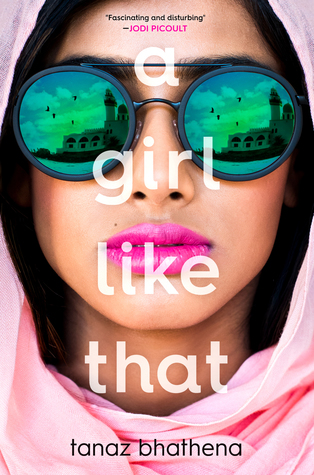
Description: Zarin Wadia is many things: a bright and vivacious student, an orphan, a risk taker. She’s also the kind of girl that parents warn their kids to stay away from: a troublemaker whose many romances are the subject of endless gossip at school. You don't want to get involved with a girl like that, they say. So how is it that eighteen-year-old Porus Dumasia has only ever had eyes for her? And how did Zarin and Porus end up dead in a car together, crashed on the side of a highway in Jeddah, Saudi Arabia? When the religious police arrive on the scene, everything everyone thought they knew about Zarin is questioned. And as her story is pieced together, told through multiple perspectives, it becomes clear that she was far more than just a girl like that.

Review: When Zarin and her friend Porus die in a car accident in Jeddah, Saudi Arabia, everyone, from the religious police to Zarin's classmates and neighbors, is suspicious. What were Porus and Zarin doing? Was Porus one of Zarin's many romantic liaisons? Only the deceased teens know the truth, and as their spirits hover above the wreckage, they look back on what led up to this point.
  Zarin has been doomed since her illegitimate birth. She is the daughter of an Indian gangster and a bar dancing "loose" Parsi mother. Her origins are a shameful secret to her family and follows her like a black cloud over her head. Raised by aunt and uncle, Zarin moves to Mumbai, India to Jeddah, Saudi Arabia for work and hopes of escaping rumors of Zarin's mother's death. In Jeddah Zarin's domineering, abusive, and paranoid aunt fears Zarin will follow the same path as her mother, keeps a tight grip on Zarin, removing all signs of physical femininity from her haircut to her clothes and shielding her from boys and men, to no avail. Zarin defies convention, dating boys and smoking, developing a bad reputation at school. It was only after reconnecting with Porus, a Parsi friend from Mumbai, whomoved to Jeddah for work, that Zarin began to reconsider her behavior—and her capacity for love.
  Bhathena's debut tackles rape culture in Saudi Arabia and for the most part does it quite well. The book addresses double standards and the gender expectations among men and women. Men are expected to demonstrate their masculinity by taking what they want and being aggressive. Women are expected to be "pure" and submissive. The narrative is split between five points of view: Zarin, Porus, Zarin's ex-boyfriend Abdullah; his righteous sister, Mishal, and Farhan, Abdullah's best friend and the popular student on whom Zarin nurses a crush. All of these points of views attempt to give the reader a multi-layered view of Zarin's reputation. Due to the numerous voices, it was hard to distinguish between the many voices and witness character development especially from Mishal and Farhan when they want to repent for their actions. The timeline between past and present jumps around and was confusing to follow.
      What I found troubling with A Girl Like That is the treatment of its Muslim characters. With the exception of the angelic Porus, the Muslim males are stereotyped and one dimensional. Abdullah follows his father's behavior of tossing one girl aside and moves on to the next when he is unable to have sex with her. Farhan takes this behavior to the extreme and uses the date rape drug to make scores on his "man card" even though he seems to be desired by virtually every female he sees. The drug dealer who supplies Farhan is also Muslim. While rape culture is unfortunately not limited to one country, due to the lack of wide range of male characters the book dangerously implies that it is limited to one group of men.
   Similarly, Muslim women are not complex characters either. Mishal is Abdullah's sister who bullies and harasses Zarin by spreading rumors about Zarin around social media and in school. The other female classmates are also bullied for their wayward actions and some are survivors of sexual assault though their stories are not talked about nor are they believed. It is also hinted at several times that Zarin's aunt suffers from mental illness but it is also not addressed in the story. Overall A Girl Like That tackles an important subject and gives the reader a lot to think about. I just wished it was more nuanced, fleshed out, and balanced. 

Rating: 3 stars

Words of Caution: The novel contains graphic descriptions of abuse and sexual assault. Recommended for Grade 10 and up.

If you like this book try: What Girls Are Made Of by Elana K. Arnold, Story of a Girl by Sara Zarr
Rummanah Aasi
Description: Winnie Mehta was never really convinced that Raj was her soulmate, but their love was written in the stars. Literally, a pandit predicted Winnie would find the love of her life before her 18th birthday, and Raj meets all of the qualifications. Which is why Winnie is shocked to return from her summer at film camp to find her boyfriend of three years hooking up with Jenny Dickens. Worse, Raj is crowned chair of the student film festival, a spot Winnie was counting on for her film school applications. As a self-proclaimed Bollywood expert, Winnie knows this is not how her perfect ending is scripted.
  Then there’s Dev, a fellow film geek, and one of the few people Winnie can count on to help her reclaim control of her story. Dev is smart charming, and challenges Winnie to look beyond her horoscope to find someone she’d pick for herself. But does falling for Dev mean giving up on her prophecy, and her chance to live happily ever after? To get her Bollywood-like life on track, Winnie will need a little bit of help from fate, family, and of course, a Bollywood movie star.

Review: Bollywood has been a part of my life for as long as I can remember, whether it is through listening to music from Bollywood movies or watching the movies on the weekend. So I was super-excited to read Sharma's debut novel when I saw its title alone. My So-Called Bollywood Life is an adorable romantic comedy filled with humor, drama, family, and of course romance just like a good Bollywood rom-com.
  Vaneeta "Winnie" Mehta is a Bollywood junkie and loves film. She aspires to be a movie critic and study film with a specialty of South Asian films at the prestigious NYU film school. Winnie had a life pretty much planned out. She would go to NYU and eventually marry her best friend and movie buff Raj as it was fated in her janampatri (natal star chart). As we start the book, Winnie's world is turned upside down as she finds out via social media that Raj was hooking up with another classmate while they were on a break. To make things worse, Raj takes over the film festival, Winnie's moment of glory to showcase her skills and passion for film and was to be her key to NYU, and club member Dev is now starting to be interested in her. Remorseful Raj wants to win Winnie back. Needless to say Winnie has to figure out her complicated romance and find a new way to showcase her love of movies. More unsettling, she must decide if she believes in destiny, and if so, what is hers?
  I absolutely loved the inclusion of Bollywood throughout the novel, particularly the dream sequences starring one of Bollywood's mega stars Shah Rukh Khan. Each chapter headings references Bollywood films, which are detailed in the back of the book for those who are unfamiliar and a good starting guide for those who want give Bollywood movies a try. Since I saw all the films listed, I had a fun time making the connections. Those less familiar with the genre may be a little overwhelmed by the movie details that sprinkle the text, but there are plenty things that they will love about the novel that this might be overlooked. Winnie is a solid heroine who is smart, funny, and ambitious. What I loved most about her, apart from the fact that I also use movie and tv references to explain situations when I can't find the right words, is how proud she is of her culture. I also loved her relationship with her family and best friend. There are plenty of romantic and swoony moments too that brought a smile to my face. My So-Called Bollywood Life is a solid and charming debut. I can't wait to see what Sharma writes next.

Rating: 4 stars

Words of Caution: There is some language and crude sexual humor. Recommended for Grades 7 and up.

If you like this book try: From Twinkle, with Love by Sandhya Menon
Rummanah Aasi

Description: When Poornima first meets Savitha, she feels something she thought she lost for good when her mother died: hope. Poornima's father hires Savitha to work one of their sari looms, and the two girls are quickly drawn to one another. Savitha is even more impoverished than Poornima, but she is full of passion and energy. She shows Poornima how to find beauty in a bolt of indigo cloth, a bowl of yogurt rice and bananas, the warmth of friendship. Suddenly their Indian village doesn't feel quite so claustrophobic, and Poornima begins to imagine a life beyond the arranged marriage her father is desperate to lock down for her. But when a devastating act of cruelty drives Savitha away, Poornima leaves behind everything she has ever known to find her friend again. Her journey takes her into the darkest corners of India's underworld, on a harrowing cross-continental journey, and eventually to an apartment complex in Seattle.

Review: Girls Burn Brighter is a story of sacrifice, exploitation, and reclamation, but most of all it is a story of true and enduring friendship. Poornima and Savitha are two friends and talented weavers who navigate poverty, abuse, and the relentless pressure to find suitable husbands in contemporary South India. In Indravalli their paths cross when Poornima’s father hires Savitha to help him meet the demand for new cotton saris. Savitha is very skillful with the charkha, the spinning wheel, and weaving with Poornima is respite from searching garbage dumps for metal and plastic to sell to support her family. Savitha finds in Poornima a sister and friend. Mourning the recent death of her mother from cancer, Poornima finds in Savitha a mother figure, a gifted storyteller, and a confidante. Though weaving brings their world together, a horrific crime tears them apart. Out in the world alone, with no knowledge of each other’s whereabouts, they must find a way to maneuver the cruelties lobbed at women with no education, little money, and a desire to want more from life in both India and the United States.
  Girls Burn Brighter is a difficult read that gets bleaker as it continues. There is no glimmer of happiness for neither woman as they find themselves in brutal circumstances and a constant fury of abuse, almost entirely at the hands of men. It is telling that there is not one redeemable male character in the entire book and those who have the potential to be so are problematic. There were many times I had to put the book down because I could not endure Poornima's and Savitha's pain and suffering. The narration alternates between Poornima's and Savitha’s points of view. I had no problems distinguishing the two voices because they were each distinct characters. What kept me reading is how resilient and brave Poornima and Savitha are as women whose indefatigable courage it took to escape their circumstances and their undying hope to reunite. I hated the abrupt and ambiguous ending mainly because I wanted to see these women happy after all they have endured. Girls Burn Brighter will make you uncomfortable and rage against the many injustices against women, it will also make you think. A great choice for book clubs and book discussions. 

Rating: 3.5 stars

Words of Caution: Domestic abuse, rape, violence, and human traffiking are heavily featured in the book. Recommended for mature teens and adults only.

If you like this book try: The Color of Our Sky by Amita Trasi  
Rummanah Aasi

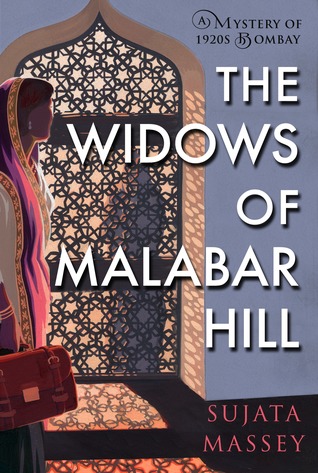
Description: Bombay, 1921: Perveen Mistry, the daughter of a respected Zoroastrian family, has just joined her father's law firm, becoming one of the first female lawyers in India. Armed with a legal education from Oxford, Perveen also has a tragic personal history that makes her especially devoted to championing and protecting women's rights.
  Mistry Law is handling the will of Mr. Omar Farid, a wealthy Muslim mill owner who has left three widows behind. But as Perveen goes through the papers, she notices something strange: all three have signed over their inheritance to a charity. What will they live on if they forefeit what their husband left them? Perveen is suspicious.
  The Farid widows live in purdah: strict seclusion, never leaving the women's quarters or speaking to any men. Are they being taken advantage of by an unscrupulous guardian? Perveen tries to investigate and realizes her instincts about the will were correct when tensions escalate to murder. It's her responsibility to figure out what really happened on Malabar Hill, and to ensure that nobody is in further danger.


Review: The Widows of Malabar Hill is the first installment of a new mystery series, set in Bombay in the 1920s. The book does a good job in establishing the diversity of colonial India particularly in class and religion. Perveen is a member of the Parsi community. She is extremely intelligent and is faced with constant obstacles for going against traditions, customs, and social mores of a being a professional woman. Perveen also belongs to an elite social class and is able to study law abroad at Oxford University. Though she is forbidden to become a lawyer because she is a woman, she still joins her father's law firm as a paralegal. I found the concept of studying law to be problematic considering there are many laws that are used in the book from Shariah, the Islamic law, the law of Paris, and the British law. So which law do you use to fight the case?   The mystery itself was okay though it took some time and patience to get it started. It allowed the reader to compare and contrast the various laws at play when it comes to marriage and family law. 
  There are two aspects of the book that did bother me. The first is the inclusion of religious slurs such as Mohammedian that are mentioned in the book. The term is offensive and inaccurate. I don't know why it was included in the book since the characters are educated enough to know that it is a wrong word to use. The second thing that also bothered me is the disjointed flashbacks that take place in 1917 that interrupt the flow of the present time. The transition between the two timelines are choppy at best and though it does provide backstory to Perveen's character, it comes across as a second story line in the book. After a while it becomes redundant and loses the book's focus. I really think the flashbacks could have been shorten and used more effectively and I hope this will be fixed in the later books. Due to the time period and the setting of the novel, I'm curious to see where this series will go.


Rating: 3 stars

Words of Caution: There is some religious slurs towards Muslims and Islam, a scene of physical assault and fade to black sex scenes. Recommended for adults.


If you like this book try: Rei Shimura mysteries by Sujata Massey
Rummanah Aasi

Description: Five girls. Three generations. One great American love story. You Bring the Distant Near explores sisterhood, first loves, friendship, and the inheritance of culture--for better or worse. Ranee, worried that her children are losing their Indian culture; Sonia, wrapped up in a forbidden biracial love affair; Tara, seeking the limelight to hide her true self; Shanti, desperately trying to make peace in the family; Anna, fighting to preserve her Bengali identity--award-winning author Mitali Perkins weaves together a sweeping story of five women at once intimately relatable and yet entirely new.

Review: You Bring the Distant Near is a multi-generational read that centers around the complexities of navigating multiple cultures, the immigrant experience, and understanding the different generations. While it doesn't offer anything new to the common motif in immigrant stories, it does a nice job in highlighting the importance of finding ones home despite where you are in the world.
   The story opens in 1970s New York, where the Das family has immigrated from England in hopes of planting roots and finding acceptance. Sisters Tara and Sonia are two teen girls who crave personal freedom and they often go against their mother Ranee's strict and traditional Indian values. Older sister Tara is known for her looks and her charisma is contagious. She longs to be an actress. Younger sister Sonia is introverted, incredibly intelligent, and a budding feminist Sonia. The tumultuous relationship between Sunny and Ranee is at the heart of the novel, representing the clash and resistance of and ultimate blending of cultures. In the United States, Ranee struggles in vain to hold on to her "Indianness," not only for herself, but also for her children. I really enjoyed this first half of the book as I connected with Sunny and Ranee the most. I could easily understand their conflicts between personal desire and their responsibilities to their culture. I think this is the strongest aspect of the book. I also appreciated the complexities of race and culture when it came to interracial marriage and gender roles.
  The second half of the book jumps through time where both Tara and Sunny have established lives with marriage and children. We now follow the narratives of their daughters, Anna and Chantal respectively. It is only through her connection to her granddaughters, Chantal and Anna that Ranee finds redemption and transformation. For me the second half of the book falters a bit as Perkins tries to touch upon different issues hurriedly such as racial imposter syndrome (where a person from multiple cultures don't see themselves in any culture), Islamophobia, and American patriotism.
  Though I enjoyed the multi-generational aspect to the story, which is not common in YA litertature, I think the book might have been stronger if there were two companion novels. Chantal and Anna are mirror images of their mothers and I would have liked to see them grow as individuals. I would also have loved for the nuisance and complex themes be explored in more details. Overall, You Bring the Distant Near is an enjoyable read that many readers can see themselves and shines a light on an experience that is actually more familiar than we think.


Rating: 4 stars

Words of Caution: There is some minor language. Recommended for Grades 7 and up.

If you like this book try: The Joyluck Club by Amy Tan
Rummanah Aasi

Description: Priyanka Das has so many unanswered questions: Why did her mother abandon her home in India years ago? What was it like there? And most importantly, who is her father, and why did her mom leave him behind? But Pri's mom avoids these questions--the topic of India is permanently closed.
  For Pri, her mother's homeland can only exist in her imagination. That is, until she find a mysterious pashmina tucked away in a forgotten suitcase. When she wraps herself in it, she is transported to a place more vivid and colorful than any guidebook or Bollywood film. But is this the real India? And what is that shadow lurking in the background? To learn the truth, Pri must travel farther than she's ever dared and find the family she never knew.

Review: Priyanka “Pri” Das is a talented artist who loves to make comics. She is a bit of a loner and outsider. She wants to know both why her deeply religious mother left India for California so abruptly years ago and her father’s whereabouts, but Pri's mother is very cryptic about her past and refuses to speak of India. When Pri discovers a mysterious pashmina tucked away in her mother's forgotten suitcase and wraps it around her shoulders, she is transported to an imagined, romanticized India. These panels burst with vibrant colors in contrast to the banal black and white images of her everyday life. In the magical India Pri has a talking elephant and peacock who serve as Pri's and the reader's tour guides and introduce us to the country's festivals, foods, and fashion, but Pri knows this isn't the realistic version of India, which is hinted by a ghost shaped woman who appears in the background. In order to find the answers to Pri's questions and see the real India, she will have to travel to India, where she learns about women’s choices—especially her mother’s—and living without fear.
  This is a well written debut graphic novel, but it left me wanting more. I appreciated how the portrayal of Indian culture was well balanced. The inclusion of Hindi words worked naturally in the text though it would have been a good idea on expanding the glossary on how to pronounce the words. Since I am familiar with Hindi already, I didn't not have a hard time understanding the words but for readers who are not familiar with the Hindi language might have some trouble. While the graphic novel touches upon classic themes of bicultural and immigrant conflicts, it also talks about women's roles and their constraints in the Indian culture. Although a lot can be inferred from the panels, I would really have liked if this topic was explored further and we got to see more ways on how the magical pashmina's influences a wide range of women in the graphic novel. I also wondered if Pri's mom was aware of the pashmina's magical abilities and if so, why did she hide it? A character like Pri is rarely featured in children and/or YA books because she is the daughter of a single mother, a family structure that is rarely represented and looked down upon in shame in the South Asian culture; another topic that could have been covered more thoroughly in the book. Though a bit lacking in some aspects, Pashmina is a welcoming addition to diverse graphic novels and I look forward to reading more from this creator.

Rating: 4 stars

Words of Caution: None. Recommended for Grades 6 and up.

If you like this book try: American Born Chinese by Gene Luen Yang
Rummanah Aasi
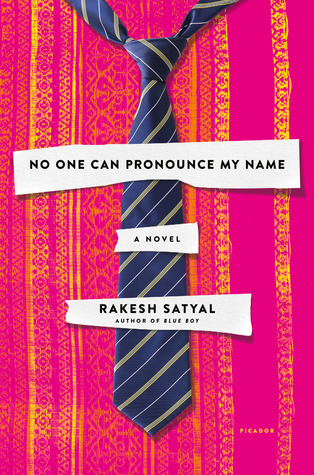
Description: In a suburb outside Cleveland, a community of Indian Americans has settled into lives that straddle the divide between Eastern and Western cultures. For some, America is a bewildering and alienating place where coworkers can’t pronounce your name but will eagerly repeat the Sanskrit phrases from their yoga class. Harit, a lonely Indian immigrant in his midforties, lives with his mother who can no longer function after the death of Harit’s sister, Swati. In a misguided attempt to keep both himself and his mother sane, Harit has taken to dressing up in a sari every night to pass himself off as his sister. Meanwhile, Ranjana, also an Indian immigrant in her midforties, has just seen her only child, Prashant, off to college. Worried that her husband has begun an affair, she seeks solace by writing paranormal romances in secret. When Harit and Ranjana’s paths cross, they begin a strange yet necessary friendship that brings to light their own passions and fears.

Review: I must admit that I was drawn to this book mostly because of its title. I have lost count on how many times my name has been mispronounced and misspelled. No Once Can Pronounce My Name is a slice of life book that explores what constitutes the identity of an Indian American. 
   The story revolves around two main characters who feel isolated in their own lives and are desperately seeking an awakening. Harit is a middle-aged department store salesman, who is still grieving over the loss of his sister. He takes care of his elderly mother and cross dresses in his deceased sister's clothing to show his mother that her daughter is still alive. Though the ruse isn't fooling anyone, it is heartbreaking to witness and acts as his catalyst to change to his life by becoming socially active. Ranjana is a loyal and obedient wife to her distant husband, and the mother of an American-born son, Prashant, a freshman at Princeton. Like Harit, her life has become cold and empty as she feels her identifiers as wife and mother become too confining. Ranjana rebels against Indian convention and strikes her independence by working outside the home, writing paranormal romance on the sly, and striking up male friendships, including one with Harit. Similarly, her son Prashant tries to meet cultural and parental expectations while asserting his independence. 
  I appreciated how the author captures his characters' experiences within a close-knit Indian community and offering a wide range of representation. Harit and Ranjana both slowly grow and become more rounded characters as they become more open minded and open to change around them. The book does drag in the middle and I found myself wanting to know more of the personal lives of the secondary characters such as Ranjana's husband and Harit's wise mother. I also liked the tongue-in-cheek criticism on being an author, the publishing world, and book shaming when it comes to the romance genre that was included in the book. Overall a decent read on the difficulties of immigrants assimilating to a new culture and redefining themselves.

Rating: 3.5 stars

Words of Caution: There is mature themes, sexual content, and drug use in the book. Recommended for adults only.

If you like this book try: The Turner House by Angela Flournoy, American Dervish by Ayad Akhtar, and  The Wangs vs. the World by Jade Chang
Rummanah Aasi
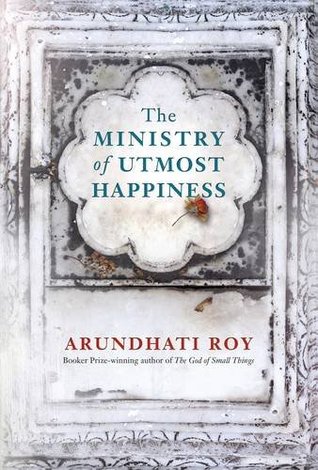
Description: The Ministry of Utmost Happiness takes us on an intimate journey of many years across the Indian subcontinent, from the cramped neighborhoods of Old Delhi and the roads of the new city, to the mountains and valleys of Kashmir and beyond, where war is peace and peace is war.
The engine of Roy's story is a heejra (India's third gender) named Anjum, and the story begins with her unrolling a threadbare Persian carpet in a city graveyard she calls home. Anjum's charisma draws a vibrant assemblage of outcasts to join her--other hijras, Kashmiri freedom fighters, activists, orphans, low-caste Hindus and Muslims, and a host of animals. Anjum's home is a place where the formerly unwanted embrace each other's true selves.
  We encounter the odd, unforgettable Tilo and the men who loved her, including Musa, sweetheart and ex-sweetheart, lover and ex-lover. Their fates are as entwined as their arms used to be and always will be. We meet Tilo’s landlord, a former suitor, now an intelligence officer posted to Kabul, and then we meet the two Miss Jebeens. The first is a child born in Srinagar and buried in its overcrowded Martyrs’ Graveyard. The second is found at midnight, abandoned on a concrete sidewalk in the heart of New Delhi.

Review: I absolutely loved Roy's debut novel, A God of Small Things, and I have been anxiously awaiting the release of her next novel. Like many of her fans, I didn't realize that it would be twenty years until her next book. Roy has been and continues to be a social and political advocate in India which translates over to her new novel The Ministry of Utmost Happiness.
  The Ministry of Utmost Happiness is a dense yet beautifully written novel that gives a panoramic view of all the various conflicts and societal issues such as gender rights and war plaguing the Indian Subcontinent. While it does have a loose plot line, the characters are mainly used as anecdotes to explain the conflicts and their consequences. The pace is deliberating slow, allowing the reader time to absorb what he/she is reading. Readers anticipating a novel featuring a gripping family saga like Roy's debut novel might be disappointed.
  The book follows two central protagonists. Anjum is born intersex and raised as a male per her parents decision in order to avoid shame and embarrassment. Embracing her identity as a woman, she moves from her childhood home in Delhi to the nearby House of Dreams, where gender non-conforming individuals like herself live together, and then to a cemetery when that home too fails her. The home that tries to create herself becomes an enclave for the wounded, outcast, and odd. The other protagonist, the woman who calls herself S. Tilottama, fascinates three very different men for various reasons but she loves only one, the elusive Kashmiri activist Musa Yeswi. When an abandoned infant girl appears mysteriously amid urban litter and both Anjum and Tilo have reasons to try to claim her, all their lives converge. The unknown baby girl is much like the motherland India who is home to a vast number of people from different states, religions, and ethnicity. While the book turns a sympathetic eye to the victims of India's social and political turmoil, it also very critical particularly when it comes to Kashmir's long fight for self rule. The book shifts through various emotions, time periods, and even narrating style from first-person and omniscient narration with "found" documents to weave everything together to make a "novel".

Rating: 3.5 stars

Words of Caution: There is strong language, some sexual content, and mature themes in the book.

If you like this book try: The Goldfinch by Donna Tartt, Freedom by Jonathan Franzen, City on Fire by Garth Risk
Rummanah Aasi
Description: Dimple Shah has it all figured out. With graduation behind her, she’s more than ready for a break from her family, from Mamma’s inexplicable obsession with her finding the “Ideal Indian Husband.” Ugh. Dimple knows they must respect her principles on some level, though. If they truly believed she needed a husband right now, they wouldn’t have paid for her to attend a summer program for aspiring web developers…right?
 
Rishi Patel is a hopeless romantic. So when his parents tell him that his future wife will be attending the same summer program as him—wherein he’ll have to woo her—he’s totally on board. Because as silly as it sounds to most people in his life, Rishi wants to be arranged, believes in the power of tradition, stability, and being a part of something much bigger than himself.
 
The Shahs and Patels didn’t mean to start turning the wheels on this “suggested arrangement” so early in their children’s lives, but when they noticed them both gravitate toward the same summer program, they figured, Why not? Dimple and Rishi may think they have each other figured out. But when opposites clash, love works hard to prove itself in the most unexpected ways.

Review: I finished When Dimple Met Rishi in one sitting, something that is very rare for me to do. This romantic debut novel wonderfully explores the culture of the sub Indian continent and more importantly what it means to be a first-generation teen from an immigrant family. Dimple and Rishi come from a similar background though they share clashing perspectives on their culture. Both teens are ready to embark on their adventure to college and being independent. In a traditional South Asian culture this is also a time to start thinking about marriage and settling down so it is not a big surprise to find Dimple's and Rishi's parents set an arranged-marriage plan in motion, but it backfires big time—or maybe not?
  In the alternating voices of her two protagonists, Menon explores themes of culture and identity with insight, humor, and warmth. I absolutely loved Dimple and Rishi for being unapologetically themselves. Too often I read about characters from my similar background who try to embrace another culture and dismiss their own without understanding it. Dimple and Rishi may not see eye to eye on certain aspects of their culture but accept it as part of themselves without sacrificing their life choices and expectations.
 Dimple loves coding and is so excited to win Insomina Con, a competitive six-week summer program at San Francisco State focused on app development, with her creative and lifesaving app. She dismisses her mother’s preoccupation with the Ideal Indian Husband and a concentration of being presented as an Indian beauty. Dimple wants to be respected for her intellect and talent. I love the fact that Dimple is described as an average teen who has unruly hair and wears glasses. Finally, a YA character that resembles regular teens! I could definitely relate with her frustrations of her mother constantly comparing her to others.
  Rishi is an obedient son who is responsible, a romantic and a dreamer who believes in destiny, tradition, and embraces his culture full on. He is perfectly fine with settling down and starting a family, which is why he brought his grandmother's ring to give to Dimple at Insomnia Con except she has no clue of his or both sets of their parents' intention. Rishi is on his father's path to study computer science and engineering at MIT even though his real passion for comic book art is a hidden one. When both attend the convention and are assigned to work together, things get tricky. It is so much fun watching Dimple and Rishi become friends, drop their walls of defense, and navigate their   swoonworthy connection. I also appreciated the fact that the conflict is an internal one for both characters instead of superfluous drama. When Dimple Met Rishi is a heartwarming, authentic, empathetic, and often hilarious, delightful read. It is my favorite contemporary romance read so far this year and I highly recommend it.  

Rating: 4.5 stars

Words of Caution: There is some language and crude sexual humor. There is also a small fade to black sex scene in the book. Recommended for Grades 9 and up.

If you like this book try: Born Confused by Tanuja Hidier Desai
Rummanah Aasi
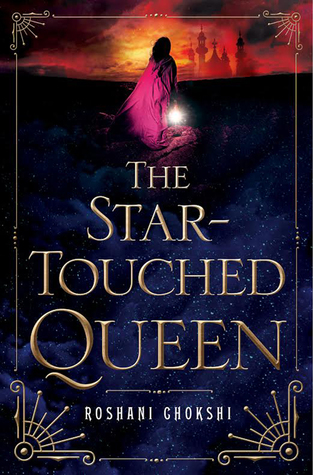
 The Star-Touched Queen has been featured on several blogs for quite some time, generating a lot of buzz, hype, and very high expectations. I was very much looking forward to this standalone fantasy that is steeped in Indian folklore and mythology, but sadly the book failed to meet my expectations.

Description: Maya is cursed. With a horoscope that promises a marriage of death and destruction, she has earned only the scorn and fear of her father’s kingdom. Content to follow more scholarly pursuits, her whole world is torn apart when her father, the Raja, arranges a wedding of political convenience to quell outside rebellions. Soon Maya becomes the queen of Akaran and wife of Amar. Neither roles are what she expected: As Akaran’s queen, she finds her voice and power. As Amar’s wife, she finds something else entirely: Compassion. Protection. Desire.

But Akaran has its own secrets—thousands of locked doors, gardens of glass, and a tree that bears memories instead of fruit. Soon, Maya suspects her life is in danger. Yet who, besides her husband, can she trust? With the fate of the human and Otherworldly realms hanging in the balance, Maya must unravel an ancient mystery that spans reincarnated lives to save those she loves the most…including herself.


Review: The Star-touched Queen has a great premise. The author has a very rich, descriptive writing style that is mesmerizing to the point of distraction, but the story's Achille's heel is its poor execution. The world building is hazy and weak. For example, many readers have commented that the story is a retelling of the Hades and Persephone myth, which would be incorrect as the Star-Touched Queen is very much influenced by a number of different Indian mythologies. This confusion is a telling mistake of how the author fails to set up and distinguish her different realms though we are taken to the Otherworld and the Underworld. Sprinkling Hindi words and detailed descriptions of clothing and jewelry does not count as efficient world building. 
  Though I liked the overall arching story of Maya, a young princess who lives in scorn because of the horoscope that decrees she will marry "death and destruction", there is too much packed into her story with hints of a former life, dormant magical abilities, love, betrayal, and redemption. The plot felt rushed and meandering, especially in the second half of the book. 
 Maya jumps from one place to the next with the author telling her story rather than showing it. As a result, I didn't really get to know Maya nor did I get the chance to care for her. The mythologies were so jumbled together that I really think this book would have been much better if there were more pages to spread the story out. There is a romance in the story, but it felt underdeveloped and inauthentic. 
 I would have loved to go on a journey to power and self-affirmation with Maya instead of being told how much she had changed. Character development is my favorite part of reading a book, but I was sad to see none of the characters fully fleshed out. While there is a companion novel coming out soon featuring a secondary character, I'm still not sure if I will pick it up anytime soon. The author has some great ideas, but she definitely needs to work on her craft and sharpen her writing skills more. 

Rating: This is a hard one to rate somewhere between 2 to 3 stars.

Words of Caution: There is strong violence that takes place mostly off the page, some language, and crude humor. Recommended for Grades 9 and up.

If you like this book try: The Wrath and the Dawn series by Renee Ahdieh, The Court of Thorns and Roses series by Sarah J. Maas
Rummanah Aasi
 I apologize for the lack of posts this week. The end of the school year craze is in full gear and I am trying my best to handle it all. Unfortunately, that means blogging has been on the back burner, but I hope to be in full swing next week. *Fingers crossed*

Waiting on Wednesday is a meme hosted by Jill of Breaking the Spine! This week I'm eagerly awaiting the release of Roshani Choksi's debut novel The Star-Touched Queen. This book has been all over the blogosphere and has received a lot of hype, which makes me a bit nervous to pick it up. 


The Star-Touched Queen by Roshani Chokshi 
Publish date: April 26, 2016
Publisher: Macmillian


 The main reasons why I am excited for this book:

  • Standalone fantasy
  • Mystery with the protagonist's self-discovery
  • Romance 
  • Indian mythology and folklore 


Maya is cursed. With a horoscope that promises a marriage of Death and Destruction, she has earned only the scorn and fear of her father's kingdom. Content to follow more scholarly pursuits, her whole world is torn apart when her father, the Raja, arranges a wedding of political convenience to quell outside rebellions. Soon Maya becomes the queen of Akaran and wife of Amar. Neither roles are what she expected: As Akaran's queen, she finds her voice and power. As Amar's wife, she finds something else entirely: Compassion. Protection. Desire.

But Akaran has its own secrets -- thousands of locked doors, gardens of glass, and a tree that bears memories instead of fruit. Soon, Maya suspects her life is in danger. Yet who, besides her husband, can she trust? With the fate of the human and Otherworldly realms hanging in the balance, Maya must unravel an ancient mystery that spans reincarnated lives to save those she loves the most . . . including herself.
Rummanah Aasi
 I have dystopian burnout. It is not that I dislike this subgenre, but I have read a slew of dystopian books that in someway or in another is Hunger Games deja vu promising another blockbuster. As a result I have become bored and weary of the category of  dystopian. When I read about Holly Bodger's debut novel I didn't know what to expect and lowered my expectations. I'm relieved to find 5 to 1 to be an engaging dystopian novel set in India that poignantly explores gender politics. Please note that this review is based on the advanced reader's copy of the book provided by the publisher via Netgalley.

Description: In the year 2054, after decades of gender selection, India now has a ratio of five boys for every girl, making women an incredibly valuable commodity. Tired of marrying off their daughters to the highest bidder and determined to finally make marriage fair, the women who form the country of Koyanagar have instituted a series of tests so that every boy has the chance to win a wife.
  Sudasa doesn’t want to be a wife, and Kiran, a boy forced to compete in the test to become her husband, has other plans as well. Sudasa’s family wants nothing more than for their daughter to do the right thing and pick a husband who will keep her comfortable—and caged. Kiran’s family wants him to escape by failing the tests. As the tests advance, Sudasa and Kiran thwart each other at every turn until they slowly realize that they just might want the same thing.


Review: In order to enjoy 5 to 1 there are few things you have to keep in mind. First 5 to 1 is what I call a soft dystopian, there is not an emphasis on the world that Bodger created which ironically  works in the author's favor because the book's basis is steeped in reality of gender politics. Second, the book is not your average heart pounding action book, the book moves steadily yet slowly focusing more on character development. Third, there is no romance in the book which allows the author to show how the gender selection effects each gender without any rose tinted glasses placed upon the characters. Additionally this debut novel is told in alternating points of view, one in poetry and one in prose. Once you settle and acknowledge these differences from the usual dystopian tropes, you can enjoy the book for its uniqueness and see where it shines.
  Bodger explores a dystopian India in which gender selection has led to there being five boys for every girl. In generations past boys were the favored gender of infants and as a result female infant population dramatically decreased as they were aborted and disposed of, signaling debt and burden for families (sadly, this is really happening in several parts of Asia). A revolution took place and a matriarchal government is now in power. Now female babies are prized possessions and men's value are determined if they can help their wives produce girls. The subversion of the gender roles and expectations is exceptionally well done in 5 to 1 from the characters to the various Tests that the boys have to pass. 
  Throughout her novel Bodger doesn't support just one gender, but rather shows how the gender selection has negatively effected both genders equally. Neither men nor women benefited from their society. Nor is one more in control than the other.  Interestingly they are equally oppressed, which can be seen in the narrative style of the novel. Kiran, the male narrative, is written in captivating prose, which allows much wordier passages however he is limited in expressing his own desires outside of winning the Tests which he is forced to participate due to his gender and age. Similarly the beautiful poetry of Sudasa is appropriately jarring and nuanced, showing how on the outside she  may seem as if she is in control because she is a girl, but her voice is also reduced in how she expresses herself and her limited freedom. Bodger does well in infusing the Indian culture and lifestyle in her work, but I would have liked to have seen more particularly within Sudasa's family dynamics. A glossary of Hindi terms would also be a great addition particularly those who are unfamiliar with the language.
 While the lack of romance in 5 to 1 may disappoint readers, I think it is one of the strong aspects of the book. The Tests are suppose to be pointless and unromantic. The more appropriate importance is placed on personal freedom and choice. During the Tests both Sudasa and Kiran have an epiphany of their own desires and both shamelessly pursue their dreams, which I would have loved to see in a more flushed out epilogue. Despite these minor flaws, I thoroughly enjoyed 5 to 1 and I look forward to see what Bodger has in stored for us in future books.  

Rating: 4 stars

Words of Caution: There is some mild crude humor in the book and minor language. Recommended for strong Grade 7 readers and up.


If you like this book try: Matched series by Ally Condie
Rummanah Aasi


Description: Darcy Patel has put college and everything else on hold to publish her teen novel, Afterworlds. Arriving in New York with no apartment or friends she wonders whether she's made the right decision until she falls in with a crowd of other seasoned and fledgling writers who take her under their wings… 
  Told in alternating chapters is Darcy's novel, a suspenseful thriller about Lizzie, a teen who slips into the 'Afterworld' to survive a terrorist attack. But the Afterworld is a place between the living and the dead and as Lizzie drifts between our world and that of the Afterworld, she discovers that many unsolved - and terrifying - stories need to be reconciled. And when a new threat resurfaces, Lizzie learns her special gifts may not be enough to protect those she loves and cares about most. 
Review: Afterworlds is the most original novel that I read last year. Westerfeld gives us two story lines to follow in his latest and ambitious work. Eighteen-year-old Darcy is an aspiring writer and has completed her book for National Writing Month. She signs with an agent, drops her college plans and moves to New York to revise her soon-to-be-published novel as well as start the sequel to her book. Meanwhile, in chapters that alternate with Darcy’s NYC adventures, her fictional protagonist, Lizzie, survives a near-death experience to find she has become a ferryman, responsible for guiding souls to the afterlife. 
  Westerfeld effectively creates and meshes two divergent reading experiences (a coming of age story and YA paranormal romance) with two distinct yet believable voices in Darcy and Lizzie. I found myself immersed in both stories. In Darcy's tale we get a sneak peak behind the scenes look at what it means to become a writer and the YA publishing world. Darcy needs to deal with her own insecurities and come to terms with her own identity, which may contradict her traditional Indian culture. Watching how Darcy's emotions as well as the influence of her culture bleed into her novel is a really cool way in transitioning to Lizzie's story line. Readers have pointed out that there are some underdeveloped parts in the book, however, I see that as a metaphor for Darcy's immature authorial voice. 
  Though the book is close to 600 pages, I read through it in a matter of days. Afterworlds has something for everyone. Fans of paranormal romance would be drawn to Lizzie's story where as fans of coming of age novel as well as aspiring writers will find Darcy's story to be fascinating. 

Rating: 4.5 stars

Words of Caution: There is some language and scenes of underage drinking. Recommended for Grades 9 and up.

If you like this book try: The Diviners by Libba Bray, The Name of the Star by Maureen Johnson, Guardian of the Dead by Karen Healey
Rummanah Aasi
 I was a big fan of Born Confused by Tanuja Desai Hidier, especially with its exploration of melding two cultures and finding your identity. I expected something similar with its sequel, Bombay Blues, but unfortunately I will had to add this one to my growing list of disappointing reads of 2014. Many thanks to the publisher and Netgalley for an advanced copy of this book.


Description: In Born Confused, Indian-American just-turned-17-year-old Dimple Rohit bhai Lala found love, friendship, art, and home where she least expected it. But a lot's gone on in the years that have followed. And what happens if what you thought you wanted wasn't what you wanted after all? As she learns during adventures that take her from India to New York to London and back, with a little luck and a lot of vision, the journey home might prove just as magical as what you left behind to make it.

Review:  Bombaby Blues had a lot of potential, but with its experimental narrative filled with characters once loved and now unfamiliar made this a very disappointing read. American born and of Indian descent, Dimple Lala travels to Bombay with her Indian parents and her longtime DJ boyfriend, Karsh Kapoor, to attend the wedding of a cousin, Sangita. Both Dimple and Karsh believed their trip to India will bring them closer as a couple, however, the trip puts a strain on their relationship. Dimple immerses herself in family, culture, photography, music, love, and a search for self; while Karsh embarks on his own spiritual journey.
  There are many, many pages filled with the sights and sounds of India that bring this book alive, however, many of the Hindi words included in the narrative are haphazardly translated. While I can understand having the 'lost in translation' feel to the story considering Dimple's hindi isn't very strong, I wish the author made a choice in translation and stuck to it. Since I was familiar with the Hindi language I didn't have any problems with the book, but I can definitely see where many readers get stumped.
  For majority of the book there is not a whole lot that happens, but then there is a rush of melodrama that takes up space. We see Sangita abruptly announces she is not marrying but instead pursuing a burgeoning art career. Sangita's sister, Kavita, opens up to the family about her homosexuality. Dimple struggles to understand her unraveling relationship with Karsh, but out of characteristic of her, has a spontaneous sexual affair with a random boy she dubbed as the "Cowboy" she just met. There is also the unveiling of a long kept secret of why Dimple's mother and her aunt don't get along well also tacked on.
   I was hoping a bit more of introspection from Dimple while we do get some, it is mostly in the form of stream of consciousness. The inclusion of the "Cowboy" completely threw me and I didn't understand his purpose at all since we know virtually nothing about him. I felt bored with this book and skimmed a lot of it in hopes that I was see a sliver of the characters that I loved in the previous book. Unfortunately, they were not found.

Rating: 2 stars

Words of Caution: There is strong language, brief discussions of sex, and a small sex scene. Recommended for Grades 10 and up.

If you like this book try: Shine, coconut, moon by Neesha Meminger, Skunk Girl by Sheba Karim
Rummanah Aasi
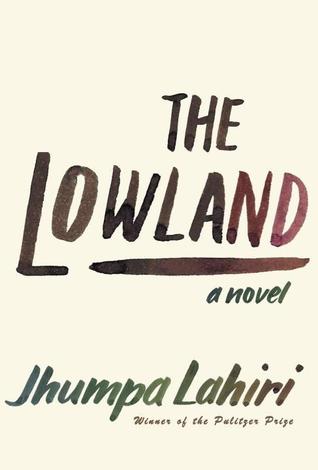
  I had really high hopes about Jhumpa Lahiri's latest book, The Lowland. When I found an ARC of it at this past summer's ALA conference in Chicago, I grabbed a copy and couldn't wait to start it. Then all the accolades and stellar reviews poured in and my expectations grew tenfold. Now I wished I had ignored everything and read it because surprisingly I felt underwhelmed about it all.

Description: Two brothers bound by tragedy; a fiercely brilliant woman haunted by her past; a country torn by revolution. A powerful new novel--set in both India and America--that explores the price of idealism and a love that can last long past death.
  Growing up in Calcutta, born just fifteen months apart, Subhash and Udayan Mitra are inseparable brothers, one often mistaken for the other. But they are also opposites, with gravely different futures ahead of them. It is the 1960s, and Udayan--charismatic and impulsive--finds himself drawn to the Naxalite movement, a rebellion waged to eradicate inequity and poverty: he will give everything, risk all, for what he believes. Subhash, the dutiful son, does not share his brother's political passion; he leaves home to pursue a life of scientific research in a quiet, coastal corner of America.
  But when Subhash learns what happened to his brother in the lowland outside their family's home, he comes back to India, hoping to pick up the pieces of a shattered family, and to heal the wounds Udayan left behind--including those seared in the heart of his brother's wife.


Review: The Lowland is one of those books that everyone seems to have loved this year, but I really didn't enjoy it. Its books like The Lowland that makes me wonder what am I missing whenever I read a glowing review. Personally, I think the book would have been much stronger if it was written as a collection of short stories rather than a novel. It has the slices of life feel to the story rather than a powerful, sweeping saga as its described on its book panel.
     The book starts off very slowly as Lahiri lays down her foundation for her novel. The Mitra brothers are inseparable even though they are complete opposites. Subhash is serious, cautious, and reliable, while Udayan is brash, impassioned, and rebellious. Suhbash is an upholder of traditional family roots of their quiet, middle-class Calcutta enclave and while Udayan questions everything. In college, Subhash studies chemistry, Udayan physics, but while Subhash prepares to go to America to earn his PhD, Udayan experiences a life-altering political awakening. 
  Unlike Lahiri's other books, there is a strong focus on politics in The Lowland. She takes time to set up the stage of the late 1960s, a time of international protest, but stops there. Udayan joins the Mao-inspired Naxalite movement, which isn't explained at all. All that I could understand from inferences is that the movement has socialism roots and demands justice for the poor. I wished Lahiri spent more time discussing the movement especially since it mattered so much to Udayan and that he was willing to alienate himself from his family. Instead of making the politics a theme of the story it comes across as a contrived plot device that drives the rest of the story. 
  Udayan also secretly marries self-reliant, scholarly Gauri, but we don't see this develop as all which also hinders not only the emotional impact of the story but rather another contrived plot device. Subhash’s indoctrination into American life and Rhode Island’s seasons and seashore is bracing and that of a typical immigrant story, while Udayan’s descent into the Naxalite underground, which stays firmly in the background, puts him in grave danger. 
 Most of the characters felt more touch and go for me to wrap my head around them. I only felt like I understood Gauri who is painted by many reviewers as the villain of the story. She is undoubtedly selfish and unabashedly ambitious, but also in a way victim of society. I didn't get the sense that she married Udayan and later Subhash because she loved either of them as a person but rather they were her ticket to a bright, independent future. She reminded me a lot of Edna from Kate Chopin's The Awakening. She made me wonder why can't female characters behave like male characters and be only seen as negative? Why is it that male characters can be jerks but still earn our sympathies while female characters will only remain as jerks and nothing else?
  As tragedies, and revelations multiply over the years, we do see the characters go through the psychological nuances of conviction, guilt, grief, marriage, and parenthood. I just wanted the book to dig a little deeper and not just scratch the surface of these themes. The Lowland is a decent read but I wanted and needed more especially from a very capable writer and one who was nominated for the Booker Prize this year. 

Rating: 3 stars

Words of Caution: There is some language, sexual situations, and mature themes. Recommended for adults only.

If you like this book try: The Age of Shiva by Manil Suri, The Marriage Plot by Jeffrey Eugenides, Cutting for Stone by Abraham Verghes
Rummanah Aasi
  I had originally planned on reading and reviewing Cathy Ostlere's debut novel, Karma, for my Southeast Asian Reading Challenge last year. Due to some glitches and a very busy schedule towards the end of 2011, I wasn't able to get to Karma until now. If you're looking for a great read about India, be sure to pick up Karma as it embraces the light and dark aspect of the nation's history. For full disclosure, I was provided a copy of the book from the author in exchange for an honest opinion. 

Description (from the publisher): It is 1984, and fifteen-year-old Maya is on her way to India with her father. She carries with her the ashes of her mother, who has recently committed suicide, and arrives in Delhi on the eve of Prime Minister Indira Gandhi s assassination - one of the bloodiest riots in the country s history. Then Maya is separated from her father and must rely upon the help of a mysterious, kindhearted boy, Sandeep, to safely reunite them. But as her love for Sandeep begins to blossom, Maya will have to face the truth about her painful adolescence . . . if she's ever to imagine her future.

Review: After reading a slew of mediocre reads, Karma felt completely original and the captivating story sucked me in right way. This epic tale unfolds through the pages of alternating diaries from October 28th through December 16th, 1984. The deceptive simplicity of the passages contains many layers with its few words, unveiling a sometimes painful history, both personal and on a national level, beneath the story's surface.
   Fifteen-year-old Maya, half Hindu/half Sikh, has lived her entire life in rural Canada. Her family's religion and ethnicity set them apart from their community, but also from one another. Naming Maya signifies the tension between her parents, lovers who gave up their families, pride, etc for each other, but who have lived in different states of mourning and regret ever since. Her father insists on calling her a Sikh name, Jiva or "life," yet her mother defiantly calls her a Hindu name, Maya or "illusion," as an insult to her Sikh father. Maya begins her story in the typical fashion of a coming of age tale detailing her plight of fitting in with her surroundings.
 Heartache and loss lead Maya and her father back to India at the time of Indira Gandhi's assassination. You may or may not know but on October 31, 1984, Prime Minister Indira Gandhi was assassinated in her garden by two of her Sikh bodyguards as revenge for the attack on the Sikh's holy "Golden Temple." This in turn led to riots where many (the numbers are not very clear) Sikhs were brutally murdered by Hindus to avenge Gandhi's death.
  Karma takes place during the riots where the city erupts in chaos. Through a sequence of horrifying events, father and daughter are separated, and Maya is left alone in a violent foreign country where she must rely on the help of strangers to reach safety. Maya's sense of otherness escalates dramatically as she is forced to consider it on virtually every aspect of her life as well as on a larger, broader scale. In her journal, she pours her uncertainties and her fears especially of never returning to her once mundane, peaceful world in Canada. She records the atrocities she has witnessed and her guilt of not helping those around her. 
   The middle diary belongs to blunt yet charming Sandeep, with whom Maya experiences love, tragedy, ancestry, and loyalty at an intimate yet physically innocent level. Sandeep is the balm of Maya's wounds yet he himself isn't immune by the riots. He too suffers from pain and it was interesting to compare how these two characters approached pain and sorrow differently. I loved how the romance between Maya and Sandeep quietly bloomed and didn't overtake the important introspection from the book. Their romance, which may or may not be doomed depending how you look at it, offers hope, even in its slightest glimmer.
  Despite its tome like appearance, Karma reads fairly quickly. The book's pace and tension compelled me to read quickly, but I did have to stop and reread a few passages to really appreciate the richness of the language, imagery, and the subtle meanings behind the surface of the words. Ostlere uses the verse format to her best ability in relaying an important story with just the right amount of words and emotions. There is nothing superfluous in the book. The various themes such as shame, retribution, war, religious fanaticism, the will to live, suffering, suicide, ignorance, not fitting in, love, loss, grief, second chances, and many more left me thinking for quite sometime after I finished the book. Part coming of age, part historical fiction, part self discovery, and part romance, Karma has something to offer for various readers. I'd highly recommend picking this one up in you are at all curious about India or Indian history/culture.

Rating: 4.5 stars

Curriculum Connection: Asian Studies

Words of Caution: There is some strong violence, disturbing rioting scenes, language, and crude humor. Recommended for Grades 9 and up.

If you like this book try: Keeping Corner by
Related Posts with Thumbnails